Moral understanding Reading Comprehension Worksheets
5 filtered results
-
From - To
Explore our Moral Understanding Reading Comprehension Worksheets, designed to enhance children’s critical thinking and moral reasoning skills. These engaging worksheets prompt students to analyze stories, identify moral lessons, and reflect on right versus wrong. Each activity encourages thoughtful discussions, helping students relate personal experiences to the narratives they read. Our resources cater to various reading levels, fostering a deeper understanding of character motivations and ethical dilemmas. By integrating moral lessons with reading comprehension, we empower young learners to make informed decisions and develop empathy. Equip your classroom with these valuable tools to nurture responsible and compassionate future leaders!
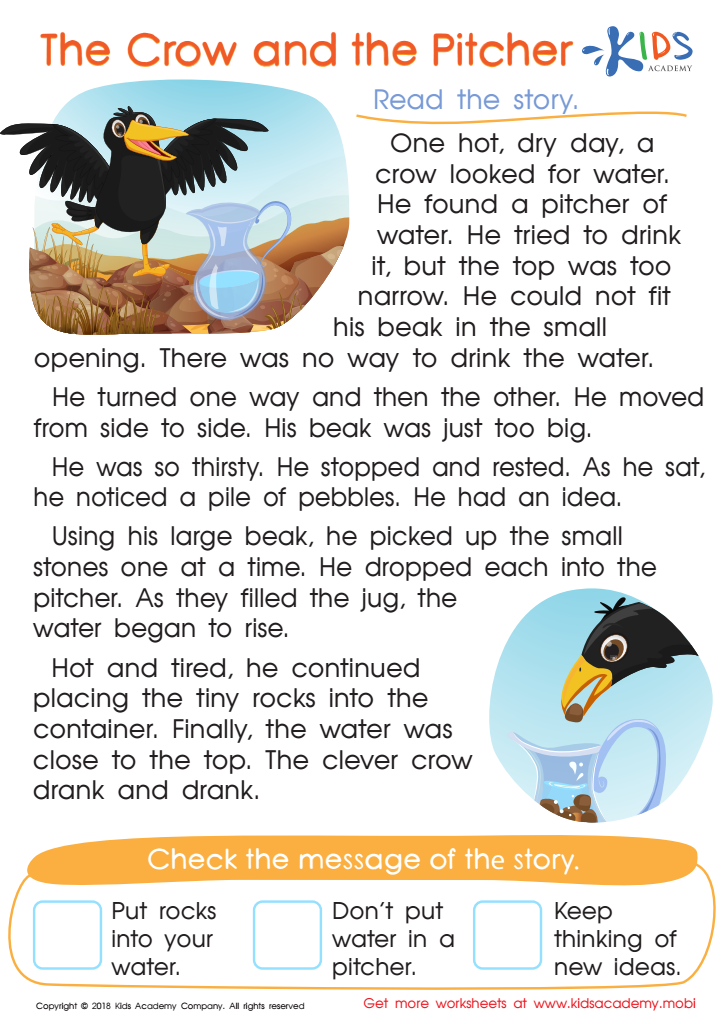
The Crow and the Pitcher Worksheet
 Assign to My Students
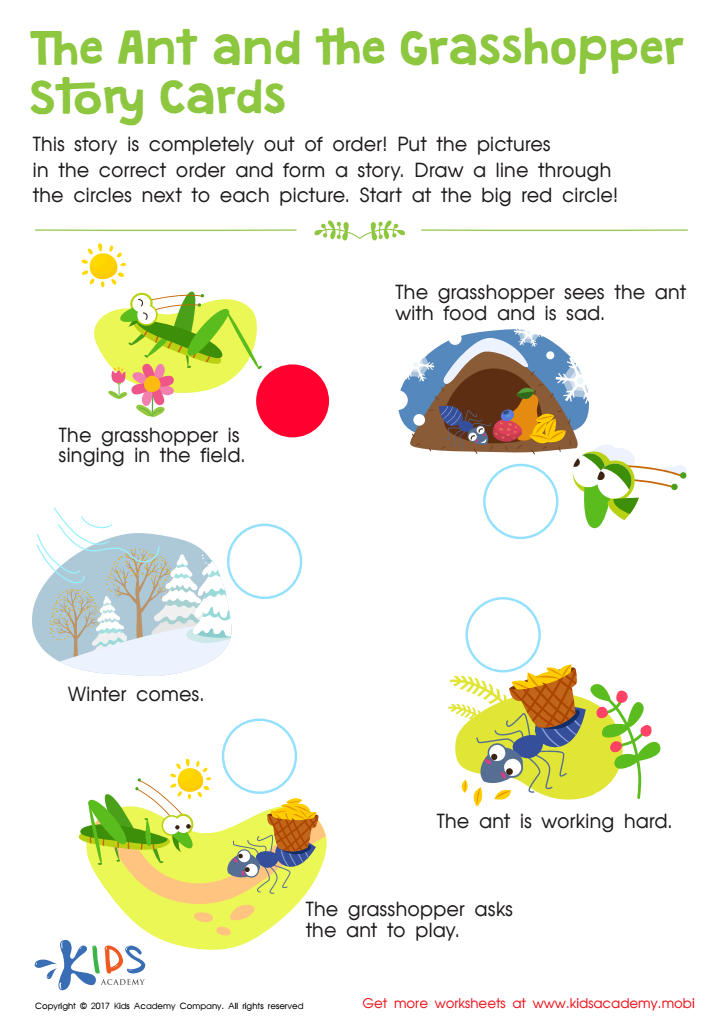
The Ant and The Grasshopper Worksheet
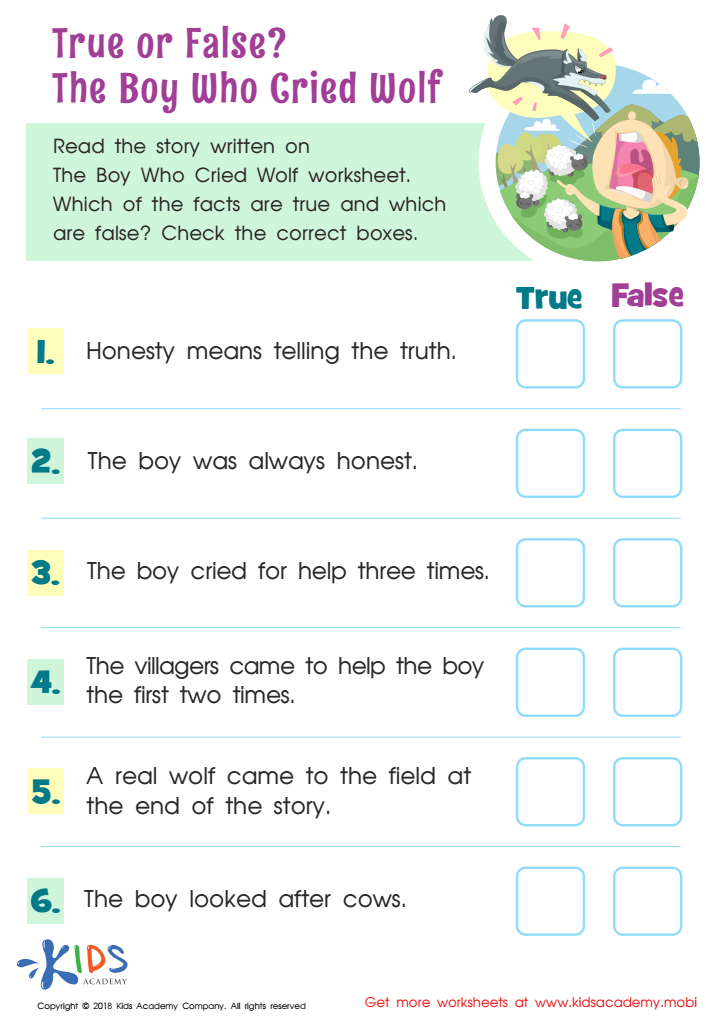
True or False? The Boy Who Cried Wolf Worksheet
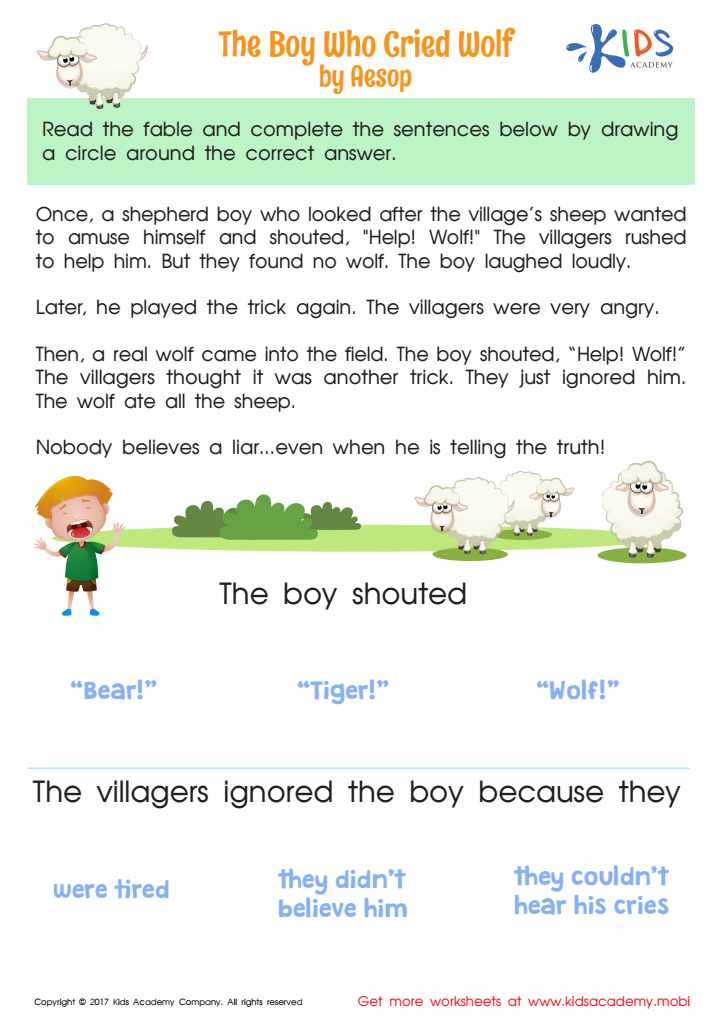
The Boy Who Cried Wolf Worksheet
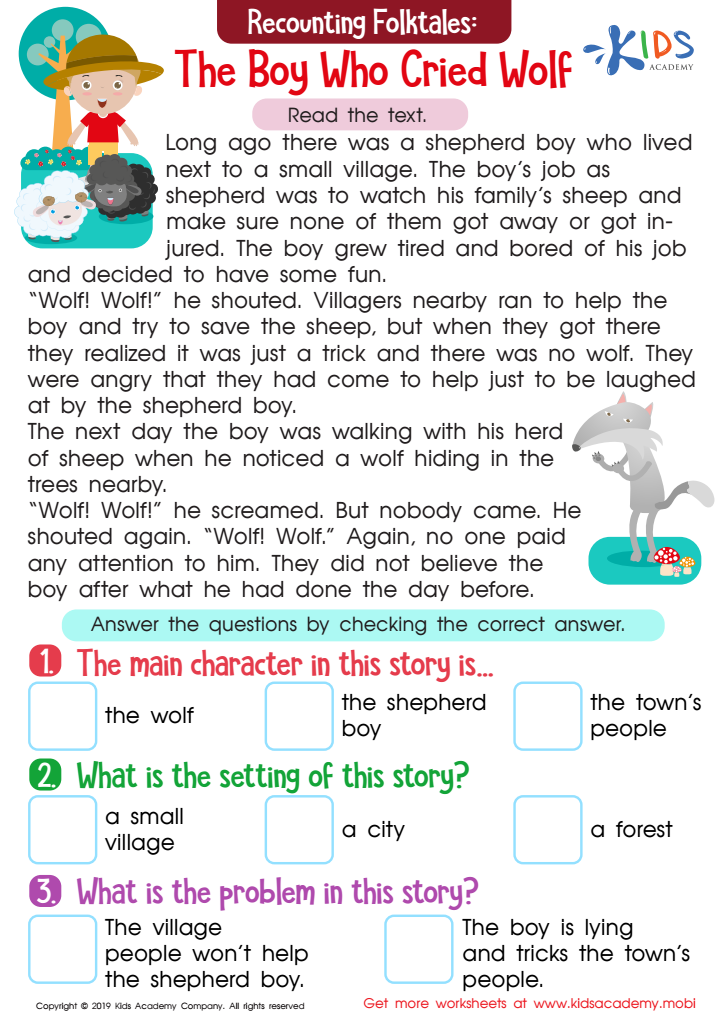
The Boy Who Cried Wolf Part 1 Worksheet


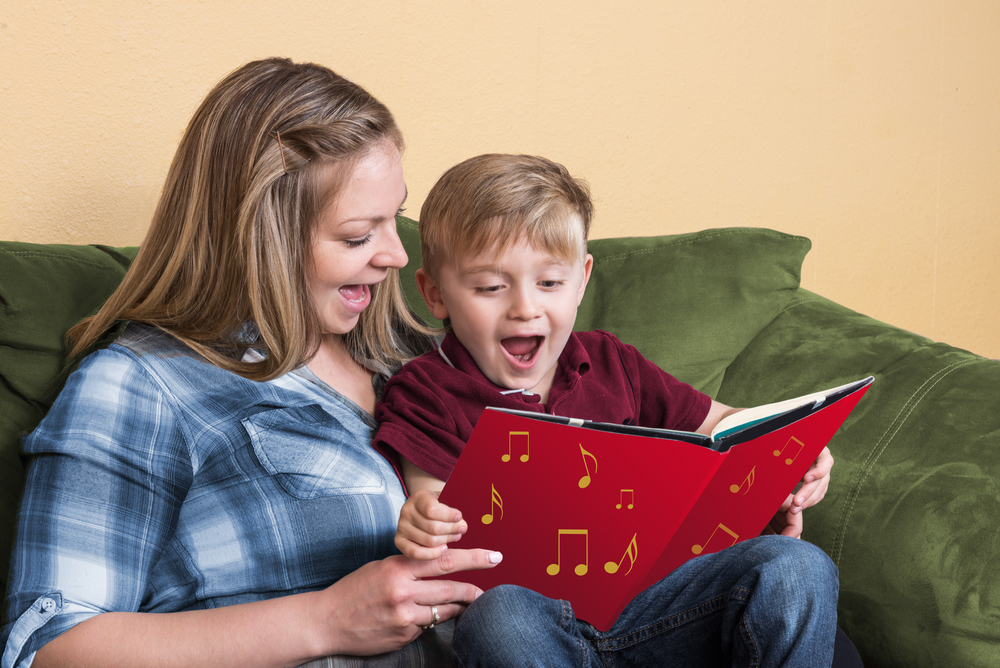




Moral understanding within reading comprehension is crucial for both parents and teachers, as it shapes a child's ability to navigate social interactions and ethical dilemmas. When children engage with texts that present moral conflicts or character choices, they develop critical thinking skills allowing them to analyze situations and understand diverse perspectives. This not only enriches their cognitive development but also fosters empathy and compassion, skills essential for functioning effectively in society.
Reading comprehension that incorporates moral themes encourages children to reflect on their own values and beliefs. This reflective practice helps them make informed choices and reason through complex situations in their everyday lives. As parents and teachers guide discussions around these narratives, they promote open dialogue about right and wrong, helping children to articulate their thoughts and feelings.
Moreover, instilling moral reasoning through reading prepares children to face real-world challenges, as they learn to consider the implications of their actions. Ultimately, emphasizing moral understanding in reading comprehension cultivates well-rounded individuals who are not only academically proficient but also socially responsible, making it a vital educational focus for both home and school environments.








