Categorizing animals Science Worksheets
3 filtered results
-
From - To
Welcome to our comprehensive collection of Categorizing Animals Science Worksheets! Designed for early learners, these engaging resources help children explore the fascinating world of animals and enhance their scientific reasoning skills. With diverse activities, students will classify animals based on various attributes, such as habitat, diet, and physical characteristics. Each worksheet fosters critical thinking and creativity, ensuring a fun learning experience. Perfect for classroom use or at-home learning, our worksheets encourage collaboration and ignite curiosity about the natural world. Dive in today and empower your students to become young scientists by mastering the art of categorization!
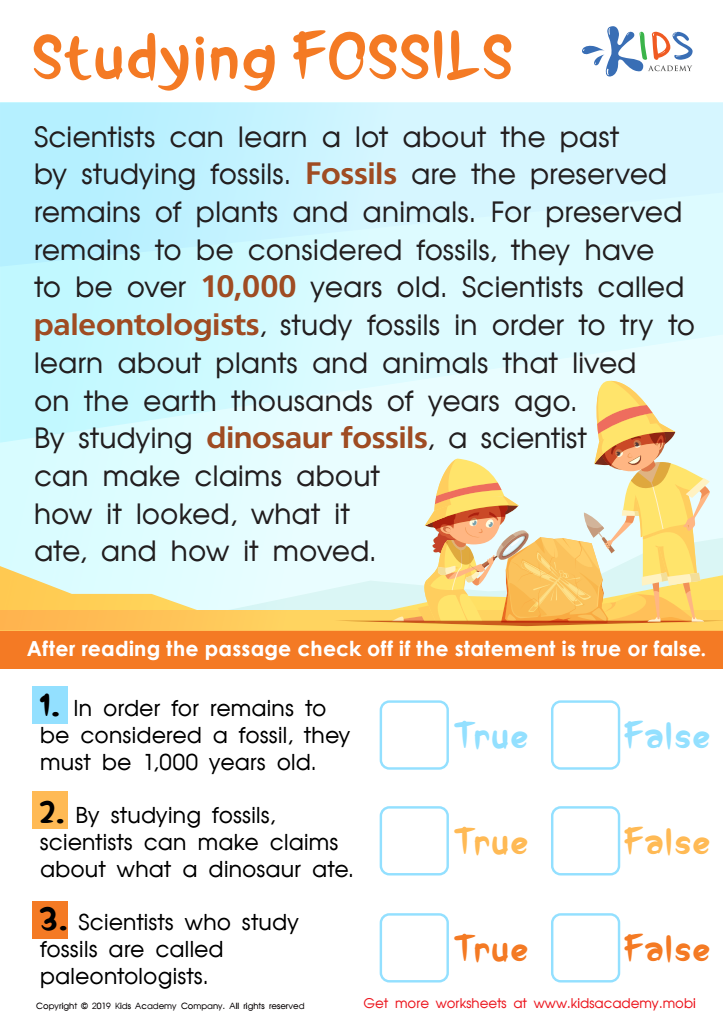
Studying Fossils Worksheet
 Assign to My Students
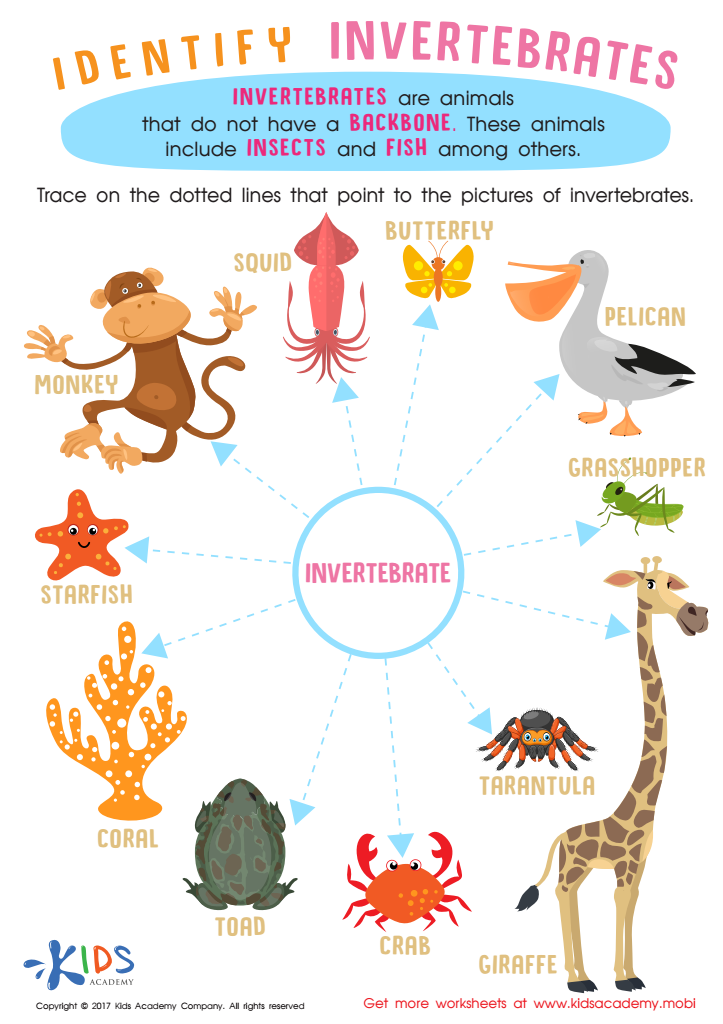
Invertebrates Worksheet for Grade 3
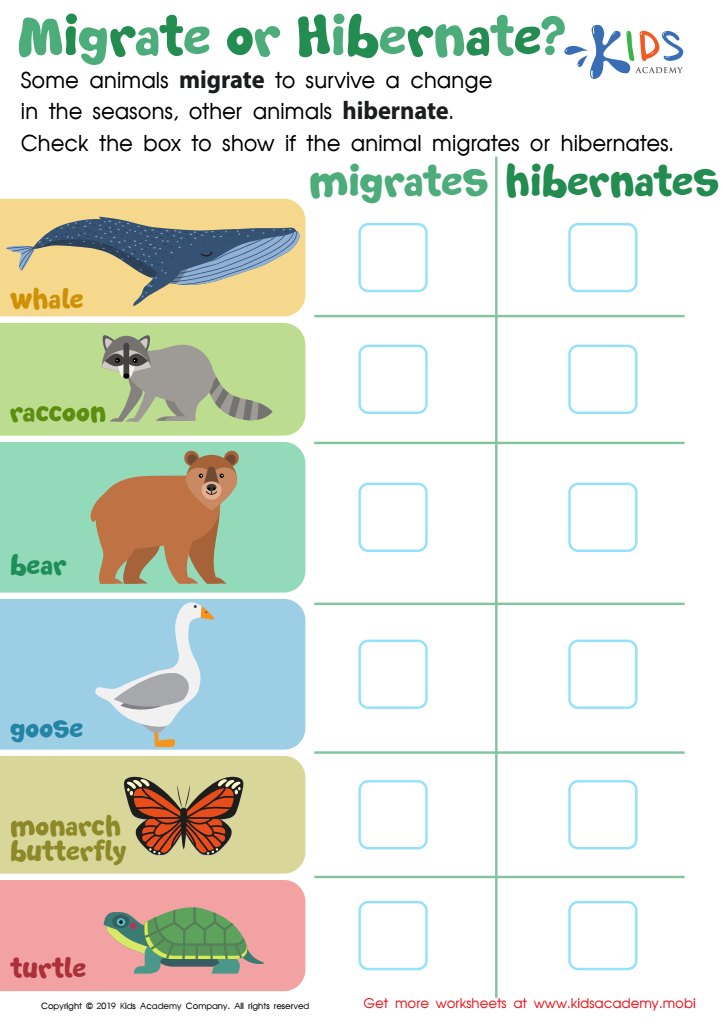
Migrate or Hibernate? Worksheet




.jpg)

Categorizing animals is a fundamental aspect of science that holds great importance for both parents and teachers. Understanding animal classification helps children grasp the immense diversity of life on Earth, fostering a sense of curiosity and appreciation for nature. This foundational knowledge encourages critical thinking and inquiry, skills essential for academic success and real-world problem-solving.
Through categorizing animals into groups such as mammals, birds, reptiles, amphibians, and fish, children can learn about the similarities and differences among species. This enhances their ability to make connections, recognize patterns, and understand ecosystems. Importantly, it lays the groundwork for more advanced concepts in biology and environmental science, promoting lifelong learning.
Involving parents in this process can create meaningful discussions at home, further reinforcing what children learn in school. Engaging in activities like classifying pets or visiting local zoos can strengthen the parent-child bond while boosting children's enthusiasm for science.
Overall, teaching about animal classification nurtures not only scientific literacy but also respect for living organisms and the environment. As educators and caregivers, being invested in this fundamental science area helps shape environmentally conscious and scientifically literate future generations.







