Understanding forces Science Worksheets
6 filtered results
-
From - To
Welcome to our "Understanding Forces" science worksheets! These engaging resources are designed to help young learners explore the fundamental concepts of forces in an interactive way. Perfect for early grade teachers, our worksheets promote critical thinking and hands-on learning through creative exercises related to push, pull, friction, and gravity. Each worksheet is aligned with educational standards and encourages curiosity and exploration in young minds. With colorful illustrations and simple language, students can easily grasp the essential principles of force and motion. Download our free worksheets today to inspire the next generation of scientists and make learning about forces fun and exciting!
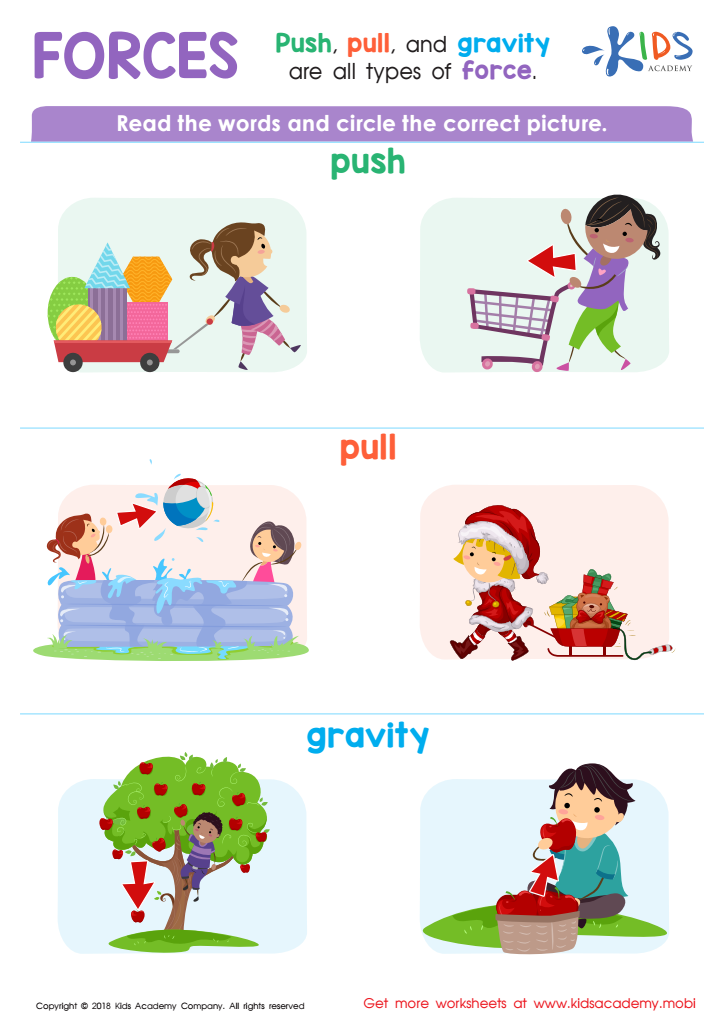
Forces Worksheet
 Assign to My Students
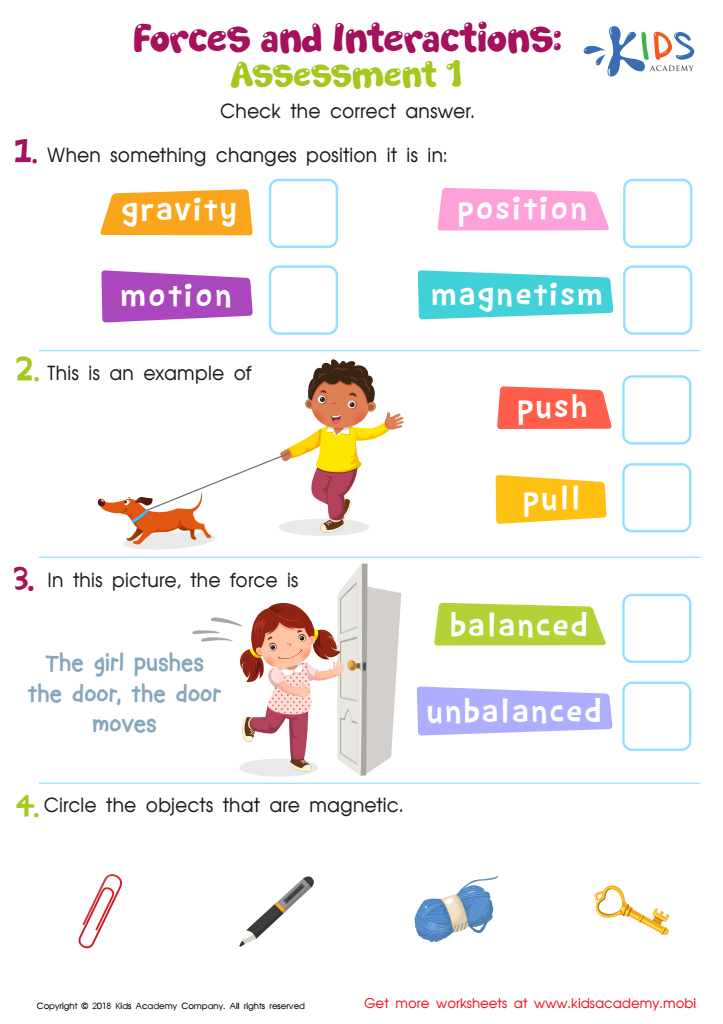
Forces and Interactions Printable
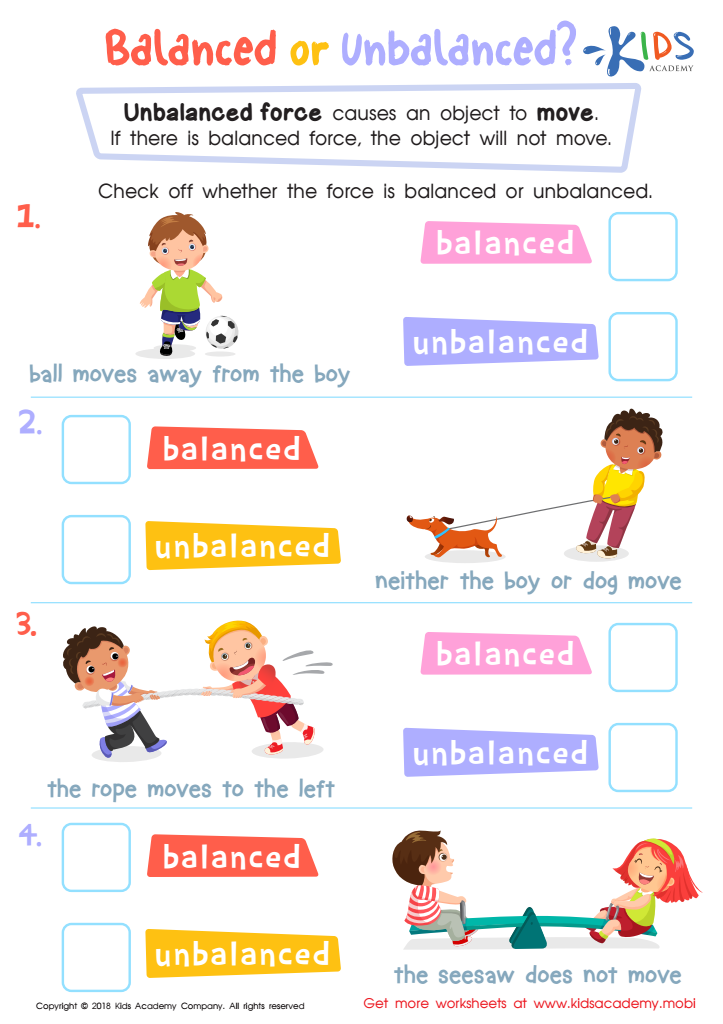
Balanced or Unbalanced Science Worksheet
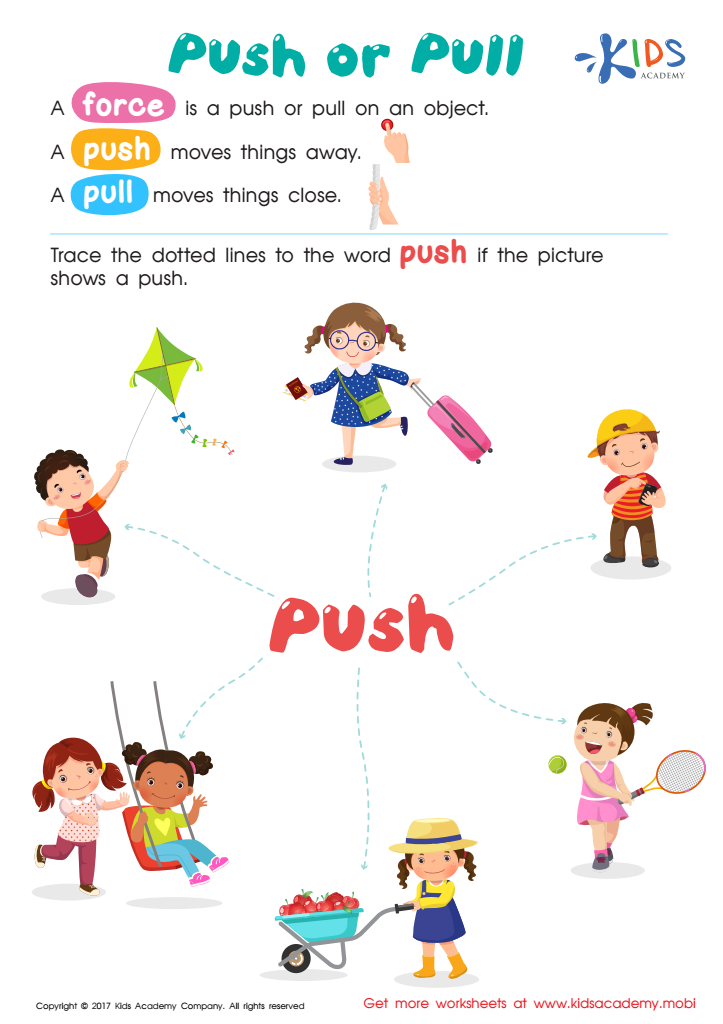
Push or Pull Worksheet
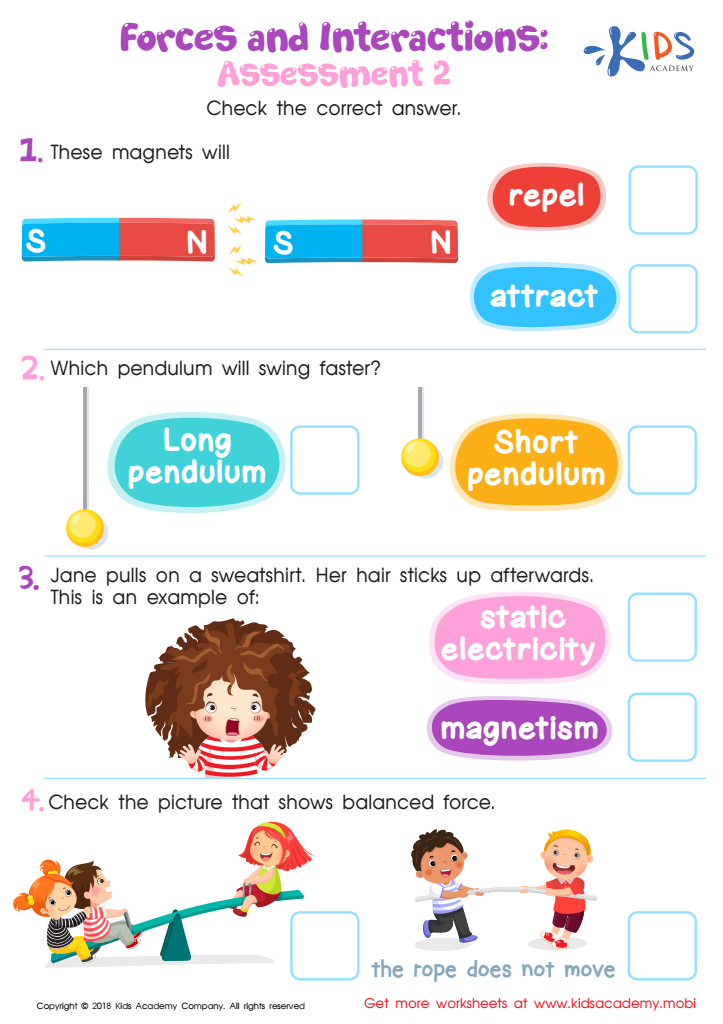
Forces and Interactions Worksheet For 3rd Grade
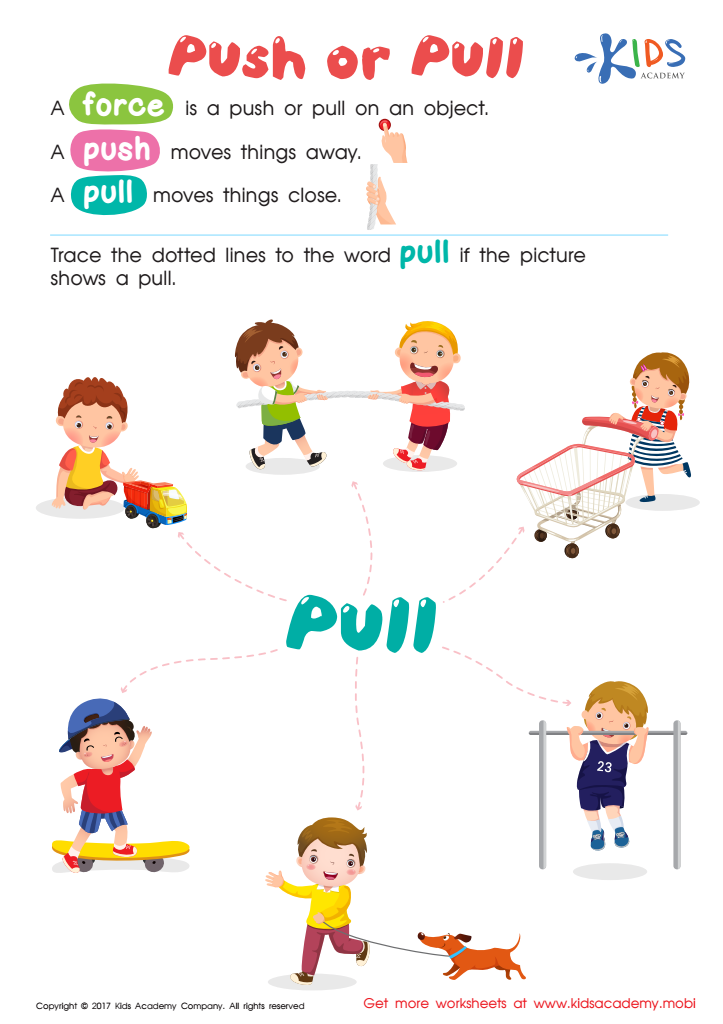
Pull or Push Worksheet








Understanding forces is fundamental to comprehending the world around us, and it is crucial for both parents and teachers to prioritize this aspect of science education. Forces are everywhere; they govern the motion of objects, whether it's launching a ball, riding a bicycle, or the gravitational pull that keeps us grounded. Teaching children about forces fosters critical thinking and problem-solving skills as they learn to analyze and predict physical interactions.
For parents, engaging with their children on the topic of forces can enhance their curiosity and appreciation for science. It serves as an opportunity to bond while exploring concepts like gravity, friction, and magnetism through simple activities, such as experimenting with toys or playing outside. Exposing children to these concepts early on can help to spark an interest in STEM fields and increase their confidence in scientific thinking.
For teachers, incorporating forces into lessons not only aligns with curriculum standards but also allows for interdisciplinary connections across subjects like math and technology. It encourages hands-on learning, which enhances student engagement and retention of knowledge. Ultimately, teaching children to understand forces equips them with the skills necessary to navigate and understand their environment, laying a foundation for lifelong learning and exploration.







