Understanding light sources Science Worksheets
6 filtered results
-
From - To
Discover our "Understanding Light Sources Science Worksheets" designed to engage young learners in the fascinating world of light. These printable resources help students identify various light sources, from natural to artificial, through fun activities and guided questions. Promote critical thinking as children explore the differences between sunlight, bulbs, and firelight. With a variety of exercises, including matching, drawing, and labeling, these worksheets are perfect for reinforcing science concepts in early education. Ideal for classroom use or home learning, our resources encourage exploration and spark curiosity about the essential role light plays in our daily lives. Illuminate your teaching with these engaging worksheets!
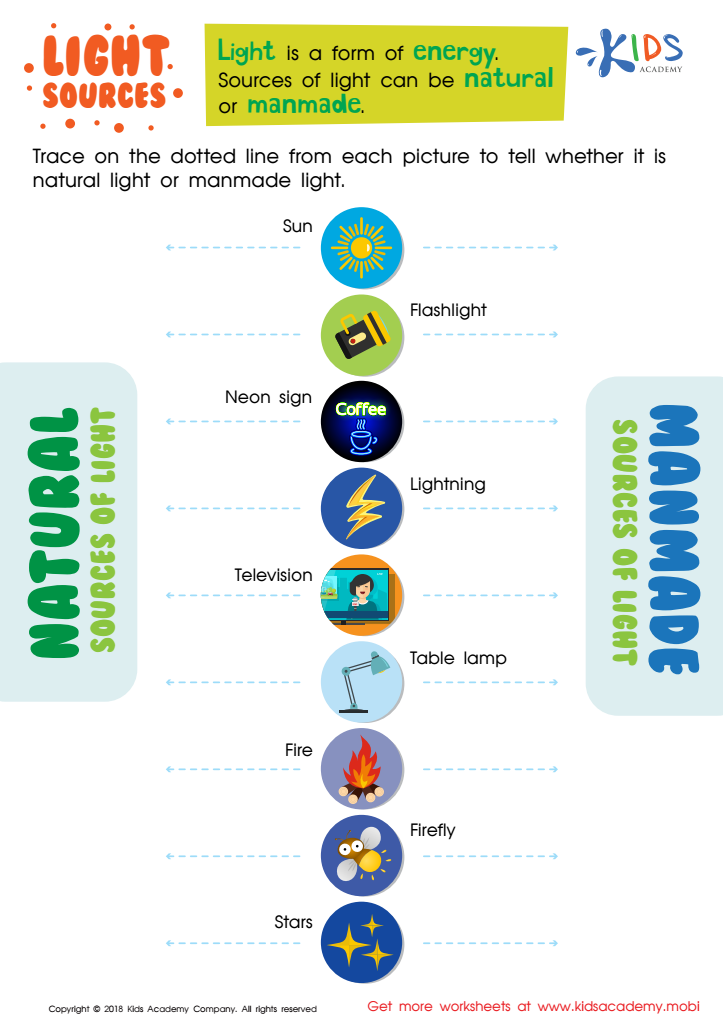
Natural and Manmade Light Sources Worksheet
 Assign to My Students
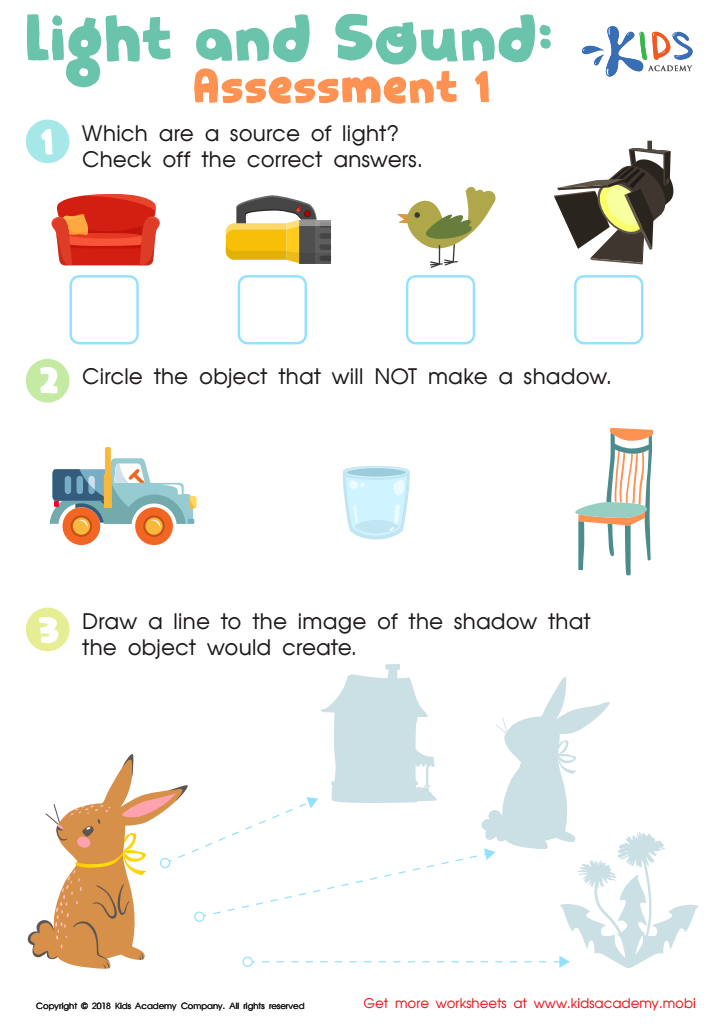
Light and Sound: Assessment 1 Worksheet
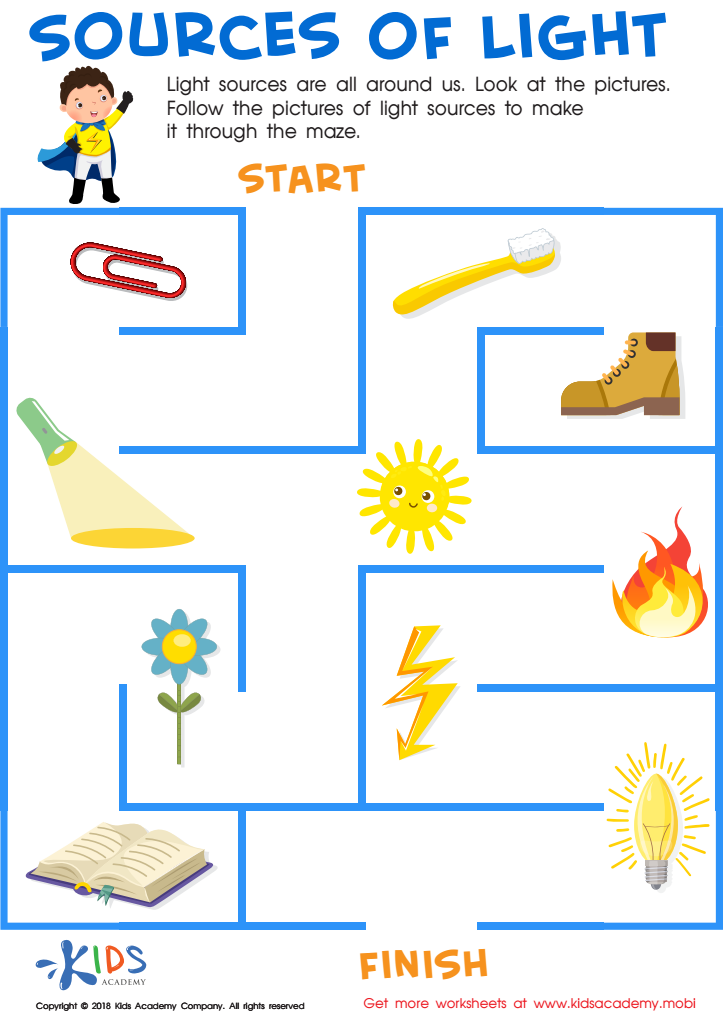
Sources of Light Worksheet
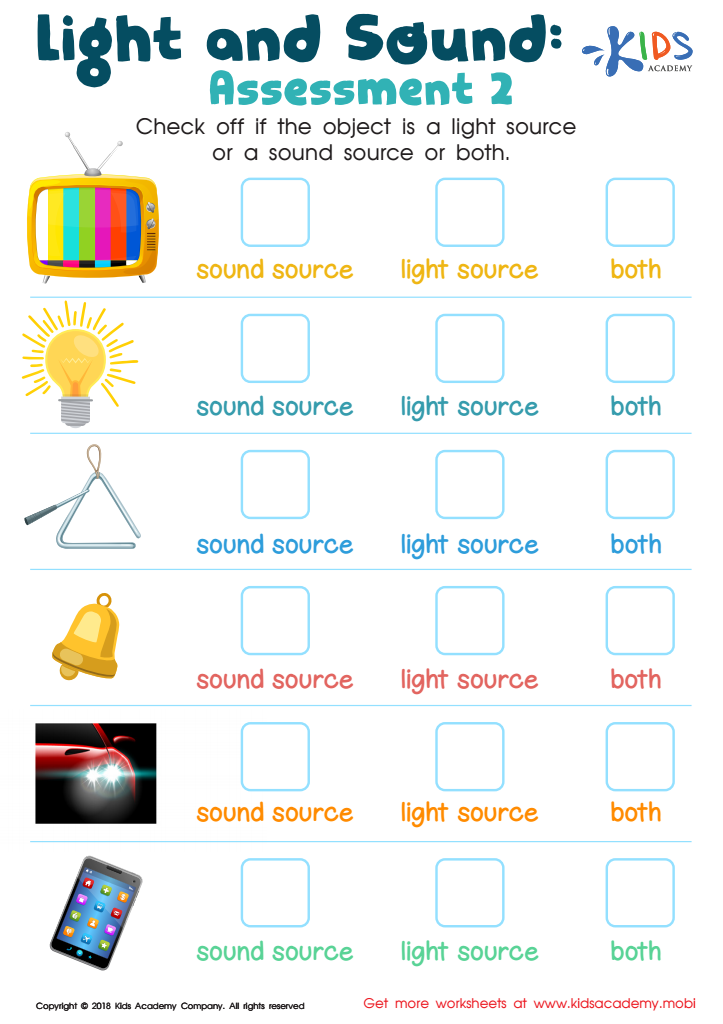
Light and Sound: Assessment 2 Worksheet
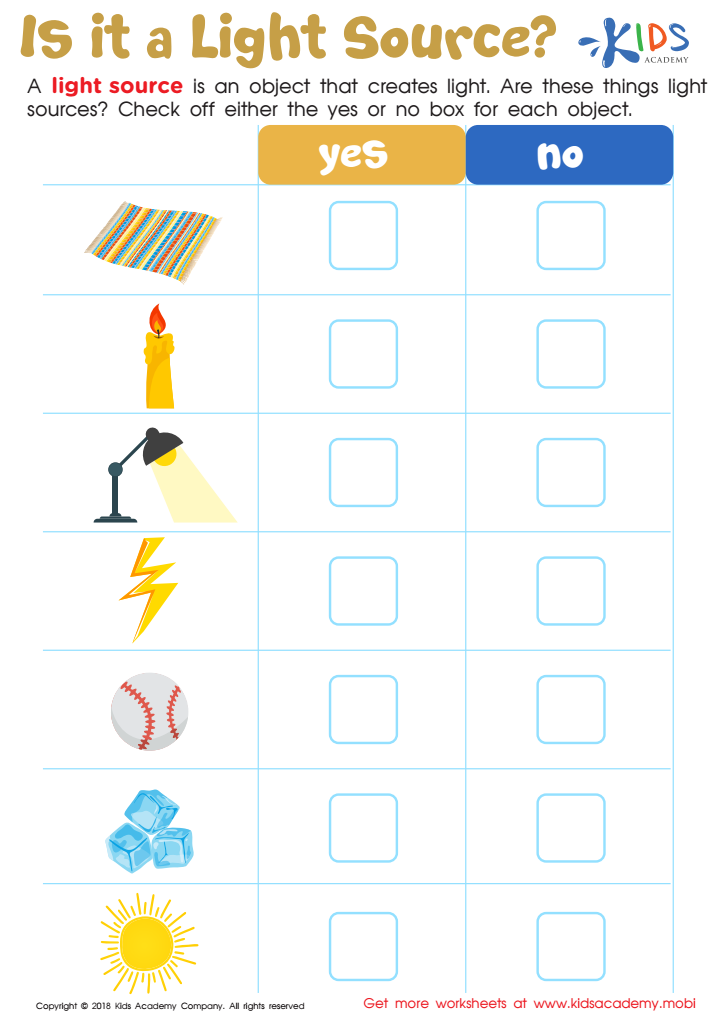
Is It a Light Source? Worksheet
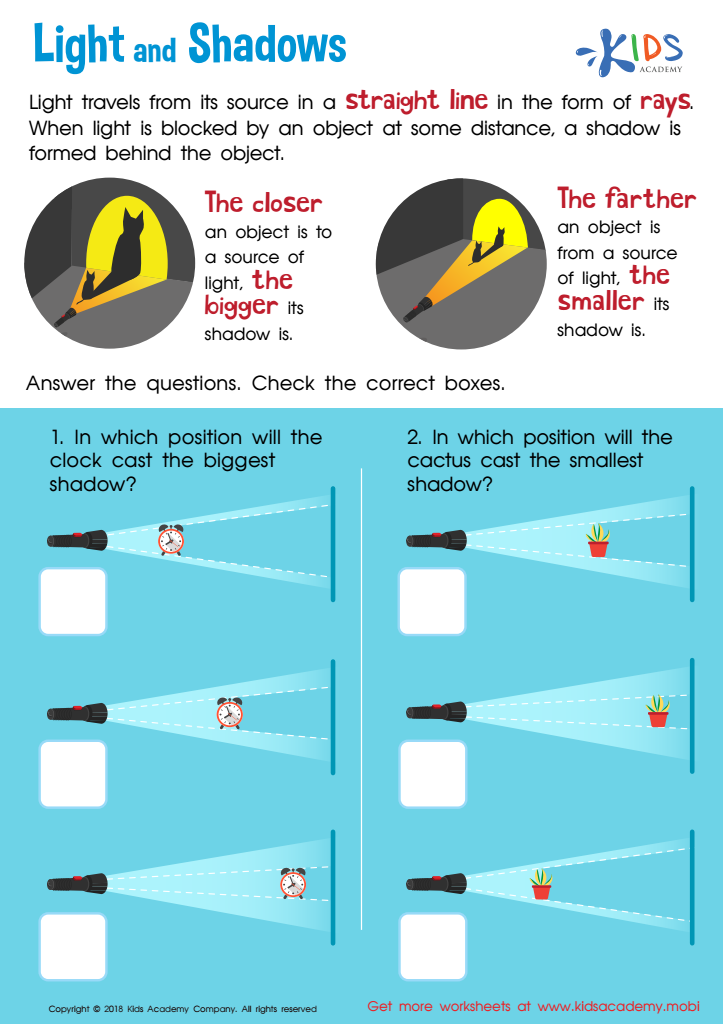
Light and Shadow Worksheet for Grade 3








Understanding light sources is crucial for parents and teachers as it encompasses essential scientific concepts foundational to children's education. Light sources, such as the sun, bulbs, and flashlights, play a significant role in daily life and various scientific phenomena. By grasping the principles of light, children enhance their critical thinking and observational skills.
Educators can use the study of light to integrate multiple subjects, sparking interest in science, art, and technology. For instance, lessons about the sun's role in ecosystems can connect science to environmental studies, while discussing shadows can inspire creativity in art projects.
Additionally, knowledge of light sources can empower children to explore their environment. Engaging students in experiments about reflection, refraction, and color helps develop essential hands-on skills and fosters curiosity about the world around them.
Finally, as technology advances, understanding light and its applications becomes increasingly relevant. Knowledge about light is vital in disciplines like photography, engineering, and medicine. When parents and teachers care about these concepts, they help build a foundation for lifelong learning and innovation, encouraging children to pursue their interests in these fields and become informed, inquisitive individuals.







