Understanding pollination Science Worksheets
3 filtered results
-
From - To
Explore the fascinating world of pollination with our "Understanding Pollination Science Worksheets"! Designed for young learners, these engaging resources introduce the crucial role of pollinators in our ecosystem. Through fun activities and informative exercises, children will learn how plants reproduce and why insects like bees and butterflies are essential for our food supply. Our worksheets promote critical thinking and encourage hands-on exploration of nature. Perfect for classroom use or at home, these printables aim to inspire curiosity about wildlife and the importance of biodiversity. Unlock the secrets of pollination today and nurture a lifelong love of science in your child!
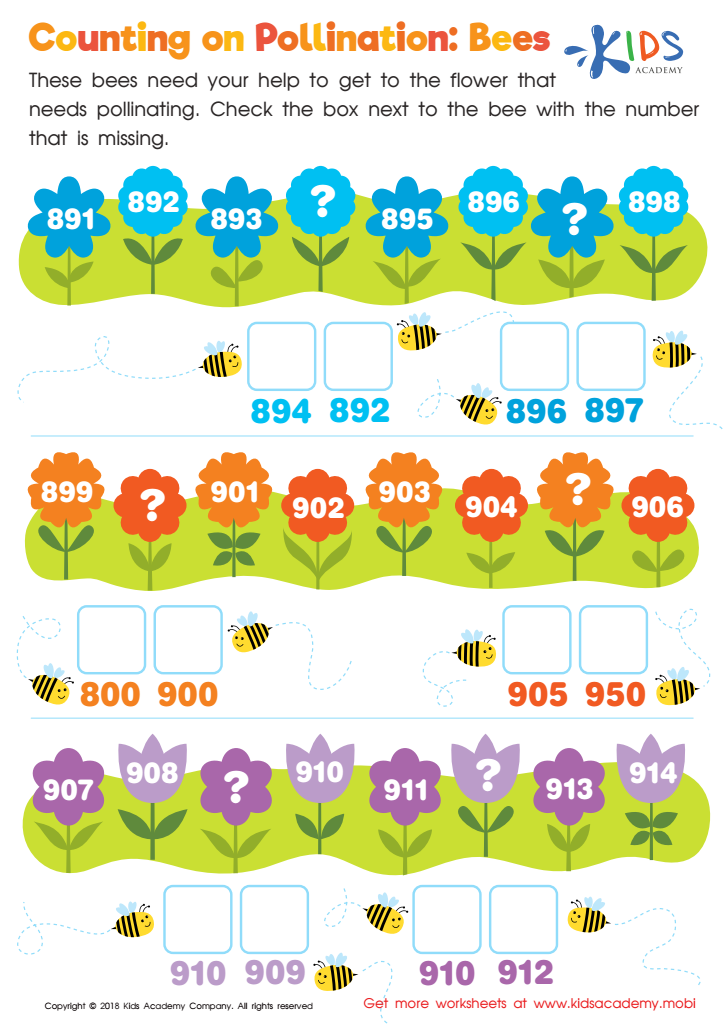
Counting on Pollination: Bees Worksheet
 Assign to My Students
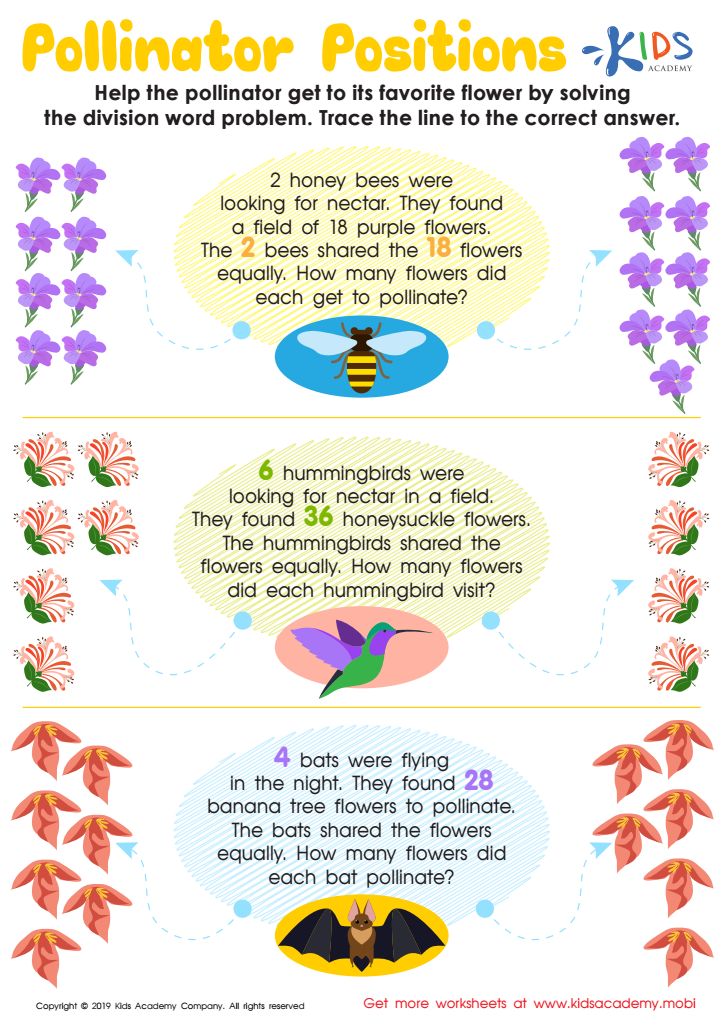
Pollinator Positions Worksheet
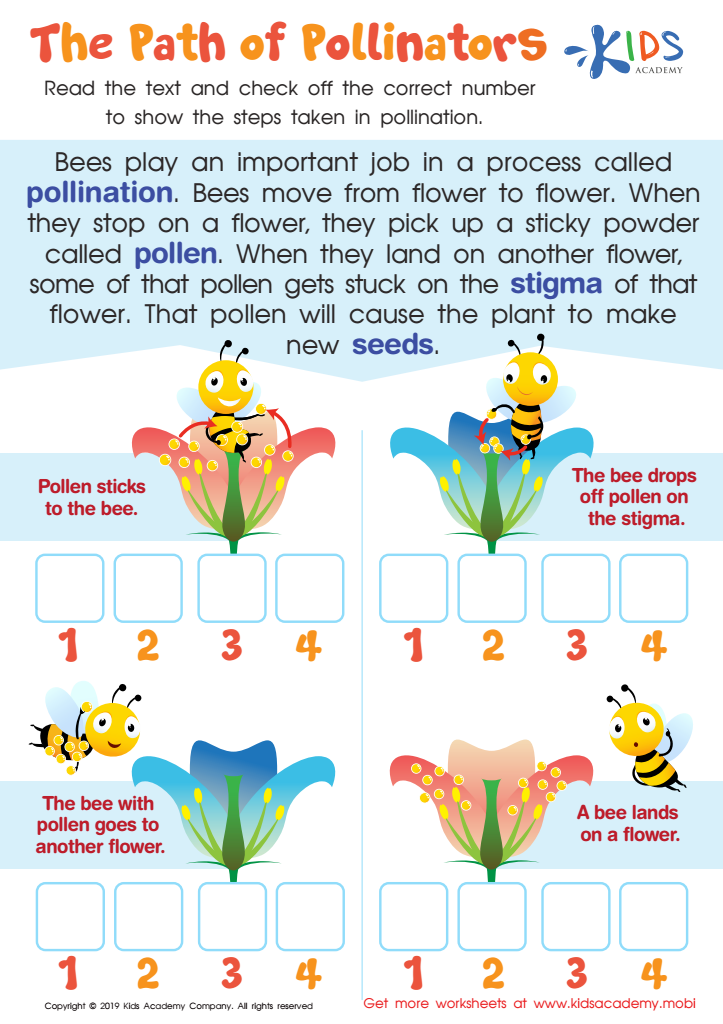
The Path of Pollinators Worksheet







Understanding pollination science is crucial for both parents and teachers because it directly impacts our ecosystem, food supply, and environmental education. Pollination is a vital process that enables plants to reproduce, ensuring the production of fruits, vegetables, and various crops essential for human survival. Approximately one-third of the food we eat relies on animal pollinators, particularly bees, butterflies, and birds.
By comprehensively grasping pollination science, parents can foster an appreciation of nature and its interconnected systems in their children. This knowledge encourages sustainable practices at home and helps instill a sense of responsibility towards protecting pollinators, which are facing threats from habitat loss, pesticides, and climate change.
Teachers can utilize pollination science as a platform to promote critical thinking and inquiry-based learning. It can serve as a gateway for students to explore broader topics such as biodiversity, ecological balance, and conservation efforts. By integrating such knowledge into the curriculum, educators empower students to become informed stewards of the environment.
Ultimately, understanding pollination science nurtures a generation that values and actively protects the delicate balance of nature, ensuring a healthier planet for all. It’s not just about science; it’s about fostering informed citizens.







