Multiplication practice Physical Science Worksheets
3 filtered results
-
From - To
Discover our engaging "Multiplication Practice Physical Science Worksheets" designed to enhance math skills while exploring key physical science concepts. Perfect for young learners, these worksheets integrate interactive multiplication exercises within real-world scientific contexts. Students will strengthen their multiplication mastery and apply it to topics like force, energy, and motion. These educational materials simplify complex ideas, making science accessible and fun. Perfect for classroom use or home study, our worksheets serve as a comprehensive tool to support diverse learning styles and reinforce foundational math and science knowledge in an enjoyable and meaningful way. Download now and inspire scientific curiosity while boosting math proficiency!
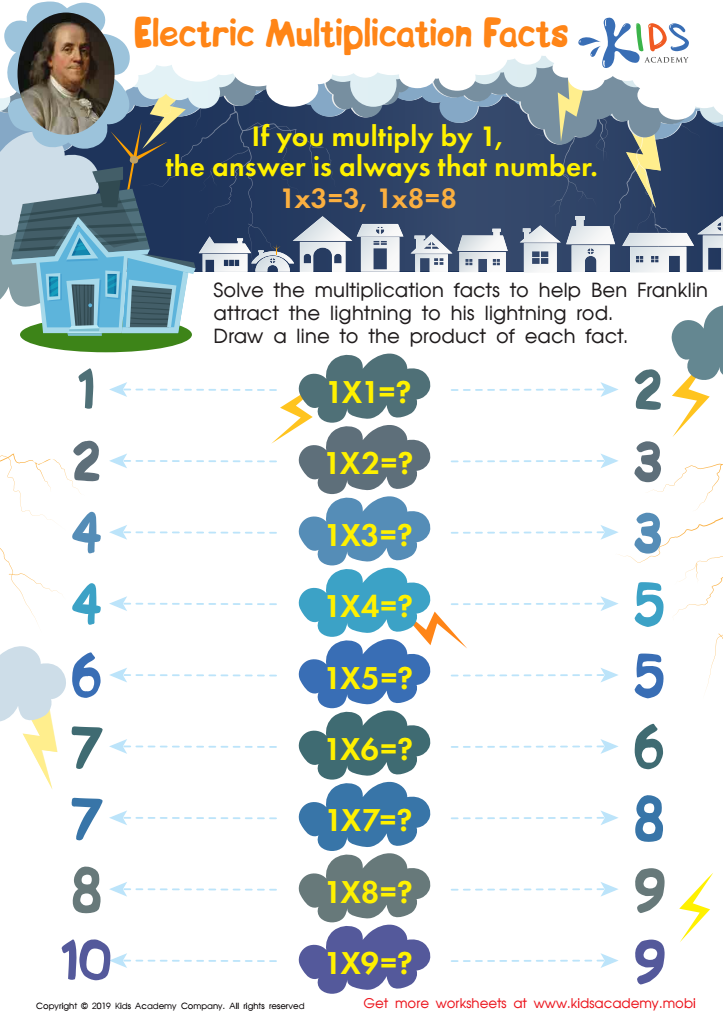
Electric Multiplication Facts Worksheet
 Assign to My Students
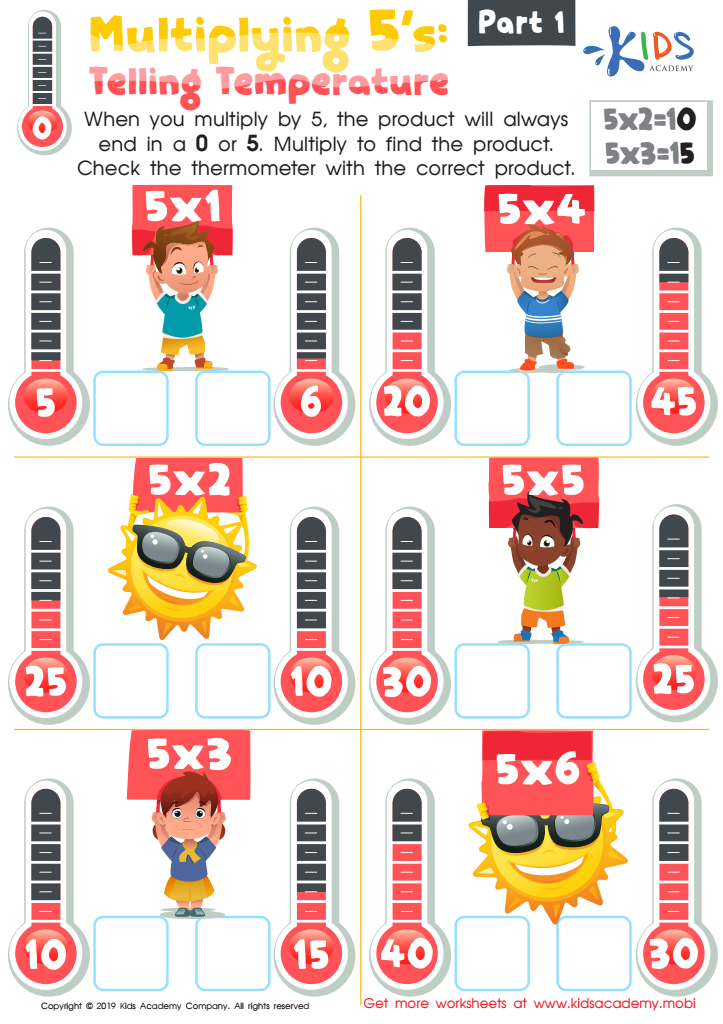
Multiplying 5’s: Telling Temperature Worksheet
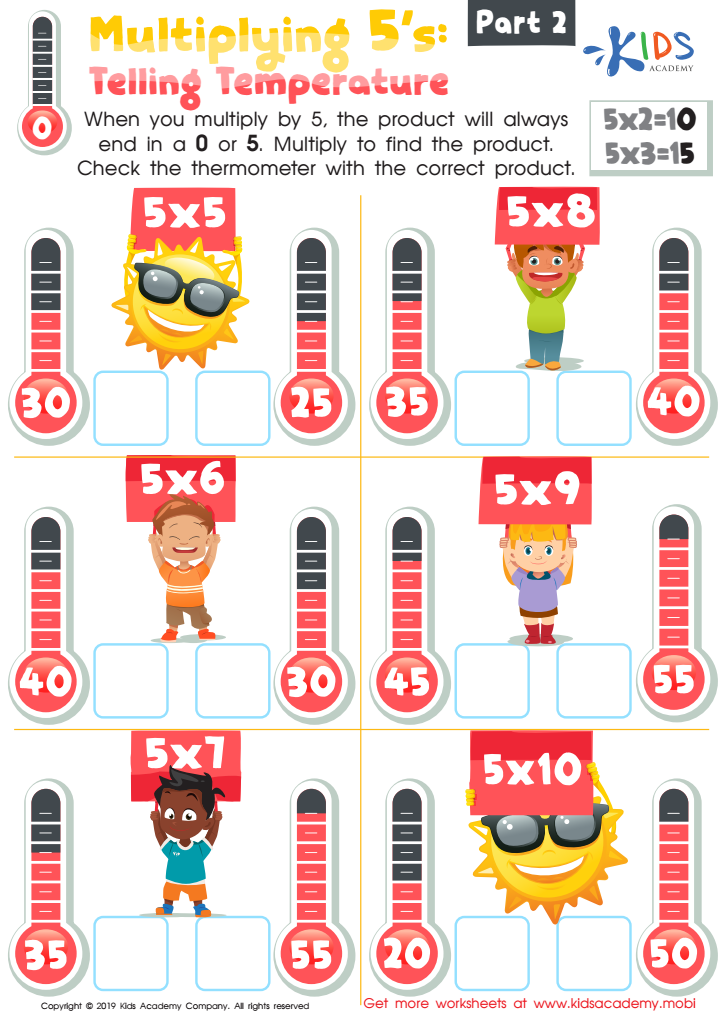
Multiplying 5’s: Telling Temperature Part 2 Worksheet




.jpg)

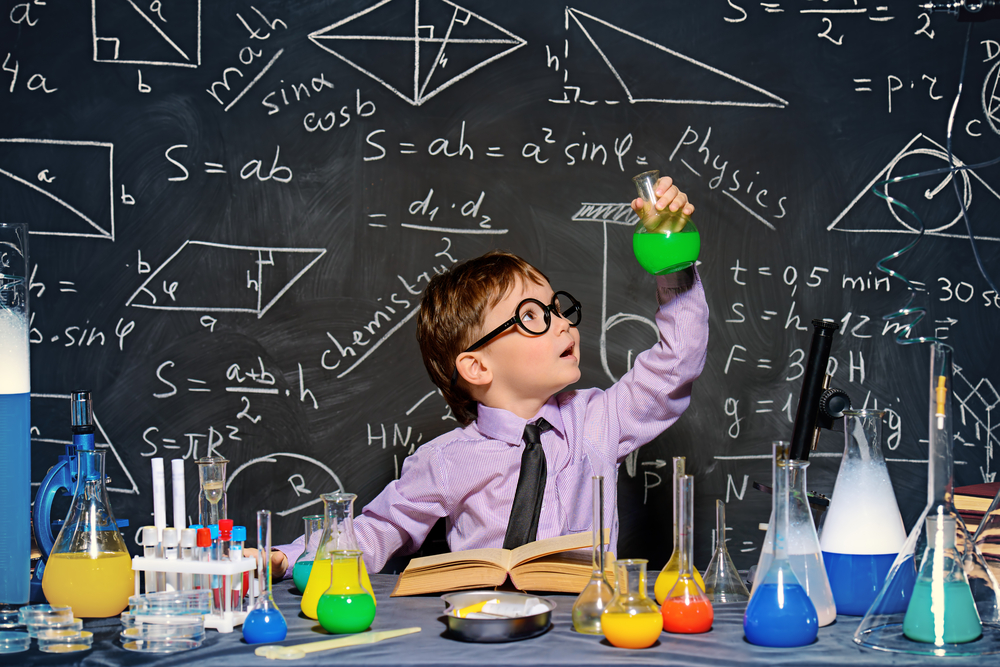
Multiplication practice and early exposure to physical science are both critical components in a child's educational journey, and parents and teachers should prioritize them for several compelling reasons.
Firstly, mastering multiplication is foundational for advanced math concepts. It fosters numerical literacy, aiding children in everything from basic arithmetic to algebra. A solid grasp of multiplication allows students to tackle more complex problems with confidence and efficiency, which is crucial for their academic success.
Physical science introduces students to the natural world, instilling curiosity and critical thinking skills early on. By understanding fundamental concepts such as gravity, magnetism, and simple machines, children not only learn about how the world operates but develop problem-solving abilities.
Interrelated to both subjects is the practice of disciplined thinking and systematic problem-solving. Multiplication requires memorization and pattern recognition, skills that translate well to scientific inquiry and experimentation. When children engage in hands-on science activities, they often apply their mathematical knowledge, reinforcing both subjects.
Parental and teacher involvement is key. Through integrative approaches like using multiplication in science experiments (e.g., calculating force or measuring volume), learning becomes relevant and applicable. Encouragement and resources from adults shape a nurturing environment where children view learning as continuous and interconnected, laying a robust foundation for future academic pursuits and everyday life skills.







