Observational skills Space Worksheets
3 filtered results
-
From - To
Unlock the wonders of the universe with our "Observational Skills Space Worksheets." These engaging resources are perfect for early grade students, designed to enhance their natural curiosity and sharpen observational abilities. Each worksheet invites kids on a stellar educational journey, where they'll strengthen essential skills like attention to detail and critical thinking. From identifying celestial objects to drawing constellations, these activities provide a hands-on approach to learning about outer space. Parents and educators can trust our printable worksheets to foster a love for science, all while developing key observational competencies in young learners. Explore, observe, and learn today!
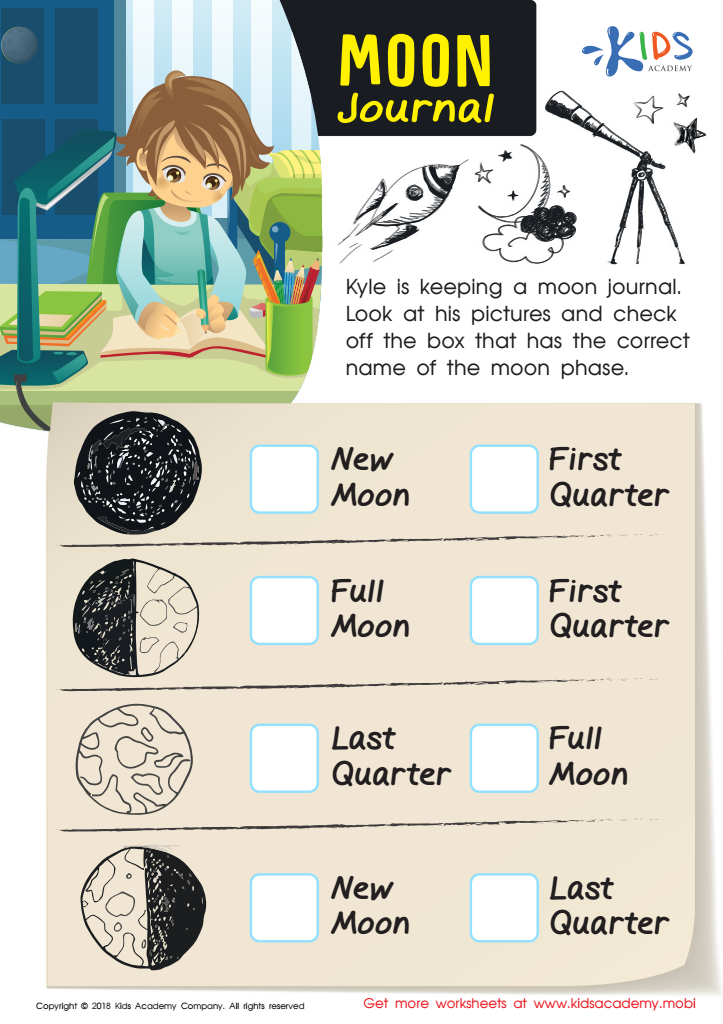
Moon Journal Worksheet
 Assign to My Students
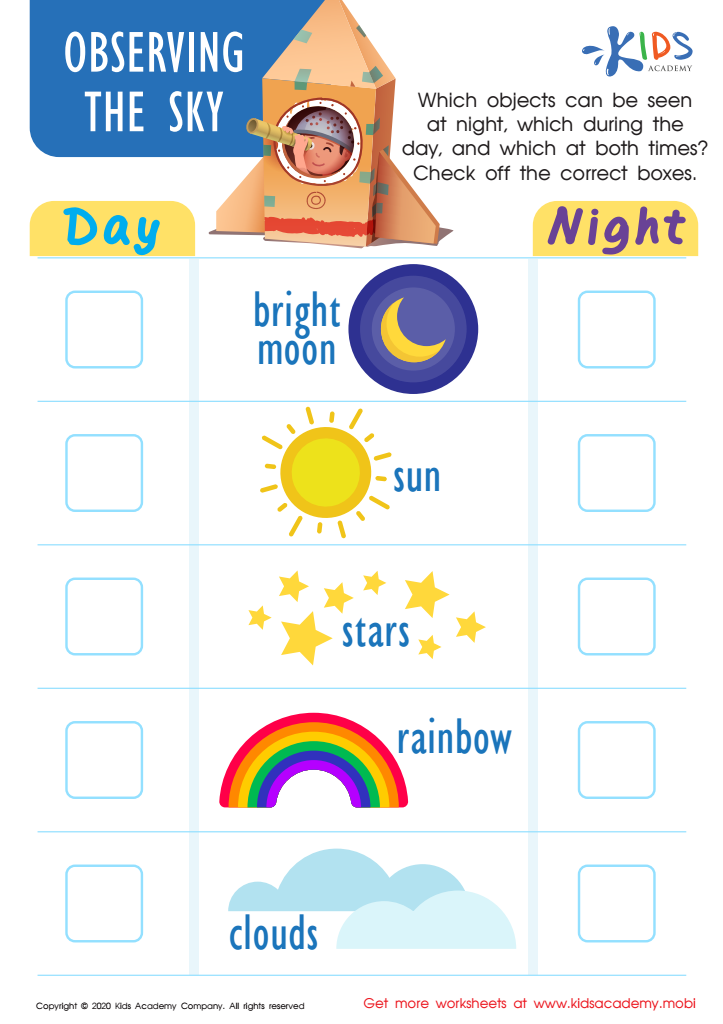
Observing the Sky Worksheet
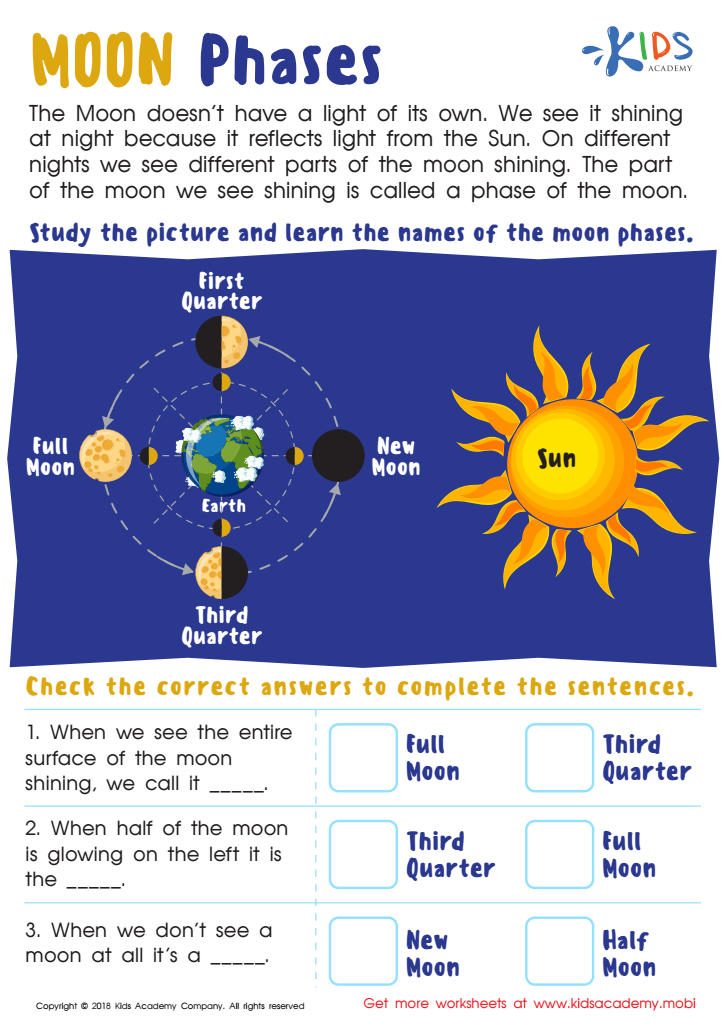
Moon Phases Worksheet








Observational skills in early childhood form the bedrock of critical thinking and learning. Parents and teachers should prioritize the development of these skills to foster curiosity, enhance cognitive abilities, and build a lifelong love for learning. Observational skills involve not just seeing but noticing and interpreting details, patterns, and changes in the surrounding environment. For young learners, this could mean recognizing letters, shapes, or social cues among peers.
Incorporating "Observational Skills Space"—dedicated areas or times for activities designed to sharpen these skills—can yield substantial long-term benefits. Activities like nature walks, simple science experiments, or "spot the difference" games can enhance children's attention to detail and analytical thinking. Mindfulness practices can also be part of this space, encouraging children to be present and aware of their surroundings.
Overall, emphasizing observational skills helps children develop better concentration, which is crucial for academic success. It also encourages empathy as they become more attuned to the emotions and reactions of others. Lastly, these skills empower children to be more independent thinkers and problem-solvers, attributes necessary for navigating the complexities of the world. In essence, cultivating keen observational skills supports a holistic approach to a child's development—cognitively, socially, and emotionally.







