
Understanding constellations Space Worksheets
3 filtered results
Difficulty Level
Grade
Age
-
From - To
Subject
Activity
Standards
Discover the wonders of the night sky with our "Understanding Constellations Space Worksheets." Perfect for kids and young learners, these engaging worksheets help students explore various constellations, understand their origins, and recognize patterns in the stars. Through fun activities, children will develop critical thinking and observation skills while gaining a greater appreciation for astronomy. Ideal for classroom use or at-home learning, our worksheets are designed to support science curriculum and inspire budding astronomers. Dive into the magical world of constellations and spark a lifelong interest in space and the stars above.
Favorites
With answer key
Interactive
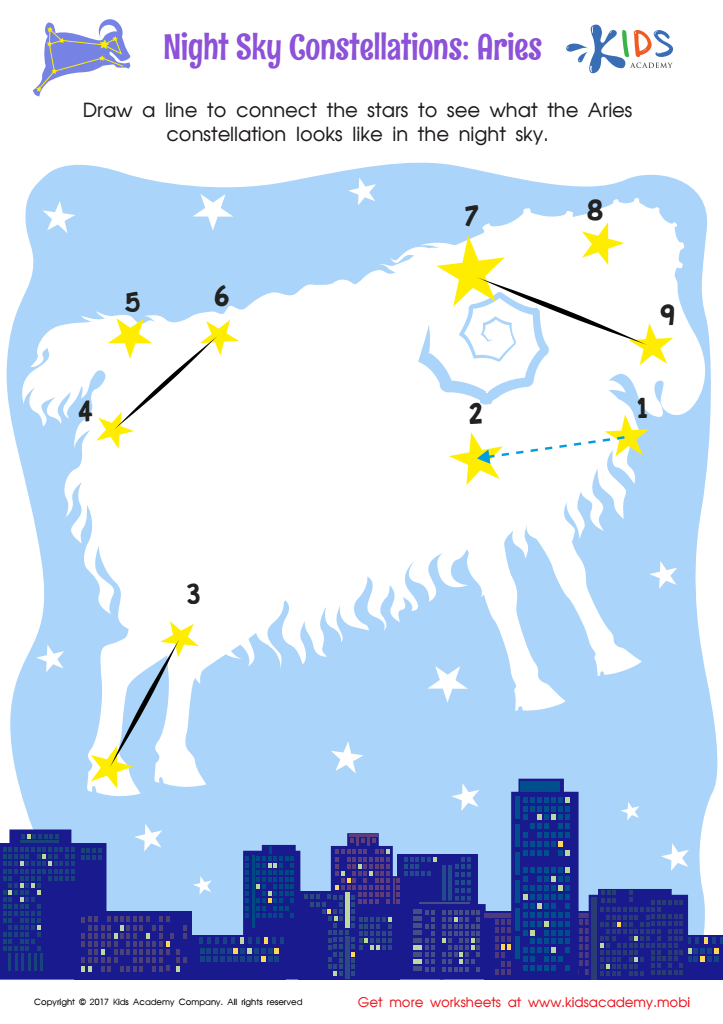
Night Sky Constellations: Aries Worksheet
Let your child explore the night sky with this fun, easy-to-complete constellation worksheet: Aries! Have them connect the stars to uncover the popular constellation. Talk about constellations and their locations to enrich their learning!
 Assign to My Students
Night Sky Constellations: Aries Worksheet
Worksheet
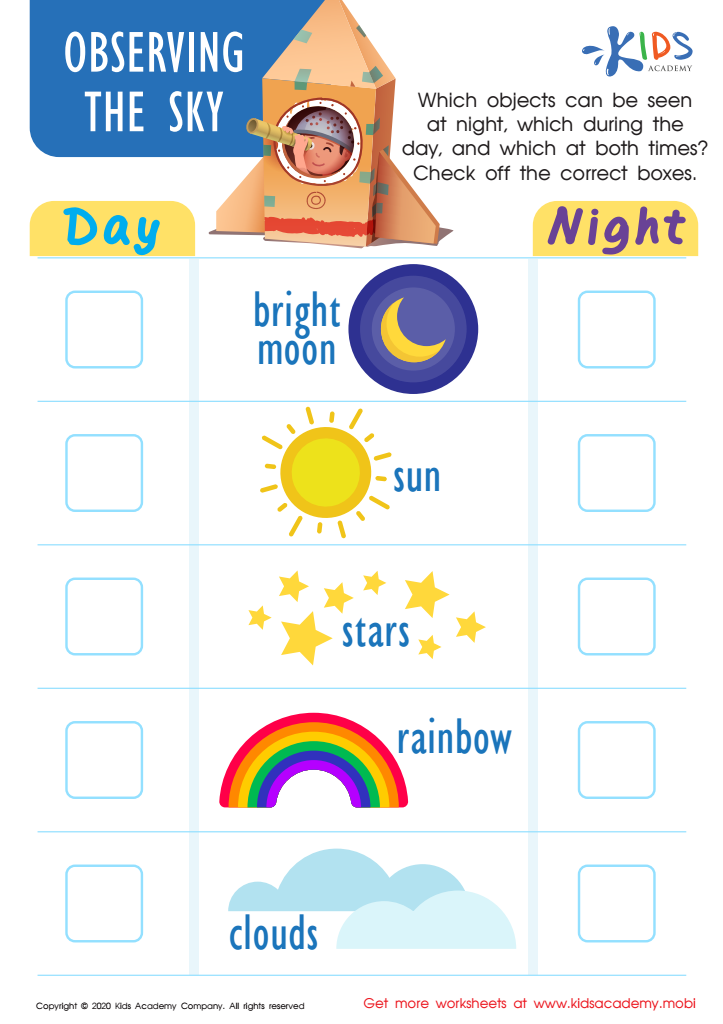
Observing the Sky Worksheet
Look up to the sky and observe day and night objects! See a rainbow or some clouds by day and stars and the moon at night. Help your little learner review this science concept with Kids Academy's fun and colorful worksheet. Have them sort and check off the objects seen by day or night, going down the column in the center.
Observing the Sky Worksheet
Worksheet
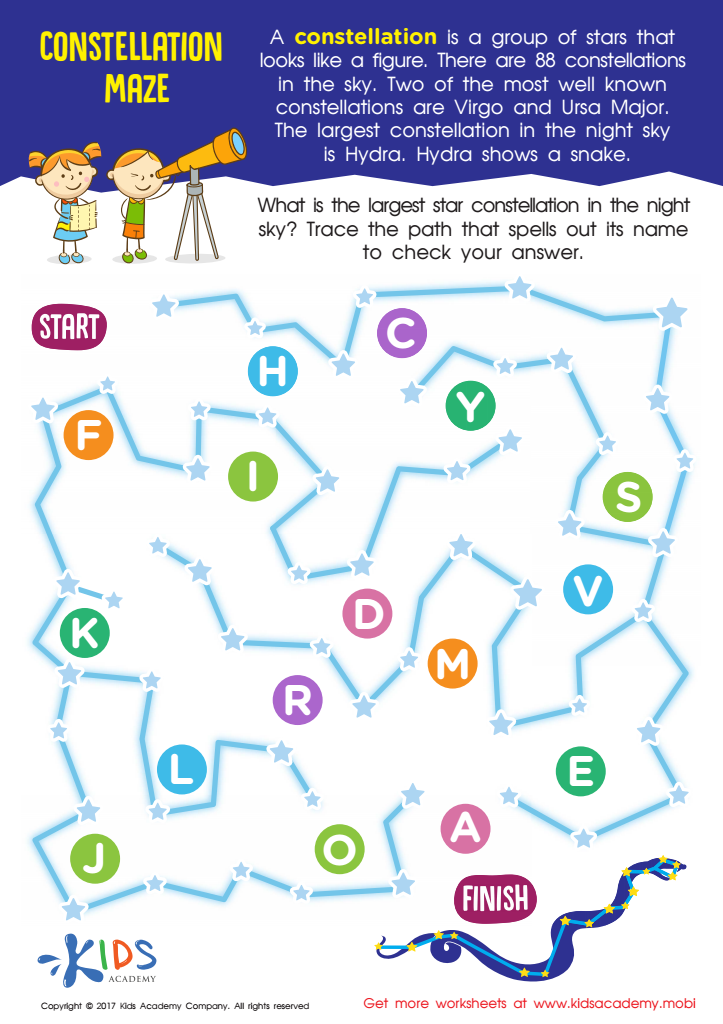
Constellations Worksheet
Kids love exploring constellations! Get your child started with our free printable worksheet. Then head out on a clear spring or summer night to find the largest constellation, Hydra!
Constellations Worksheet
Worksheet
Join Kids Academy for Free
Who is primarily going to use this learning content?







Understanding constellations and space offers numerous benefits for both parents and teachers, as it fosters curiosity, scientific literacy, and a connection to the natural world among children. First, studying constellations helps develop critical thinking and observational skills. By identifying and tracking star patterns, children enhance their attention to detail, spatial awareness, and problem-solving abilities. These cognitive skills are transferable across various academic disciplines, helping children excel in subjects like math, science, and reading.
Moreover, learning about constellations and space can ignite a passion for astronomy and STEM (Science, Technology, Engineering, and Mathematics) fields. This early interest can inspire lifelong learning and possibly lead to fulfilling career paths in science and technology. Encouraging an understanding of space also helps children grasp fundamental scientific concepts, such as gravity, the Earth’s rotation, and astronomical distances, grounding these abstract ideas in engaging, relatable activities.
Additionally, appreciating the night sky fosters a sense of wonder and mindfulness, nurturing children’s emotional and psychological well-being. It cultivates an awareness of our place in the universe, promoting awe and a healthy perspective on life’s challenges.
Finally, exploring constellations provides valuable opportunities for family bonding and hands-on learning experiences outside the classroom, making education a joyful and integrated aspect of everyday life.







