Comparing sizes Grade 2 Worksheets
3 filtered results
-
From - To
Welcome to our "Comparing Sizes Grade 2 Worksheets" page! These engaging and educational materials are designed to help second graders sharpen their understanding of size, measurement, and comparison. Our worksheets feature a variety of fun activities that encourage students to compare objects by height, length, width, and volume. From visual exercises to hands-on tasks, these worksheets provide the perfect blend of learning and play, fostering critical thinking and math skills. Perfect for classroom use or home learning, our resources are easily printable and suitable for children at all skill levels. Start exploring the exciting world of size comparison today!
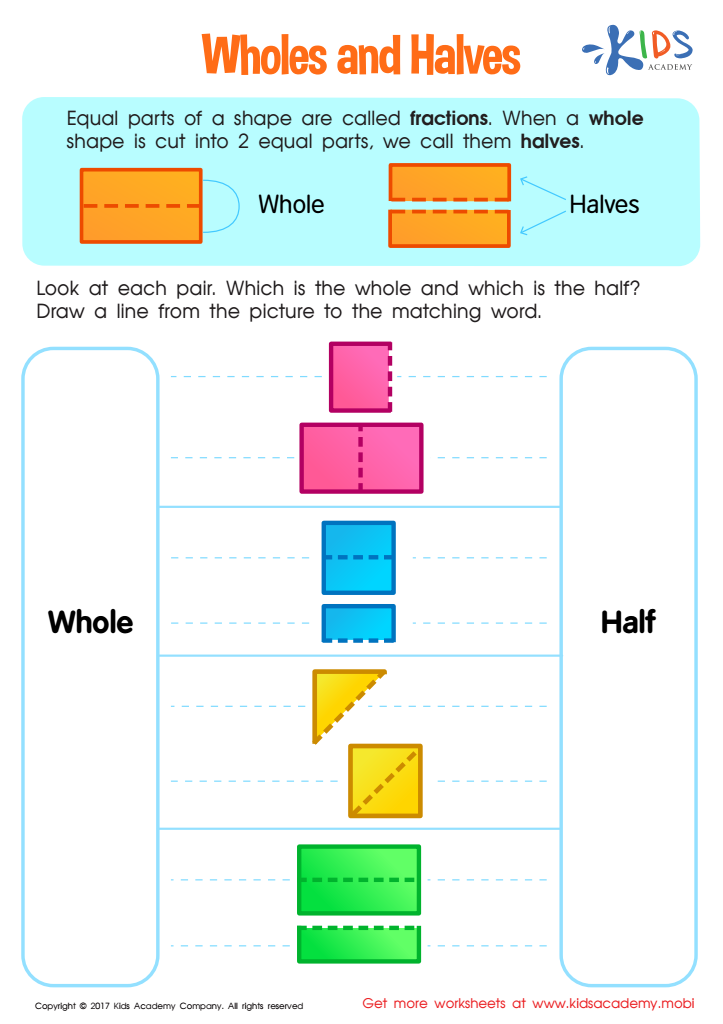
Wholes and Halves Worksheet
 Assign to My Students
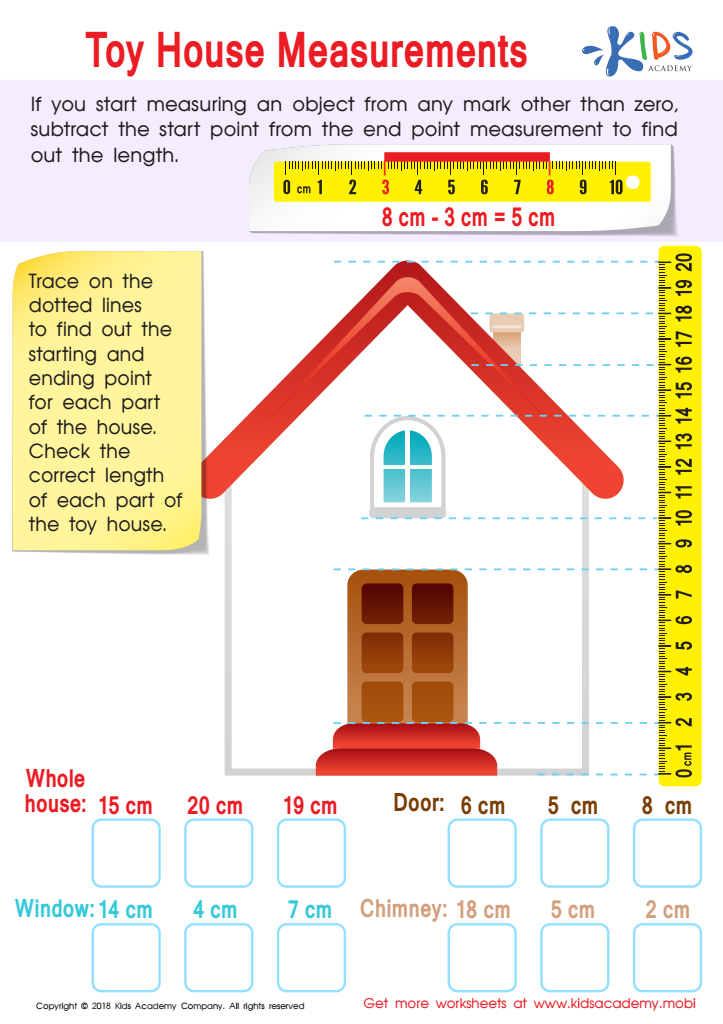
Toy House Measurements Worksheet




Comparing sizes is a fundamental skill that forms the foundation for essential mathematical concepts in Grade 2. For parents and teachers, understanding the importance of this skill is crucial for promoting children's cognitive and academic development.
First, comparing sizes helps children develop critical thinking skills. It encourages them to observe, analyze, and categorize objects in their environment, promoting observational skills and logical reasoning. This engages their curiosity and enthusiasm toward learning.
Moreover, size comparison is not just a mathematical exercise; it has real-world applications. Children encounter sizes daily, whether measuring ingredients in cooking or choosing appropriate clothing sizes. Understanding comparatives like "larger," "smaller," "longer," and “shorter” enables children to navigate these situations confidently.
Additionally, mastering size comparison supports advanced mathematical concepts like measurement, geometry, and even data handling in later grades. Early proficiency lays the groundwork for ensuring children find math accessible and enjoyable, fostering a positive attitude towards subjects or activities to follow.
Finally, engaging activities that involve size comparison can be a fun way for parents and teachers to bond with students, sparking interest in learning. Overall, caring about this skill leads to a well-rounded education, equipping children for future success.