Enhancing problem-solving skills Grade 2 Worksheets
8 filtered results
Difficulty Level
Grade
Age
-
From - To
Subject
Activity
Standards
Our "Enhancing Problem-Solving Skills Grade 2 Worksheets" are designed to cultivate critical thinking and analytical abilities in young learners. At Kids Academy, we provide engaging and interactive activities that help students navigate problems through step-by-step instructions and practice scenarios. These worksheets are curated to enhance mathematical reasoning, logical thinking, and everyday problem-solving skills. Ideal for classroom use or at-home learning, they align with educational standards and provide a fun and challenging way for second graders to improve their cognitive skills. Engage your students with well-structured exercises and promote their academic success today!
Favorites
With answer key
Interactive
How King Moves Worksheet
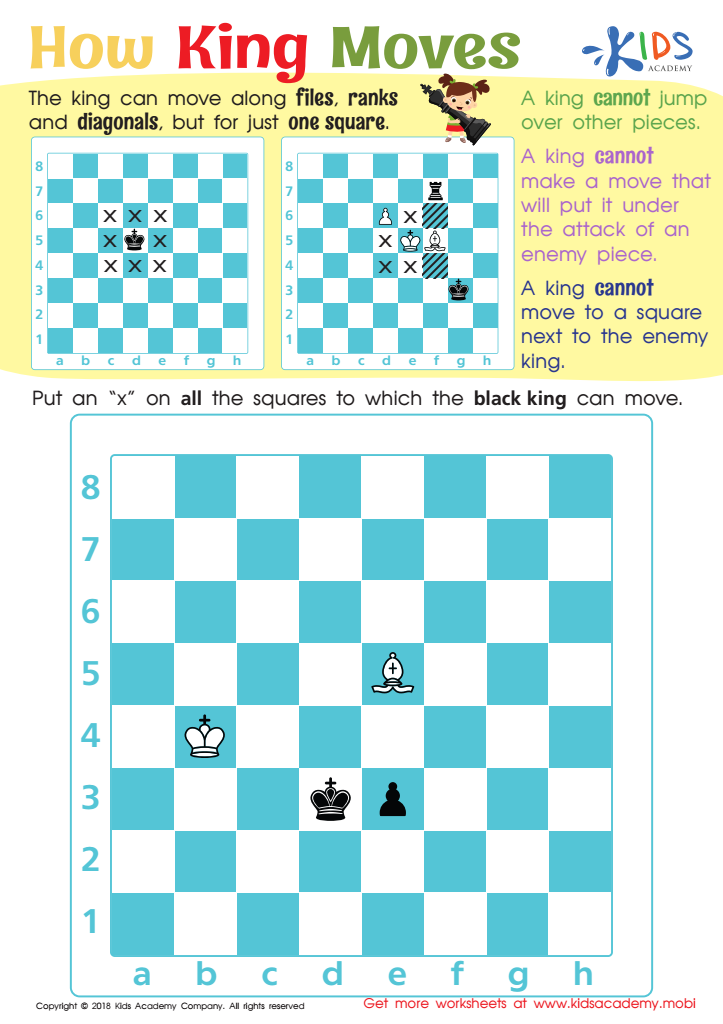
Teach your kids the fundamentals of chess with this worksheet! The goal is to checkmate the opponent's king, so it must be protected at all times. The king moves along files, ranks, and diagonals (except one square at a time), and cannot move to a square next to the enemy king. Your kids will soon master the art of checkmate!
 Assign to My Students
How King Moves Worksheet
Worksheet
Whole Shape from Fourths Worksheet
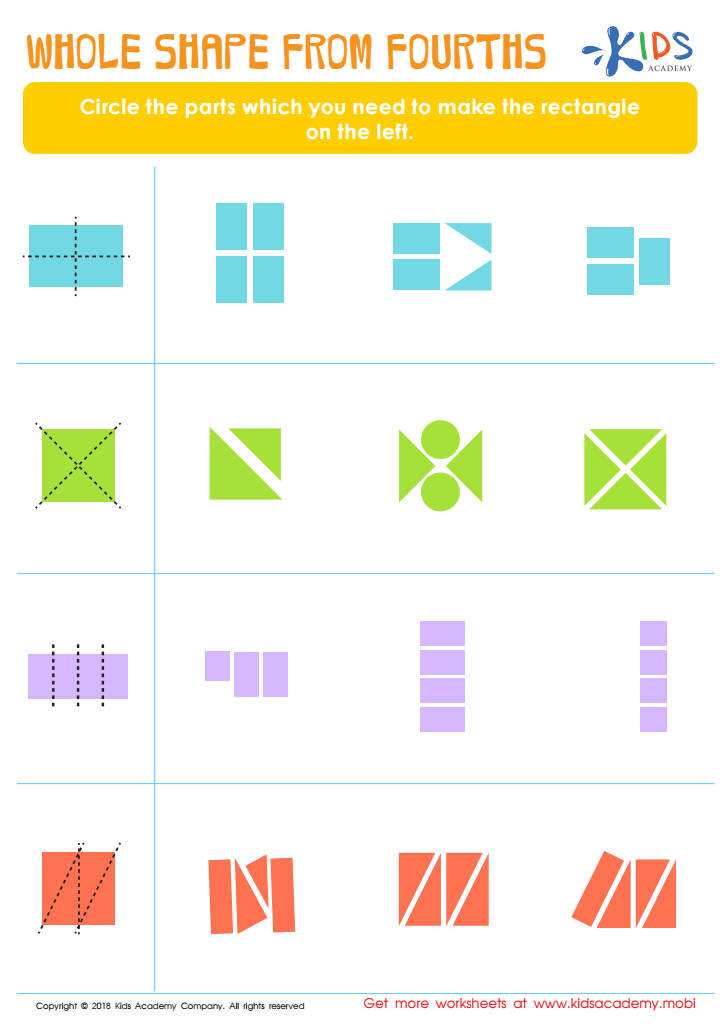
Have your kids circle the shapes that'll form the rectangle on the left. It'll test their knowledge of shapes and ability to put them together to make a new one. Ask them to look at the parts on the right and circle the ones that'll form the rectangle.
Whole Shape from Fourths Worksheet
Worksheet
How Queen Captures Worksheet
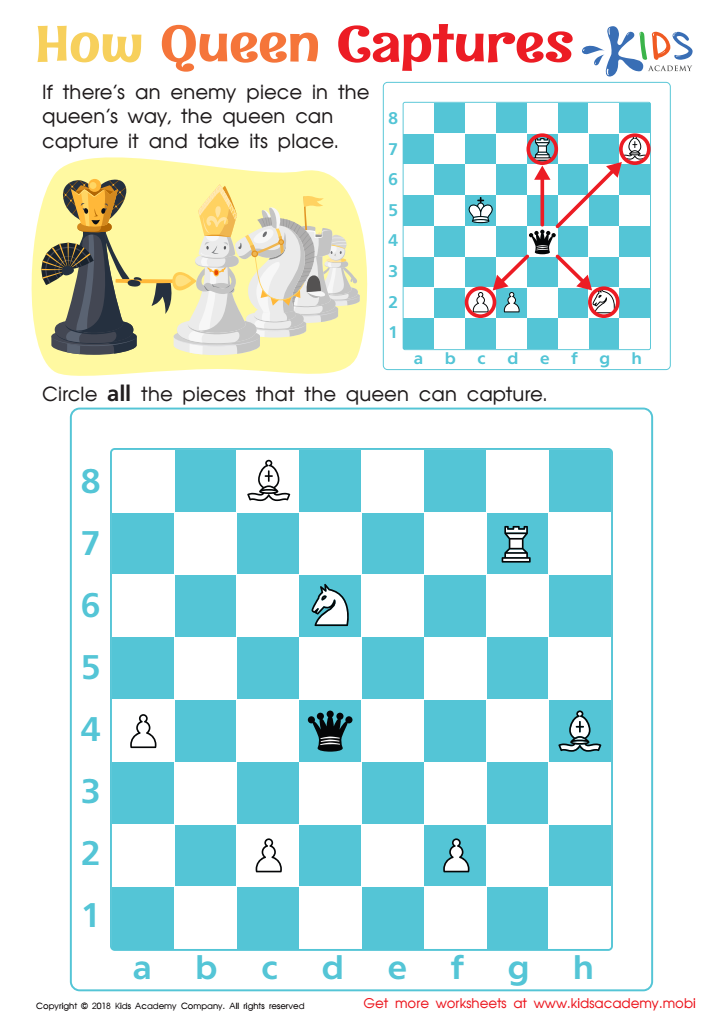
Chess is a great game for sharpening math skills, strategic thinking, and knowledge of how each piece moves. If your child is interested, introduce them with this worksheet. It demonstrates how the queen can capture opposing pieces, such as another queen, and take their place.
How Queen Captures Worksheet
Worksheet
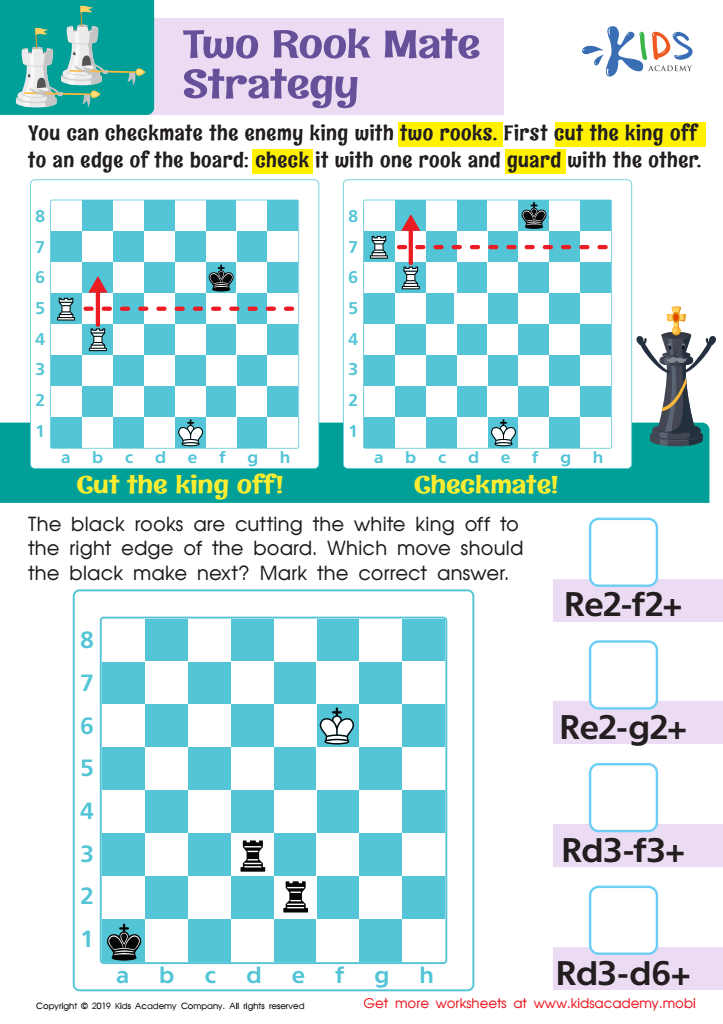
Two Rook Mate Strategy Worksheet
Kids who can play stress gain better reasoning, logic and critical thinking skills. This worksheet can teach kids the Two Rook Mate strategy to checkmate their opposite king. They'll discover how to close in the enemy king and protect with another rook, all the while enjoying a screen-free activity!
Two Rook Mate Strategy Worksheet
Worksheet
Join Kids Academy for Free
Who is primarily going to use this learning content?








Enhancing problem-solving skills in Grade 2 is pivotal for children's cognitive development and future academic success. At this age, children are naturally curious and beginning to develop critical thinking abilities. Parents and teachers should prioritize these skills as they lay a foundation for various areas of learning and everyday life.
Problem-solving skills encourage children to think independently, make decisions, and overcome challenges. For a Grade 2 student, this translates to increased confidence and resilience. When young students are presented with puzzles, math problems, or even social scenarios that require thoughtful solutions, they learn to analyze information, consider different approaches, and develop solutions. These skills are fundamental for subjects like math and science, where logical thinking and structured problem-solving are critical.
Furthermore, problem-solving exercises enhance children's creativity. As they explore different ways to reach a solution, they learn to think outside the box. This creativity can enrich their language abilities, foster teamwork, and improve their social interactions.
In the long term, strong problem-solving skills contribute to better academic performance and a greater ability to tackle real-life issues. Therefore, by fostering these skills early, parents and teachers set children on a path toward becoming confident, innovative, and capable individuals equipped for the challenges of tomorrow.