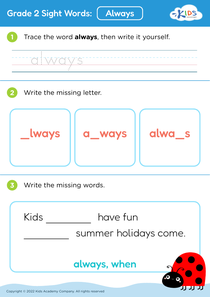
Improve vocabulary Grade 2 Worksheets
5 filtered results
-
From - To
Enhance your second grader's vocabulary with our engaging "Improve Vocabulary Grade 2 Worksheets"! These printable resources are designed to help young learners expand their word knowledge through fun activities. Students will tackle activities such as word searches, matching exercises, and fill-in-the-blank challenges that make learning enjoyable. Our worksheets promote critical thinking and reading comprehension, ensuring children not only learn new words but also understand their meanings and usage. Perfect for classroom or at-home learning, these worksheets are tailored to support Grade 2 curriculum standards. Watch your child's language skills flourish as they delve into our dynamic vocabulary-building exercises!
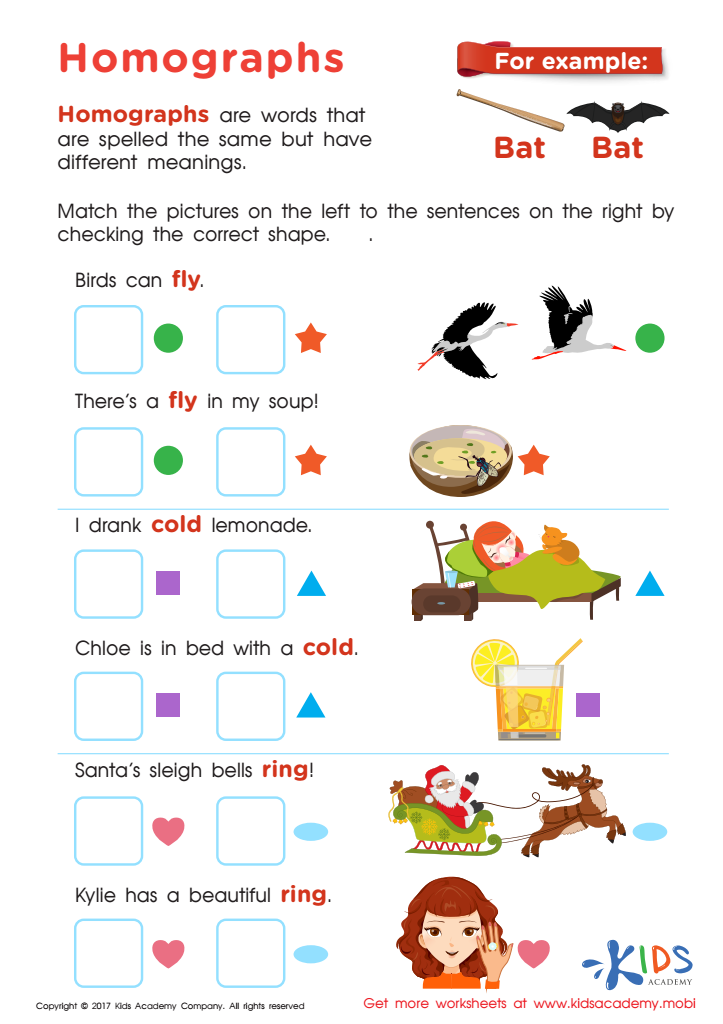
Homographs Free Printable Worksheet
 Assign to My Students
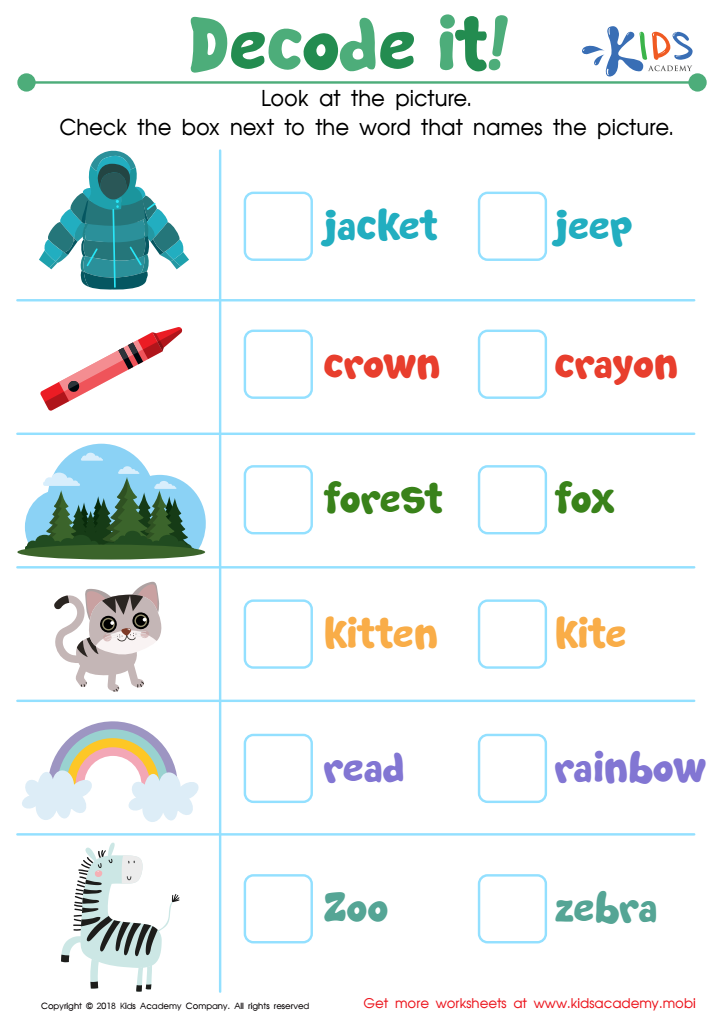
Reading: Decode It Worksheet
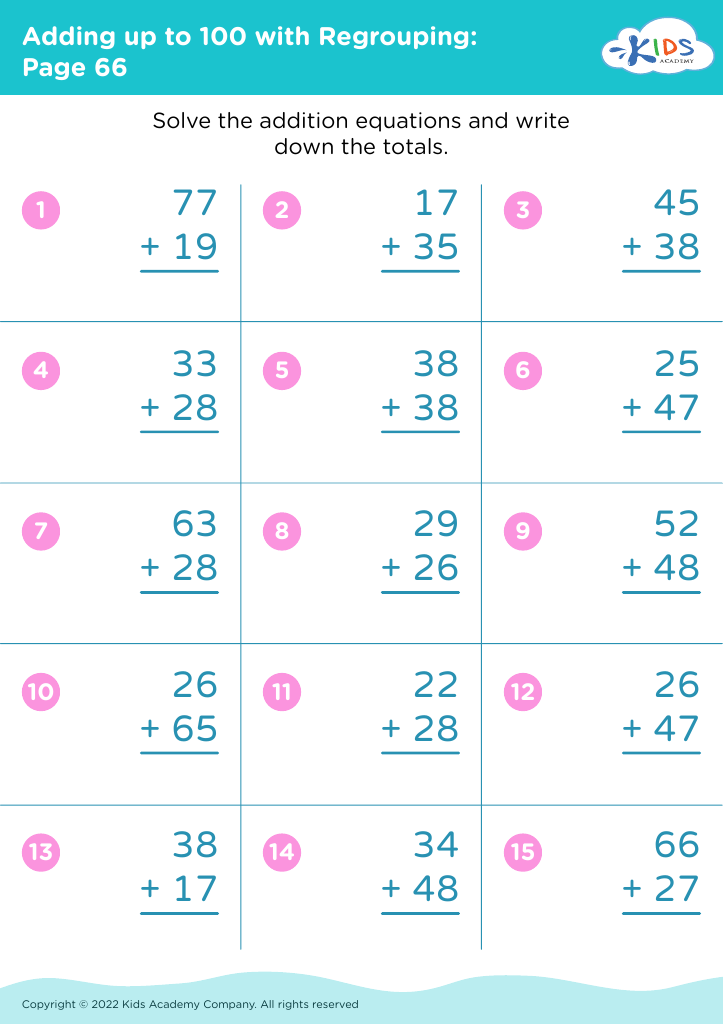







Improving vocabulary in grade 2 is crucial for both parents and teachers because it lays the foundation for effective communication and successful literacy skills. At this stage, children are transitioning from learning to read to reading to learn, making robust vocabulary knowledge essential. A strong vocabulary enhances comprehension, allowing students to grasp complex ideas and engage with a broader range of texts.
For parents, actively supporting vocabulary development at home fosters a love for reading and helps children express themselves more clearly. Engaging in conversations, reading aloud, and introducing new words in everyday contexts can significantly enrich a child’s language skills.
For teachers, vocabulary instruction is a core component of literacy education. Teaching rich, robust vocabulary not only aids comprehension but also promotes critical thinking and creativity. Utilizing various strategies, such as games, song, and storytelling can make learning enjoyable and memorable. This involves developing a rich word bank that children can draw from across subjects, preparing them for future academic achievement.
In sum, prioritizing vocabulary enhancement is a collaborative effort between parents and teachers, ultimately leading to improved academic performance and emotional well-being as children gain confidence in their communication abilities.