Improving observational skills Grade 2 Worksheets
3 filtered results
-
From - To
Enhance your child’s awareness and analytical abilities with our Grade 2 worksheets focused on improving observational skills. Perfectly tailored for second graders, these engaging and interactive sheets support cognitive development by encouraging careful observation, critical thinking, and detailed recognition. Kids Academy offers a variety of exercises ranging from spotting differences, matching objects, to identifying patterns, ensuring learning is both educational and fun. Boost your child's confidence and academic performance as they work through stimulating tasks designed to refine their attention to detail and observational prowess. Equip your young learner with the skills they need for future learning success!
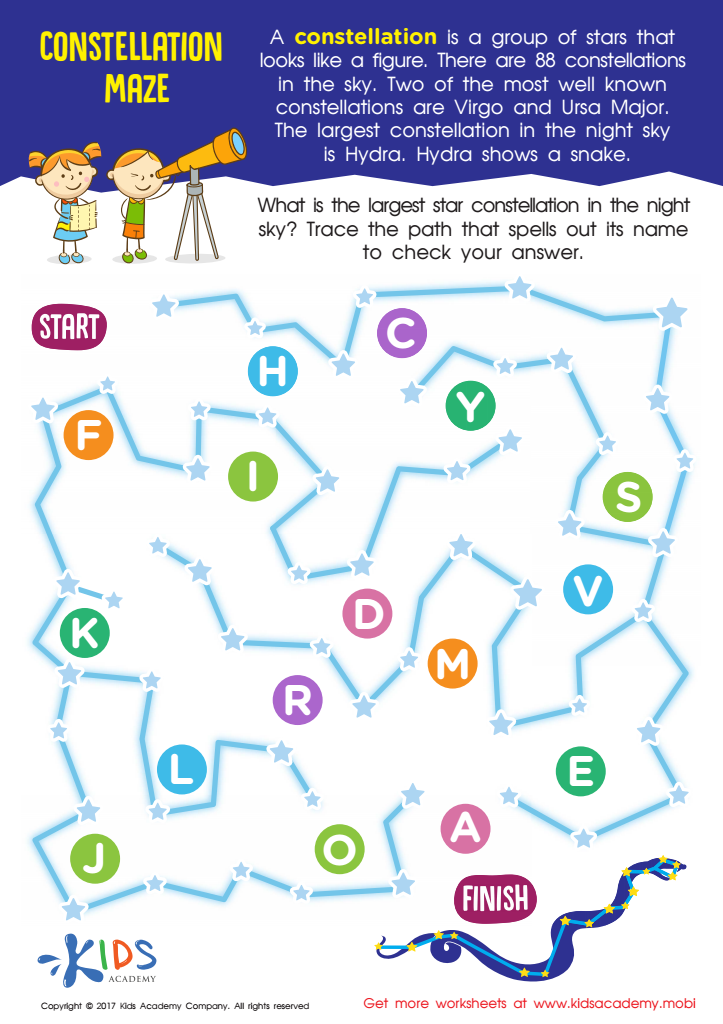
Constellations Worksheet
 Assign to My Students







Improving observational skills in Grade 2 is crucial as it forms the foundation for lifelong learning and critical thinking. At this age, children are naturally curious and eager to explore the world around them. Enhancing their ability to observe closely helps them become more attentive and engaged learners. When kids learn to notice details, patterns, and differences, they better understand concepts in subjects like science, math, and reading.
For parents and teachers, fostering these skills means empowering children to make connections between what they see and what they learn. Observational skills also support social development; children who are attentive to their peers’ expressions and behaviors can navigate social interactions more effectively and create stronger relationships.
Practicing observation encourages patience and mindfulness. It teaches children to slow down and pay attention, reducing impulsive behaviors and improving their overall focus and discipline. These skills are vital for academic success and for developing a thoughtful and reflective mindset.
Moreover, solid observational skills in Grade 2 set the stage for effective problem-solving as students grow older. Being observant allows them to gather crucial information before making decisions. For educators and parents, investing time in improving these skills equips children with an essential toolkit for both their educational journey and everyday life.