Filters

20 filtered results

Clear all filters
Favorites
With answer key
Interactive
20 filtered results

Difficulty Level

Grade


Unlock the world of multiplication for second graders with our engaging "Understanding Multiplication Grade 2 Addition Worksheets!" These worksheets are designed to reinforce the connection between addition and multiplication, making math concepts accessible and enjoyable. With a variety of exercises, students will learn to visualize multiplication as repeated addition, helping to build a strong mathematical foundation. Each worksheet encourages practice and mastery through fun activities and visual aids, ideal for classroom use or homeschooling. Discover how our resources foster confidence and ignite a love for math in young learners as they progress through their educational journey. Perfect for all budding mathematicians!


Check out this FREE Grade 2 Trial Lesson on Addition!

Irregular Past Tense Verbs

Favorites
With answer key
Interactive
  • Grade 2
  • Understanding multiplication
  • Addition
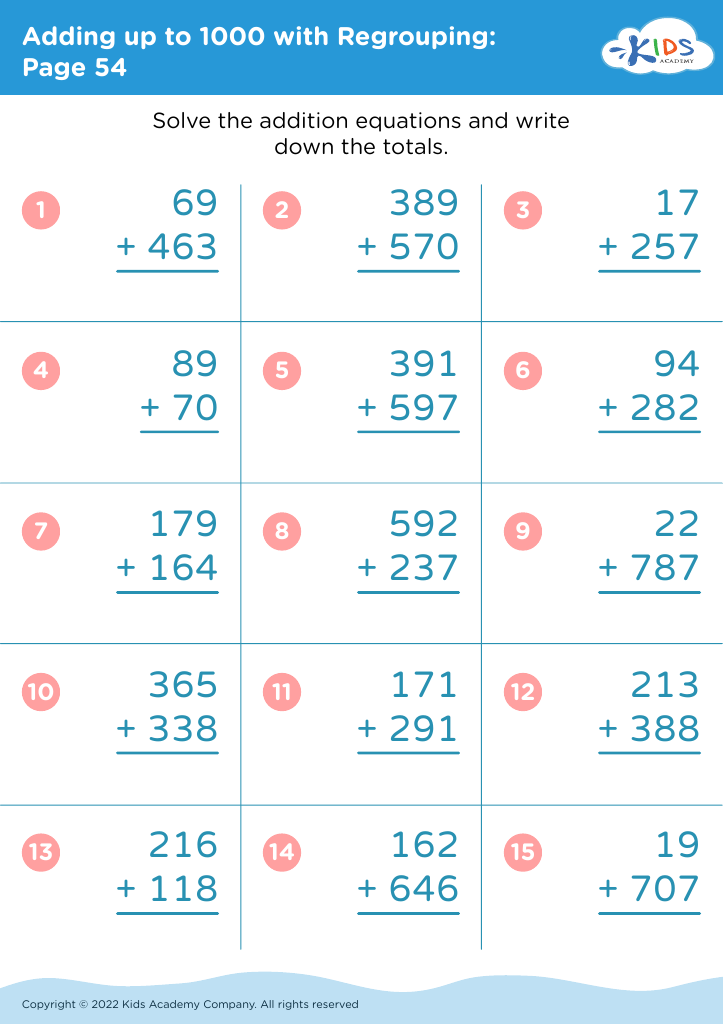
Adding up to 1000 with Regrouping: Page 54
Worksheet
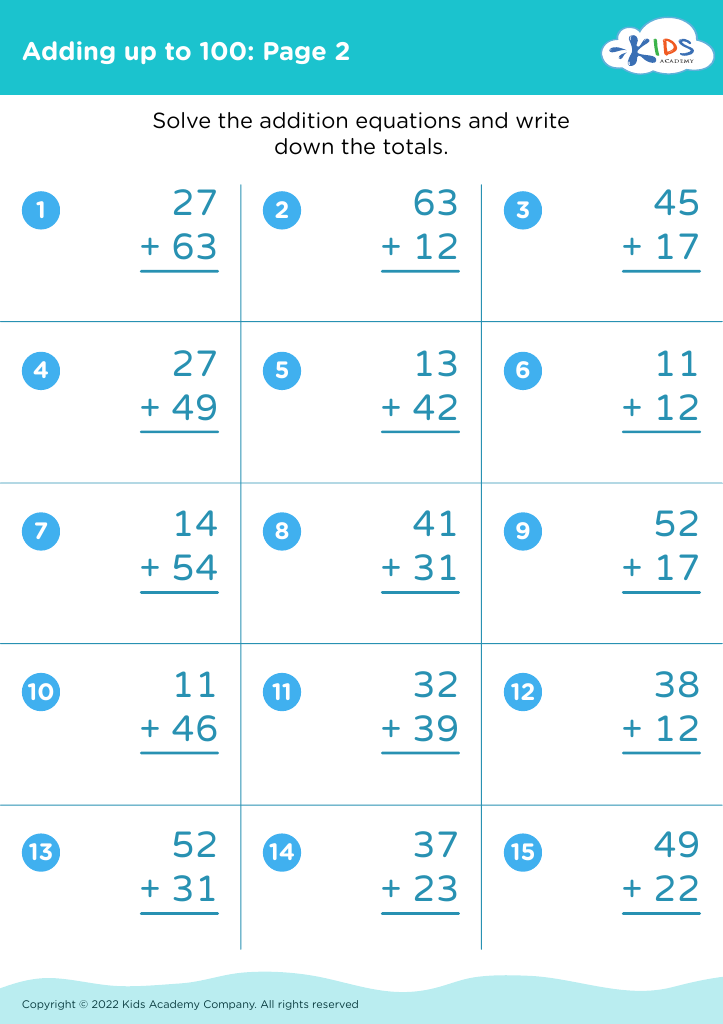
Adding up to 100: Page 2

Adding up to 100: Page 2

Adding up to 100: Page 2
Worksheet
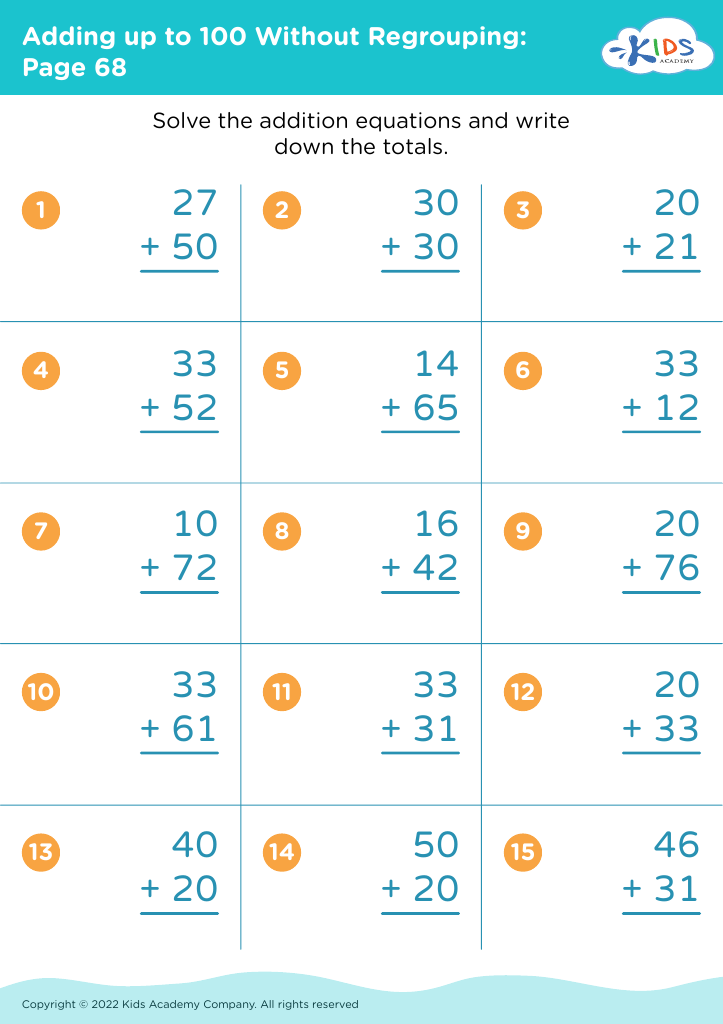
Adding up to 100 Without Regrouping: Page 68
Worksheet
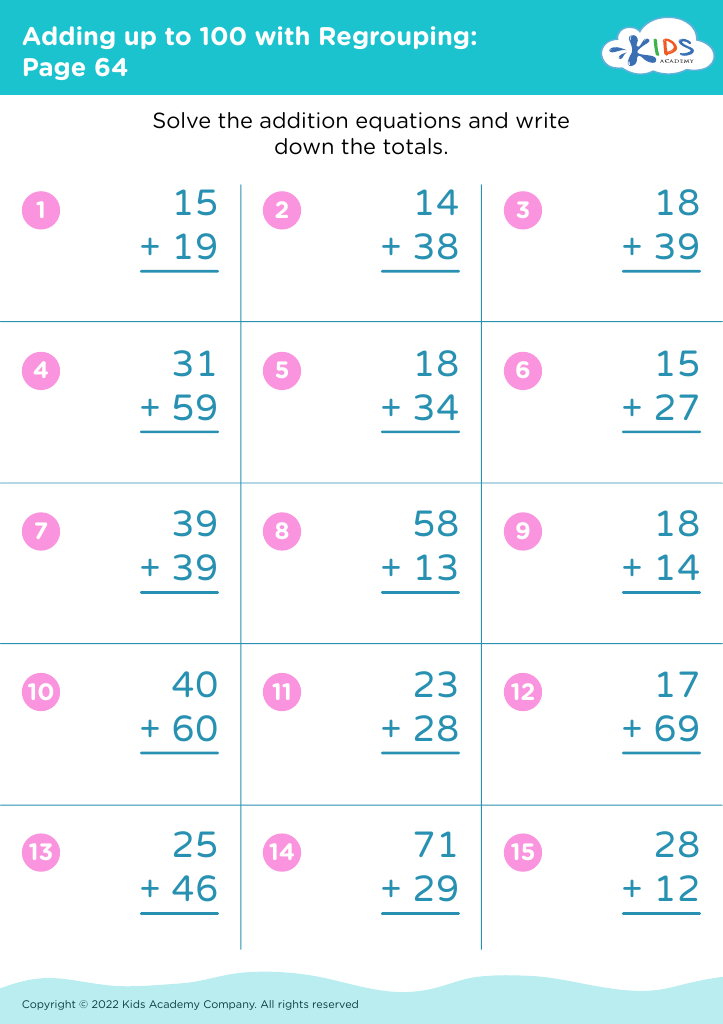
Adding up to 100 with Regrouping: Page 64
Worksheet
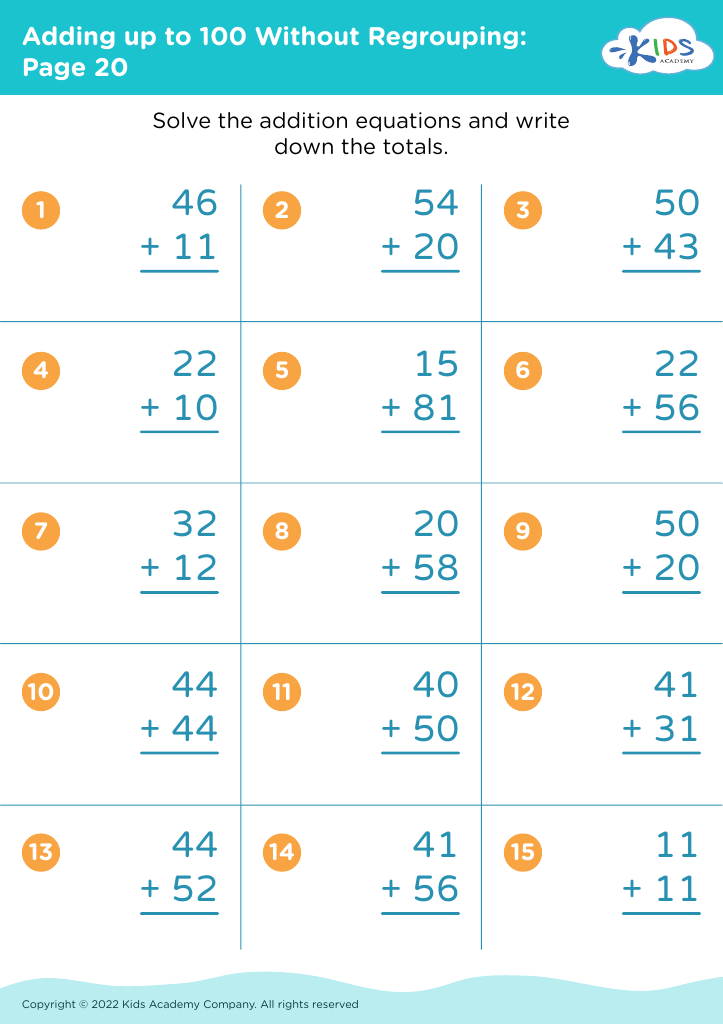
Adding up to 100 Without Regrouping: Page 20
Worksheet
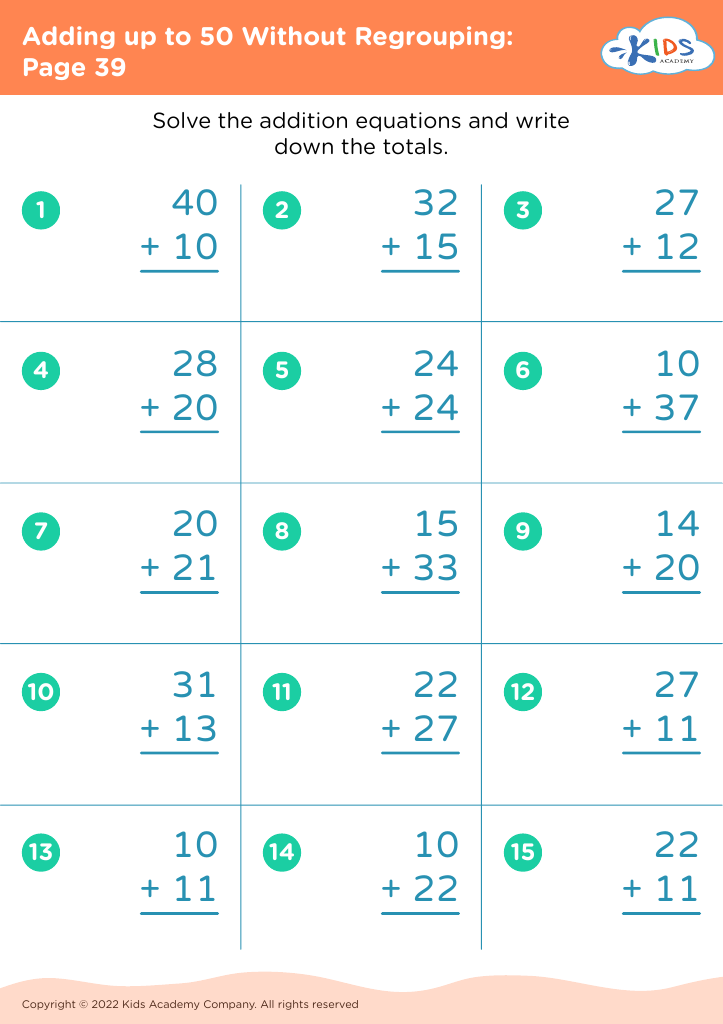
Adding up to 50 Without Regrouping: Page 39
Worksheet
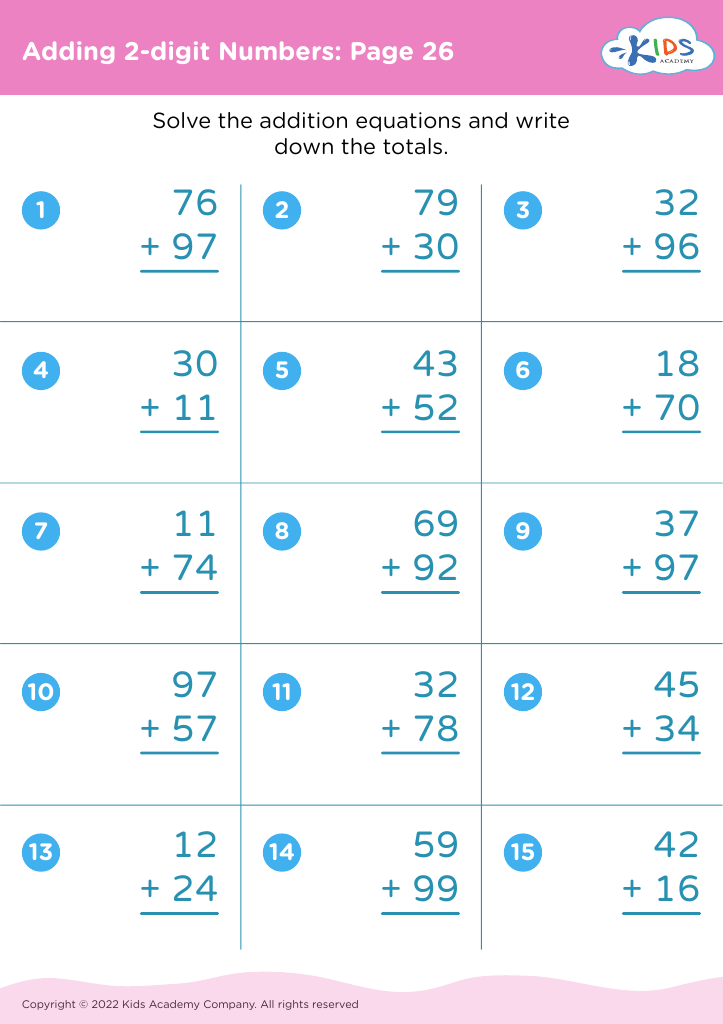
Adding 2-digit Numbers: Page 26

Adding 2-digit Numbers: Page 26

Adding 2-digit Numbers: Page 26
Worksheet
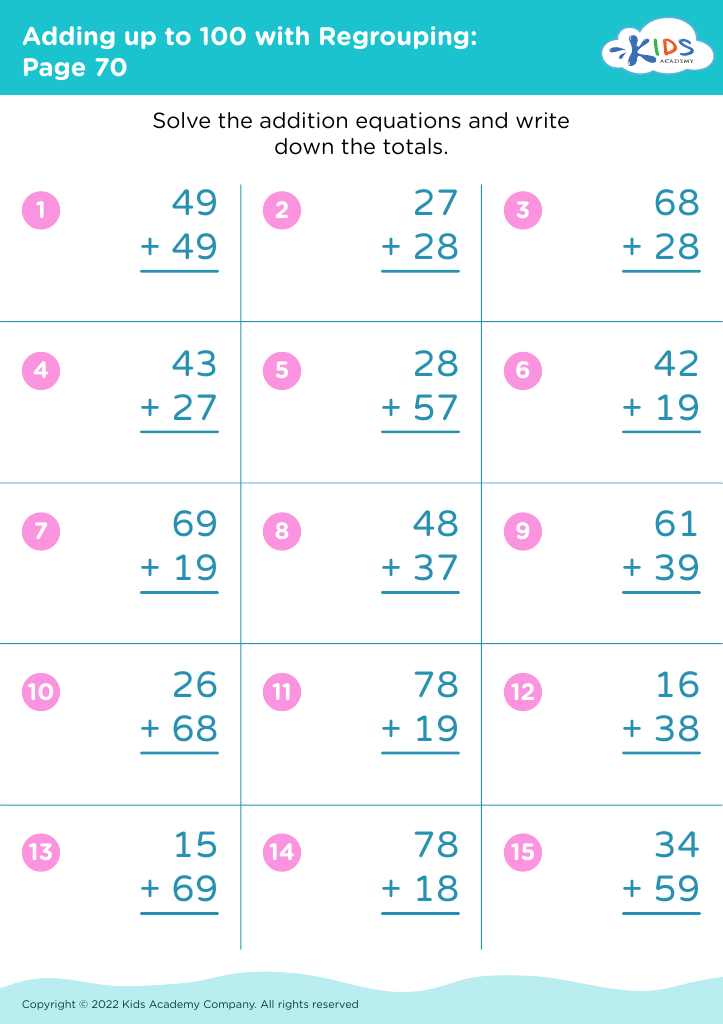
Adding up to 100 with Regrouping: Page 70
Worksheet
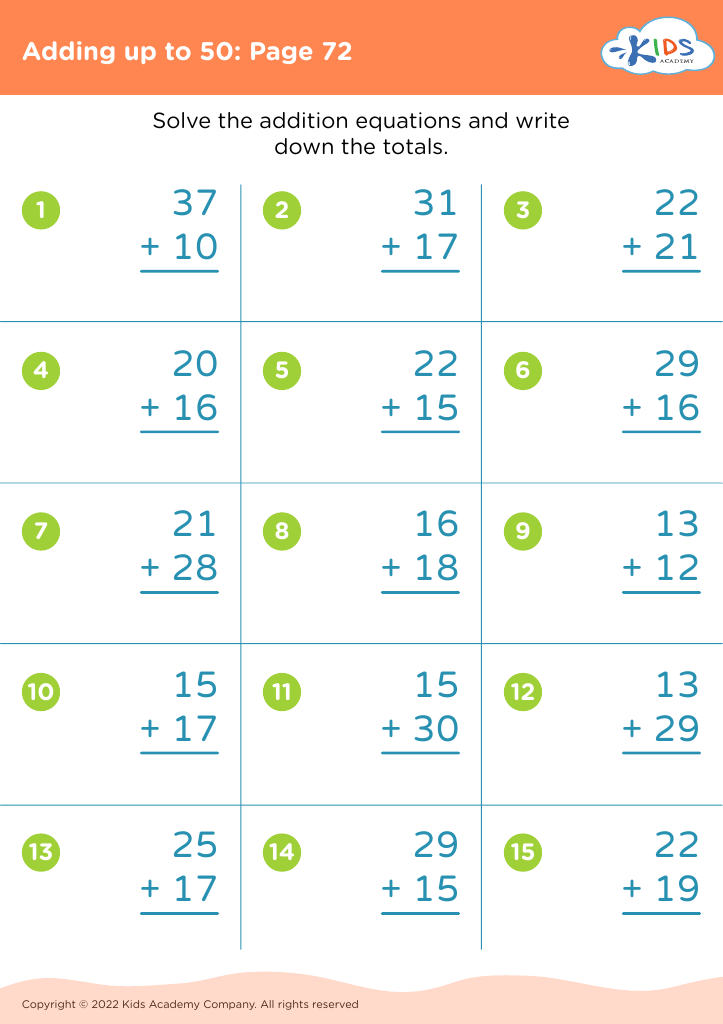
Adding up to 50: Page 72

Adding up to 50: Page 72

Adding up to 50: Page 72
Worksheet
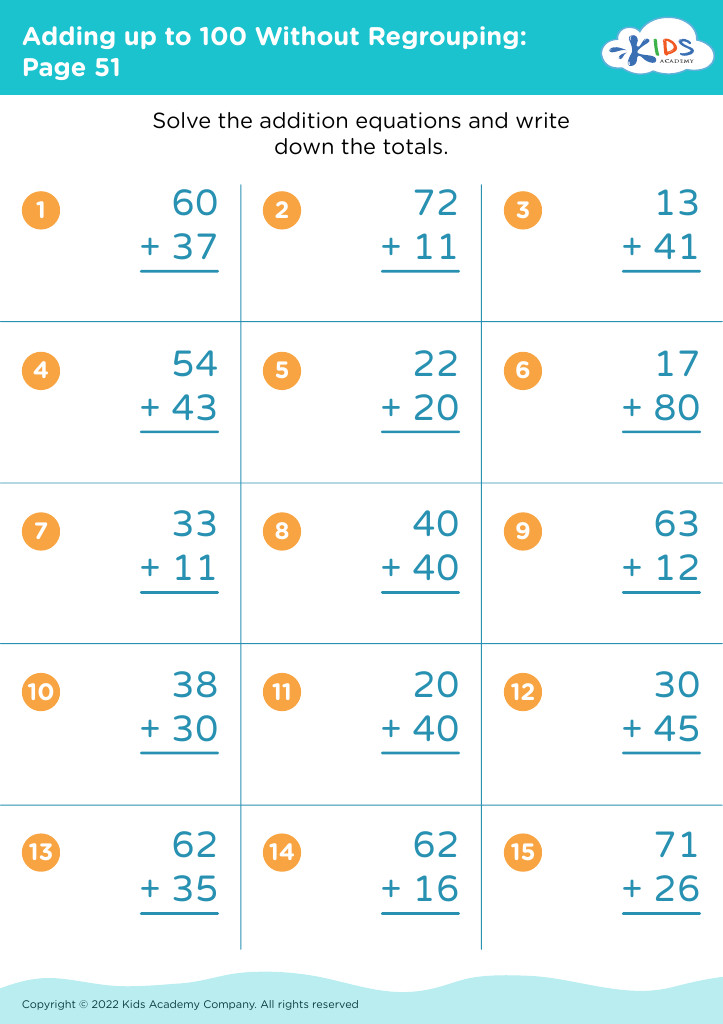
Adding up to 100 Without Regrouping: Page 51
Worksheet
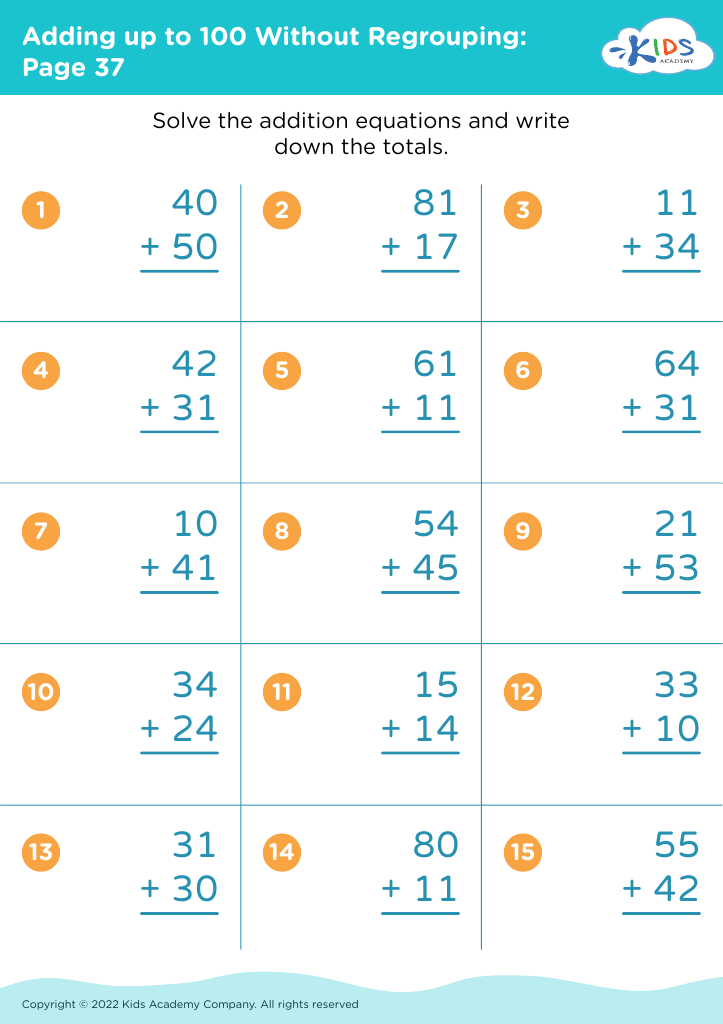
Adding up to 100 Without Regrouping: Page 37
Worksheet
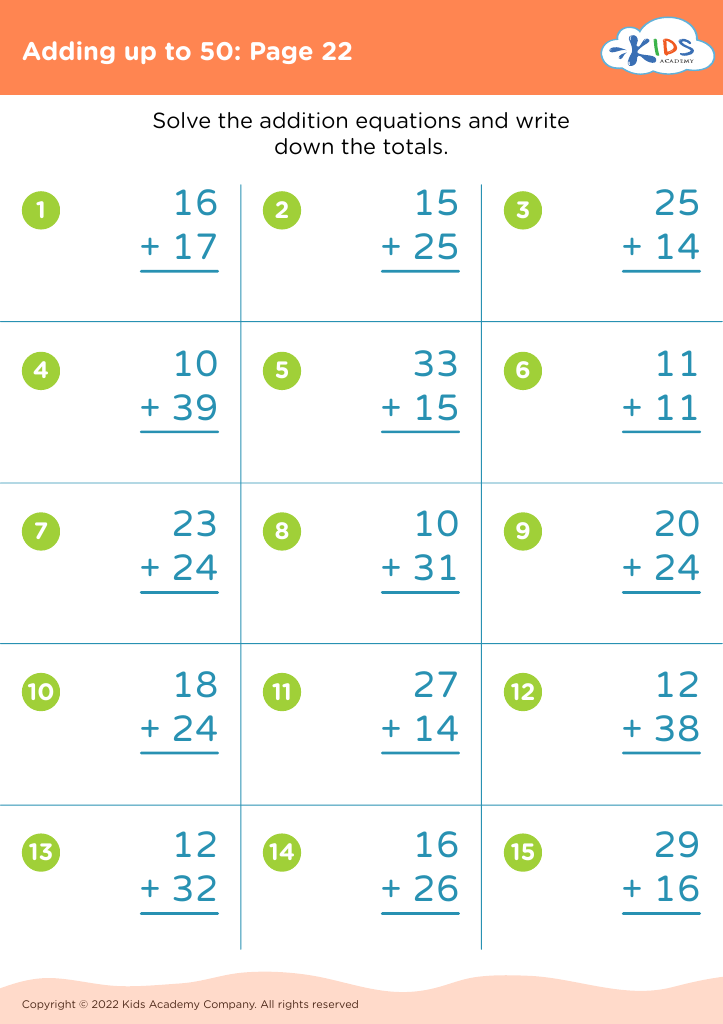
Adding up to 50: Page 22

Adding up to 50: Page 22

Adding up to 50: Page 22
Worksheet
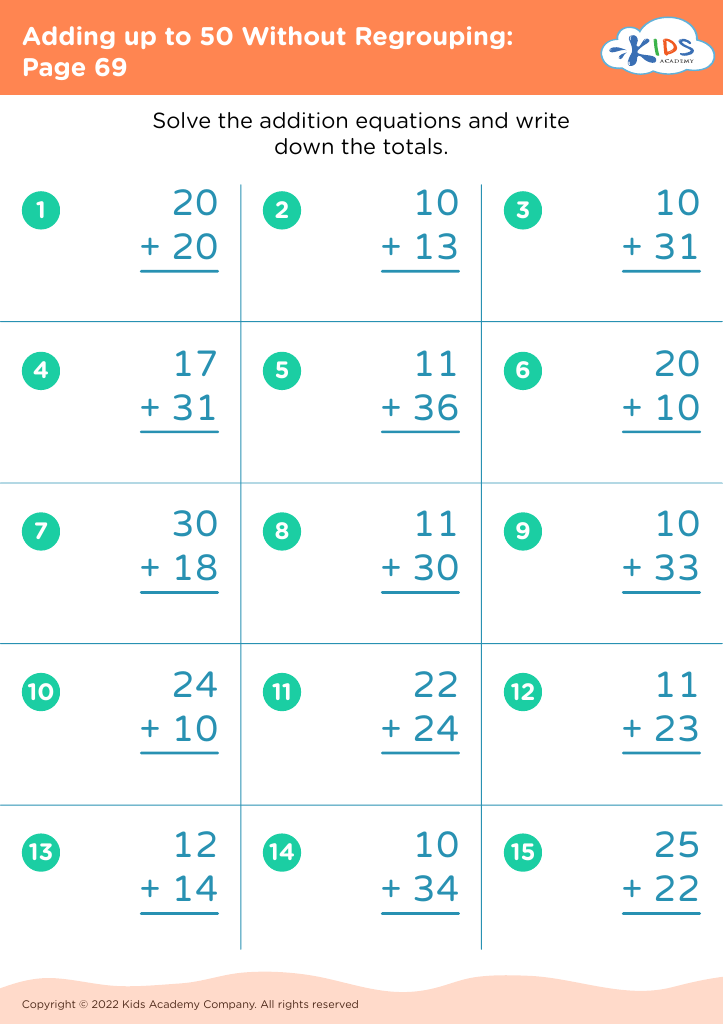
Adding up to 50 Without Regrouping: Page 69
Worksheet
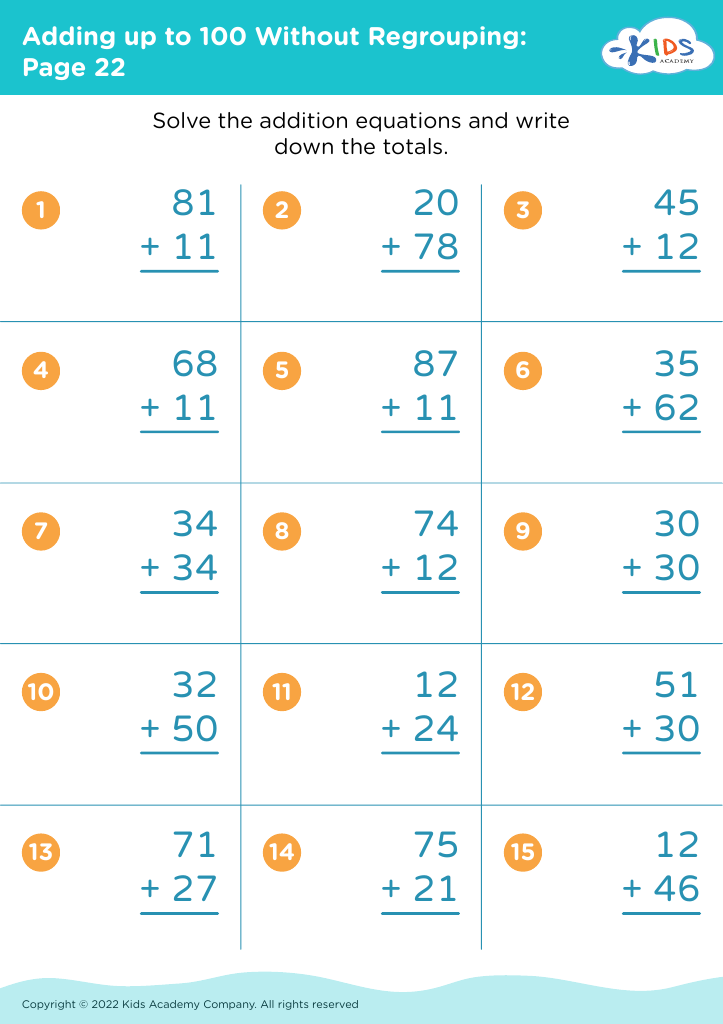
Adding up to 100 Without Regrouping: Page 22
Worksheet
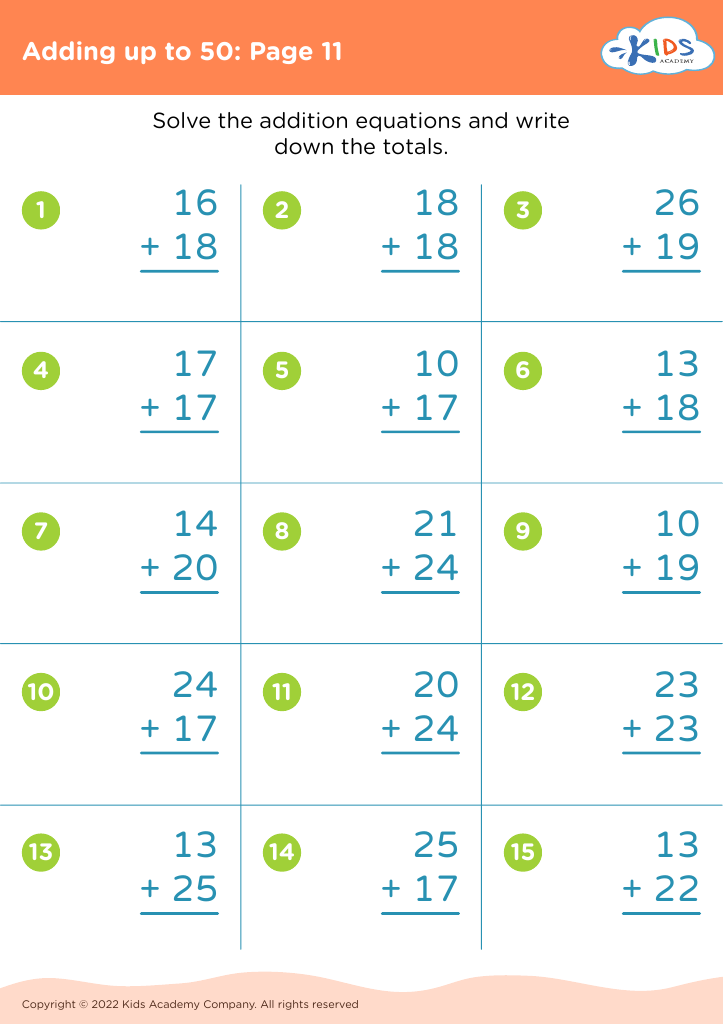
Adding up to 50: Page 11

Adding up to 50: Page 11

Adding up to 50: Page 11
Worksheet
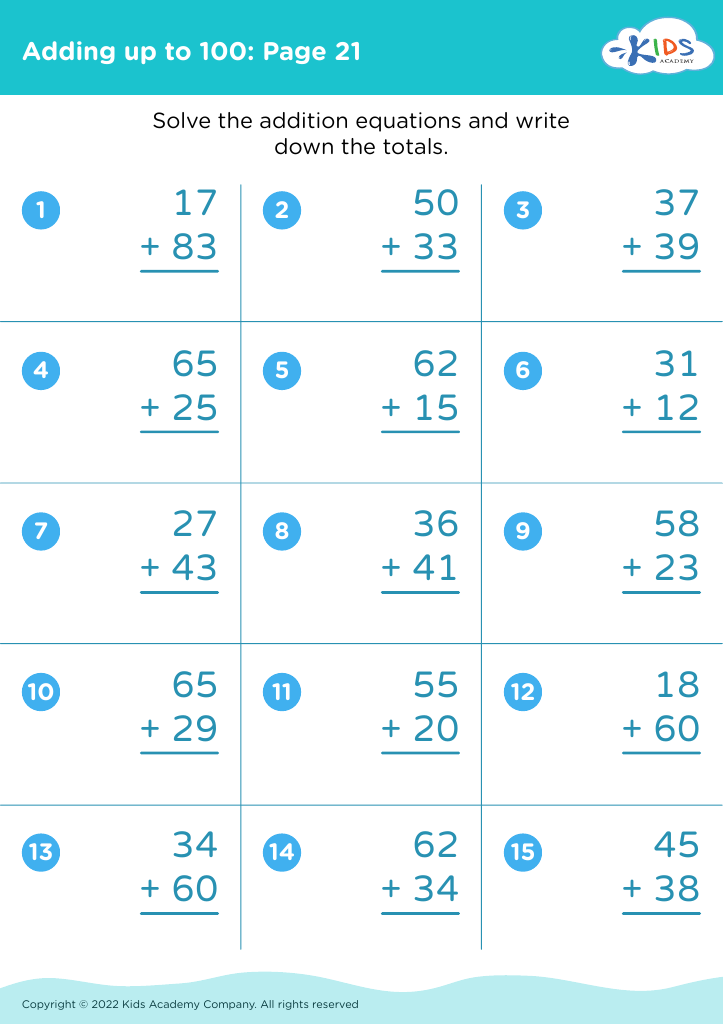
Adding up to 100: Page 21

Adding up to 100: Page 21

Adding up to 100: Page 21
Worksheet
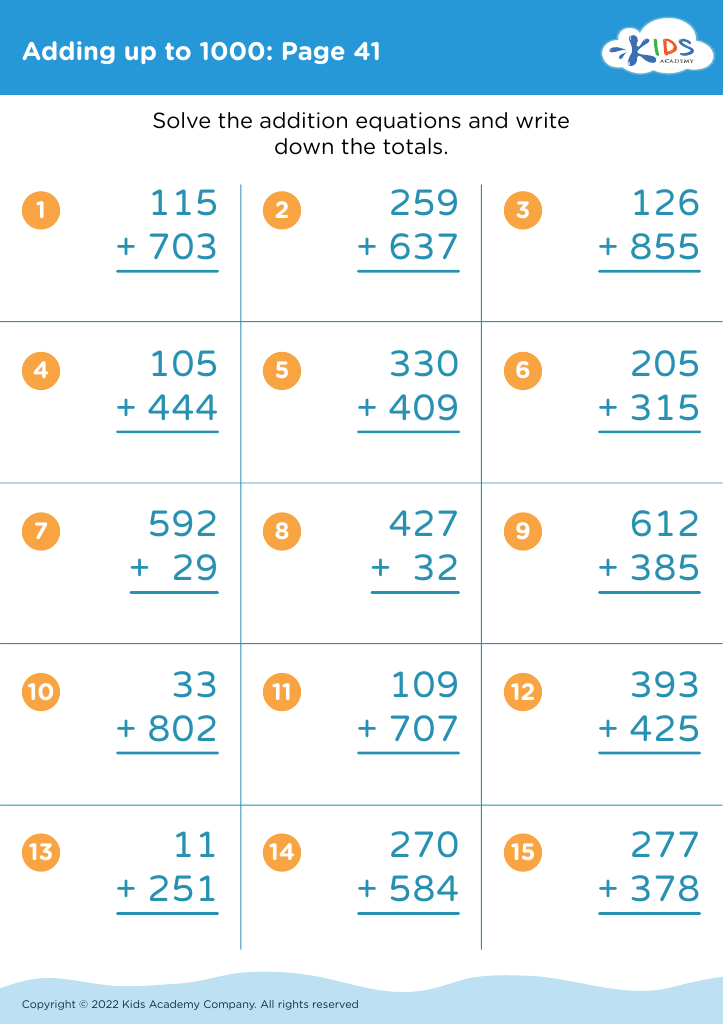
Adding up to 1000: Page 41

Adding up to 1000: Page 41

Adding up to 1000: Page 41
Worksheet
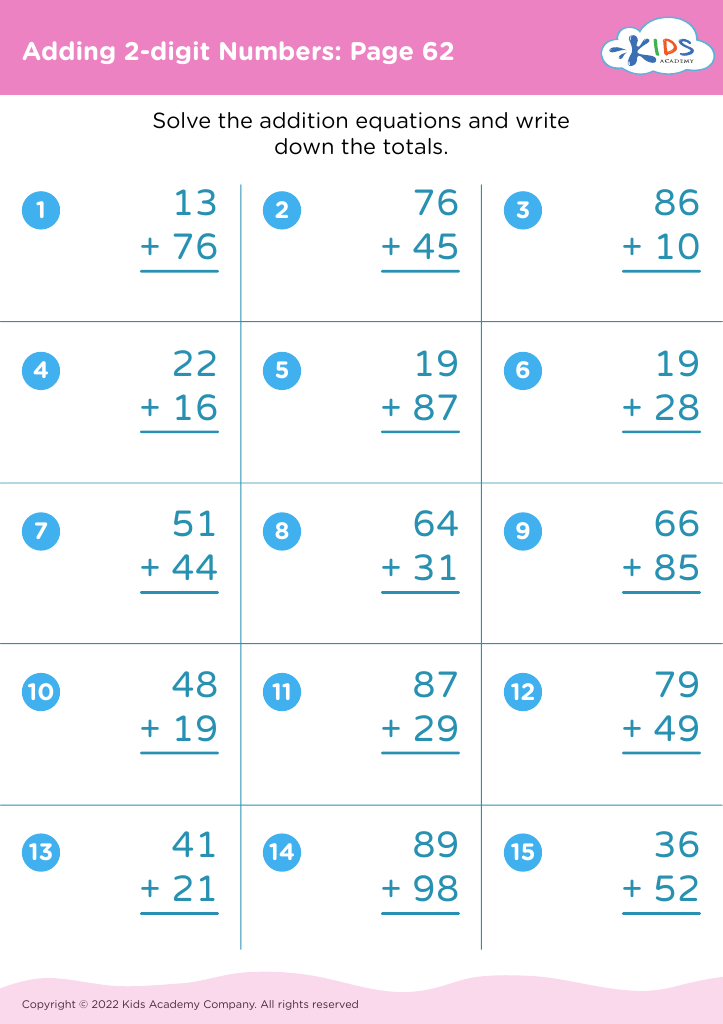
Adding 2-digit Numbers: Page 62

Adding 2-digit Numbers: Page 62

Adding 2-digit Numbers: Page 62
Worksheet
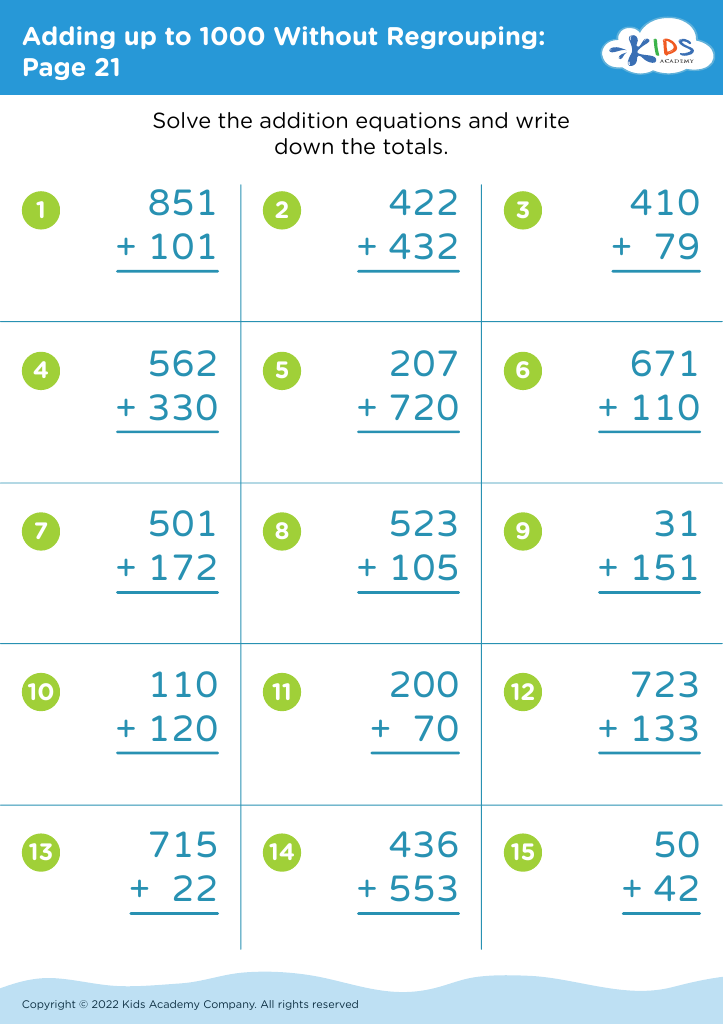
Adding up to 1000 Without Regrouping: Page 21
Worksheet
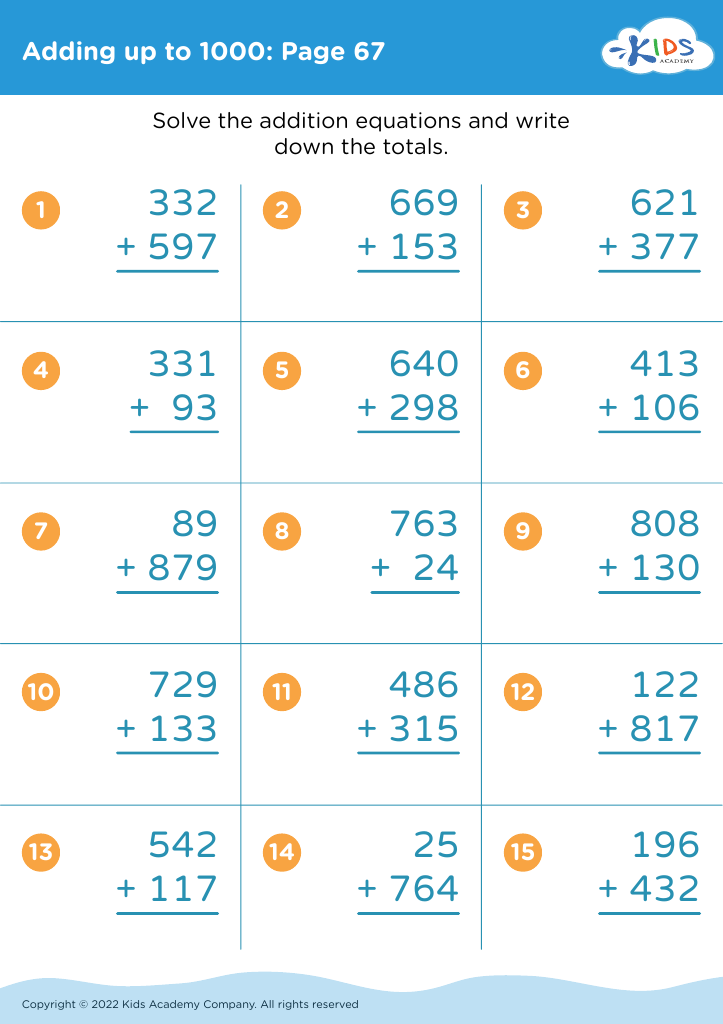
Adding up to 1000: Page 67

Adding up to 1000: Page 67

Adding up to 1000: Page 67
Worksheet


Understanding multiplication and its relationship with addition is essential for Grade 2 students as it forms the foundation for their future mathematical learning. At this age, children begin to explore the concept of multiplication, often recognizing it as repeated addition. For parents and teachers, fostering this understanding is crucial as it deepens students' number sense and helps them develop confidence in their math abilities.

When children grasp the connection between addition and multiplication, they can simplify calculations, making math more approachable. It also aids in problem-solving, allowing them to tackle more complex math operations as they progress. Moreover, recognizing multiplication as an extension of addition provides students with multiple strategies for computation, enhancing their flexibility in thinking.

Parents play a vital role by engaging children in activities that reinforce these concepts, such as using practical examples from daily life. Teachers, on the other hand, can incorporate interactive learning methods and games to make the learning process enjoyable. Together, they create a supportive environment that encourages exploration and curiosity, ultimately establishing a strong mathematical foundation that benefits students long term. Understanding multiplication as it relates to addition is not just about numbers—it’s about building critical thinking skills essential for overall academic success.