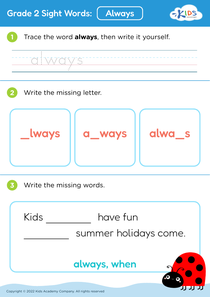
Vocabulary Building Grade 2 Addition Worksheets
5 filtered results
Difficulty Level
Grade
Age
-
From - To
Subject
Activity
Standards
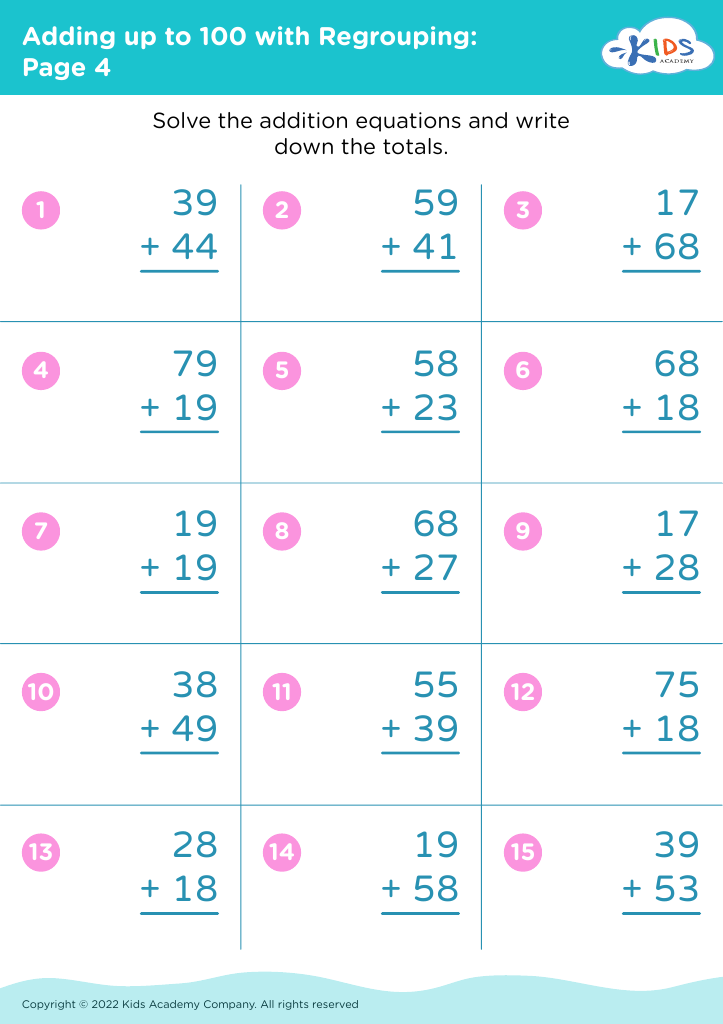
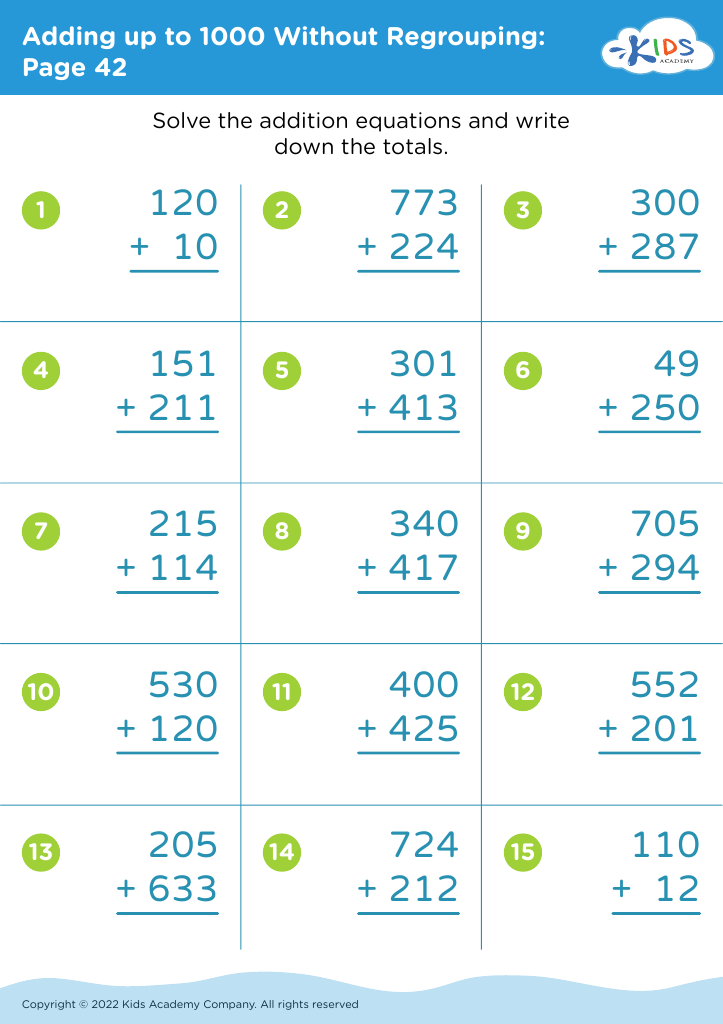
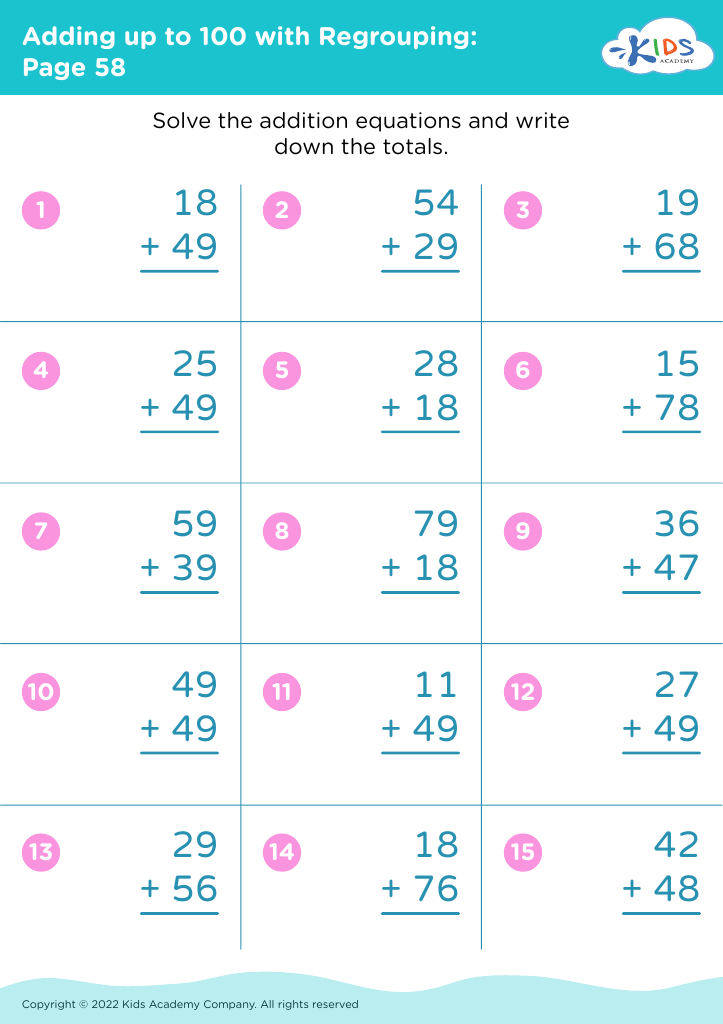
Welcome to our Vocabulary Building Grade 2 Addition Worksheets page! Here, young learners can enhance their math skills while expanding their vocabulary. Our engaging and interactive worksheets are designed specifically for second graders, combining fun visuals with essential vocabulary related to addition concepts. Each activity promotes critical thinking and reinforces language skills in mathematical contexts, making learning enjoyable and effective. Perfect for classroom use or homeschooling, these worksheets cater to diverse learning needs and provide opportunities for students to practice their addition skills while exploring new words. Download our worksheets today and empower your child's mathematical journey!
Favorites
With answer key
Interactive
Join Kids Academy for Free
Who is primarily going to use this learning content?








Vocabulary building in Grade 2 is crucial for young learners as it serves as the foundation for reading and comprehension skills. At this early stage, children begin to encounter more complex texts that require not just basic vocabulary but also an understanding of context, nuance, and synonyms. By focusing on vocabulary enhancement, parents and teachers foster literacy, allowing students to articulate their thoughts and ideas more effectively.
Moreover, a robust vocabulary supports math learning, particularly in contexts like "addition." Words associated with math, such as "sum," "increase," and "combine," help students better understand and articulate mathematical concepts. This integration reinforces learning across subjects, aiding in problem-solving skills and critical thinking.
Encouraging vocabulary building also nurtures a love for reading and learning, encouraging children to explore new ideas. By engaging students in discussions and activities that expand their language skills, educators and parents empower them to express themselves with confidence and clarity. Ultimately, vocabulary development is a powerful tool that influences academic success, social interactions, and emotional expression, making it essential for parents and teachers to prioritize in their approach to education.