Filters

6 filtered results

Clear all filters
Favorites
With answer key
Interactive

6 filtered results

Difficulty Level

Grade


Enhance your second graders' problem-solving abilities with our comprehensive Measurement Worksheets! These engaging and interactive resources are designed to help young learners develop critical thinking skills while mastering essential measurement concepts. Each worksheet focuses on real-life scenarios, encouraging students to apply measurement knowledge in practical situations. With various activities tailored to different skill levels, children will enjoy tackling challenging problems involving length, weight, and volume. Our carefully crafted exercises foster a strong foundation in mathematics and promote confidence in their problem-solving skills. Download these worksheets now to make math both fun and educational for your second-grade classroom!

Check out this FREE Grade 2 Trial Lesson on Measurement!

Estimate Length

Favorites
With answer key
Interactive
  • Grade 2
  • Problem-Solving Skills
  • Measurement
Students Line Plot Worksheet

Students Line Plot Worksheet

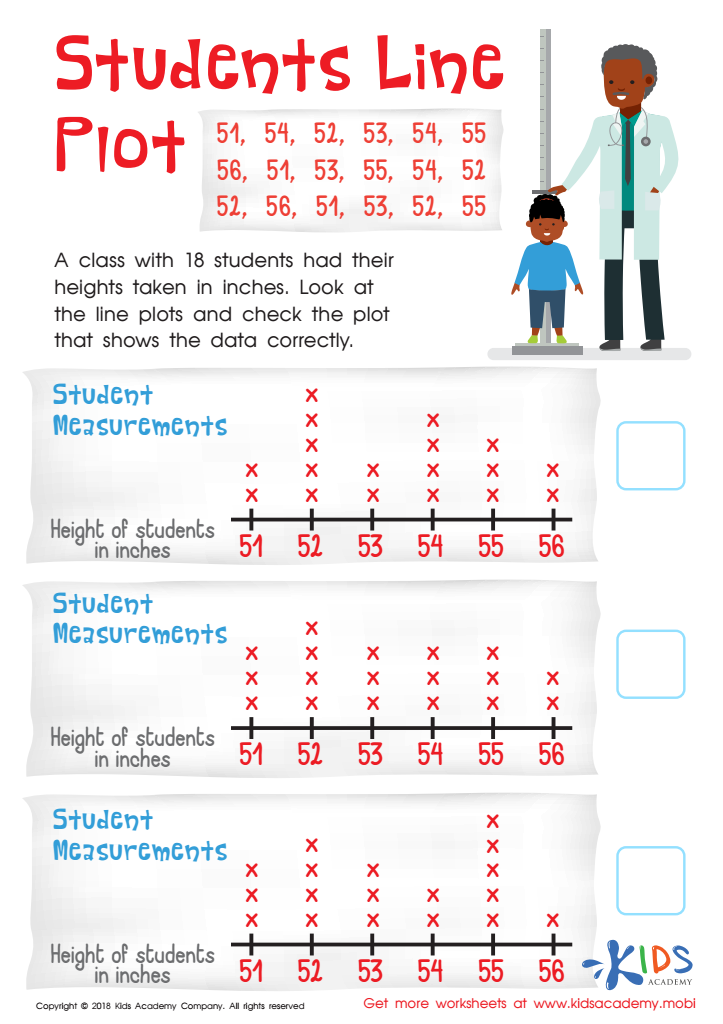
Help your students learn to draw a line plot correctly by giving real examples. In this exercise, they must check the data of a class of 18 students' heights (in inches). Have them compare two line plots and figure out which one is correct.
Students Line Plot Worksheet
Worksheet
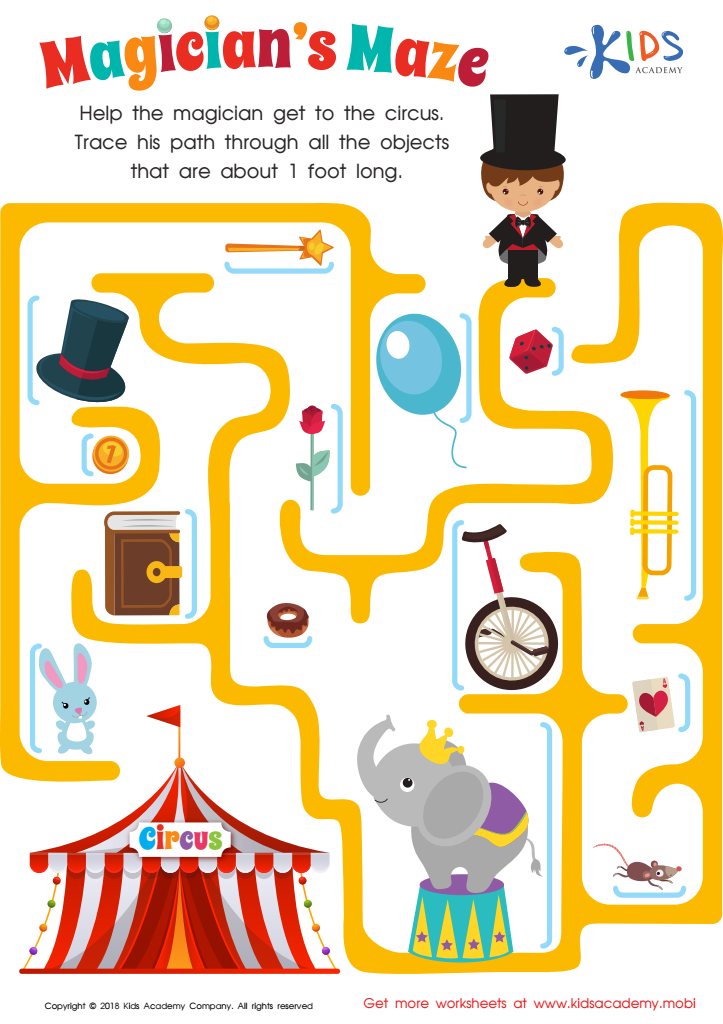
Estimating Length: Magician's Maze Worksheet

Estimating Length: Magician's Maze Worksheet

Does your kid want to practice magic and have a blast? This exercise will be a great way to help them do so! In the worksheet, they'll need to guide the magician to the circus. How? By tracing his path through the 1-foot long obstacles in the maze. Once they help him get through the objects, the circus will be just a few steps away!
Estimating Length: Magician's Maze Worksheet
Worksheet
Measure It Twice: Feet and Yards Worksheet

Measure It Twice: Feet and Yards Worksheet

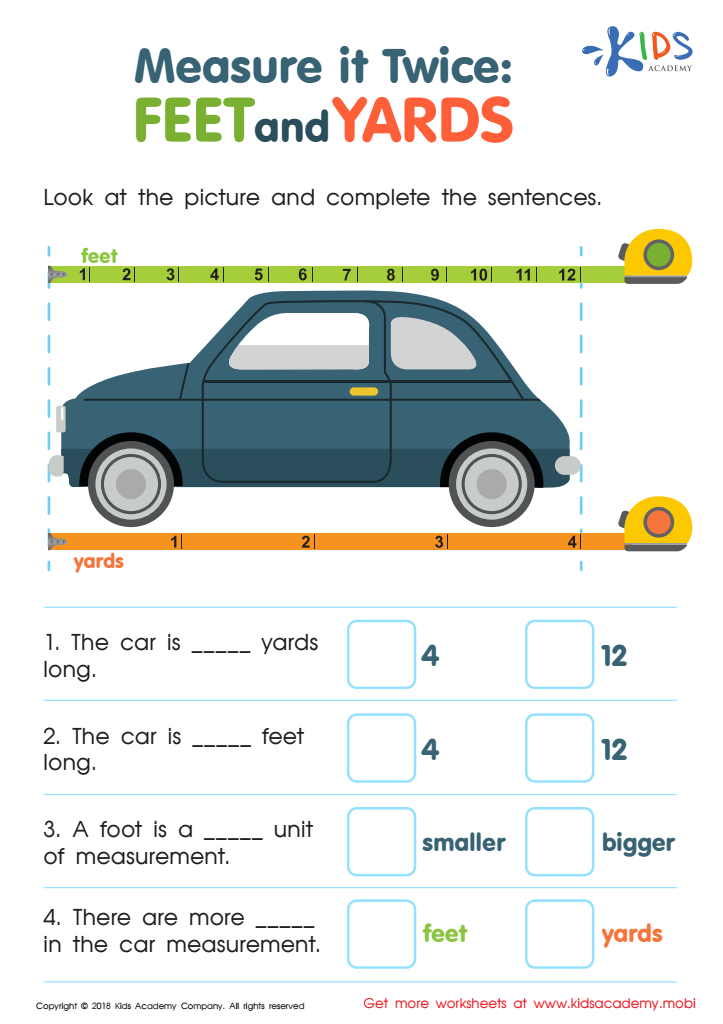
A car is pictured with a metric ruler in feet at the top and a yard ruler at the bottom. Get your child to look at the picture and complete sentences about it; for example, how many yards long is the car? Is a foot a bigger or smaller unit of measurement? It'll teach them that 1 yard is equal to 3 feet.
Measure It Twice: Feet and Yards Worksheet
Worksheet
Line plot worksheet for 2nd grade

Line Plot Worksheet

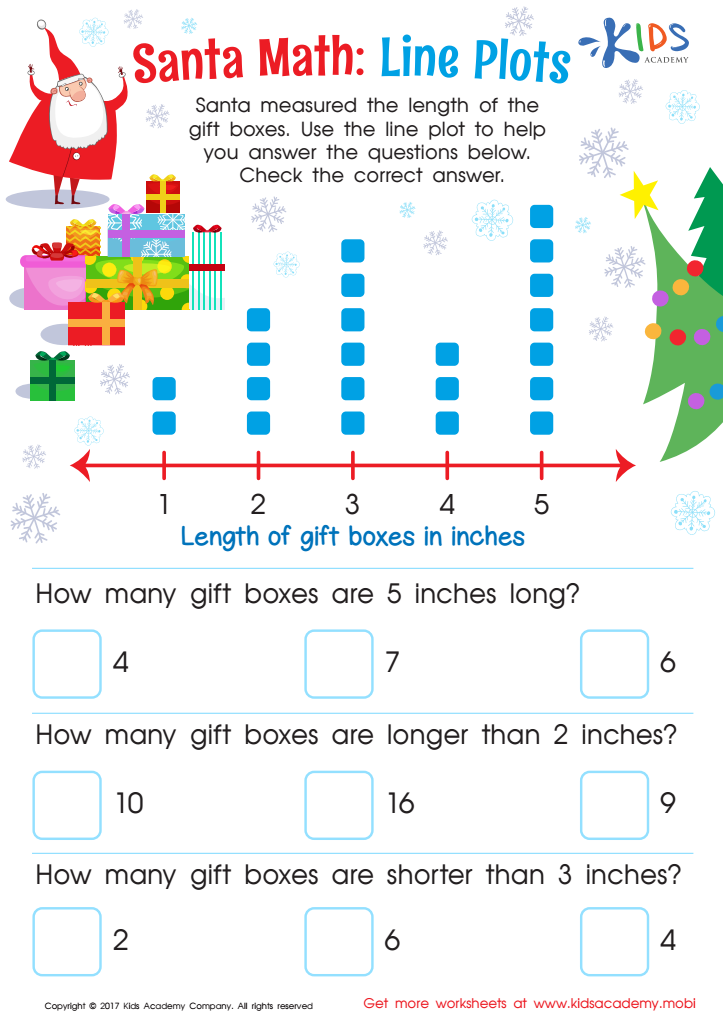
Help your child measure presents with Santa using this 2nd grade line plot worksheet! It's a fun way to boost math skills and analyze data. Plus, it's sure to delight your child!
Line Plot Worksheet
Worksheet
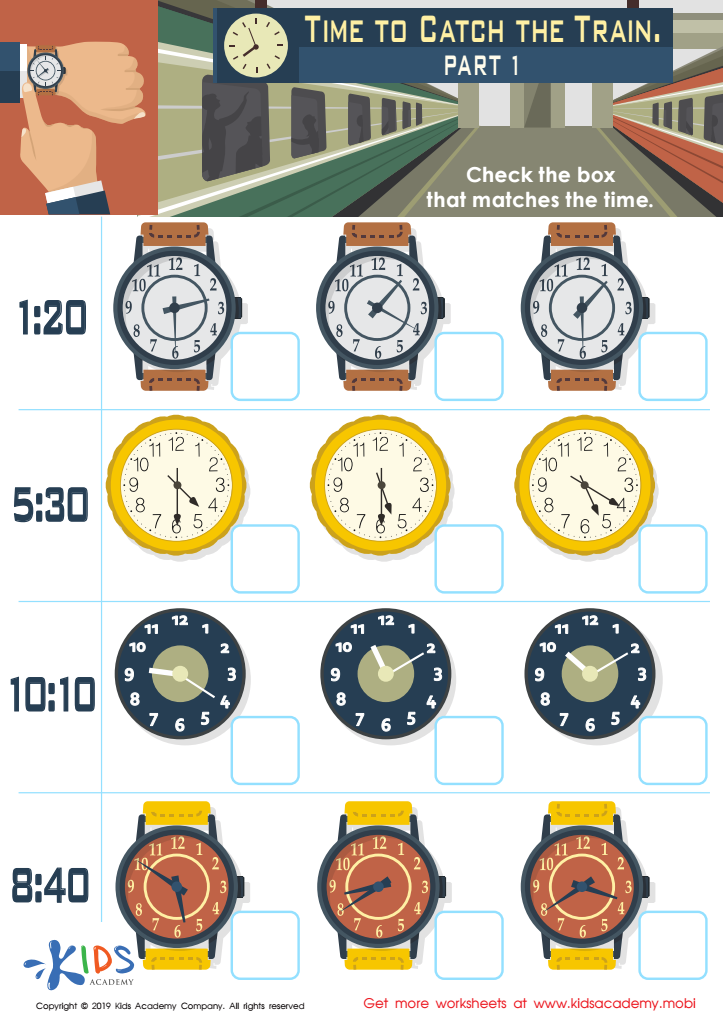
Time to Catch the Train Part 1 Worksheet

Time to Catch the Train Part 1 Worksheet

Time is essential for us; it lets us know when to do various things. Your kids likely wake up at a specified hour and prepare for the school bus. Demonstrate to them that time-telling is vital, and show them there are multiple ways to show time. Point to the time written on the left and the watches in the picture. Assist your children to check the box that corresponds to the time.
Time to Catch the Train Part 1 Worksheet
Worksheet
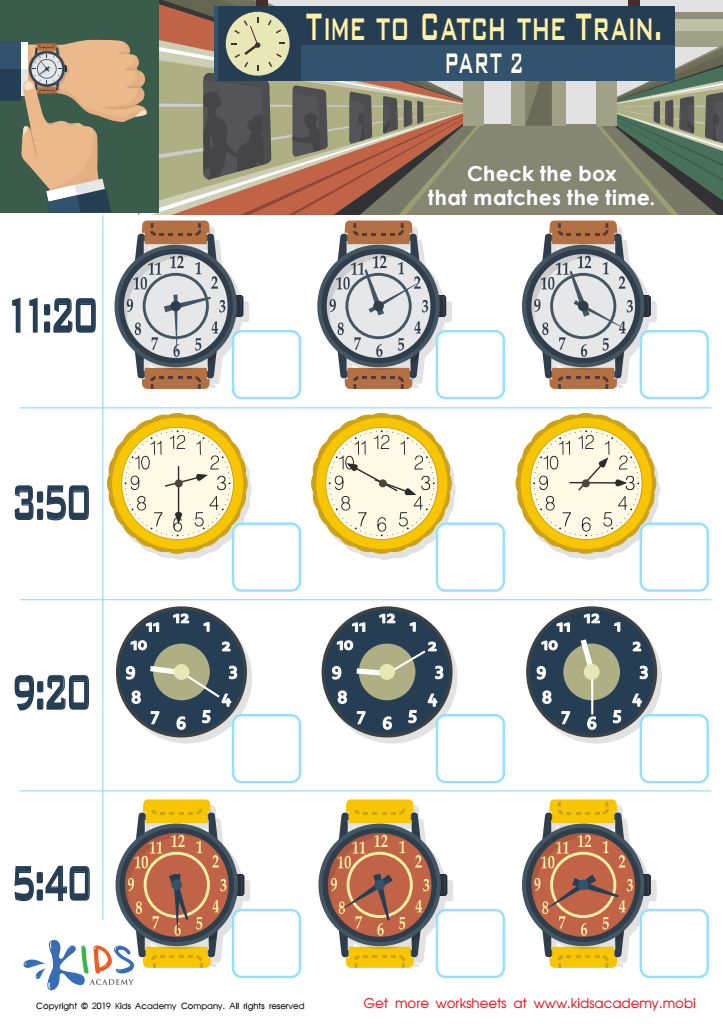
Time to Catch the Train Part 2 Worksheet


Time to Catch the Train Part 2 Worksheet

Teach your kids the importance of telling time and how to do it. Explain that there are multiple ways to show the time, such as written on the left side or watches in the picture. Guide them to check the box that matches the time. Knowing the time is essential to get things done and create order. Ensure your kids understand this and they will reap the benefits.
Time to Catch the Train Part 2 Worksheet

Worksheet


Problem-solving skills in Grade 2 Measurement are crucial for a child's development and future success. At this stage, children begin to grasp fundamental concepts of measurement, including length, weight, and volume, which serve as the building blocks for more advanced math skills. Developing these skills enhances a child's ability to think critically and approach challenges systematically.

When parents and teachers focus on teaching problem-solving through measurement, they help students learn how to break down complex problems into manageable parts. This instills confidence and encourages a positive attitude towards math. Moreover, measurement activities promote hands-on learning, allowing children to visualize and engage with concepts actively, which reinforces retention.

In addition, strong problem-solving skills foster creativity and innovation, essential qualities in today’s fast-paced world. By participating in engaging measurement activities, children learn to collaborate, communicate, and apply their knowledge to real-world situations—skills that are vital beyond the classroom. Supporting the development of problem-solving skills equips students with the tools to become adaptable learners who can tackle various life challenges. Ultimately, focusing on these skills lays the foundation for academic achievement and personal growth, making it an indispensable part of every child's education journey.