Critical Thinking Grade 2 Reading Fiction Worksheets
9 filtered results
-
From - To
Explore our engaging "Critical Thinking Grade 2 Reading Fiction Worksheets," designed to enhance young learners' comprehension and analytical skills. These worksheets focus on developing critical thinking by encouraging students to ask questions, make inferences, and draw conclusions while reading fictional narratives. Aligned with educational standards, each activity supports the development of essential skills through interactive exercises that promote creativity and problem-solving. Ideal for classroom use or at-home practice, our thoughtfully crafted worksheets make learning enjoyable and effective. Equip your second graders with the tools they need to think critically about stories, enhancing both their reading enjoyment and overall academic growth.
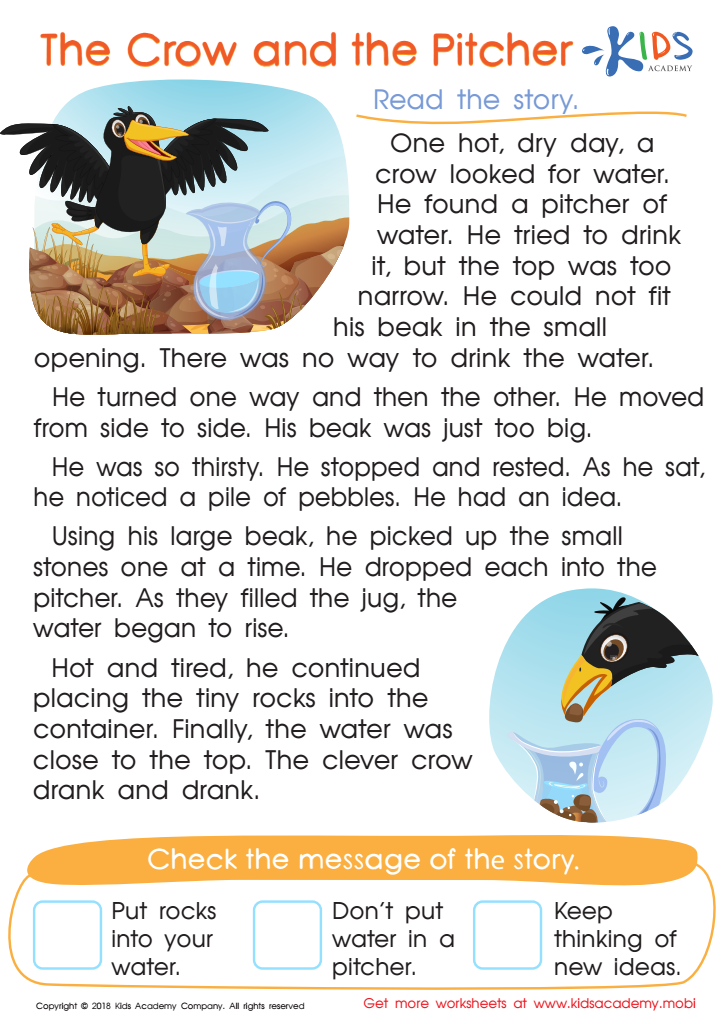
The Crow and the Pitcher Worksheet
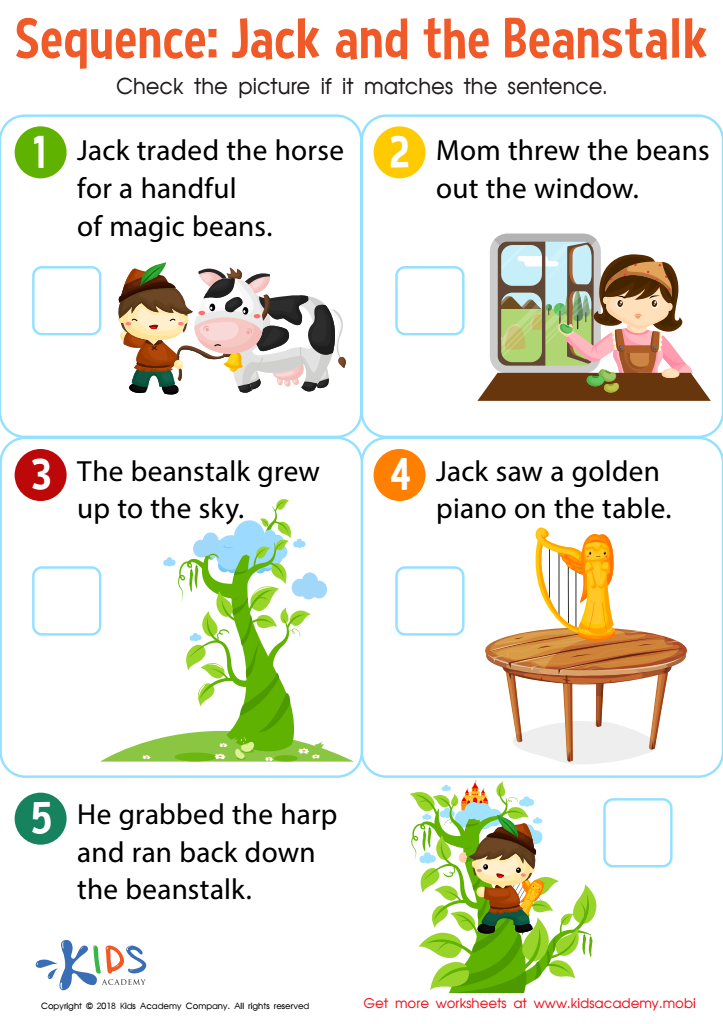
Sequence: Jack and The Beanstalk Worksheet
Folktales Printable PDF Worksheet: The 3 Little Pigs
 Assign to My Students
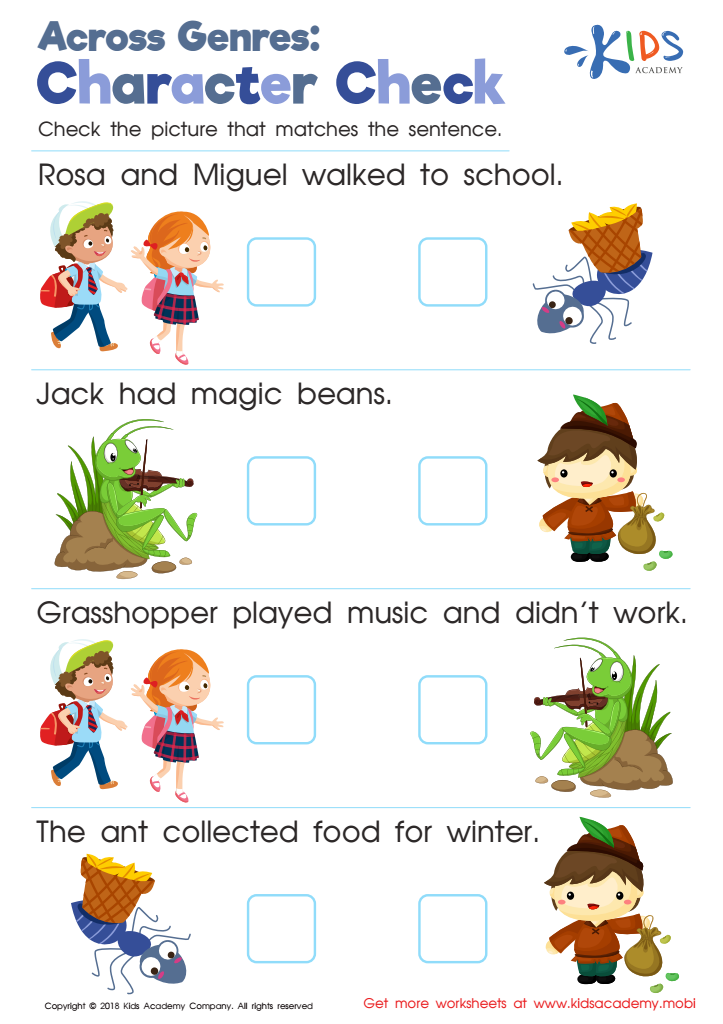
Across Genres: Character Check Worksheet
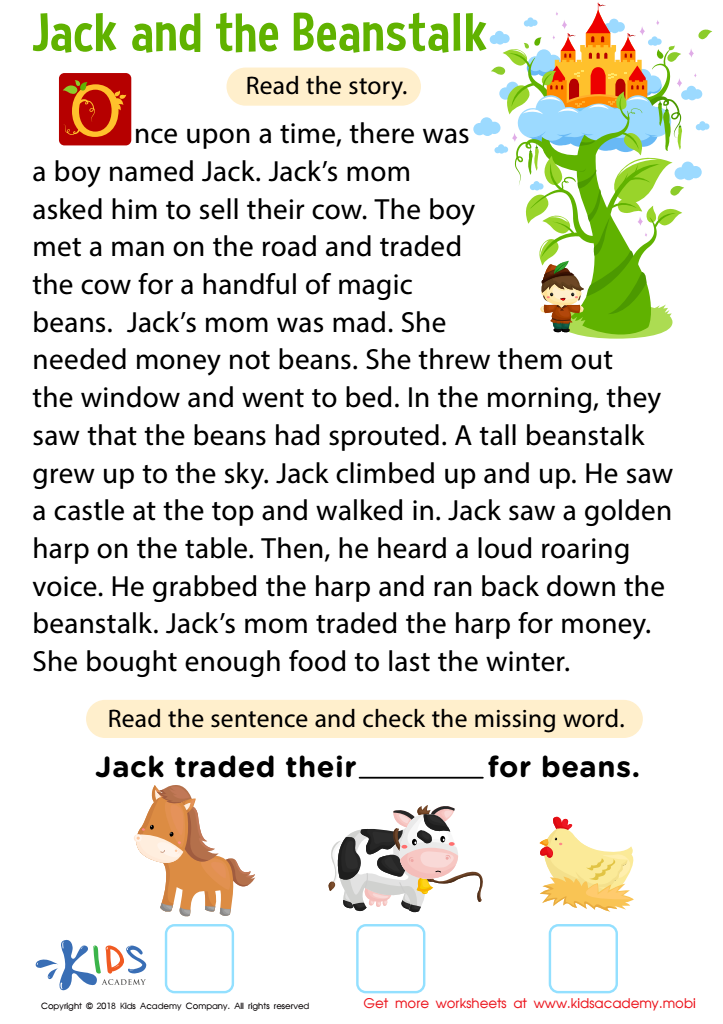
Jack and Beanstalk Worksheet
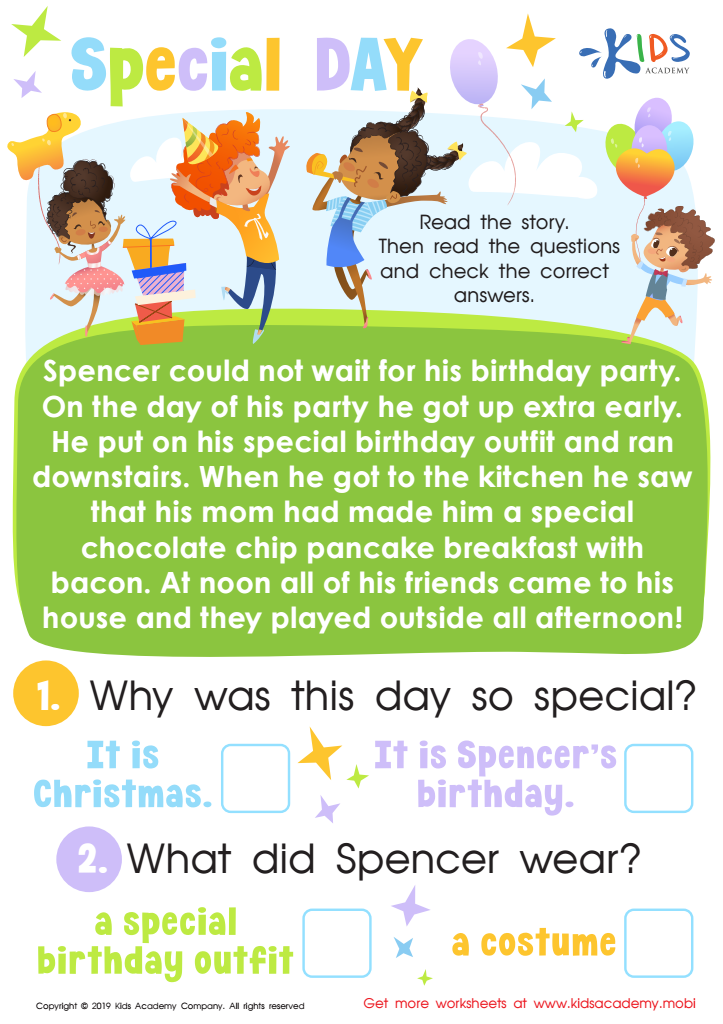
Special Day Worksheet
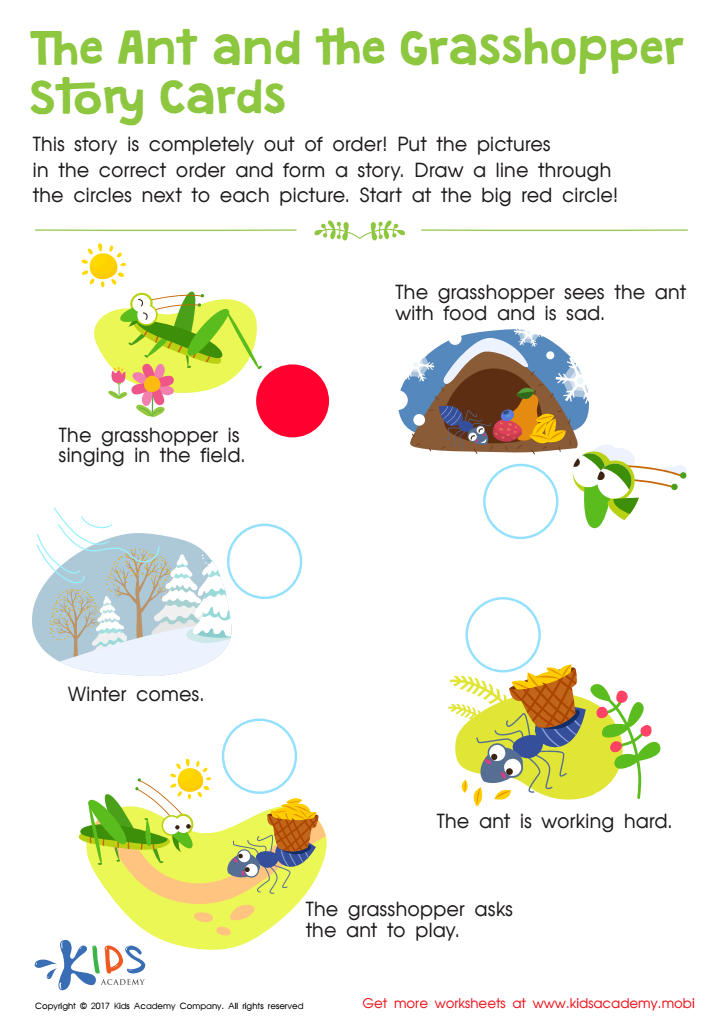
The Ant and The Grasshopper Worksheet
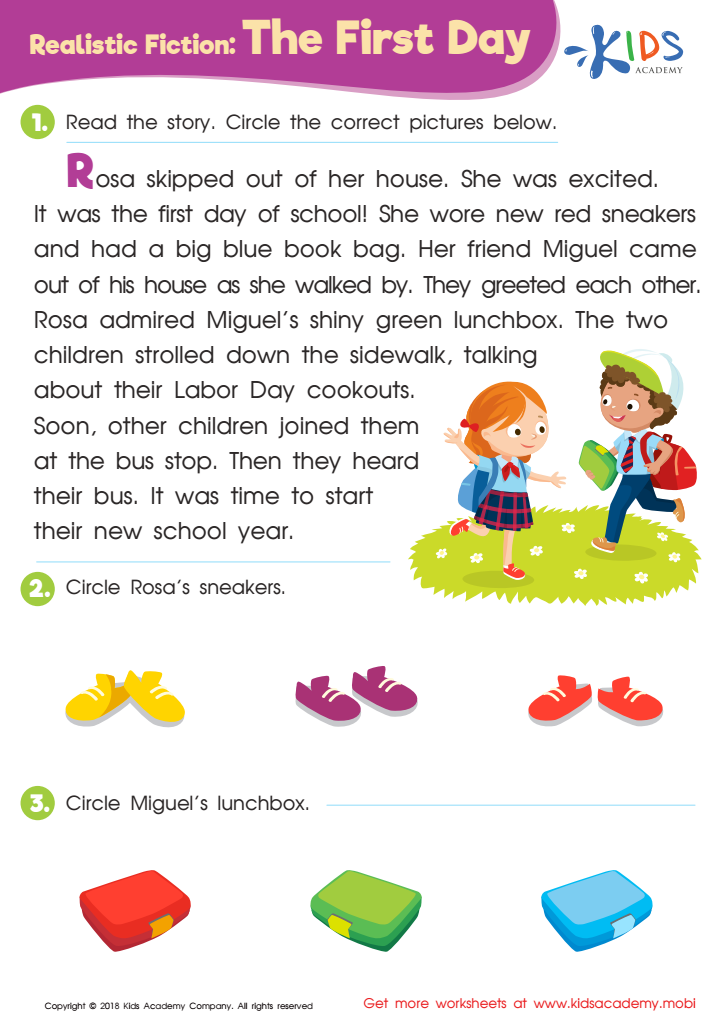
Realistic Fiction: The First Day Worksheet
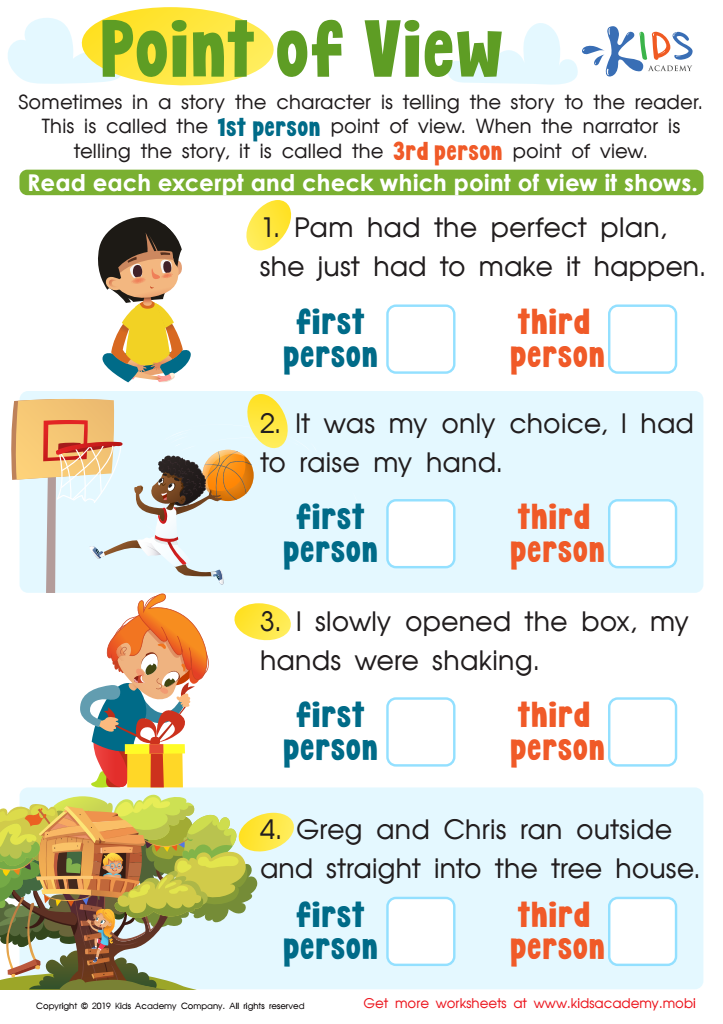
Point of View Printable







Parents and teachers should care about Critical Thinking in Grade 2 Reading Fiction because it is crucial for developing essential cognitive skills in young learners. At this age, children are transitioning from learning to read to reading to learn, making it the perfect time to foster critical thinking. Engaging with fiction not only boosts their imagination and creativity but also allows them to analyze characters, plot, and themes, enhancing comprehension.
By encouraging discussion about stories, parents and teachers can help children draw connections to their own lives, develop empathy, and understand different perspectives. Critical thinking skills also assist students in making inferences, predicting outcomes, and evaluating the motives of characters, as they learn to ask questions and form opinions rather than passively consume information.
Moreover, these skills are foundational for later academic success, empowering children to tackle complex texts and articulate their thoughts confidently. Ultimately, fostering critical thinking in reading fiction nurtures well-rounded individuals capable of both analytical thought and emotional intelligence, preparing them not only for future educational endeavours but for becoming discerning, empathetic members of society. Engaging young minds in critical analysis of fiction promotes lifelong learning and a deeper appreciation for literature.