
Cultural awareness Community Worksheets
3 filtered results
Difficulty Level
Grade
Age
-
From - To
Subject
Activity
Standards
Discover our engaging Cultural Awareness Community Worksheets designed to help young learners explore and appreciate diverse cultures. These worksheets encourage children to recognize differences and similarities among various communities, fostering empathy and respect. With interactive activities and real-life scenarios, students can develop vital social skills while enhancing their understanding of cultural diversity. Perfect for classrooms or at-home learning, our comprehensive resources promote open discussions, critical thinking, and respect for others. Equip your students with the tools to become compassionate global citizens. Browse our selection and empower the next generation to celebrate and embrace cultural differences in their communities!
Favorites
With answer key
Interactive
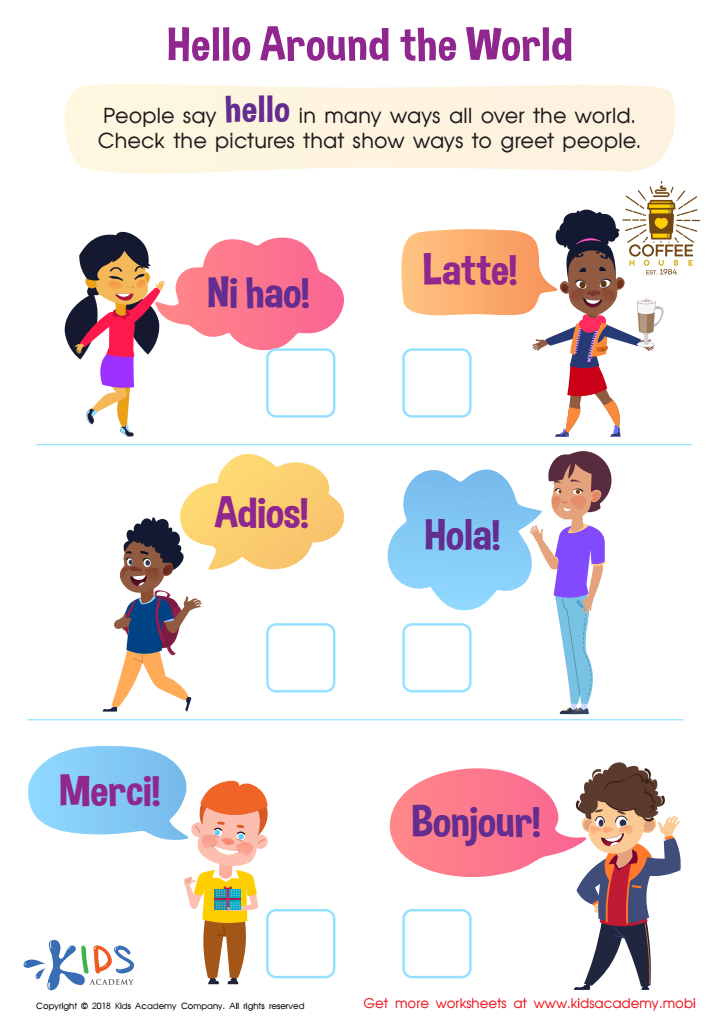
Hello Around the World Worksheet
This fun and cheery worksheet helps kids explore different cultures and how people greet each other around the world. With colorful pictures and clues, they'll check off greetings from different countries and learn more about the world.
 Assign to My Students
Hello Around the World Worksheet
Worksheet
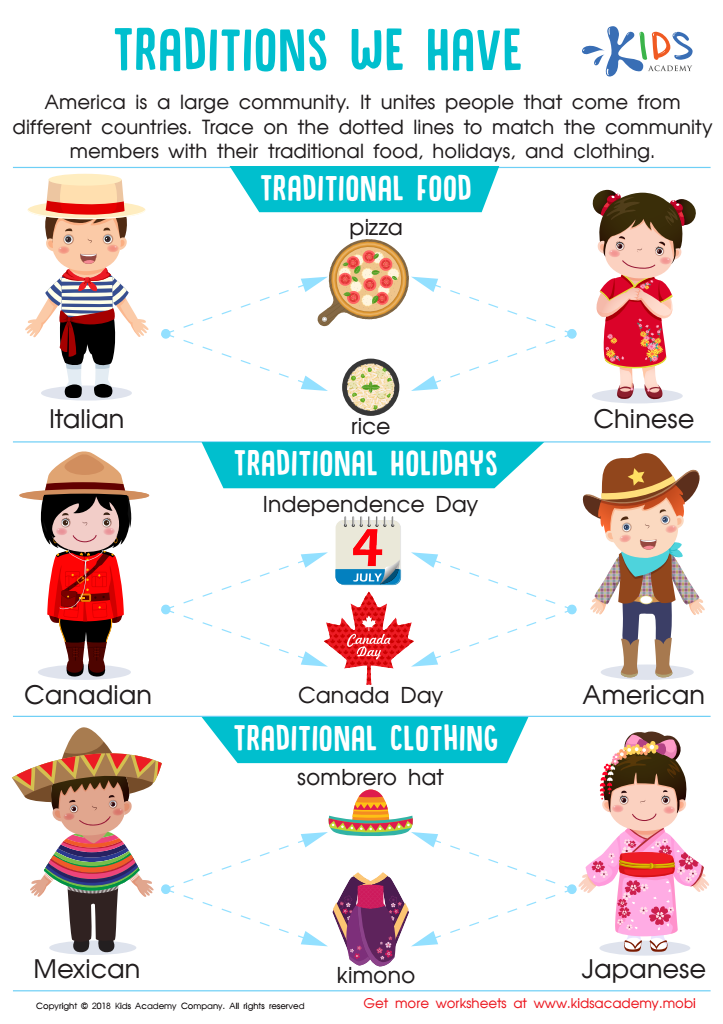
Traditions We Have Worksheet
Help your child learn about the world's diverse cultures with this tracing sheet. Trace the dotted lines to match different community members with their traditional holidays, foods and clothing. America is just one of many countries with multiple communities living together - teach your child that everybody has different backgrounds and customs, opening their minds to an even bigger world.
Traditions We Have Worksheet
Worksheet
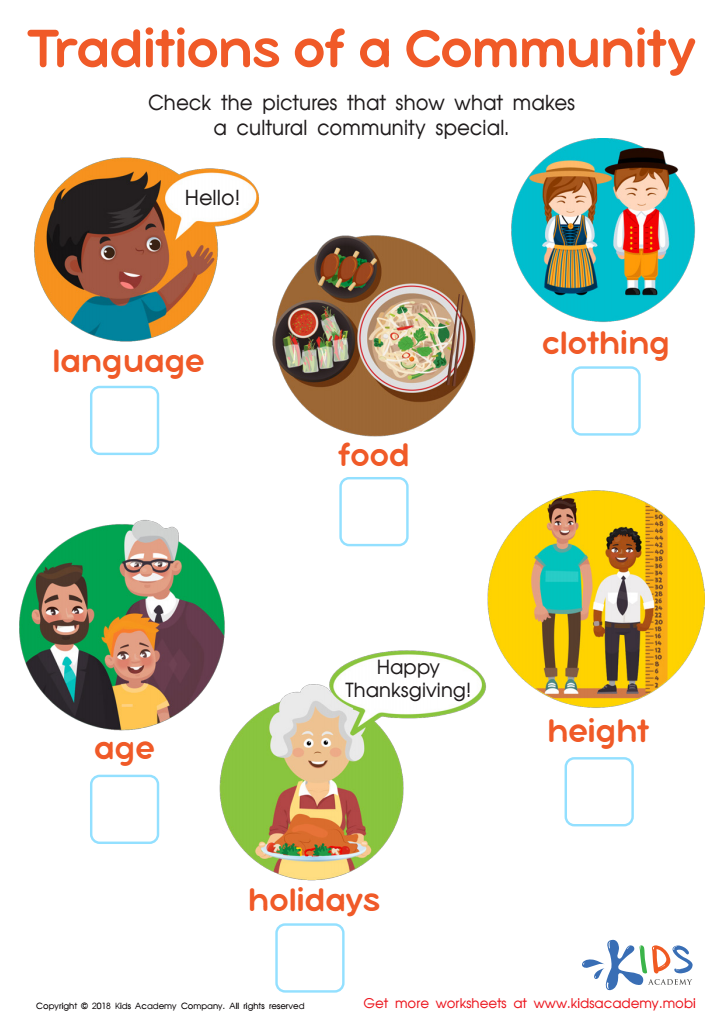
Traditions of a Community Worksheet
Does your child understand the differences between communities? Show them this printable PDF and ask them to identify the traditions that make each unique. Check the images, then discuss what happens in each community.
Traditions of a Community Worksheet
Worksheet
Join Kids Academy for Free
Who is primarily going to use this learning content?






Cultural awareness is crucial for both parents and teachers as it fosters a more inclusive and understanding environment for all children. In today's diverse society, children come from various cultural backgrounds, each bringing unique perspectives, traditions, and values. By being culturally aware, parents and teachers can promote respect and empathy among students, reducing biases and stereotypes that may lead to discrimination or conflict.
Moreover, culturally aware educators are better equipped to create engaging curricula that reflect the richness of different cultures. This not only enhances learning and retention but also allows students to see themselves represented in the material, fostering a sense of belonging. Parents play a key role in setting the foundation for cultural awareness by sharing their own traditions and encouraging curiosity about other cultures within their families.
A culturally aware community also strengthens social cohesion, as awareness leads to collaboration and mutual respect. Encouraging dialogue about cultural differences helps children develop critical thinking and interpersonal skills that are essential for navigating a multicultural world. Ultimately, fostering cultural awareness in educational settings supports children's holistic development, preparing them to be compassionate and informed global citizens. For these reasons, parents and teachers should prioritize cultural awareness in their interactions and activities.








