Historical Knowledge Social Studies Worksheets - Page 2
26 filtered results
-
From - To
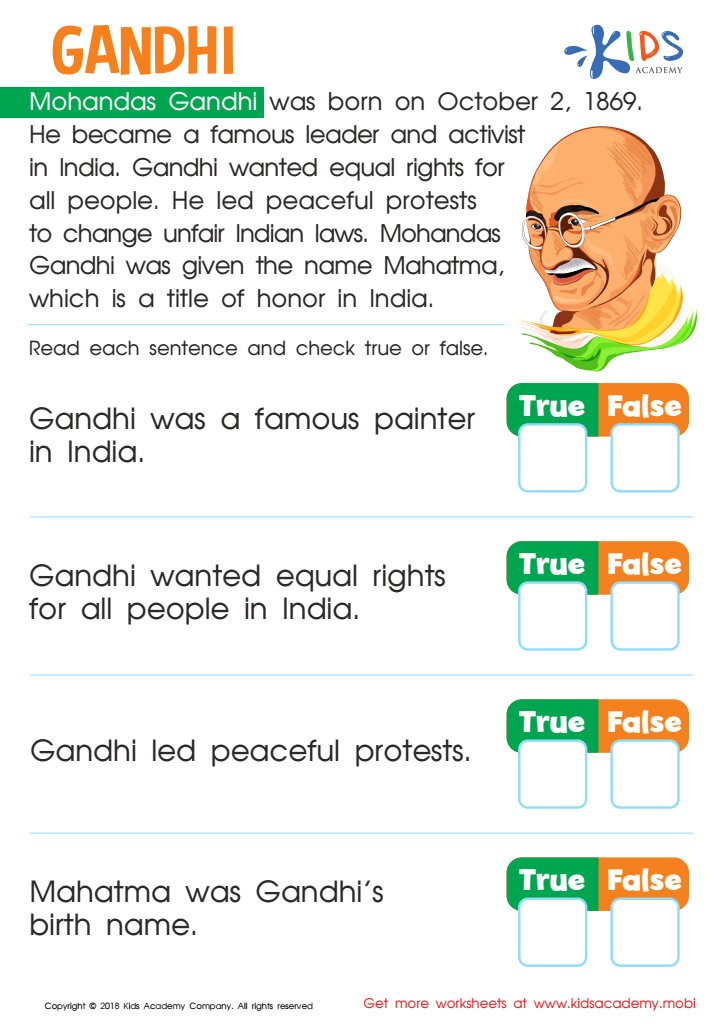
Gandhi Worksheet
 Assign to My Students
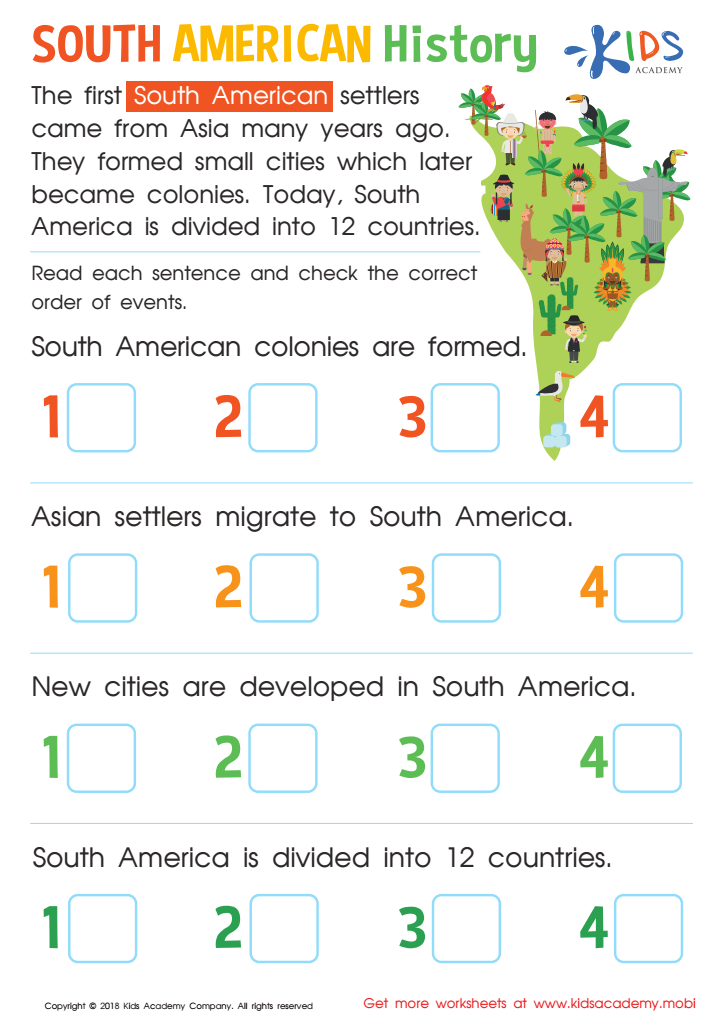
South American History Worksheet








Parents and teachers should care about Historical Knowledge in Social Studies because it fosters critical thinking, cultural awareness, and civic responsibility in children. Understanding history equips students with the ability to analyze past events, appreciate different perspectives, and develop informed opinions about the world around them. This foundation helps them connect historical events to contemporary societal issues, enhancing their understanding of the significance of history in shaping our present.
Moreover, studying history cultivates empathy and respect for diverse cultures and communities. Children learn about the struggles, triumphs, and narratives of various groups, which promotes inclusivity and understanding in increasingly diverse societies. This awareness is essential for building a cohesive community where everyone’s story is valued.
Additionally, historical knowledge contributes to responsible citizenship. By understanding the evolution of governments, rights, and social movements, students are empowered to engage in civic duties, advocate for justice, and participate actively in democracy.
Ultimately, when parents and teachers prioritize Historical Knowledge in Social Studies, they are equipping children with the essential skills and insights needed to navigate an ever-changing world, fostering future generations that are informed, empathetic, and responsible.








