Spatial awareness Social Studies Worksheets
8 filtered results
-
From - To
Enhance your students' geographical skills and understanding of the world with our Spatial Awareness Social Studies Worksheets. Designed for early learners, these worksheets help children develop critical spatial thinking through engaging activities that include map reading, recognizing landmarks, and understanding spatial relationships. Our high-quality, printable resources make learning interactive and fun while fostering crucial learning skills. Perfect for reinforcing classroom lessons or homeschooling, these worksheets cater to various learning styles and ensure that foundational geography concepts are comprehensively covered. Start exploring our collection today to broaden your child's horizons and improve their spatial awareness skills!
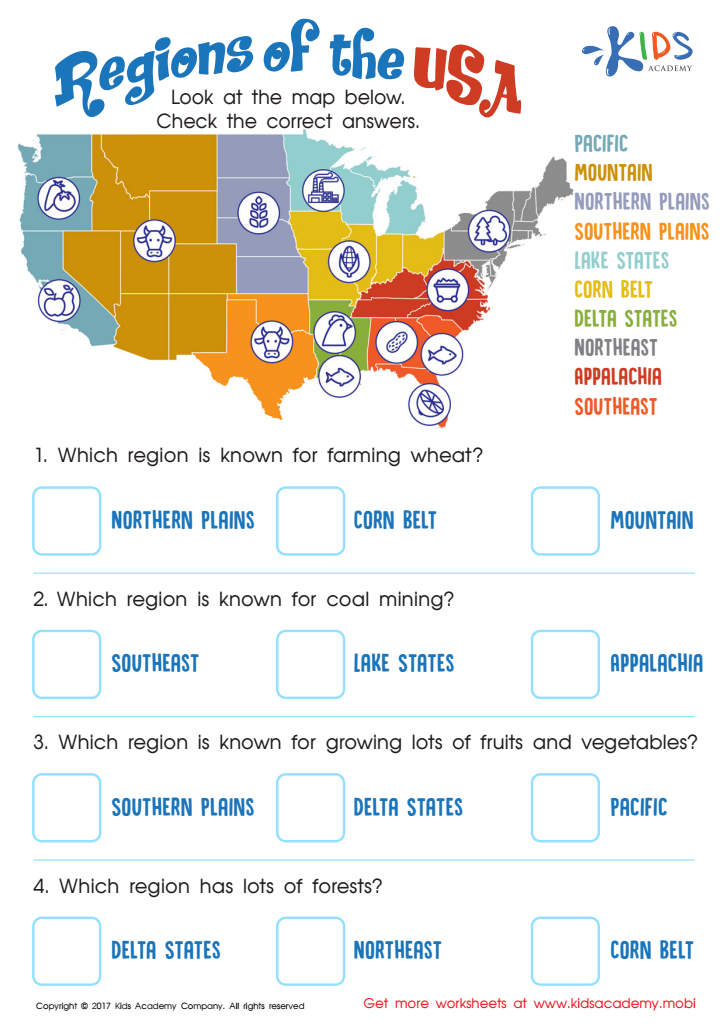
Regions of the USA Worksheet
 Assign to My Students

My Bedroom Worksheet
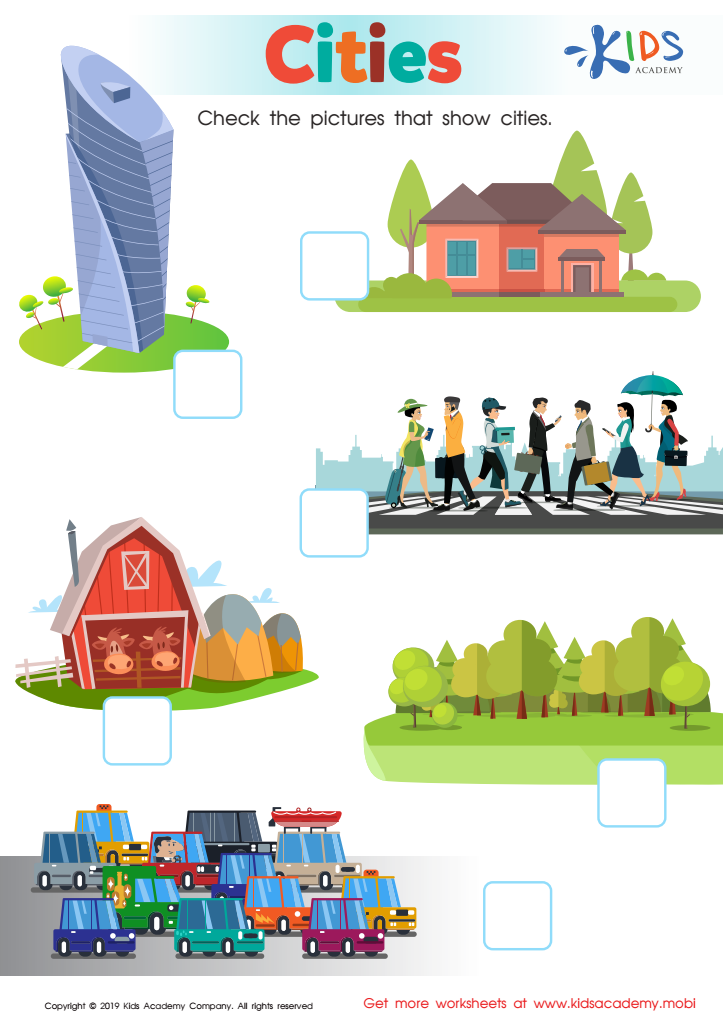
Cities Worksheet
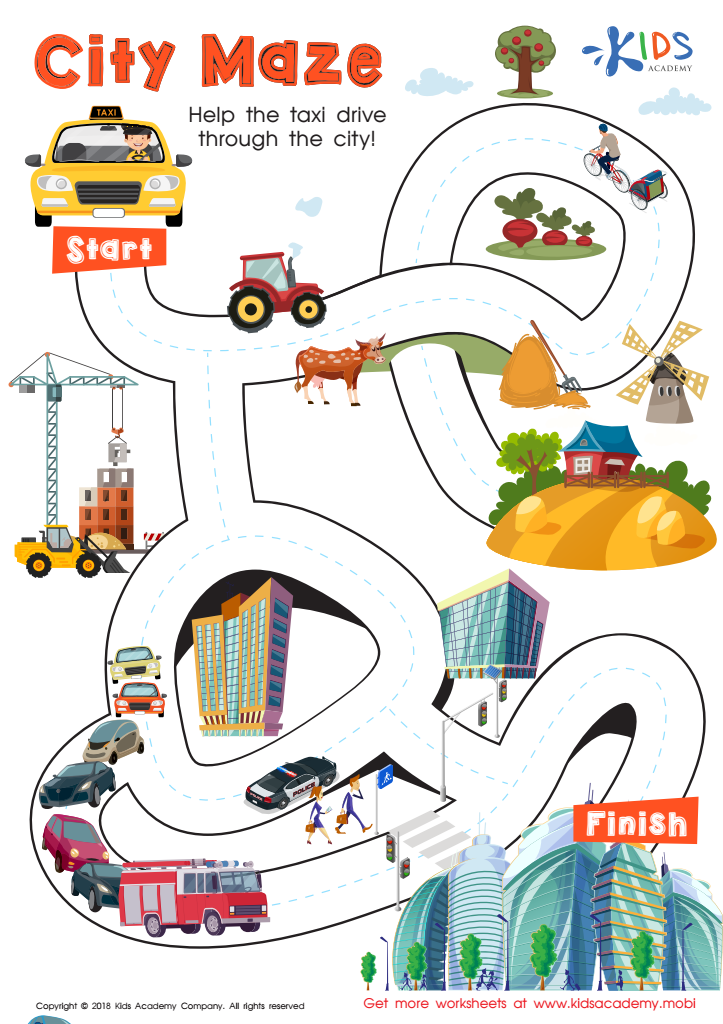
City Maze Worksheet
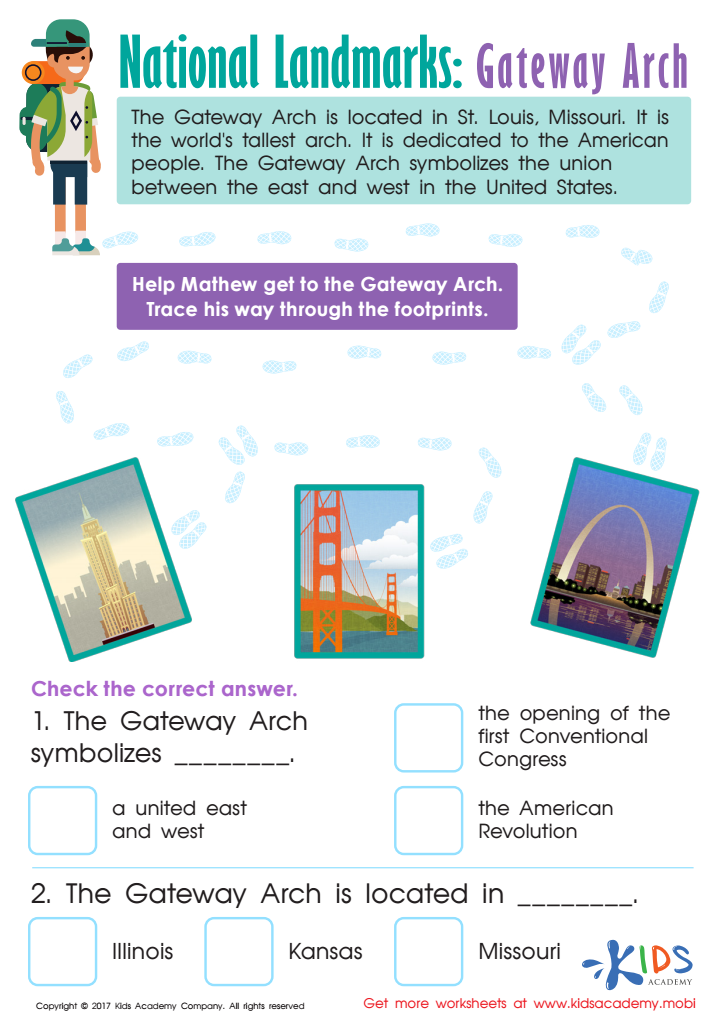
Gateway Arch Printable Worksheet
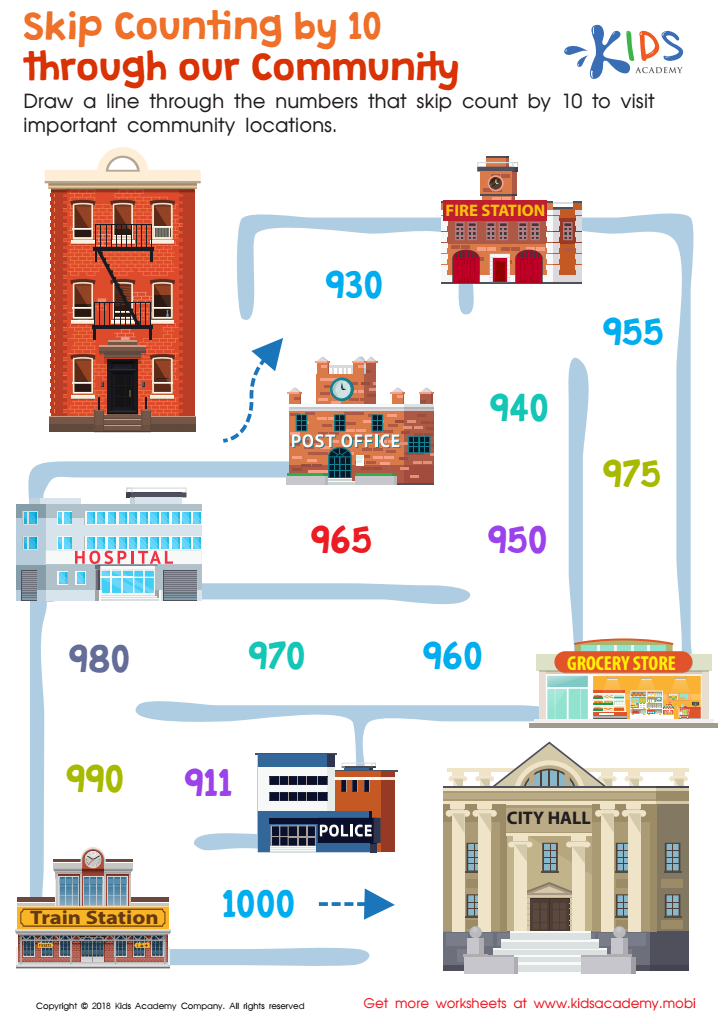
Skip Counting by 10 Through Our Community Worksheet
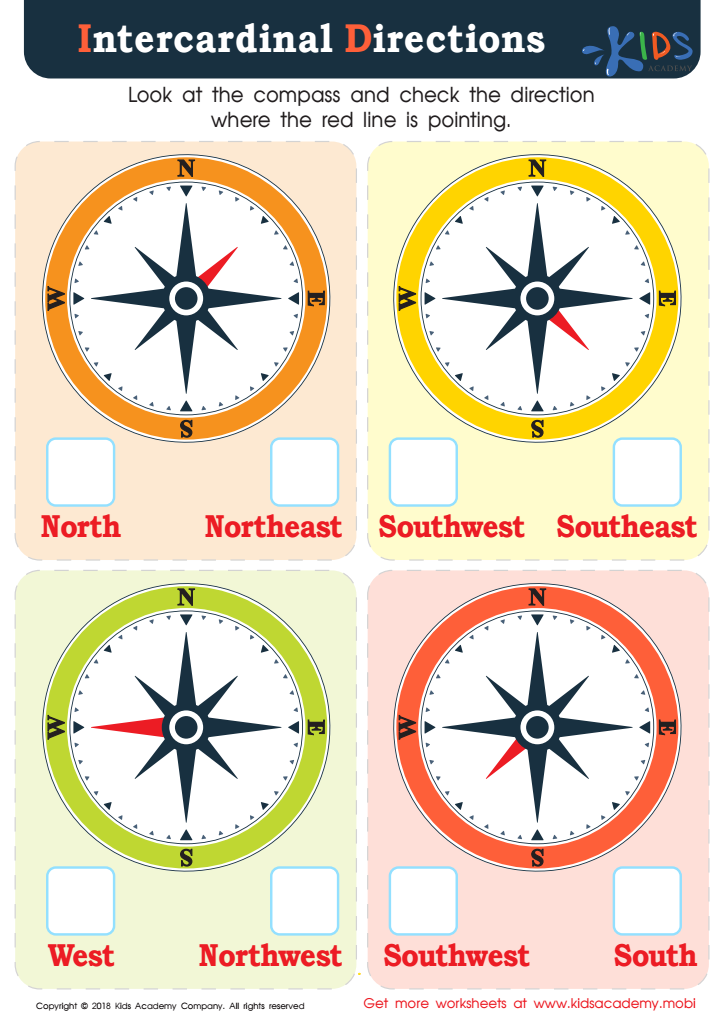
Intercardinal Directions Worksheet
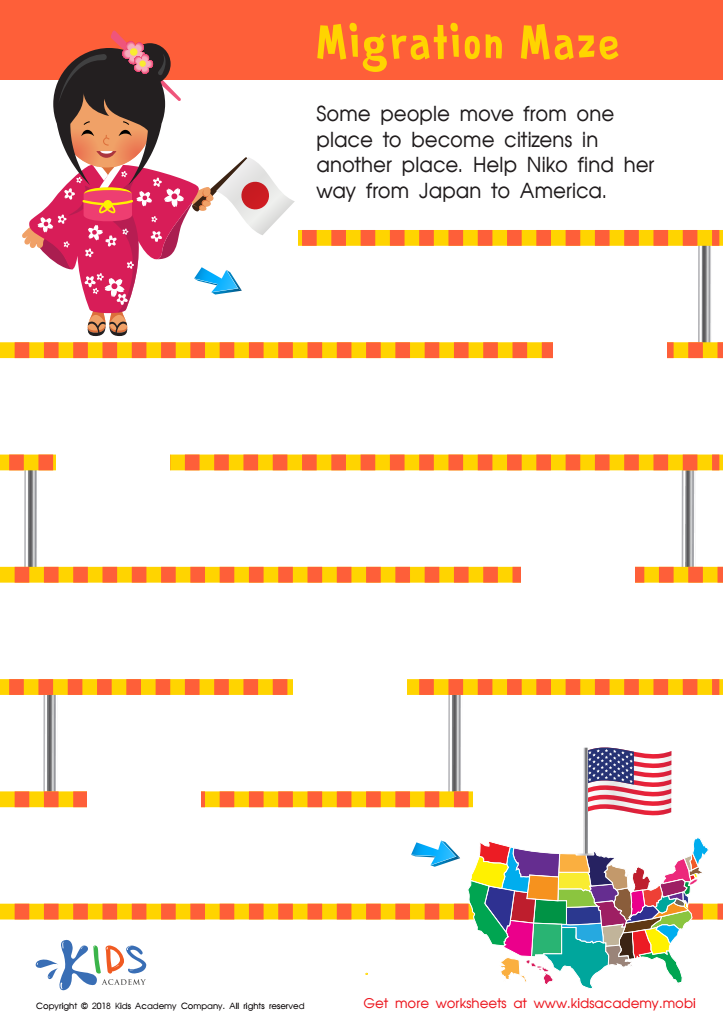
Migration Maze Worksheet







Spatial awareness in Social Studies is crucial for both cognitive development and practical life skills, making it essential for parents and teachers to prioritize. Understanding spatial relationships helps children grasp geography, which is the bedrock for comprehending how cultures, environments, and human activities intertwine. It enhances their ability to read maps, understand global positioning, and navigate spaces—skills that are increasingly valuable in our interconnected world.
Moreover, spatial awareness nurtures problem-solving abilities and critical thinking. By recognizing patterns and spatial relationships, children improve their ability to reason and logically analyze the information, which is transferable across diverse academic disciplines. Additionally, spatial skills are linked to success in STEM fields, fostering a generation capable of technological and scientific advancements.
From a social perspective, spatial awareness contributes to a child's understanding of community structures and societal organization. Recognizing the spatial layouts of cities, transportation systems, and even historical migrations enriches their empathy and appreciation for different cultures and histories. Therefore, incorporating spatial awareness in Social Studies is not merely about academic growth—it's about equipping children with a comprehensive toolkit to navigate and contribute to the world meaningfully. By prioritizing this development, parents and teachers lay a strong foundation for a well-rounded and informed future generation.