Understanding democracy Social Studies Worksheets
3 filtered results
-
From - To
Explore our "Understanding Democracy" Social Studies Worksheets, designed to engage young learners in grasping the fundamentals of democracy. These worksheets offer interactive activities, including fill-in-the-blanks, matching exercises, and critical thinking questions that help students comprehend the key concepts of democracy, such as voting, citizenship, and civic responsibility. By exploring topics like the importance of diverse opinions and the function of government, children will develop essential skills to participate actively in society. Perfect for classroom or home use, these resources are tailored to enhance understanding and inspire discussions about democracy's role in everyday life. Unlock your students' potential with fun, educational worksheets!
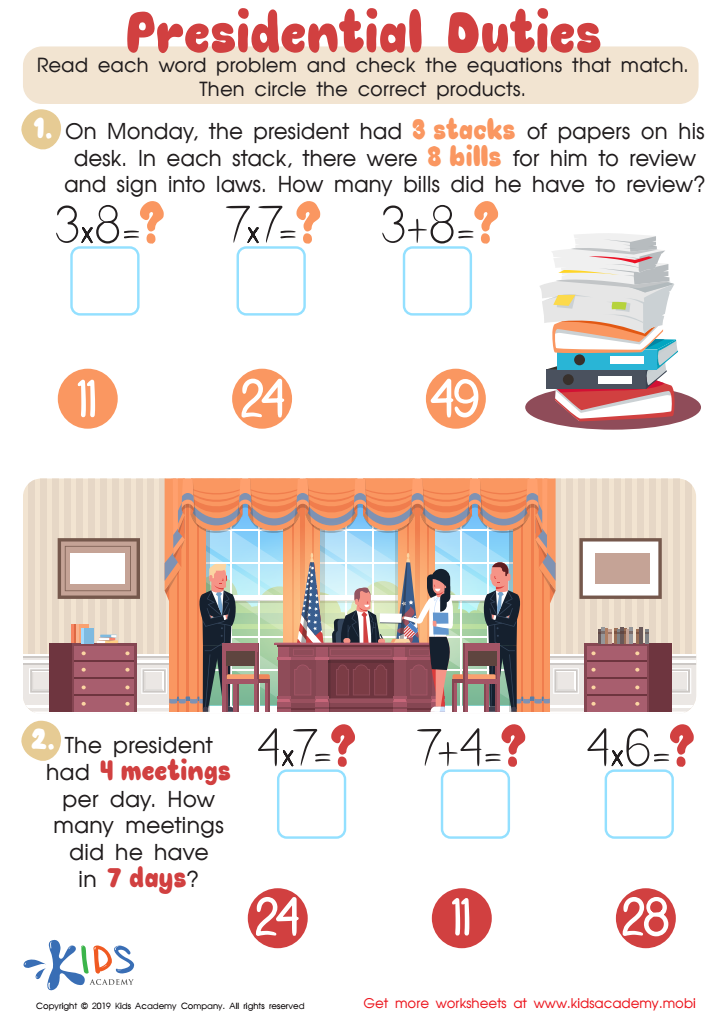
Presidential Duties Worksheet
 Assign to My Students
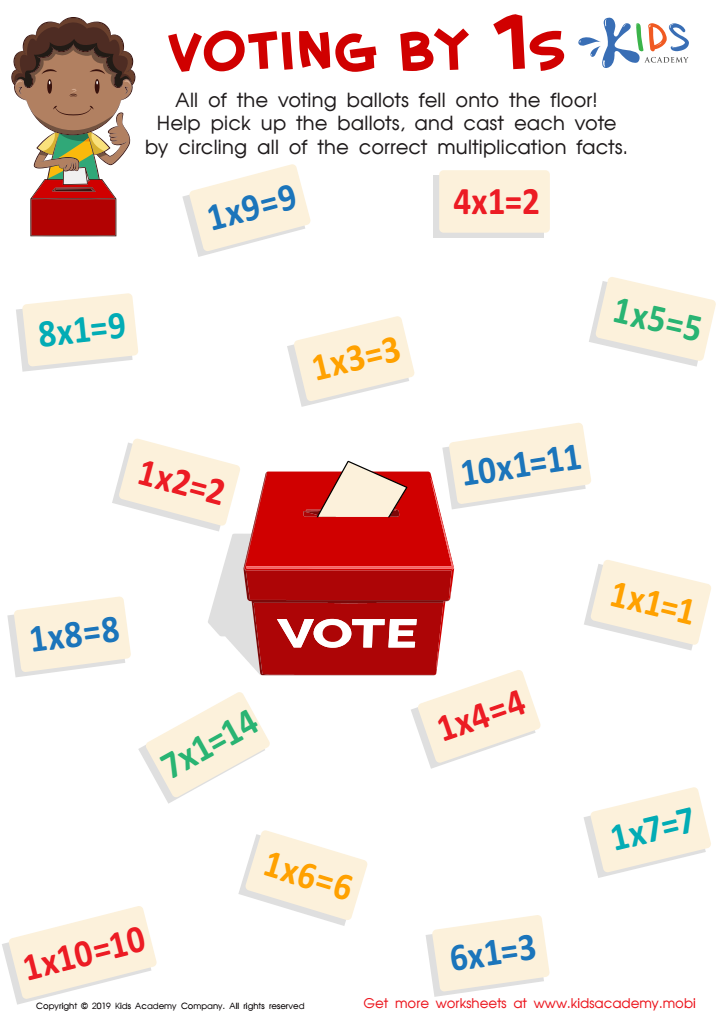
Voting by 1s Worksheet
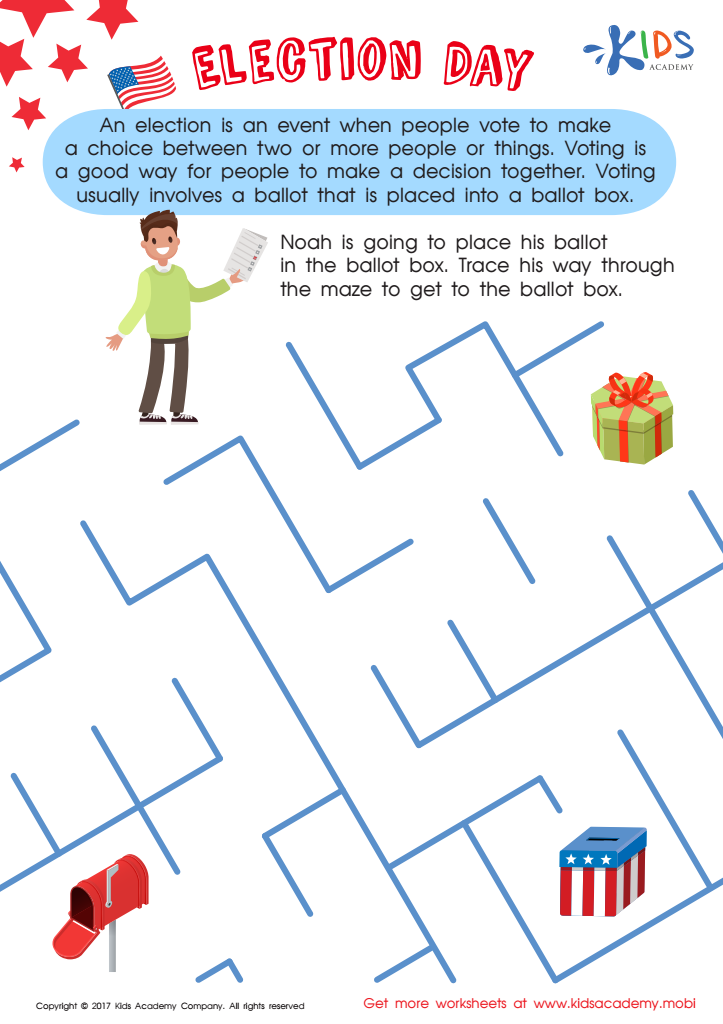
Election Day Worksheet








Understanding democracy through Social Studies is crucial for both parents and teachers, as it shapes informed, active citizens. Democracy is not just a form of government; it’s a fundamental set of values and principles that emphasize equality, participation, and civic responsibility. Teaching children about democracy helps them appreciate the importance of their voice and rights within society.
For parents, fostering a deep understanding of democratic principles equips children to navigate their personal and collective identities. It cultivates critical thinking as they learn to evaluate information and recognize various perspectives. By engaging in discussions about civil rights, responsibilities, and the implications of their actions, children develop a sense of agency and social awareness.
Teachers play a pivotal role in guiding students through the complexities of democracy. Integrating democratic values into the curriculum encourages collaboration, empathy, and respect for diversity. Beyond classroom learning, it prepares students for active participation in their communities, paving the way for future leaders.
Ultimately, an educational foundation in democracy promotes an enduring sense of responsibility toward local and global issues, encouraging children to contribute thoughtfully to society. Parents and teachers, therefore, have a shared duty to instill these essential concepts, which are vital for a thriving democratic society.








