Simplifying Fractions Grade 3 Worksheets
10 filtered results
-
From - To
Unlock your child's mathematical potential with our engaging "Simplifying Fractions Grade 3 Worksheets." Designed specifically for third-grade students, these worksheets provide a clear and interactive approach to understanding simplifying fractions. Each worksheet features colorful visuals and step-by-step instructions, making complex concepts easily digestible. Your child will practice identifying common factors, reducing fractions to their simplest form, and gain confidence in their math skills. Our resources cater to diverse learning styles, ensuring every student can thrive. Let learning fractions be a fun and rewarding experience today—download our free worksheets and watch your child excel in foundational math skills!
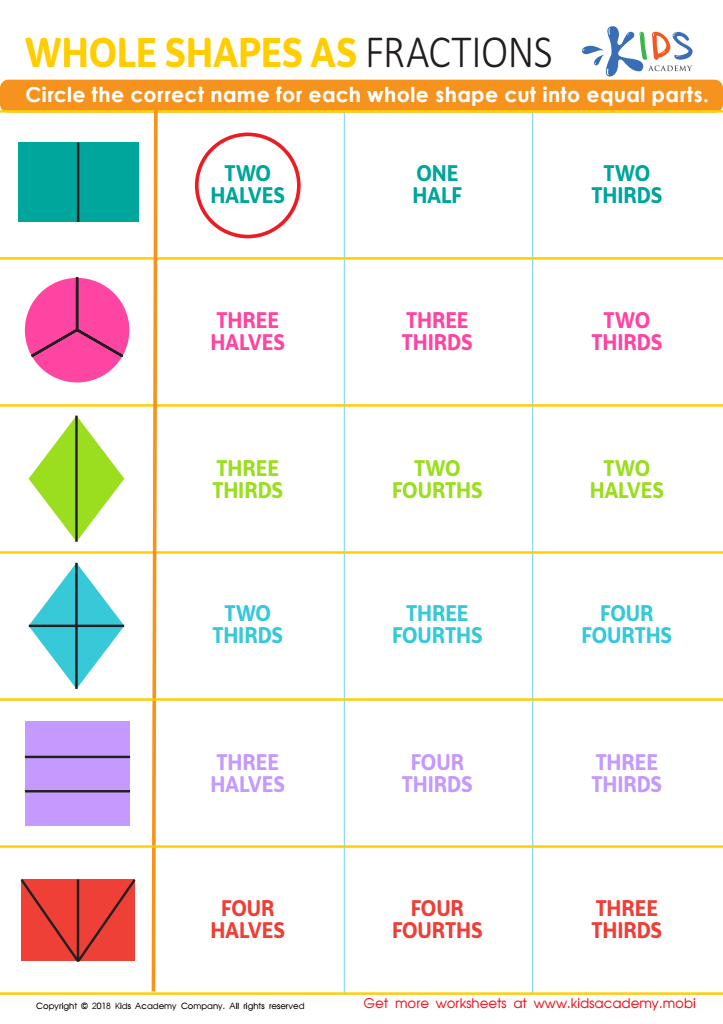
Whole Shapes as Fractions Worksheet
 Assign to My Students
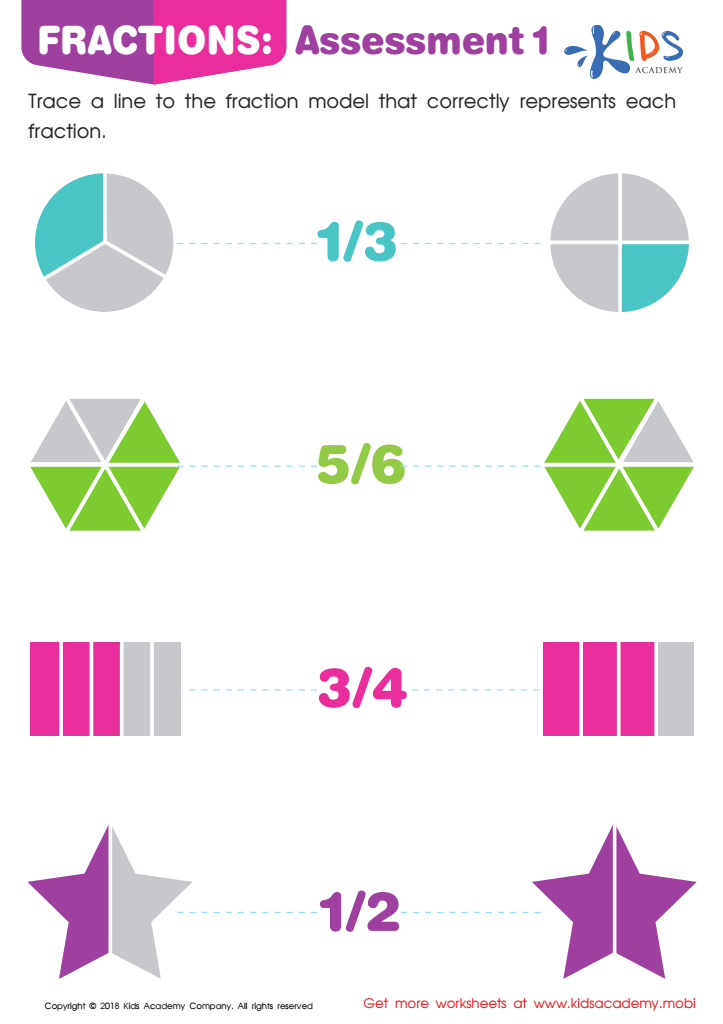
Fractions: Assessment 1 Worksheet
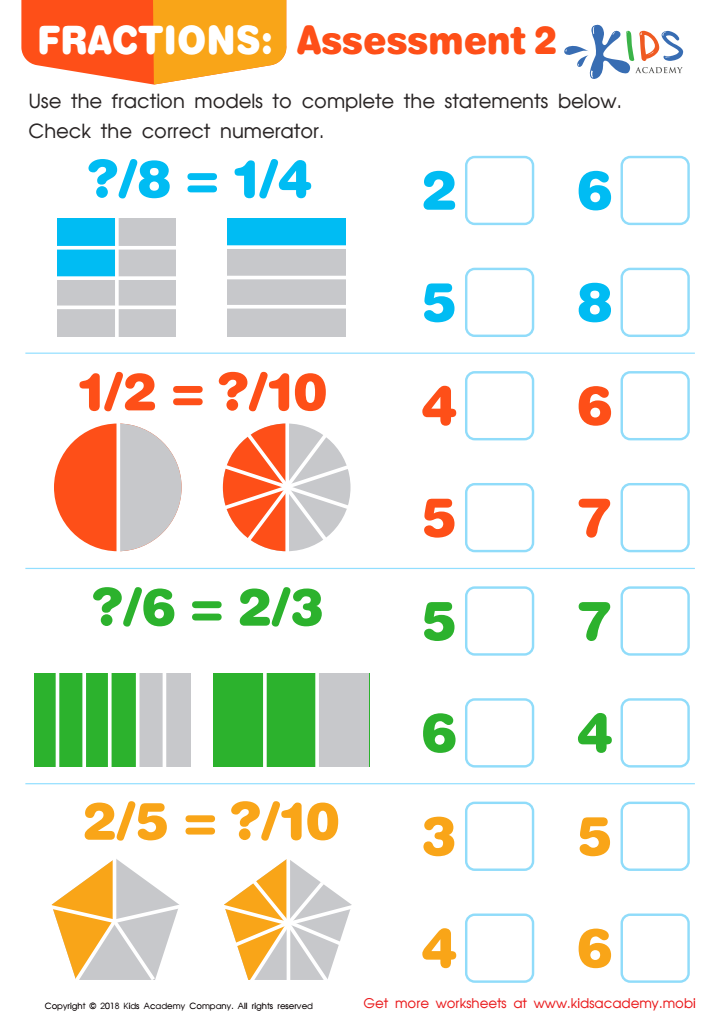
Fractions: Assessment 2 Worksheet
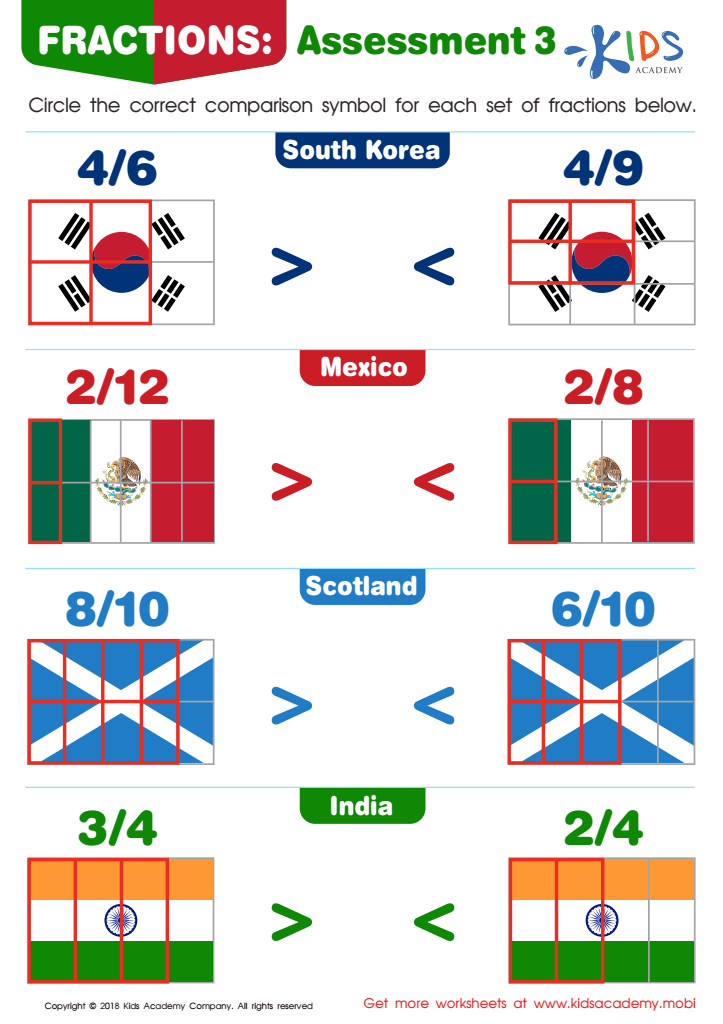
Fractions: Assessment 3 Worksheet
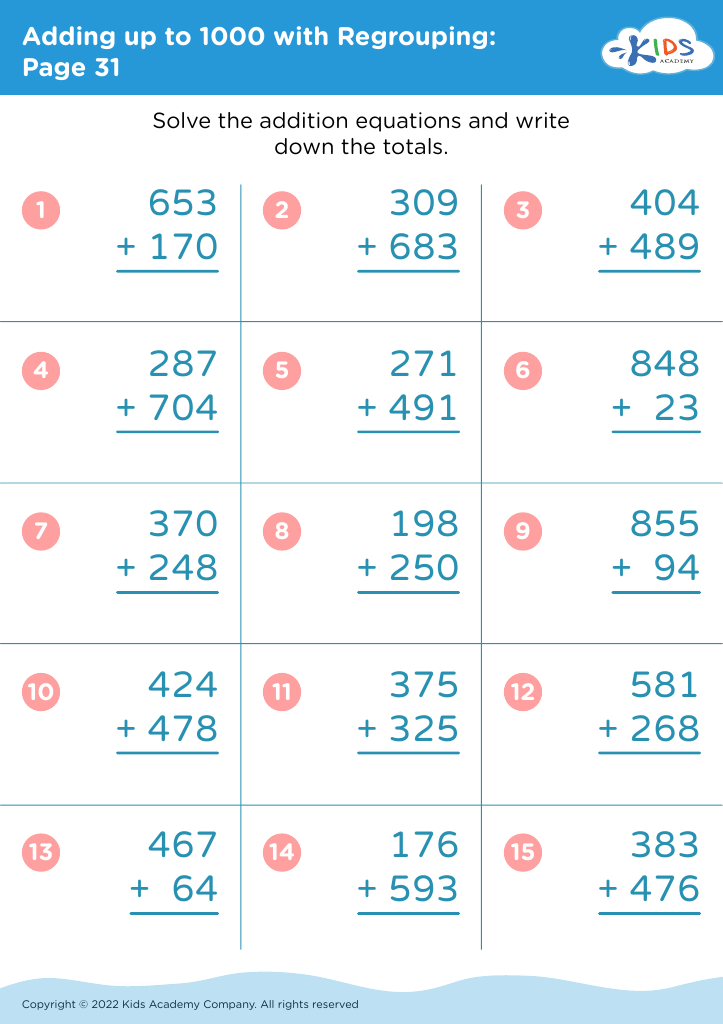
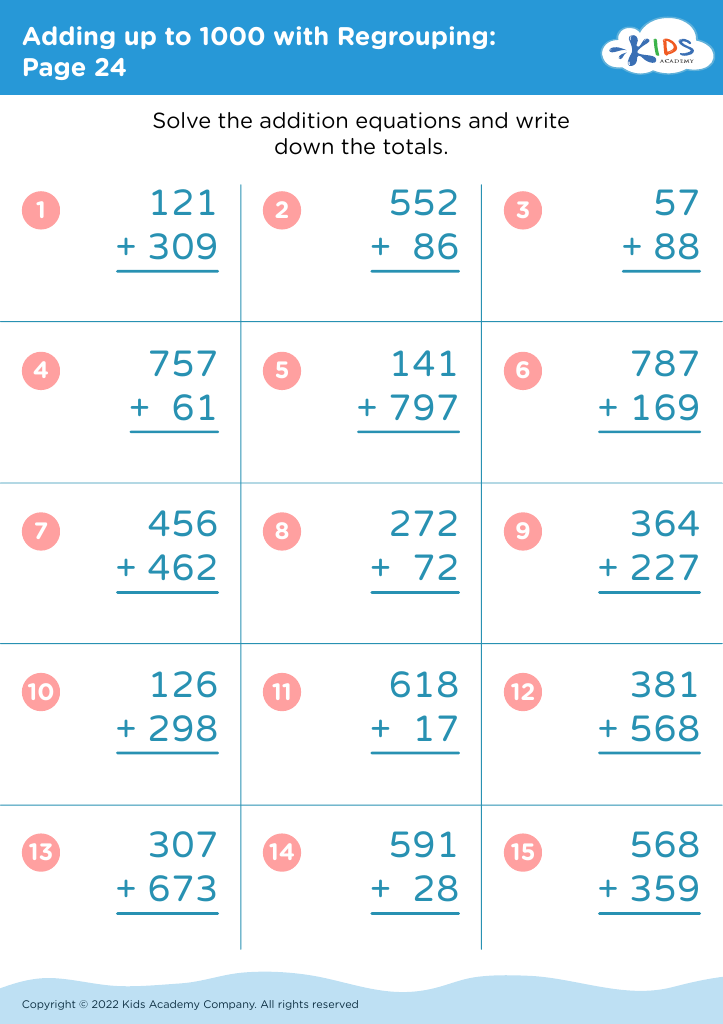
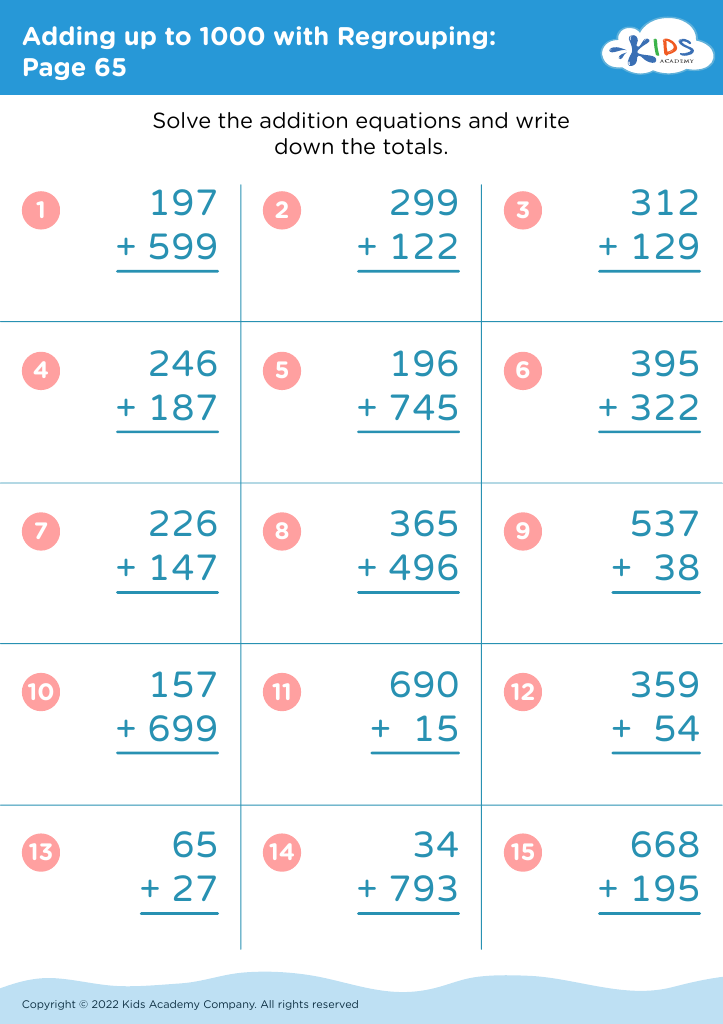







Simplifying fractions is an essential skill for third graders that lays the groundwork for more advanced mathematical concepts. Understanding how to simplify fractions helps students grasp the idea of equivalent values, which fosters overall number sense. When parents and teachers emphasize simplifying fractions, they enhance children’s abilities to recognize patterns and relationships in numbers, making complex math more manageable as they progress through higher grades.
Additionally, learning to simplify fractions supports problem-solving skills. For instance, if a child can reduce fractions to their simplest form, they can effectively tackle real-world problems that involve sharing, measuring, or dividing. This practical application helps students see the relevance of math in everyday life, which can increase their motivation and interest in the subject.
Moreover, teaching fraction simplification cultivates persistence and critical thinking. As students learn to analyze fractions and determine common factors, they develop reasoning skills that transfer to other subjects and areas of life. By caring about simplifying fractions, parents and teachers play a vital role in nurturing confident, capable learners equipped to face future mathematical challenges with enthusiasm. Ultimately, this focus contributes to a solid foundation that will benefit students well beyond third grade.