
Reading Non-Fiction worksheets activities for Ages 3-8
4 filtered results
Difficulty Level
Grade
Age
-
From - To
Subject
Activity
Standards
Explore our engaging Reading Non-Fiction worksheets designed for children ages 3 to 8! These interactive activities encourage young learners to delve into fascinating real-world topics, enhancing their reading comprehension and critical thinking skills. Each worksheet features vibrant illustrations and age-appropriate prompts, making learning enjoyable and accessible. From exploring animals and space to understanding everyday objects, kids will develop a love for reading non-fiction. Perfect for home or classroom use, our worksheets support early literacy and can be tailored to suit various learning styles. Begin your child's journey into the world of non-fiction today and watch their curiosity grow!
Favorites
With answer key
Interactive
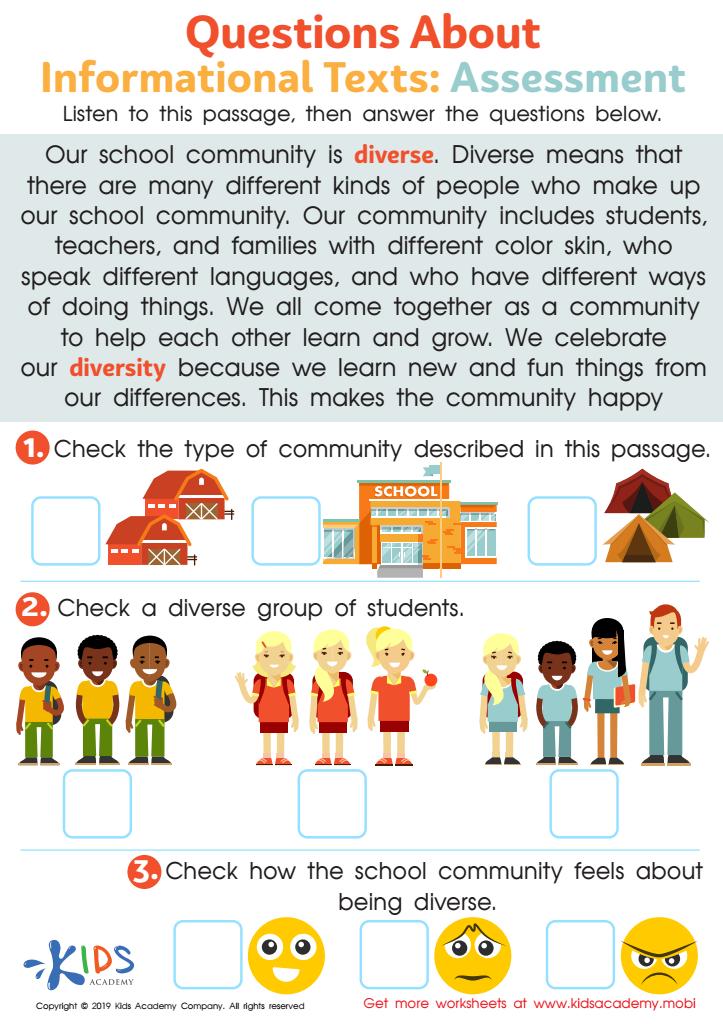
Questions About Informational Texts: Assessment 1 Worksheet
Ask your students: What comes to mind when we talk about a community? What different habits do people practice? What do fellow students do that seems strange? Read this passage aloud to your kindergartners and make sure they understand it. Then, answer the questions at the bottom of the page. (80 words)
 Assign to My Students
Questions About Informational Texts: Assessment 1 Worksheet
Worksheet
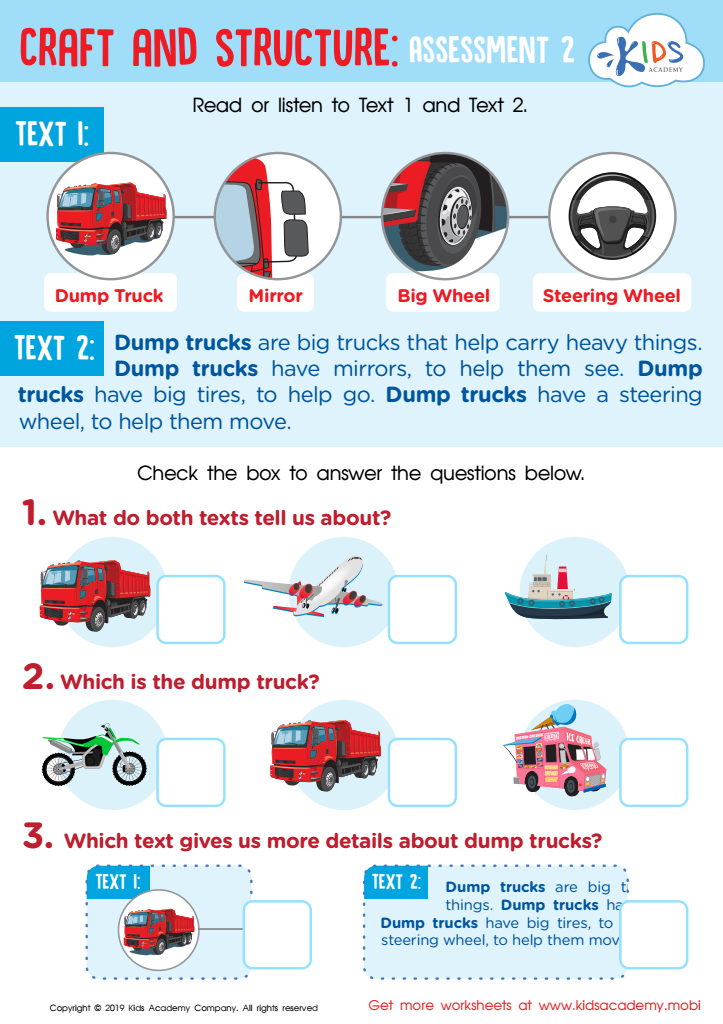
Craft and Structure: Assessment 2 Worksheet
Good readers need to analyze text features and use picture clues to understand. This assessment worksheet gives your child info in different formats and they can show understanding using answer options to check the correct answers. (80 words)
Craft and Structure: Assessment 2 Worksheet
Worksheet
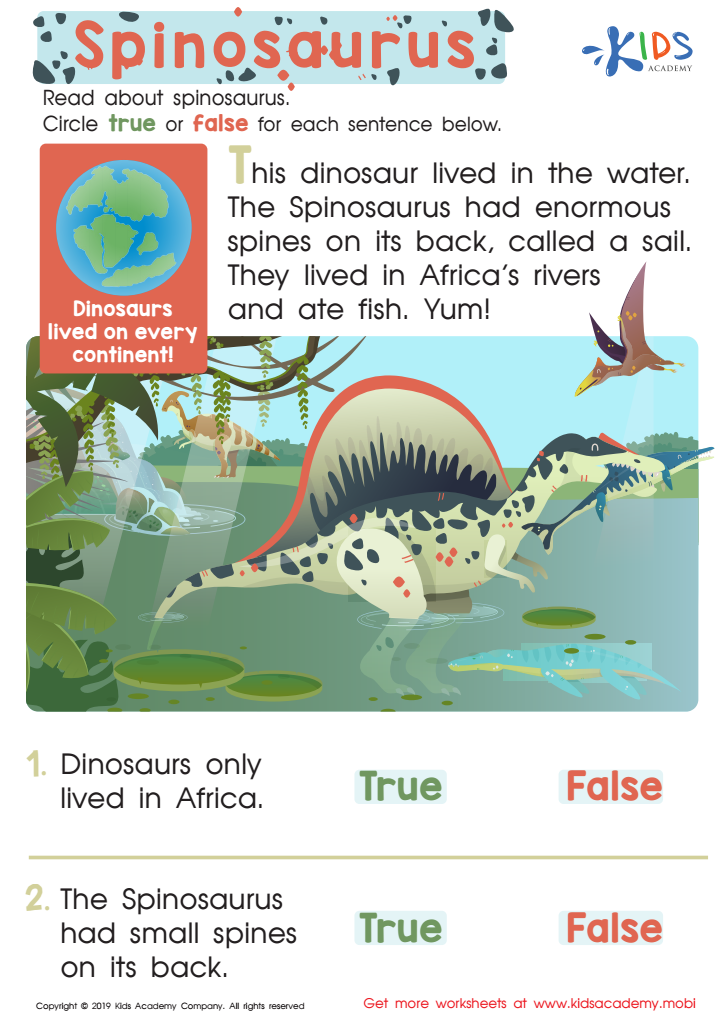
Spinosaurus Assessment Worksheet
Take your child on a journey to discover the Spinosaurus! This worksheet combines an engaging nonfiction passage about this incredible dinosaur with comprehension questions. Invite kids to read the text before deciding if the statements are true or false. Then, have them circle the right answers to complete the activity.
Spinosaurus Assessment Worksheet
Worksheet
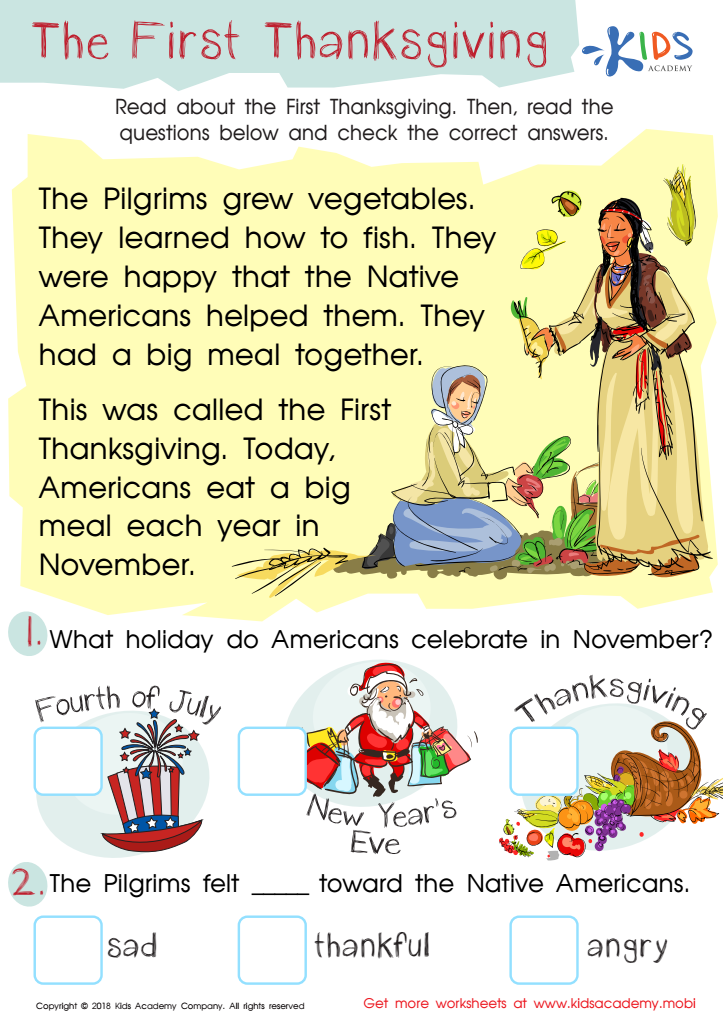
Assessment: First Thanksgiving Worksheet
When the Pilgrims arrived in America in 1620, they met the Native Americans and formed a pact to live in harmony. The Native Americans taught the Pilgrims how to survive in the new land, which helped them celebrate the First Thanksgiving. Read this text to your children and help them answer the questions below.
Assessment: First Thanksgiving Worksheet
Worksheet
Join Kids Academy for Free
Who is primarily going to use this learning content?







Reading non-fiction activities for children ages 3-8 are crucial for their cognitive and emotional development. Firstly, these activities spark curiosity as they introduce young learners to real-world concepts, enabling them to explore diverse topics like animals, space, history, and cultures. By engaging with non-fiction texts, children develop critical thinking skills; they learn to ask questions and seek answers, fostering a deeper understanding of the world around them.
Moreover, reading non-fiction enhances vocabulary and language skills. Non-fiction introduces children to new terminology and phrases associated with specific subjects, which enriches their overall language development. This broad vocabulary lays a strong foundation for effective communication.
Additionally, non-fiction books often contain illustrations and photographs, catering to visual learners and helping maintain interest. They serve as excellent tools for discussions between parents or teachers and children, encouraging dialogue and shared learning experiences.
Non-fiction reading can also help instill a sense of responsibility and awareness about social issues, environmental challenges, and other real-life scenarios, promoting civic-mindedness from a young age. By prioritizing non-fiction activities, parents and teachers empower children to become informed, curious, and empathetic individuals equipped for lifelong learning.








