Cursive Writing worksheets activities for Ages 3-9 - Page 2
26 filtered results
-
From - To
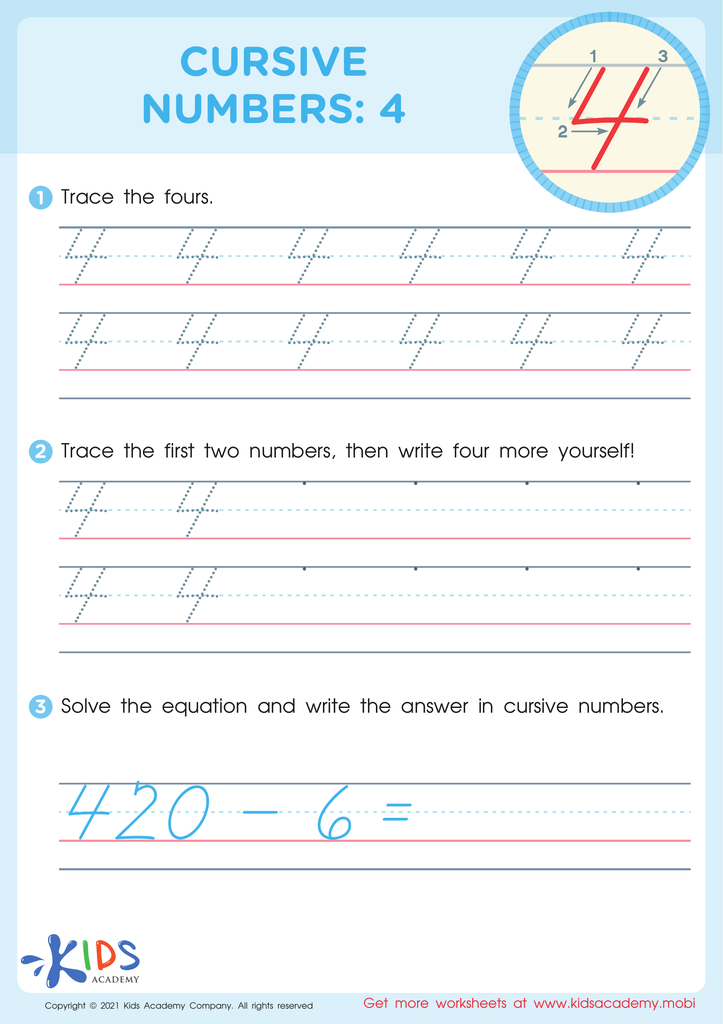
Cursive Numbers: 4 Worksheet
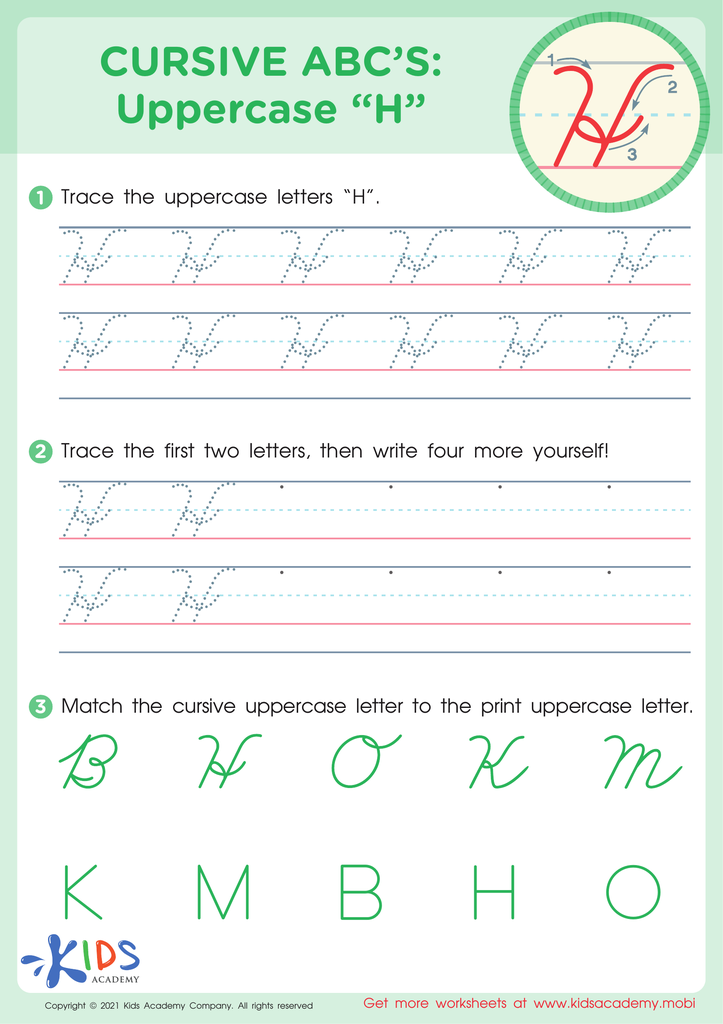
Cursive ABCs: Uppercase H






Cursive writing activities for children aged 3-9 play a crucial role in their developmental learning journey, and both parents and teachers should prioritize these exercises. Cursive writing enhances fine motor skills, which are essential for honing hand-eye coordination and dexterity. As children practice the fluid movements of cursive letters, they improve their grip and control, laying the groundwork for handwriting.
Moreover, cursive writing has cognitive benefits. It encourages children to develop quicker, more creative thinking patterns as they practice the connected flow of letters, fostering better retention and spelling. Research indicates that writing by hand, especially in cursive, can improve memory recall and comprehension compared to typing or using printed forms.
Additionally, engaging in cursive writing activities can boost children's self-esteem and confidence. Mastering a complex skill like cursive allows them to take pride in their neat, fluid writing style, which can be encouraging in academic environments.
Finally, cursive writing fosters a deeper appreciation for language and can make learning more enjoyable. As children express their thoughts and creativity through cursive, they cultivate a lifelong love for writing that extends beyond the classroom. By integrating cursive into their educational experiences, parents and teachers nurture well-rounded, capable learners.








