
Letter Sounds worksheets activities for Ages 4-6
2 filtered results
Difficulty Level
Grade
Age
-
From - To
Subject
Activity
Standards
Discover the joy of learning with our engaging Letter Sounds worksheets activities, specially designed to captivate young minds and foster a love for reading. Each worksheet is meticulously crafted to reinforce letter recognition and sound association, providing a solid foundation in phonics. Through a blend of fun and educational exercises, children will embark on a journey to master the alphabet and unlock the magic of words. Ideal for preschoolers and kindergarteners, our Letter Sounds worksheets activities are the perfect tool for parents and educators striving to inspire early literacy. Embrace the adventure of learning today and watch your child's reading skills blossom!
Favorites
With answer key
Interactive
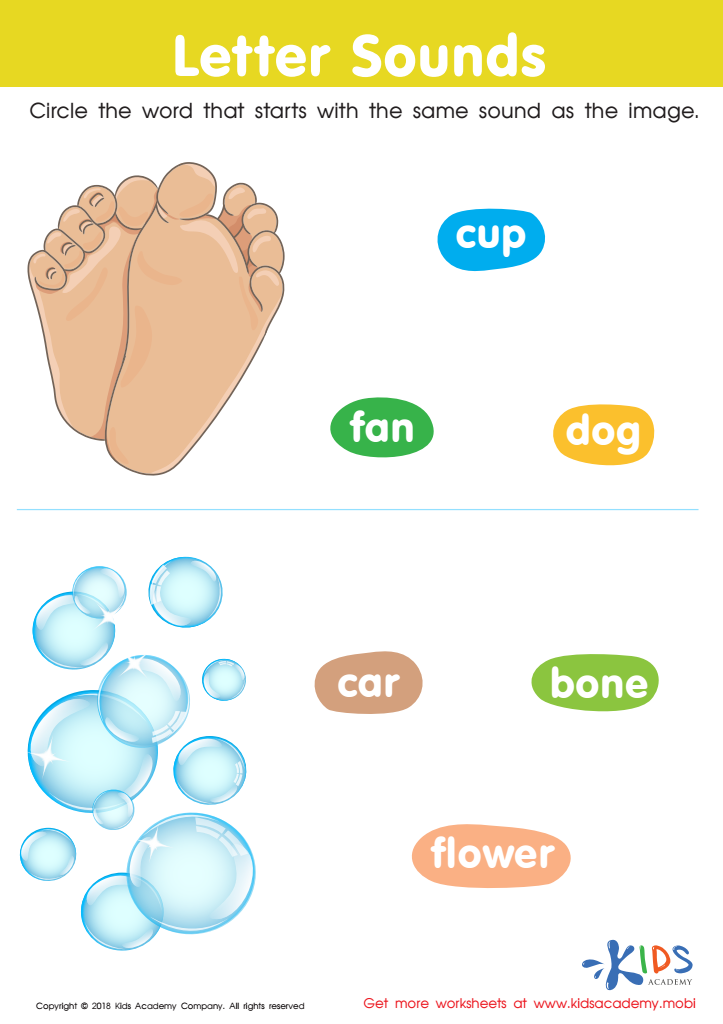
letter sounds Worksheet
Test your child's letter recognition skills with this worksheet. Match words to pictures and challenge them to say each image out loud and sound out the words beside it. Ask: Which word starts with the same letter as the picture? Then let them circle the right answer. Quick and easy!
 Assign to My Students
letter sounds Worksheet
Worksheet
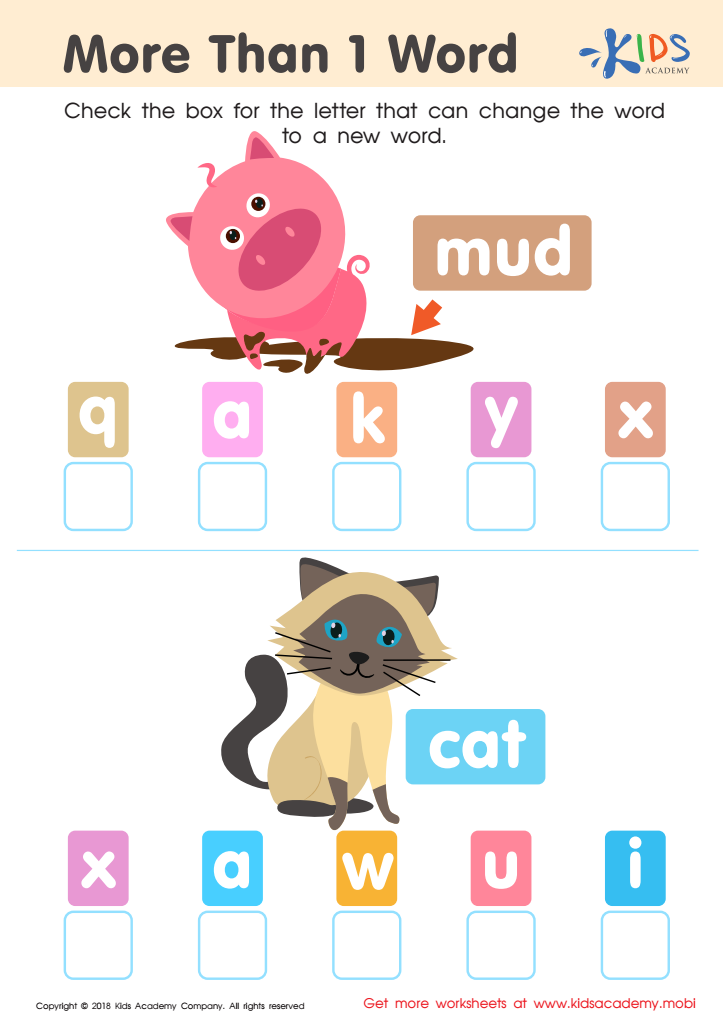
More than 1 word Worksheet
Test your child's reading skills with this fun worksheet! Point out the word in each picture, then switch the middle letter of each word with one from the list and check the box when you find a new word. It's a great way to develop your child's reading skills!
More than 1 word Worksheet
Worksheet
Join Kids Academy for Free
Who is primarily going to use this learning content?







Letter Sounds worksheets activities represent a cornerstone in early childhood education, offering an array of benefits that extend far beyond the classroom. These strategically designed exercises not only introduce young learners to the alphabet but also lay the foundation for reading and writing skills by emphasizing the sounds each letter makes. The unique blend of visual recognition and phonetic understanding that Letter Sounds worksheets activities provide is crucial for developing literacy at a formative age.
The utility of Letter Sounds worksheets activities is multi-faceted. Firstly, they foster phonemic awareness, an essential skill for decoding words, by helping children understand that words are made up of small sound units. This awareness is critical for reading fluency and comprehension, as it enables learners to segment and blend sounds to form words. Moreover, engaging with these worksheets can significantly enhance a child's vocabulary and pronunciation, paving the way for more confident communication.
Another significant advantage of Letter Sounds worksheets activities is the interactive learning experience they offer. Children are naturally curious and eager to explore; these activities feed their innate desire to learn through fun and engaging exercises. Whether it's matching letters to their corresponding sounds, filling in missing letters, or identifying objects that start with a specific sound, each worksheet is designed to capture a child's interest and hold their attention. This interactive approach not only makes learning more enjoyable but also increases retention of the concepts taught.
Furthermore, Letter Sounds worksheets activities are incredibly versatile, catering to a wide range of learning styles and paces. They can be easily adapted to meet the individual needs of each student, ensuring that every child can progress at their own rate. This flexibility makes them an invaluable resource for educators and parents alike, providing a tailored learning experience that can adjust to the developmental stage of each learner.
In conclusion, the role of Letter Sounds worksheets activities in early childhood education cannot be overstated. By combining phonemic awareness, interactive learning, and adaptability, these activities equip young learners with the foundational skills necessary for literacy success. Their importance in fostering a love for reading and writing from an early age is unparalleled, making them an essential part of any educational curriculum.








