Physical Science worksheets activities for Ages 4-7
6 filtered results
-
From - To
Discover a collection of engaging Physical Science worksheets and activities specially designed for children ages 4-7. Our interactive materials introduce young learners to essential scientific concepts through fun and hands-on experiences. From exploring the properties of matter to understanding simple machines, these worksheets encourage curiosity and promote critical thinking skills. Each activity is tailored to inspire creativity and foster a love for science while aligning with early learning standards. Perfect for teachers, parents, and caregivers, these resources provide essential support in guiding young minds on their educational journey. Dive into the world of Physical Science and watch your child’s knowledge grow!
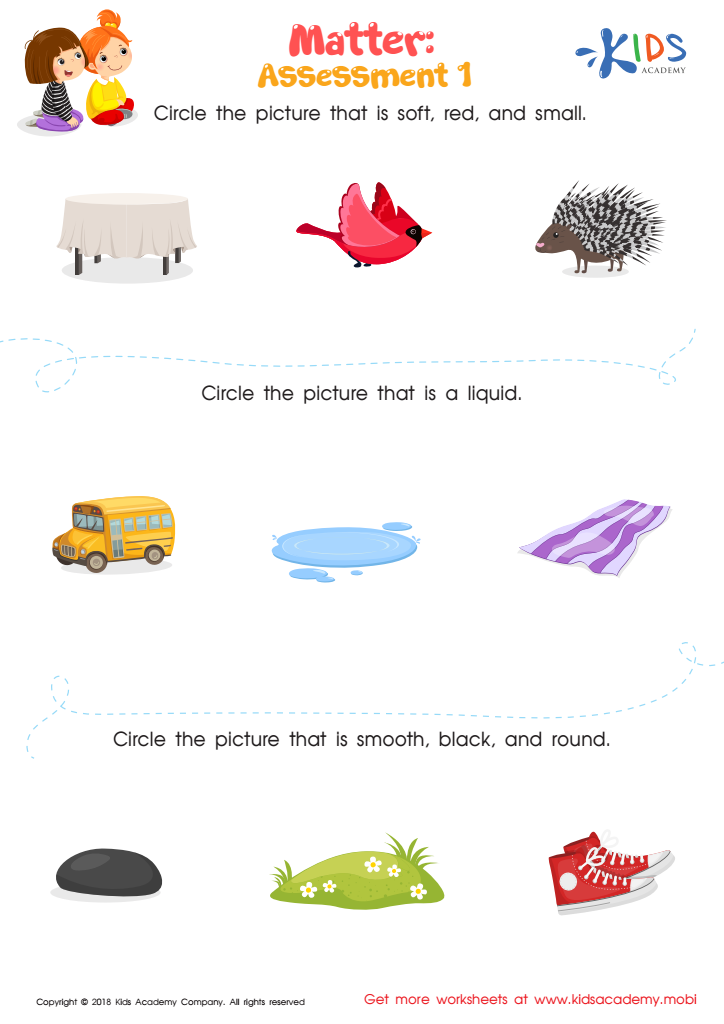
Matter: Assessment 1 Worksheet
 Assign to My Students
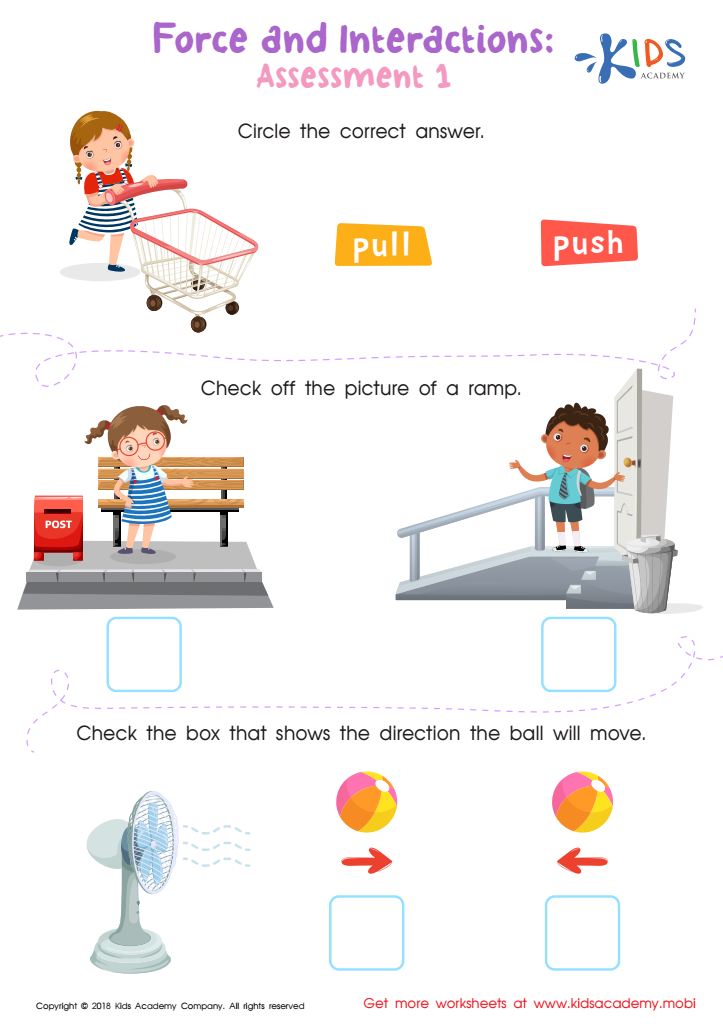
Force and Interactions: Assessment 1 Worksheet
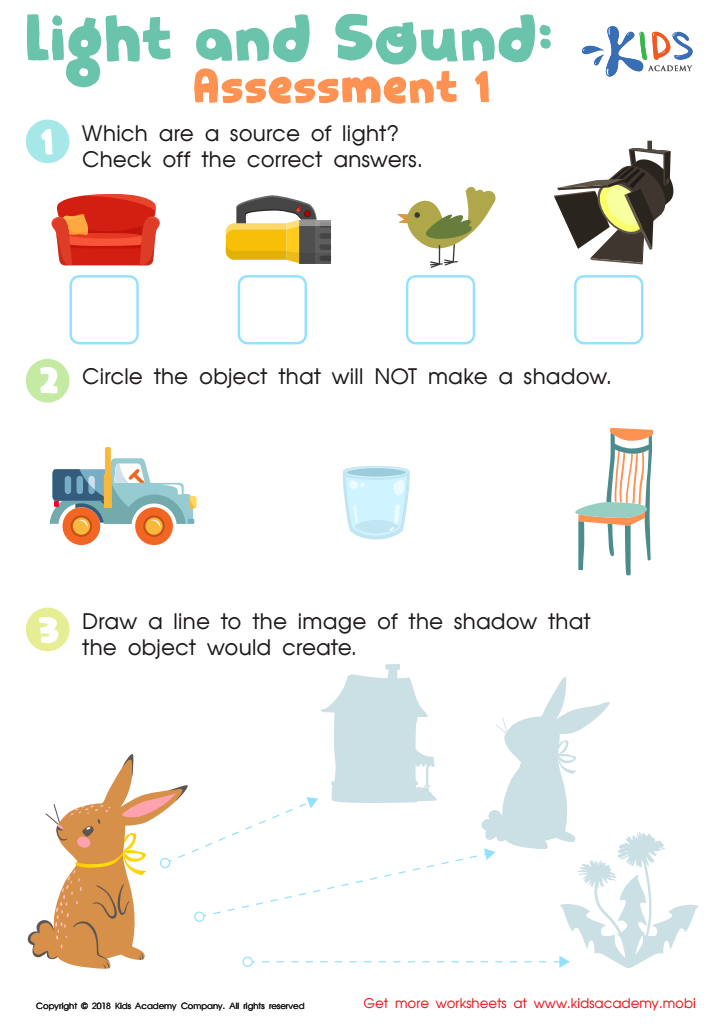
Light and Sound: Assessment 1 Worksheet
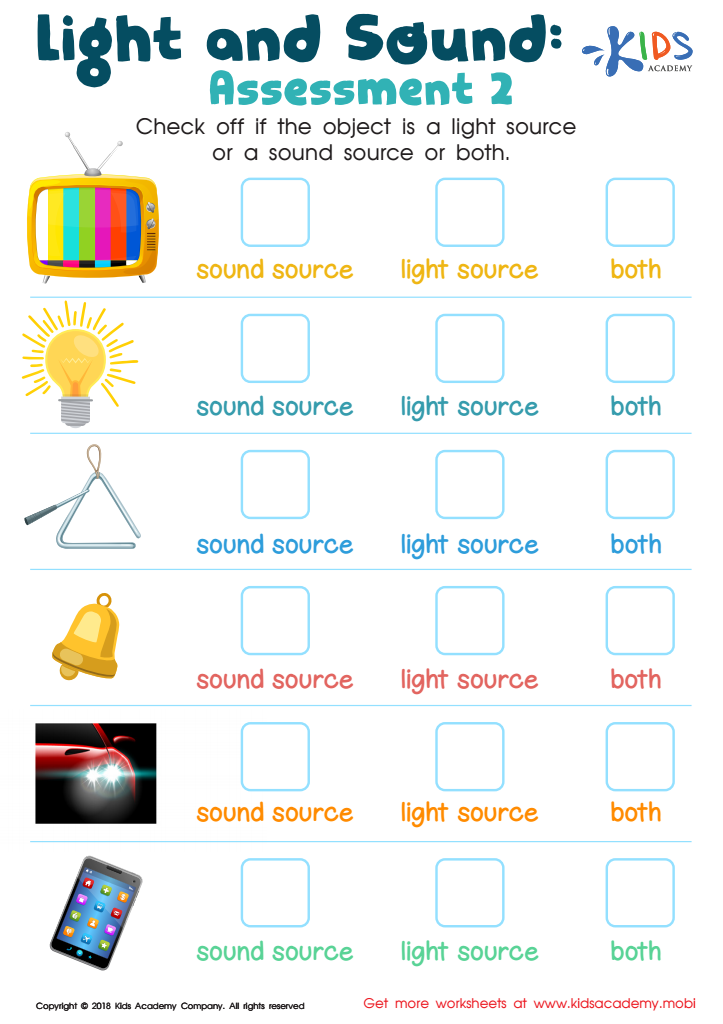
Light and Sound: Assessment 2 Worksheet
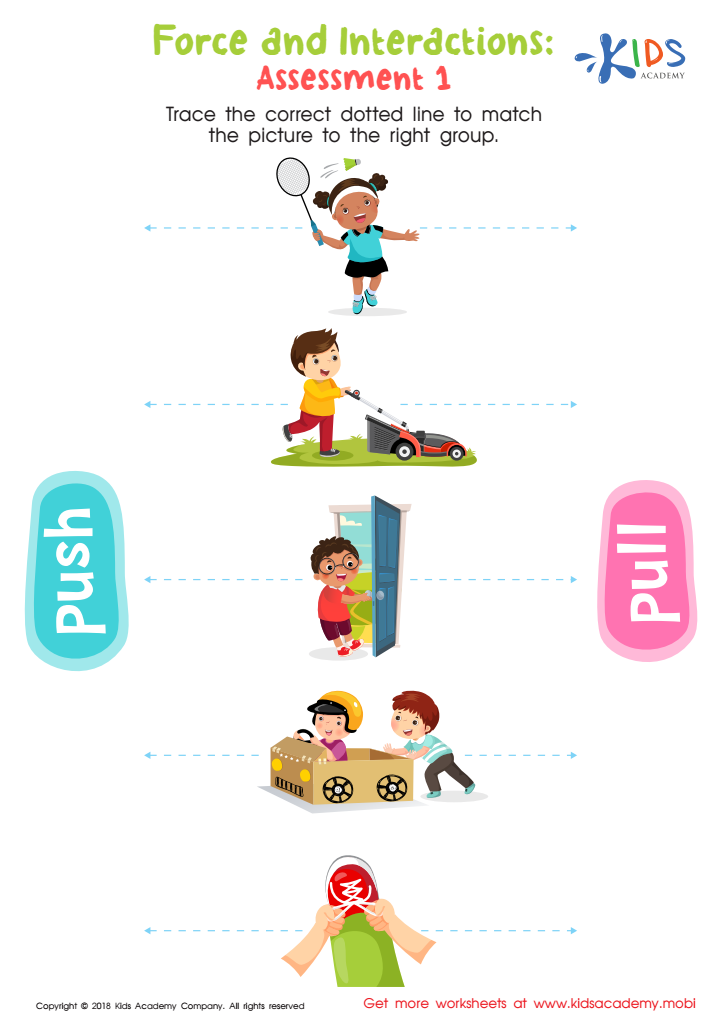
Force and Interactions: Assessment 2 Worksheet
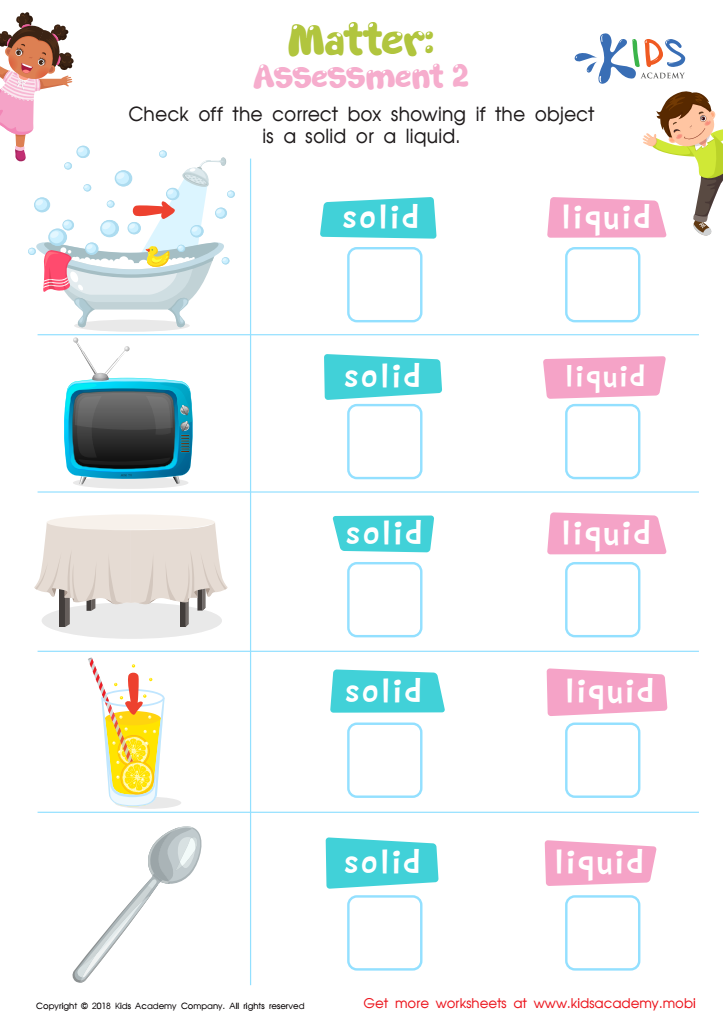
Matter: Assessment 2 Worksheet






Physical Science activities are vital for children aged 4-7 as they lay the foundation for critical thinking, curiosity, and problem-solving. During these early years, children are naturally inquisitive, and engaging them in hands-on activities promotes cognitive development and a love for learning. Such activities introduce fundamental concepts like matter, energy, and simple forces through playful exploration, making abstract ideas tangible and relatable.
Additionally, these activities foster fine motor skills and coordination as children manipulate objects, conduct experiments, or explore their environment. They also encourage observation and inquiry, as children ask questions and seek answers through experimentation, promoting a scientific mindset. Furthermore, collaborating with peers in group activities nurtures social skills and teamwork, crucial for holistic development.
Engaging in Physical Science promotes creativity and resilience. It allows children to hypothesize, test, and refine their understanding, essential traits for future learning. This early exposure to science wonders equips children with skills that are not only essential in academic pursuits but also beneficial in navigating everyday challenges. Ultimately, parents and teachers should invest in Physical Science activities to support children’s overall growth and inspire a lifelong interest in science. Such foundational experiences can spark a passion that lasts well into their educational journey and beyond.








