Cursive Writing worksheets activities for Ages 4-9 - Page 2
26 filtered results
-
From - To
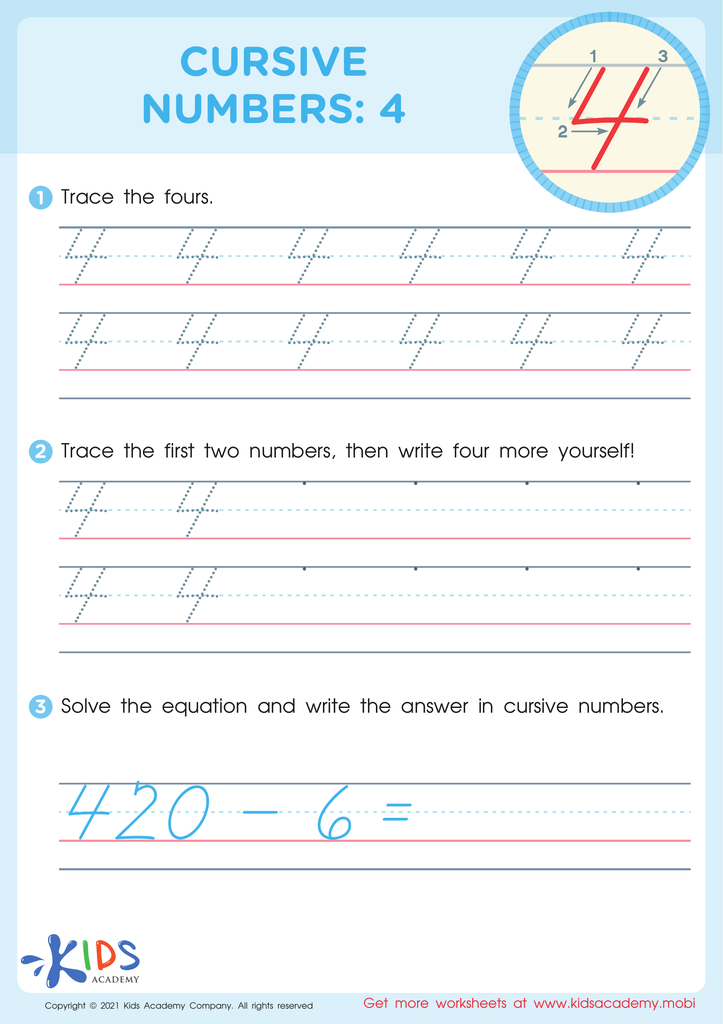
Cursive Numbers: 4 Worksheet
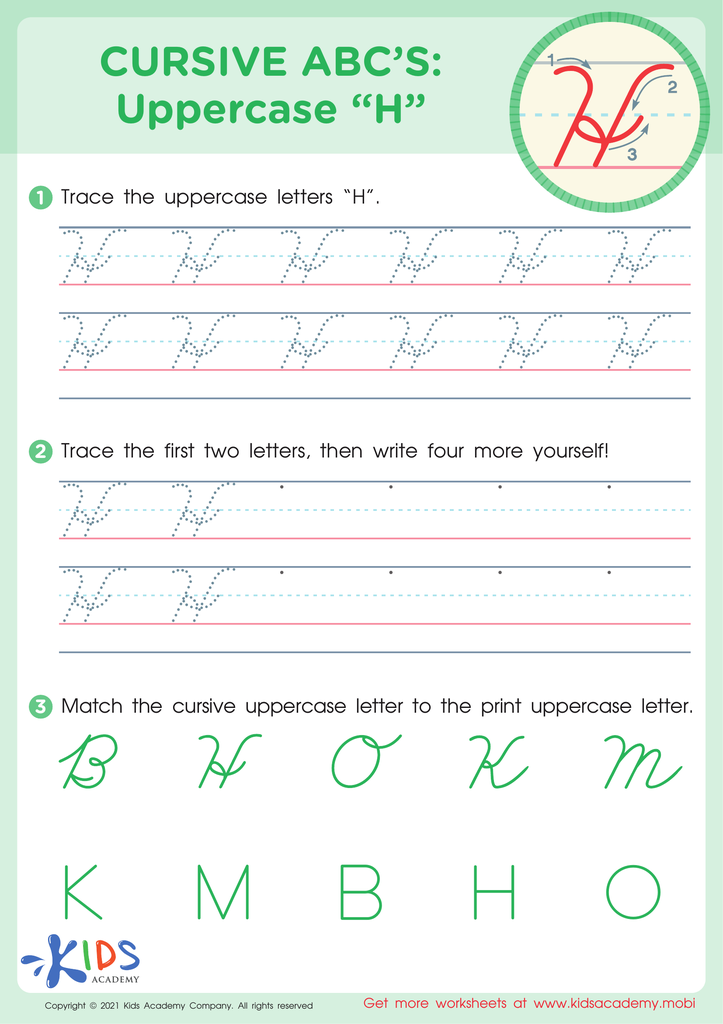
Cursive ABCs: Uppercase H






Cursive writing is an essential skill that supports the development of fine motor skills, cognitive abilities, and literacy in young children aged 4-9. Engaging in cursive writing activities helps children develop better hand-eye coordination and control over their hand movements, which can be beneficial for various academic tasks.
Cursive writing also improves reading fluency. The continuous flow of cursive letters aids children in recognizing whole words rather than just isolated letters, enhancing their overall reading speed and comprehension. Moreover, the unique, linked structure of cursive letters may aid memory retention and help children differentiate between similar letters.
Furthermore, learning cursive writing nurtures creativity and personal expression. Children often find the art of cursive appealing, which can encourage them to write more often. Increased writing practice promotes confidence and proficiency in writing skills, essential for academic success.
Moreover, cursive writing allows for a unique form of communication. As children learn to create their own written style, they develop a personal signature that showcases their individuality. In a digital age where typing dominates, cursive writing cultivates a connection to traditional writing methods and helps children appreciate the art of handwriting. For these reasons, parents and teachers should prioritize cursive writing activities in early childhood education.








