Filters

174 filtered results

Clear all filters
Favorites
With answer key
Interactive

174 filtered results

Difficulty Level

Grade


Subject

    Check out this FREE Tracing Trial Lesson for age 6-8!

    Count to 10

    Favorites
    With answer key
    Interactive
    • Tracing
    • 6-8
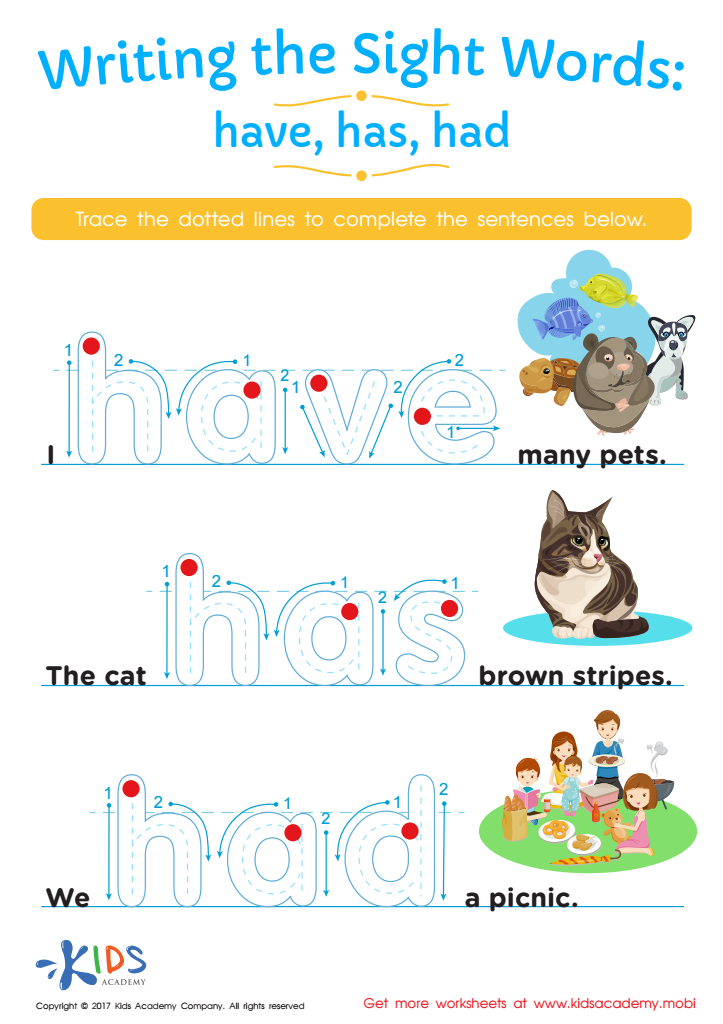
    Writing the Sight Words: Have, Has, Had
    Writing the Sight Words: Have, Has, Had

    Have, Has, Had Worksheet Sight Words Worksheet

    Writing and reading go hand-in-hand. Build your child's literacy with this helpful worksheet, focusing on the sight words - have, has, had. Have them read through the sentences and trace the words to master the skill.
    Have, Has, Had Worksheet Sight Words Worksheet
    Worksheet
    Kindergarten number tracing worksheet pdf
    Kindergarten number tracing worksheet pdf

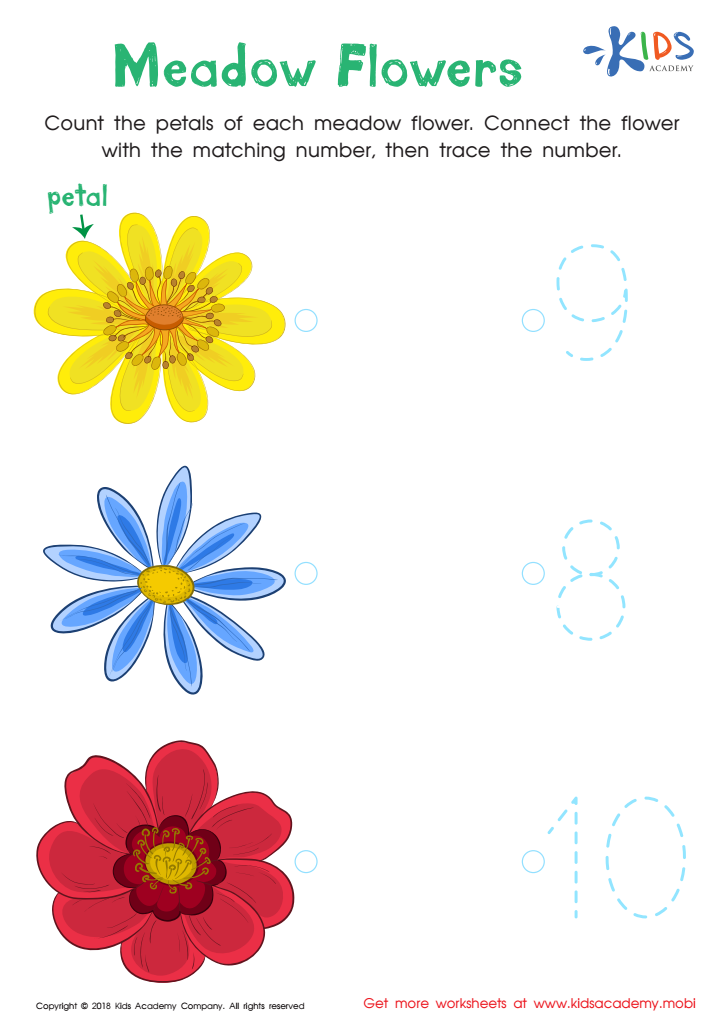
    Kindergarten Number Tracing: Medow Flowers Worksheet
    Take your child to the garden to count flower petals and trace numbers with this fun kindergarten PDF worksheet. They'll learn to count and write, all while enjoying the sweet scent of the flowers.
    Kindergarten Number Tracing: Medow Flowers Worksheet
    Worksheet
    Cursive ABCs: Lowercase e
    Cursive ABCs: Lowercase e

    Cursive ABCs: Lowercase e

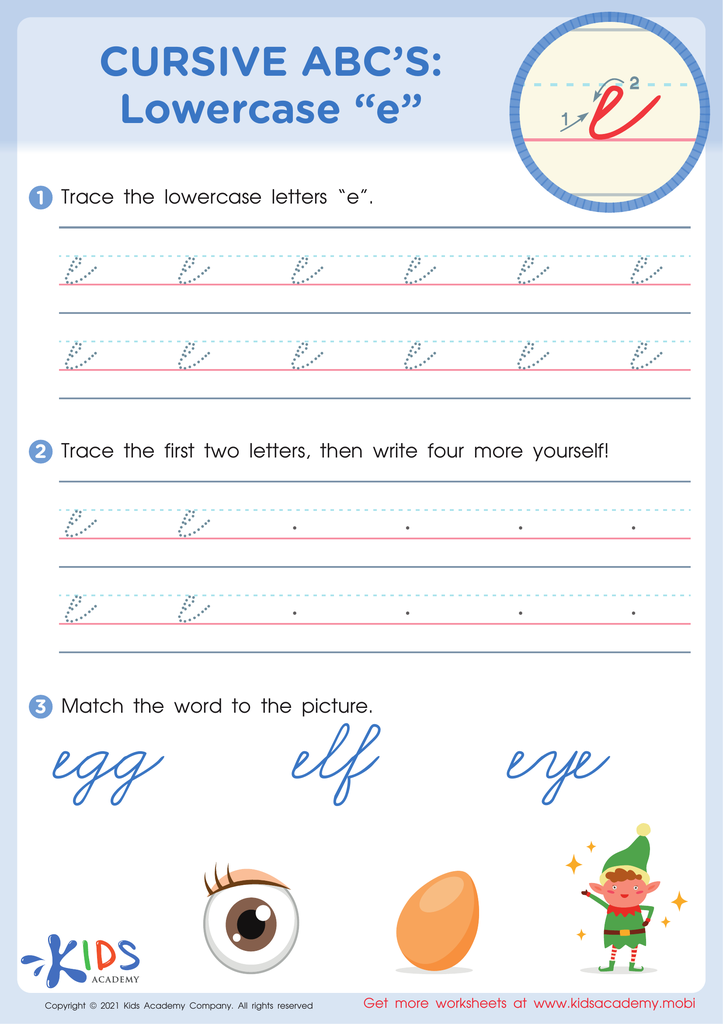
    Traceable worksheets are great for kids wanting to practice writing alphabet letters. Help them improve their skills by tracing dotted lines to form 'e', then writing it on their own. They'll also learn new words beginning with letters of the alphabet.
    Cursive ABCs: Lowercase e
    Worksheet
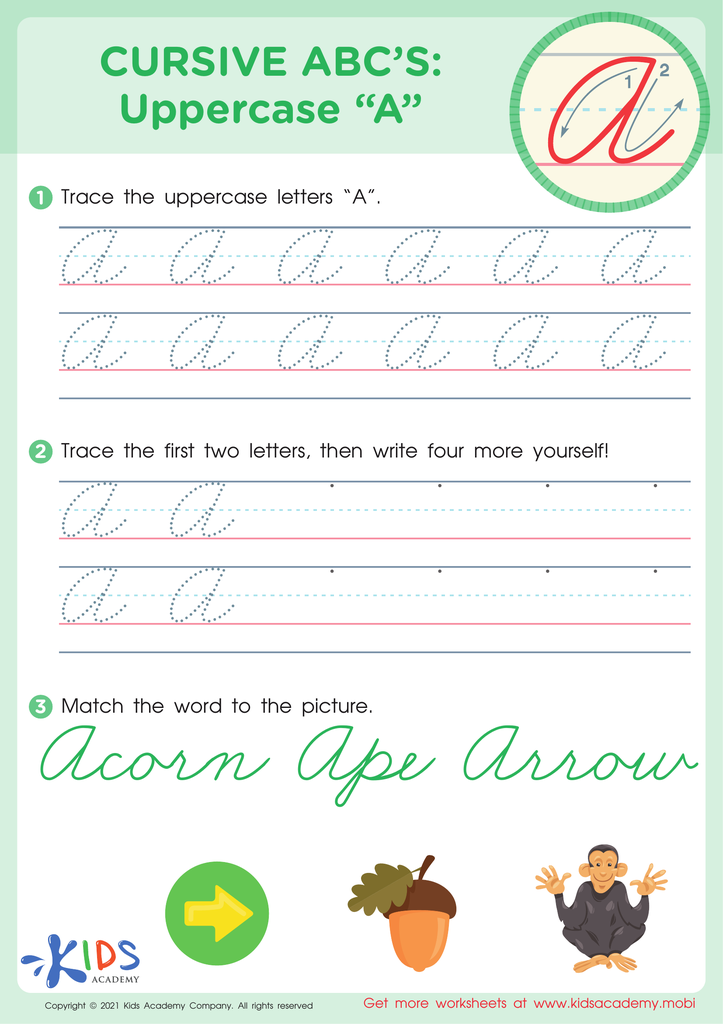
    Cursive ABCs: Uppercase A
    Cursive ABCs: Uppercase A

    Cursive ABCs: Uppercase A

    Help your kids develop their writing skills with our great tracing sheets. Improve their motor skills, as well as their vocabulary, by guiding them through tracing the dotted lines for the uppercase letters of the alphabet. When they are ready, let them practice writing the letters on their own for improved confidence.
    Cursive ABCs: Uppercase A
    Worksheet
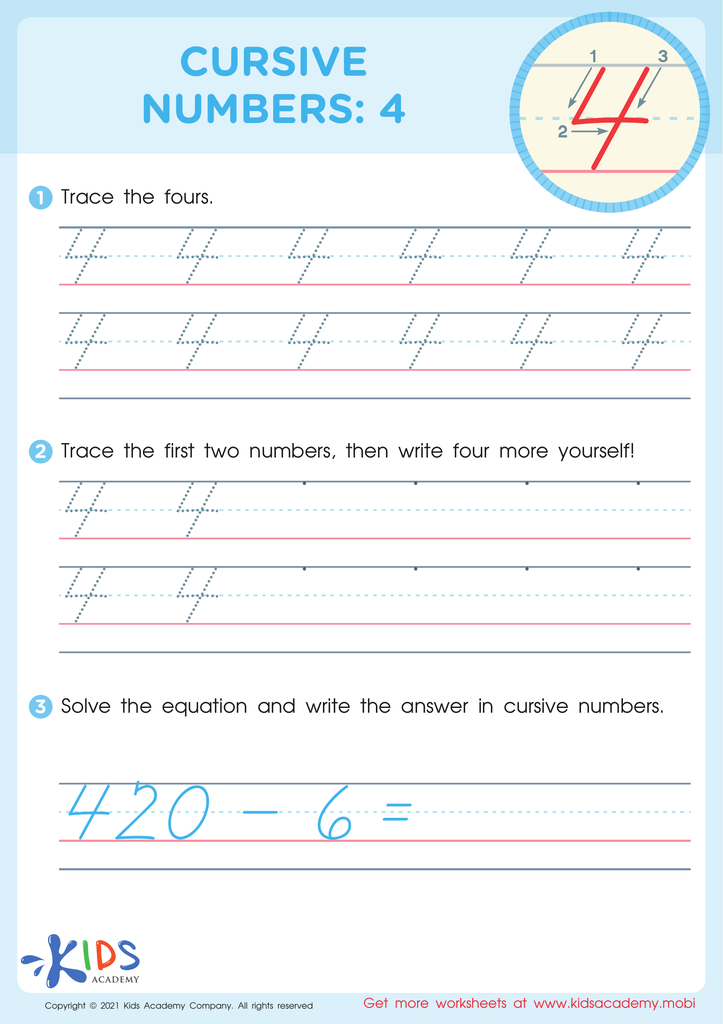
    Cursive Numbers: 4 Worksheet
    Cursive Numbers: 4 Worksheet

    Cursive Numbers: 4 Worksheet

    Math is challenging, and teaching cursive alongside it can be overwhelming. Make lessons enjoyable and your child will be more likely to stay engaged. Utilize worksheets to practice tracing the number 4 in cursive. With regular practice, your child can learn to write the number on their own.
    Cursive Numbers: 4 Worksheet
    Worksheet
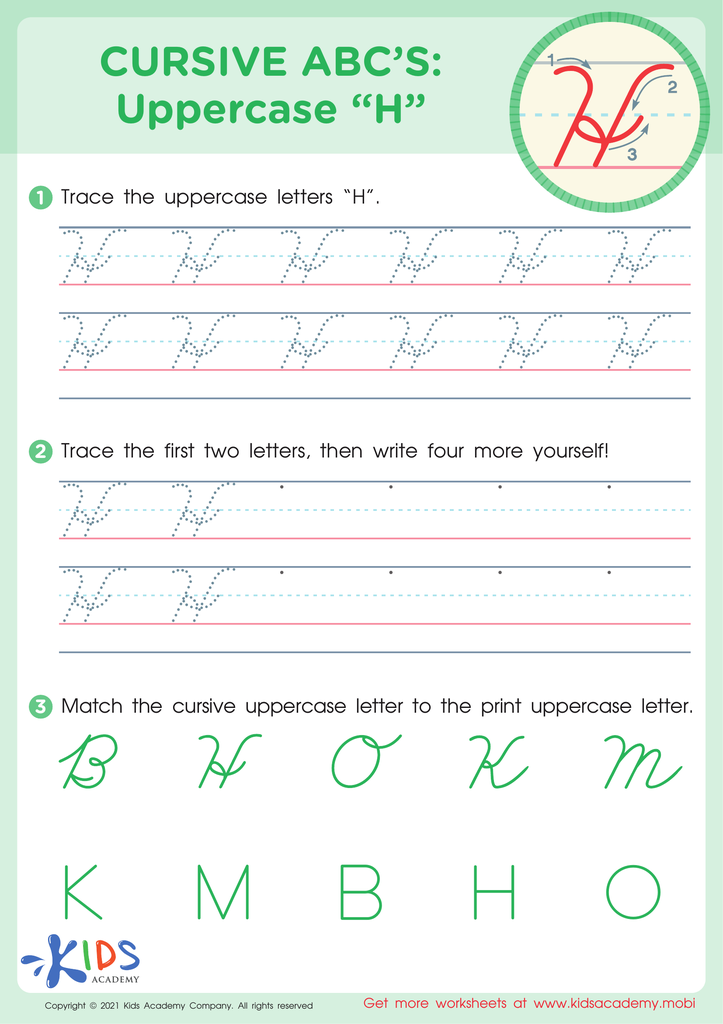
    Cursive ABCs: Uppercase H
    Cursive ABCs: Uppercase H

    Cursive ABCs: Uppercase H

    Have your child recite the alphabet and give you words beginning with H. This tracing sheet is perfect to help them improve their handwriting. Guide their hands as they trace the uppercase H, then have them practise writing it alone. At the bottom is an exercise to check their letter recognition.
    Cursive ABCs: Uppercase H
    Worksheet


    ... 7 8

    Tracing activities for children aged 6-8 play a crucial role in their cognitive and motor development, making them important for both parents and teachers to prioritize. At this age, children are honing their fine motor skills, which are essential for tasks such as writing, drawing, and daily self-care activities. Tracing helps improve hand-eye coordination and control over writing tools, leading to better grip and posture.

    Additionally, tracing activities can boost literacy skills by allowing children to familiarize themselves with letters, numbers, and shapes. This foundational step supports reading, spelling, and arithmetic as it enhances letter recognition and sound association. Engaging in tracing also fuels creativity, as children express themselves in various ways while developing fluency and confidence in their writing abilities.

    Furthermore, tracing provides an opportunity for mindfulness and focus. It can be a calming activity that encourages patience, concentration, and persistence. Parents and teachers alike should recognize that these activities not only assist with fundamental skills but also foster a love for learning. By incorporating tracing into daily practices, caregivers can help children build a strong foundation for future educational success while also nurturing their confidence.