Our Planet and Environment worksheets activities for Ages 6-9
5 filtered results
-
From - To
Explore our engaging "Our Planet and Environment" worksheets, designed specifically for children ages 6-9! These fun and educational activities encourage young learners to discover the wonders of nature and understand the importance of caring for our planet. Through interactive tasks such as coloring pages, matching games, and fact-finding missions, kids willdevelop essential knowledge about ecosystems, recycling, and environmental protection. Our thoughtfully crafted worksheets stimulate curiosity and promote a sense of responsibility towards the environment. Perfect for at-home learning or as a supplementary classroom resource, these activities provide a fantastic way for children to connect with and appreciate the world around them!
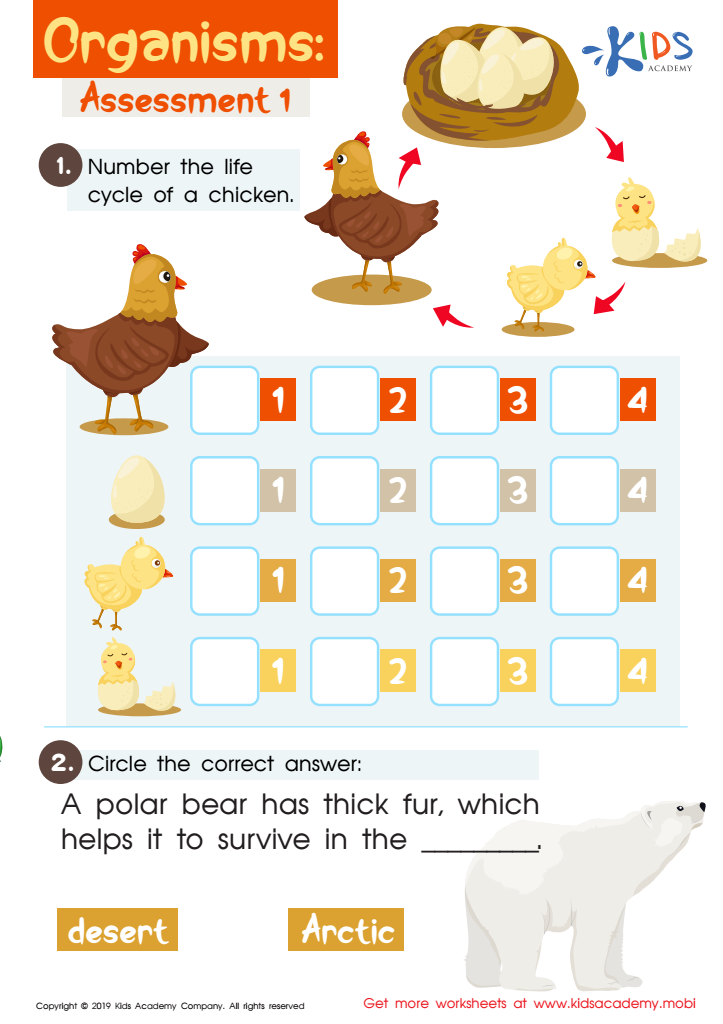
Organisms: Assessment 1 Worksheet
 Assign to My Students
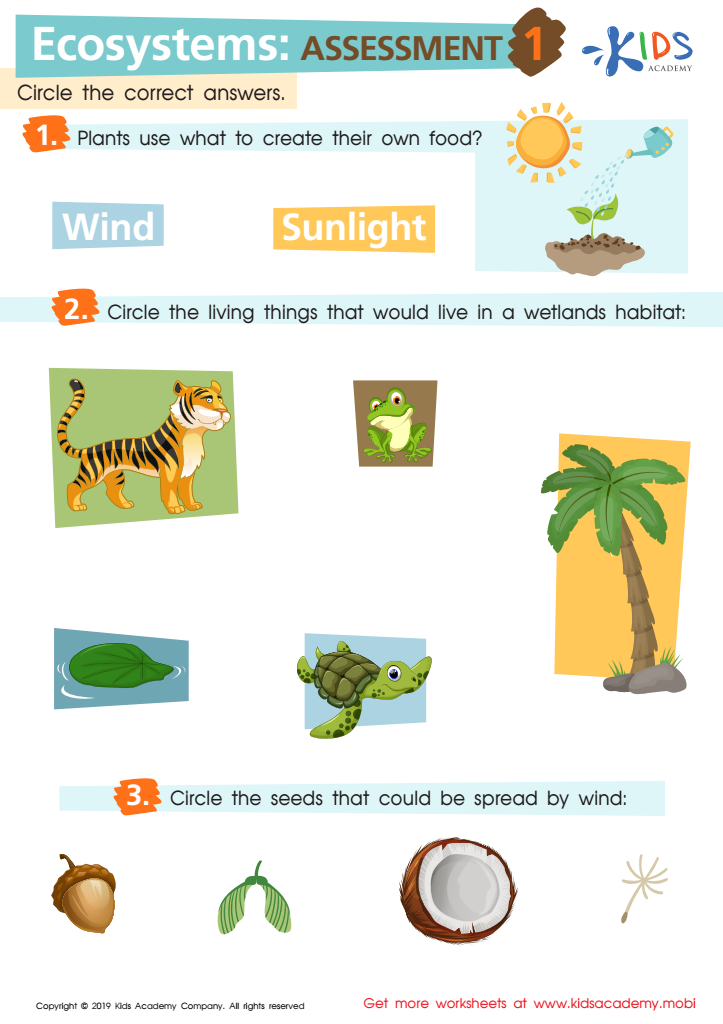
Ecosystems: Assessment 1 Worksheet
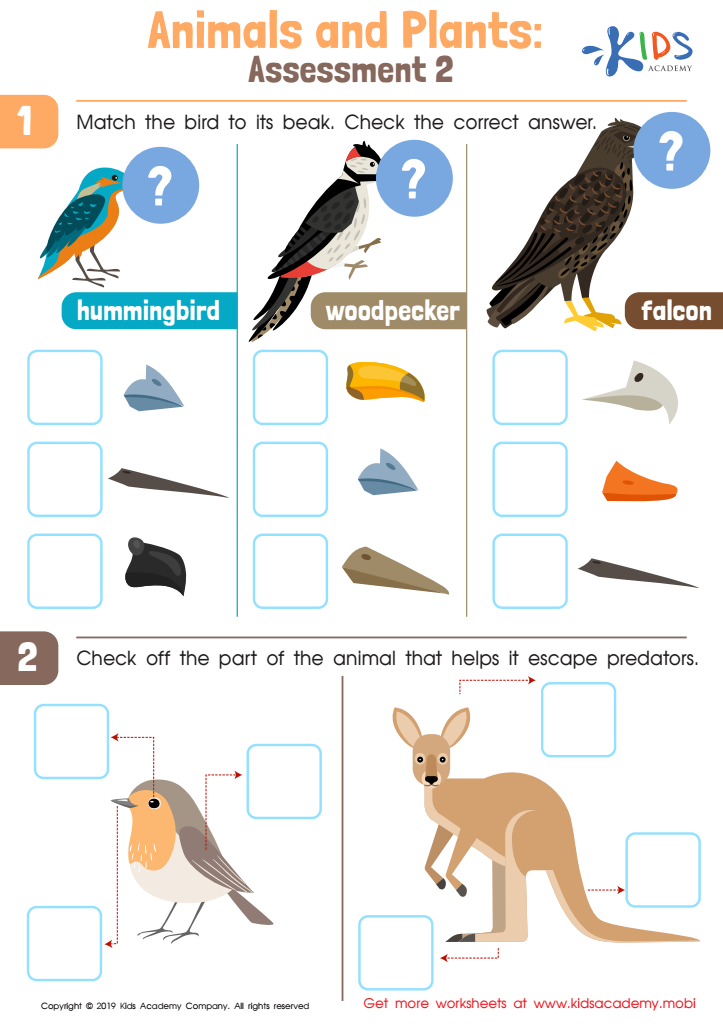
Animals and Plants: Assessment 2 Worksheet
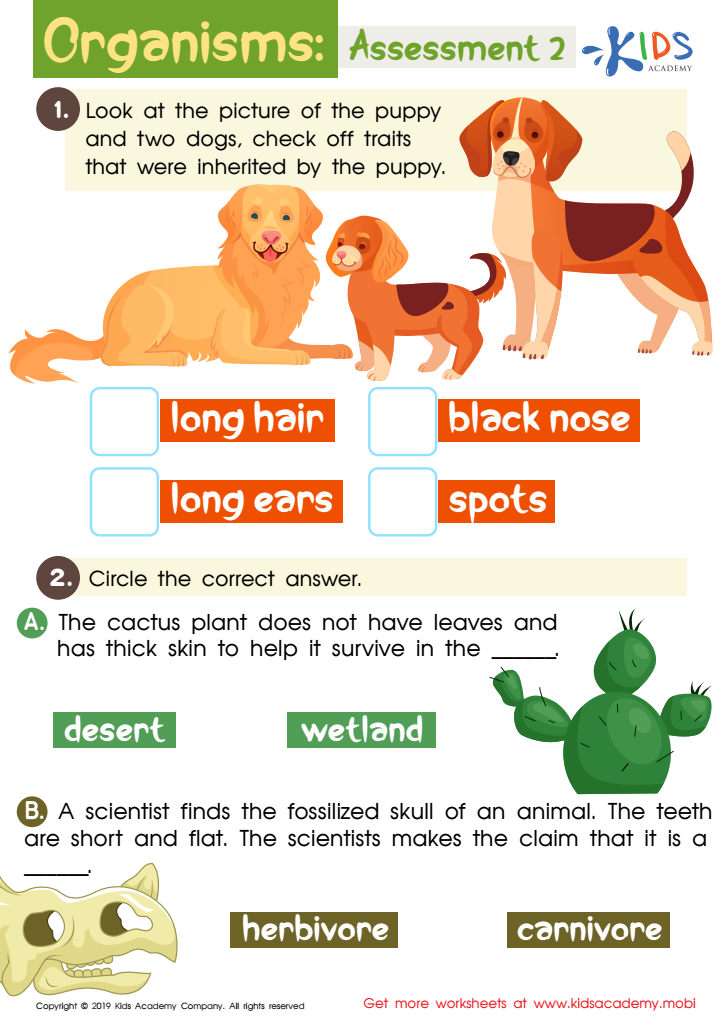
Organisms: Assessment 2 Worksheet
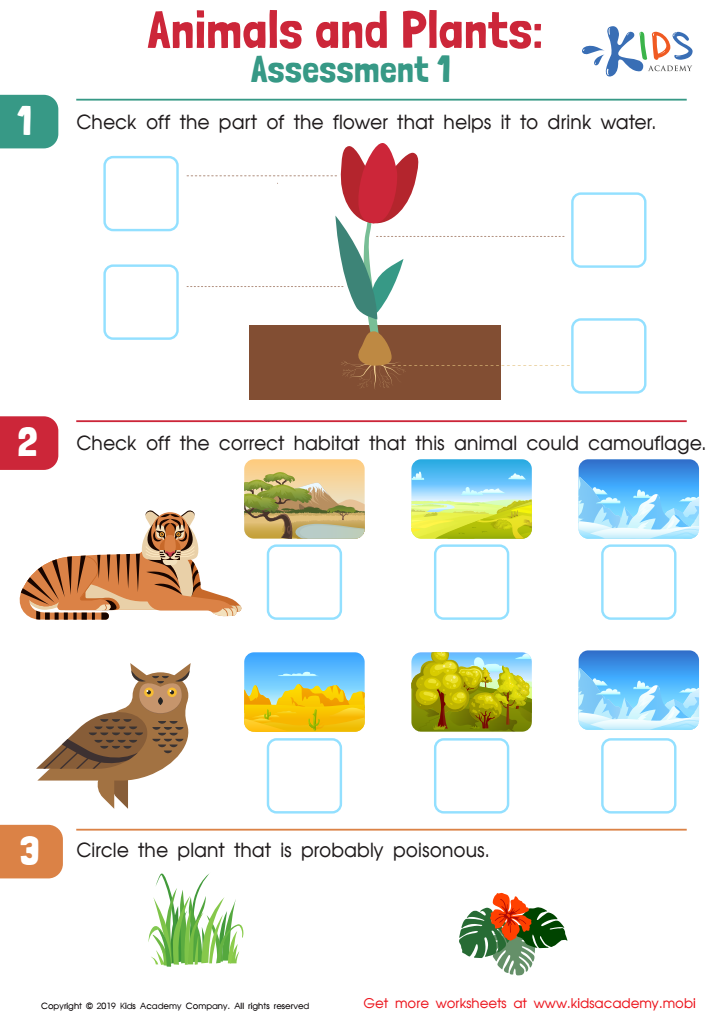
Animals and Plants: Assessment 1 Worksheet







Parents and teachers should care about environmental activities for children aged 6-9 because this age group is crucial for shape lifelong values and behaviors. Engaging young children in "Our Planet" activities helps instill a sense of responsibility and connection to their environment at an early age. When children learn about nature, ecosystems, and the impact of human actions on the planet, they develop an appreciation for the world around them.
Moreover, these activities can enhance critical thinking and problem-solving skills as children explore real-world issues like pollution and conservation. They are more likely to adopt sustainable practices as they grow older if they start learning early about issues such as recycling, conserving water, and protecting wildlife.
In addition, participating in environmental activities can promote teamwork and social skills as children work together on projects, such as planting trees or cleaning up local parks. Overall, fostering a commitment to environmental stewardship in young learners not only safeguards our planet for future generations but also empowers children to become proactive citizens who influence positive change. By prioritizing environmental education, parents and teachers can help nurture a healthier planet and a more sustainable future.








