Plants and Animals worksheets activities for Ages 6-9
3 filtered results
-
From - To
Unlock the wonders of the natural world with our engaging "Plants and Animals Worksheets" designed specifically for children ages 6-9! These interactive activities provide young learners with the opportunity to explore the unique characteristics of plants and animals through fun-filled exercises. From identifying different species to understanding their habitats, each worksheet encourages curiosity and critical thinking. Our carefully crafted resources promote hands-on learning, making it easy to integrate foundational knowledge about biodiversity into your child's educational journey. With vibrant illustrations and captivating themes, these activities inspire discovery and nurture a love for nature, ensuring that learning about plants and animals is both enjoyable and informative!
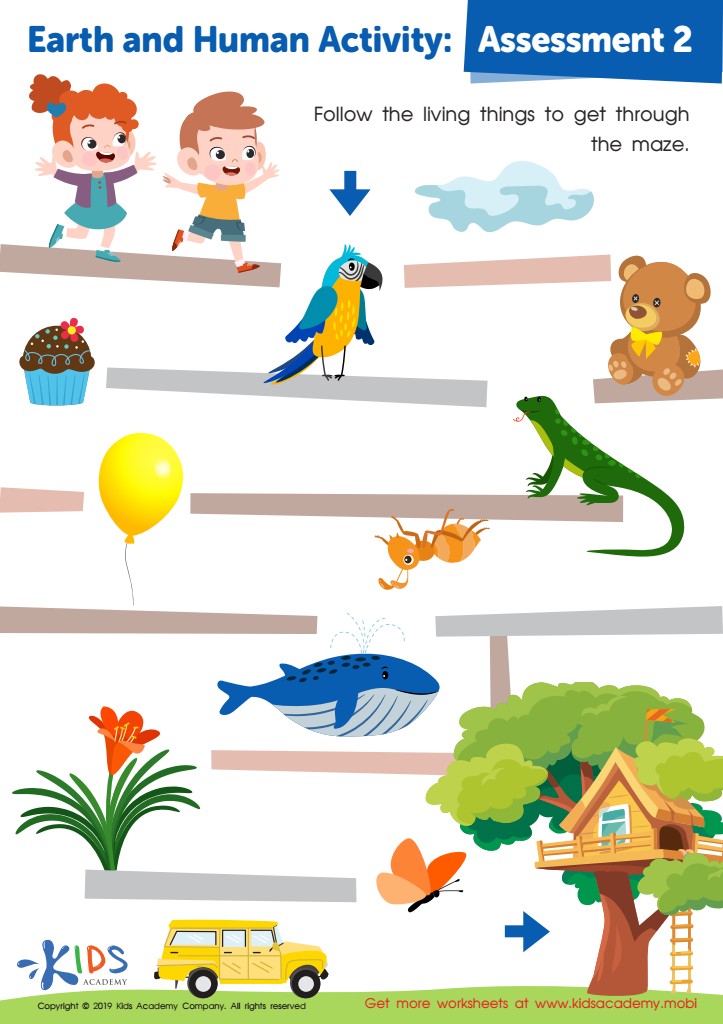
Earth and Human Activity: Assessment 2 Worksheet
 Assign to My Students
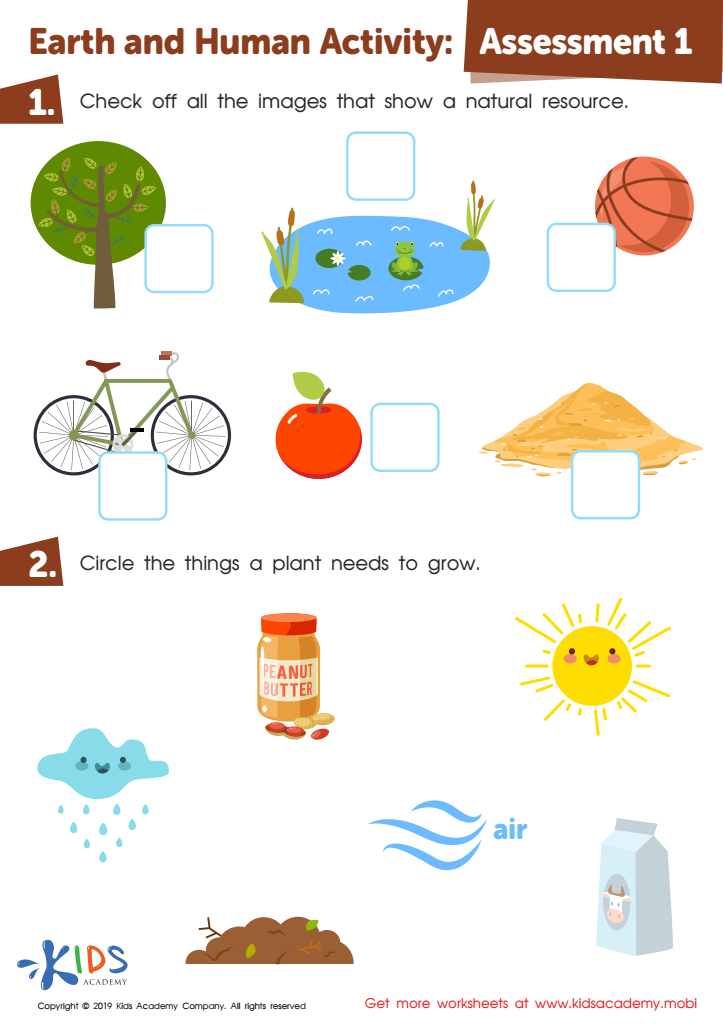
Earth and Human Activity: Assessment 1 Worksheet
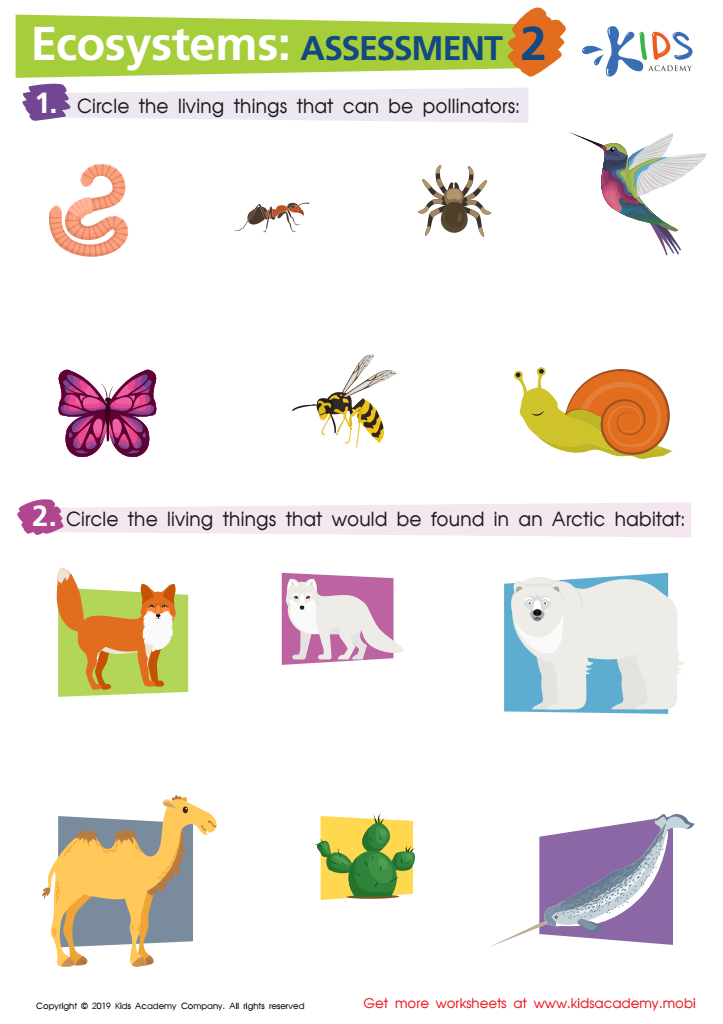
Ecosystems: Assessment 2 Worksheet








Activities centered on plants and animals for children aged 6-9 are critical for fostering a deep connection to nature, which has numerous benefits for their development. Firstly, these activities engage children’s innate curiosity, promoting exploration and hands-on learning. Interacting with plants and animals instills a sense of wonder and helps strengthen observational skills as they learn to identify species, understand ecosystems, and recognize the value of biodiversity.
Furthermore, these activities offer excellent opportunities for promoting responsibility and empathy. Caring for plants or animals teaches children about nurturing and the importance of respecting living things. They learn that their actions can impact the environment, fostering a sense of stewardship and community responsibility.
In addition, outdoor activities enhance physical health through active play, reducing screen time and encouraging movement in natural settings. After all, early experiences in nature correlate with better mental health and cognitive development.
Lastly, integrating plant and animal studies into the curriculum can enrich subjects like science and mathematics, illustrating concepts through real-world examples. Teachers and parents should thus prioritize these activities, not only for educational benefits but also for long-term environmental awareness and personal growth in children.








