Cursive Writing worksheets activities for Ages 7-9 - Page 2
26 filtered results
-
From - To
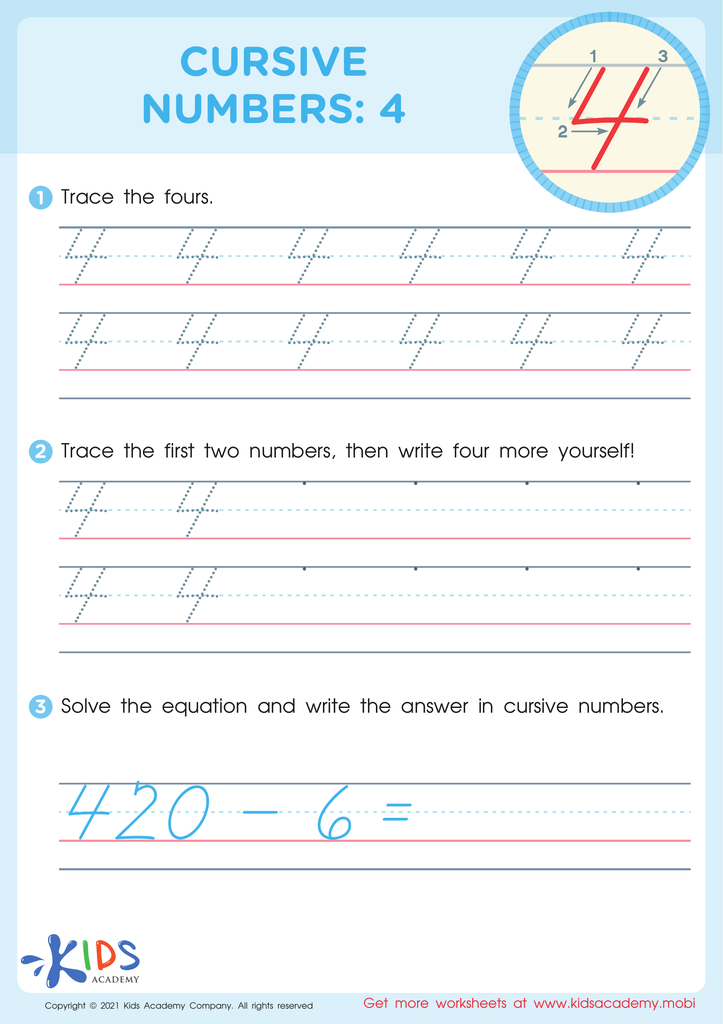
Cursive Numbers: 4 Worksheet
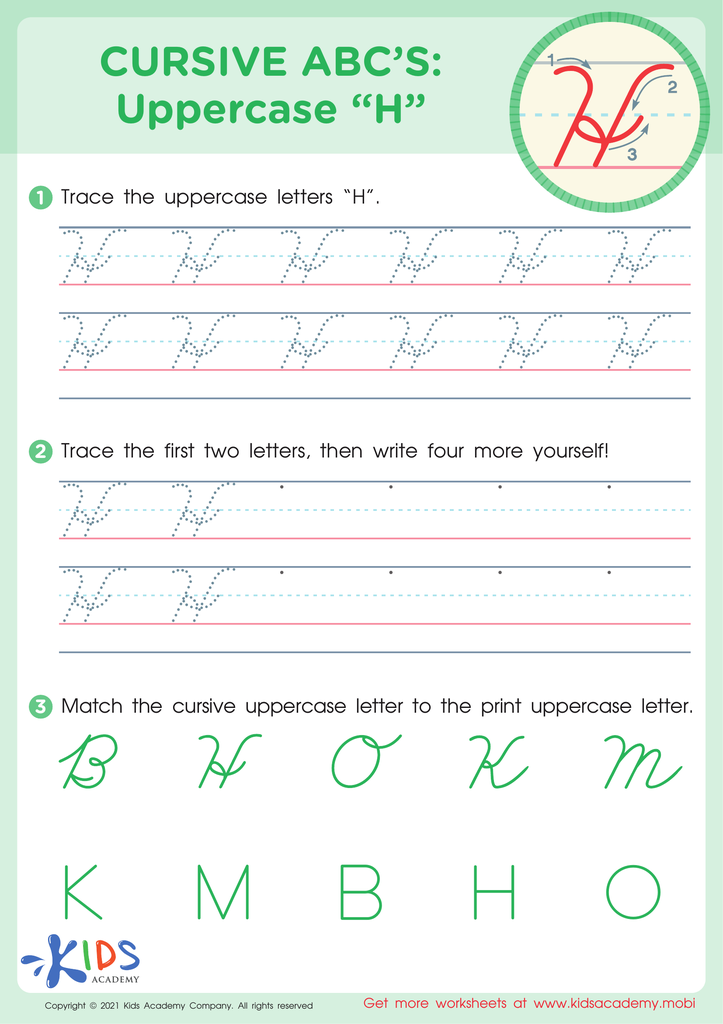
Cursive ABCs: Uppercase H







Cursive writing activities for children aged 7-9 offer a variety of cognitive, emotional, and developmental benefits that parents and teachers should prioritize. At this age, children's fine motor skills are still developing, and engaging in cursive writing can help enhance their dexterity and coordination. The fluid motion required for cursive not only aids in muscle memory but also promotes spatial awareness.
Furthermore, cursive writing fosters a deeper connection between writing and thinking. As children master the flow of cursive letters, they often experience improved written expression—an essential skill as they progress in their education. Cursive writing also encourages focus and mindfulness, allowing students to immerse themselves fully in the process.
Additionally, there is a nostalgic and historic value to cursive writing. Teaching children this skill not only connects them to the past but prepares them to read historical documents and correspondences—important in fostering a well-rounded education.
Incorporating cursive writing into activities supports brain development and promotes perseverance as children practice and master new tasks. As educators and caregivers, enabling these experiences helps cultivate not only competent writers but confident individuals who appreciate the beauty and utility of written communication.








