
Easy Addition & Subtraction worksheets activities for Ages 6-8
5 filtered results
Difficulty Level
Grade
Age
-
From - To
Subject
Activity
Standards
Discover engaging and interactive Easy Addition & Subtraction worksheets for kids aged 6-8! Perfect for young learners, these activities are designed to build confidence and strengthen foundational math skills in a fun way. From simple equations to lively games, our worksheets cater to diverse learning styles, making math enjoyable and memorable. Encourage your child's love for numbers with colorful illustrations and relatable themes that resonate with their everyday experiences. These resources are ideal for homeschooling, after-school programs, or classroom activities. Explore our collection and watch your child excel in mathematics with ease and excitement, developing essential skills for future success!
Favorites
With answer key
Interactive
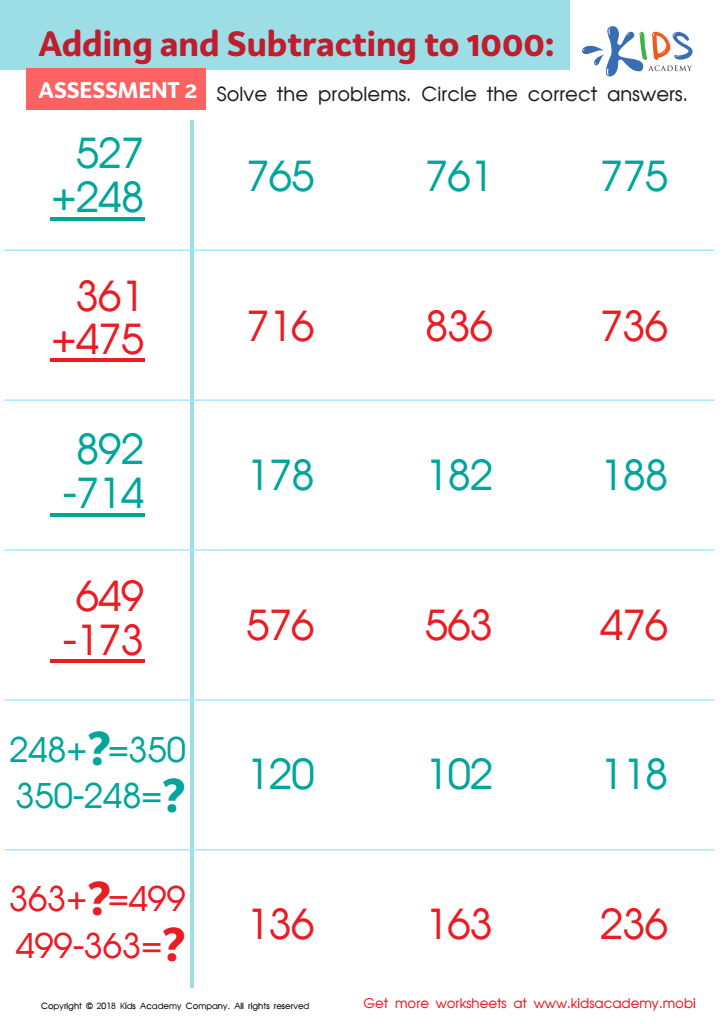
Adding and Subtracting to 1 Worksheet: Assessment 2
Test your child's addition and subtraction of 3-digit numbers with this assessment worksheet! They'll practice regrouping and pre-algebra skills to show their expertise. Have them work through the page and circle their answers, then see how many they got right to check their understanding and progress.
 Assign to My Students
Adding and Subtracting to 1 Worksheet: Assessment 2
Worksheet
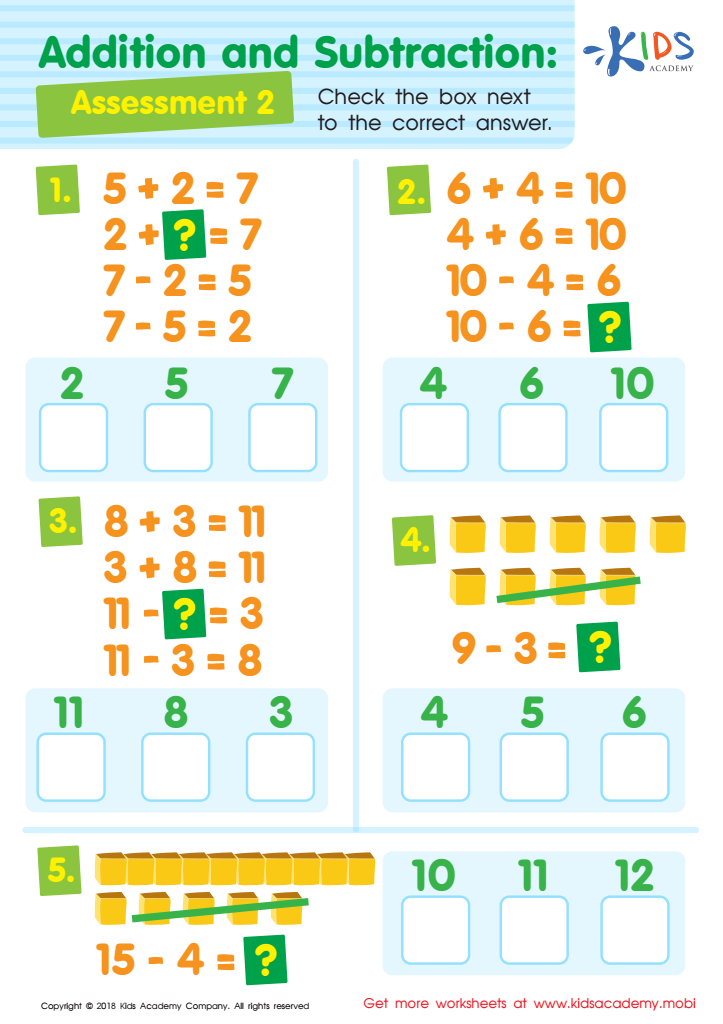
Addition and Subtraction Assessment 2 Worksheet
As your child grows, math problems become harder. To keep their brains active and provide extra help if needed, use this math worksheet. It'll help them become more familiar with equations. Go through each one carefully with your child and have them check the box next to the right answer.
Addition and Subtraction Assessment 2 Worksheet
Worksheet
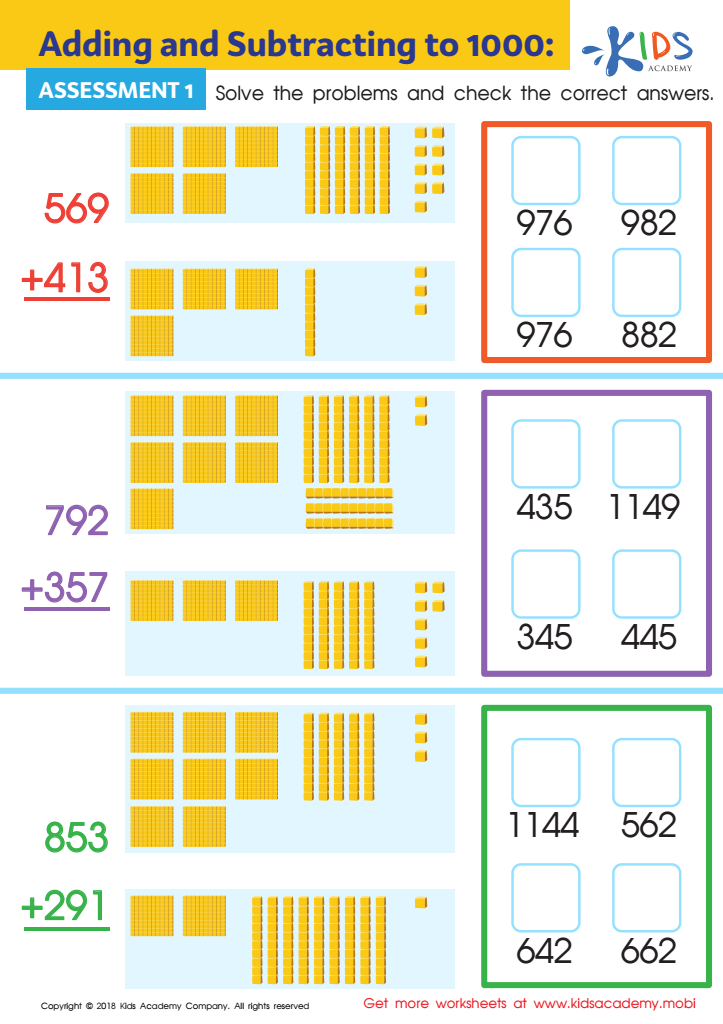
Adding and Subtracting to 1 Worksheet: Assessment 1
This assessment worksheet tests your child's addition skills. It has 3 3-digit problems with base ten blocks for visual aid. Encourage learners to use these visuals for better understanding. When they have solved the problems, they can check the box with the right answer. It's a quick and easy way to gauge numeracy development.
Adding and Subtracting to 1 Worksheet: Assessment 1
Worksheet
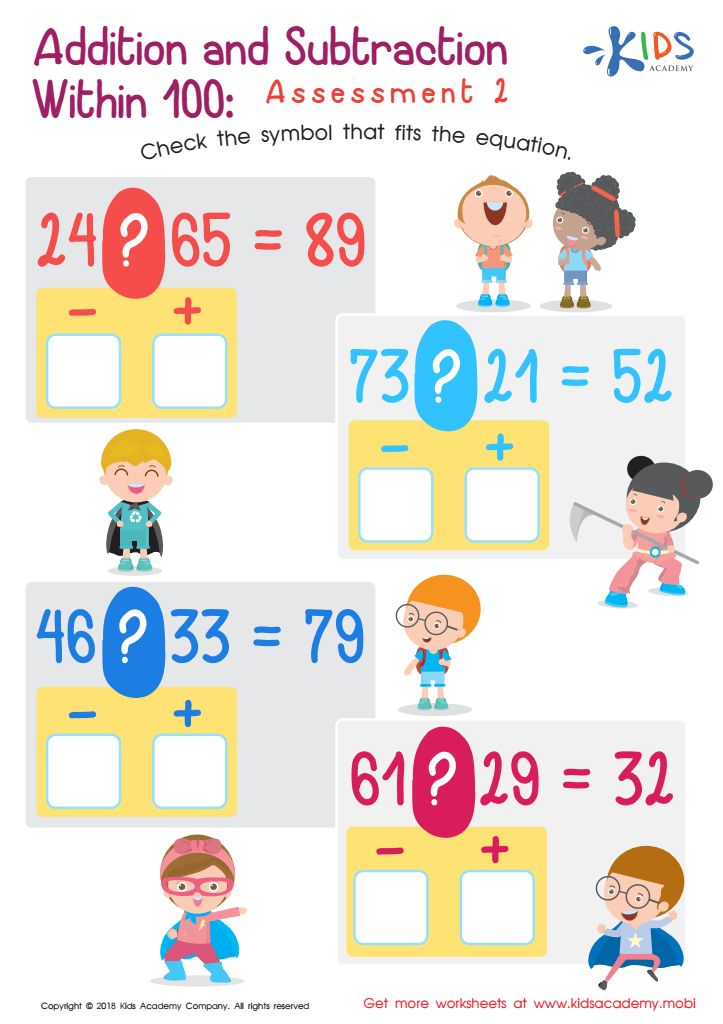
Addition and Subtraction Within 1: Assessment 2 Worksheet
This worksheet is a great tool to help your students learn addition and subtraction. It contains four equations in a printable pdf. Ask your students to review the equation and determine if the symbol between them is a '+' or '-'. Guide them in selecting the correct symbols for each equation.
Addition and Subtraction Within 1: Assessment 2 Worksheet
Worksheet
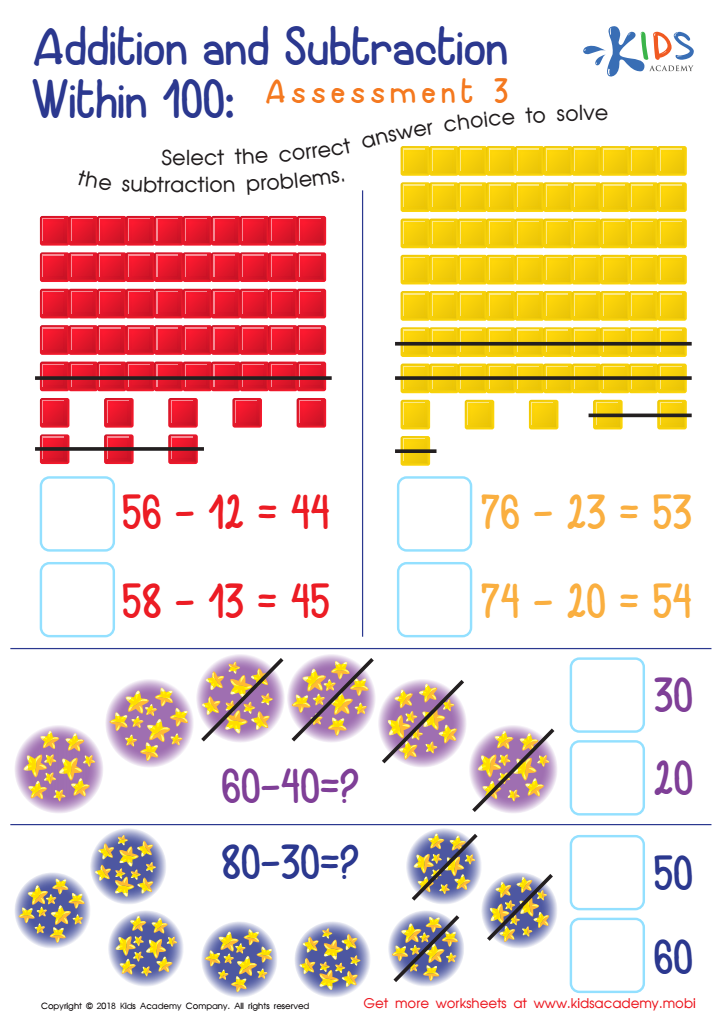
Addition and Subtraction Within 1: Assessment 3 Worksheet
Help your kids count the base ten blocks in the picture. Then, count how many have been marked off. Ask them to select the correct answer choice to solve the subtraction problems based on the blocks counted. 80 words
Addition and Subtraction Within 1: Assessment 3 Worksheet
Worksheet
Join Kids Academy for Free
Who is primarily going to use this learning content?






Parents and teachers should prioritize Easy Addition and Subtraction activities for children aged 6-8 because foundational math skills are critical for academic success and daily problem-solving. At this age, children are developing their number sense, and engaging them in enjoyable, interactive activities strengthens their ability to understand and manipulate numbers.
These activities enhance cognitive development and promote critical thinking. Fun and practical math exercises can make learning enjoyable, fostering a positive attitude toward mathematics. In addition, children who practice these essential skills early on are likely to experience greater confidence in their abilities, setting the tone for future learning.
Furthermore, Easy Addition and Subtraction helps build important life skills, such as patience, perseverance, and the ability to work independently or collaboratively with peers. It supports emotional development through encouraging resilience when facing challenges.
Finally, involving parents and teachers in these activities allows them to create supportive environments that recognize and celebrate small successes, which in turn nurtures self-esteem and motivation. Ultimately, Smooth Easy Addition and Subtraction practices establish a solid mathematical foundation, paving the way for more advanced concepts and problems as children progress through their education.








