
Easy Phonics worksheets activities for Ages 6-8
3 filtered results
Difficulty Level
Grade
Age
-
From - To
Subject
Activity
Standards
Discover our engaging Easy Phonics worksheets for children aged 6-8! Perfect for young learners, these activities enhance essential reading skills through fun and interactive exercises. Each worksheet is designed to make phonics learning enjoyable, helping kids recognize letter sounds, blend sounds, and build their vocabulary. With a variety of activities including matching games, coloring sheets, and sound identification tasks, children will gain confidence in their reading abilities. These resources are ideal for classroom use or at-home learning, ensuring a seamless integration into your educational routine. Explore our collection and watch your child thrive in their phonics journey!
Favorites
With answer key
Interactive
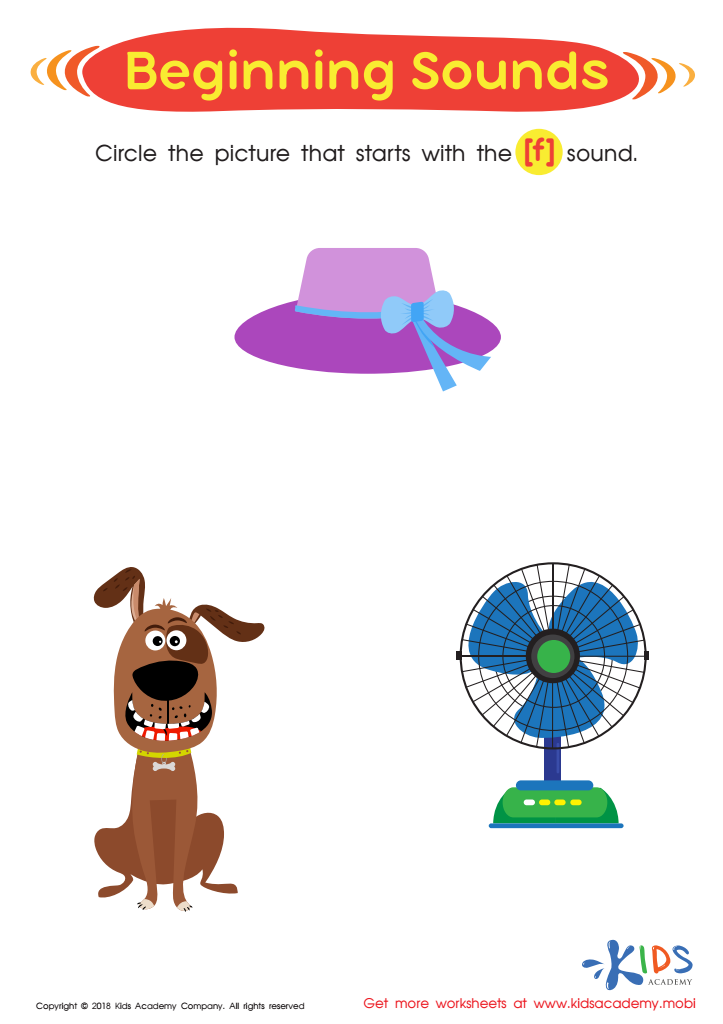
Beginning Sounds Assessment Printable
Test your child's knowledge of the alphabet. Ask them to recite the whole alphabet and the words for each letter. For example: A for apple, B for boy. Identify objects on this worksheet, then ask your child which one starts with the letter "f" and have them circle it.
 Assign to My Students
Beginning Sounds Assessment Printable
Worksheet
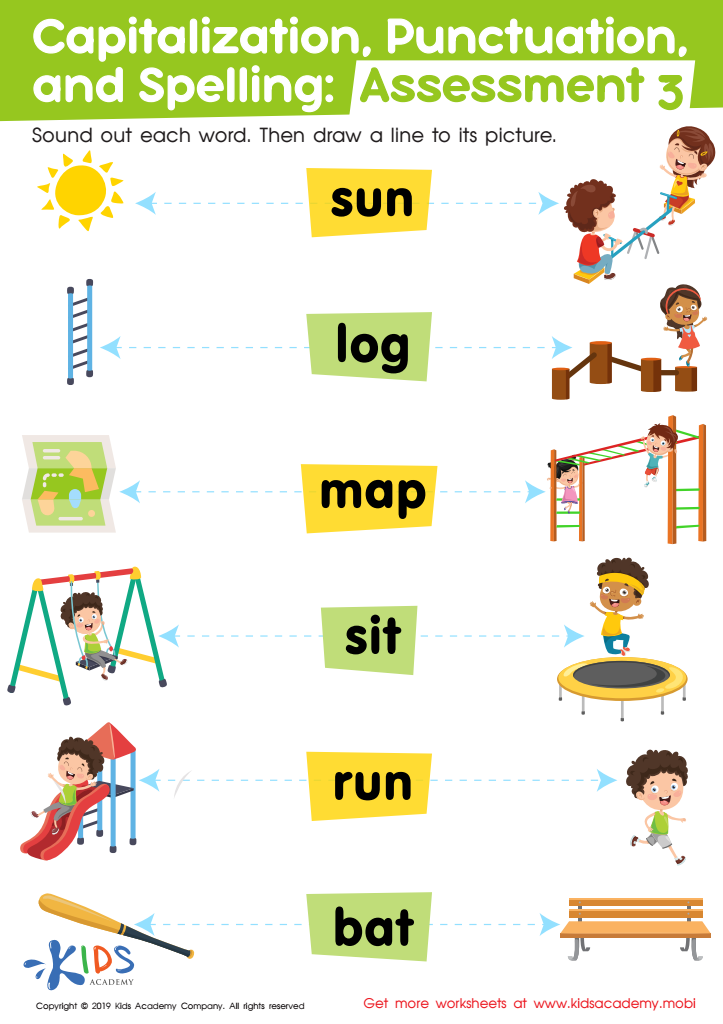
Capitalization. Punctuation. Spelling. Assessment 3 Worksheet
Before starting this worksheet, have your kids spell some simple words. Correct if wrong and show the right spellings. Then, ask them to link the pictures to the words you read out. Spelling is key for a good writer, and kids need to know how to spell to read texts easily.
Capitalization. Punctuation. Spelling. Assessment 3 Worksheet
Worksheet
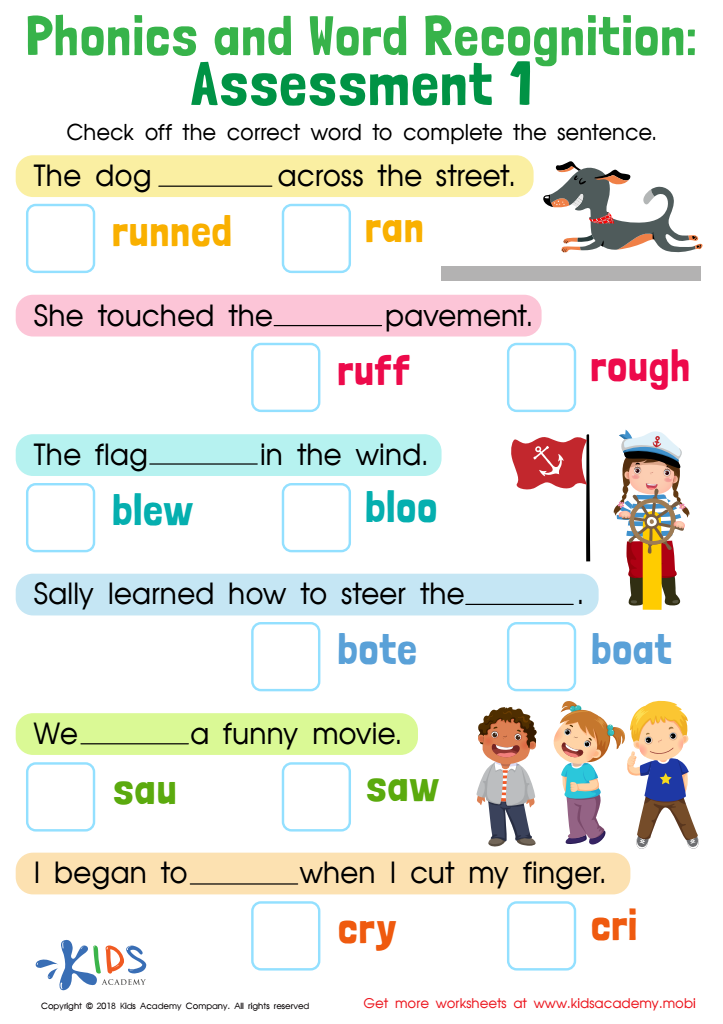
Phonics and Word Recognition: Assessment 1 Worksheet
This worksheet tests phonetics and word recognition. Students should be familiar with past tense verbs. Read incomplete sentences, then read multiple options and help students select the correct one.
Phonics and Word Recognition: Assessment 1 Worksheet
Worksheet
Join Kids Academy for Free
Who is primarily going to use this learning content?



.jpg)




Parents and teachers should care about Easy Phonics activities for ages 6-8 because phonics forms the foundation of early reading skills, essential for academic success. At this developmental stage, children are beginning to decode words, making it crucial to integrate effective phonics instruction into their learning routines. Easy Phonics activities employ engaging, multisensory techniques such as games, songs, and visual aids, which capture children's interest and make learning enjoyable.
These activities help reinforce sound-letter correspondence, enabling children to read and write with confidence. Additionally, mastering phonics supports vocabulary development and comprehension, as children learn to identify and manipulate sounds in different contexts. Investing time in phonics not only lays a solid literacy foundation but also fosters a love for reading, encouraging lifelong educational engagement.
Furthermore, incorporating Easy Phonics activities in homes and classrooms provides teachers and parents with a structured approach to nurture budding readers, ensuring that no child is left behind. By investing in these practices, adults can enhance children’s learning experiences, empower them academically, and ignite their imaginations through the power of reading. Ultimately, supporting phonics development in young learners is vital for their overall educational trajectory.








