Filters

304 filtered results

Clear all filters
Favorites
With answer key
Interactive

304 filtered results

Difficulty Level

Grade


Check out this FREE "Counting practice" Trial Lesson for age 3-4!

Breaking Down 8

Favorites
With answer key
Interactive
  • 3-4
  • Counting practice
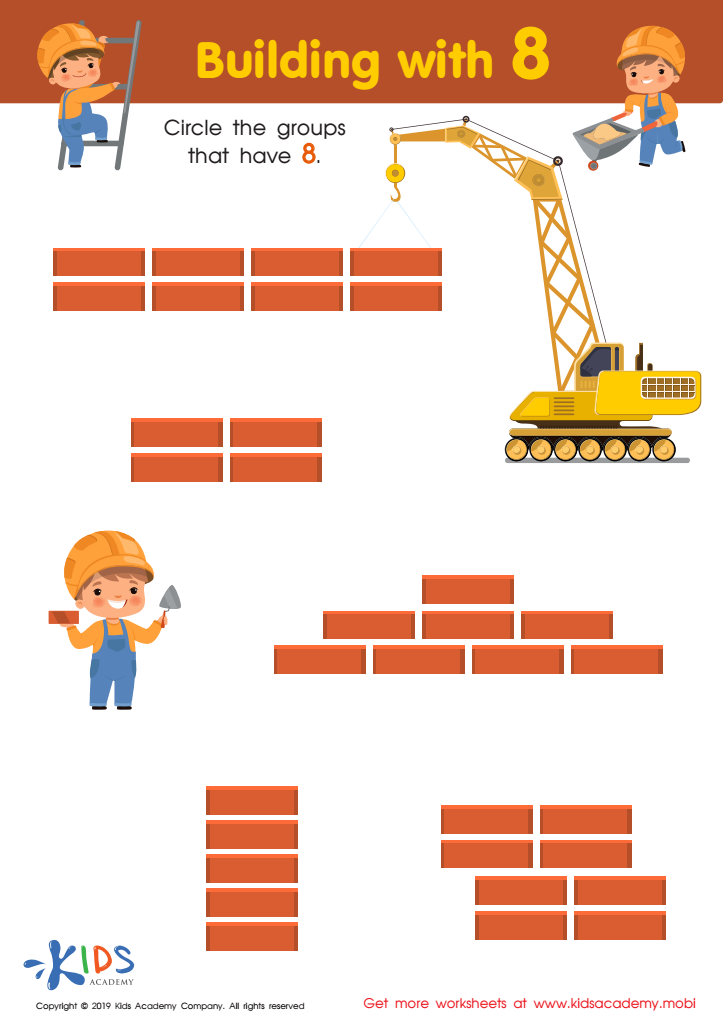
Building with 8 Worksheet

Building with 8 Worksheet

Your child can learn more with this simple exercise! Get them counting and help them circle the groups of 8 bricks. It's a great addition to their post-school lessons, supporting their counting skills. Plus, it's a fun way to learn!
Building with 8 Worksheet
Worksheet
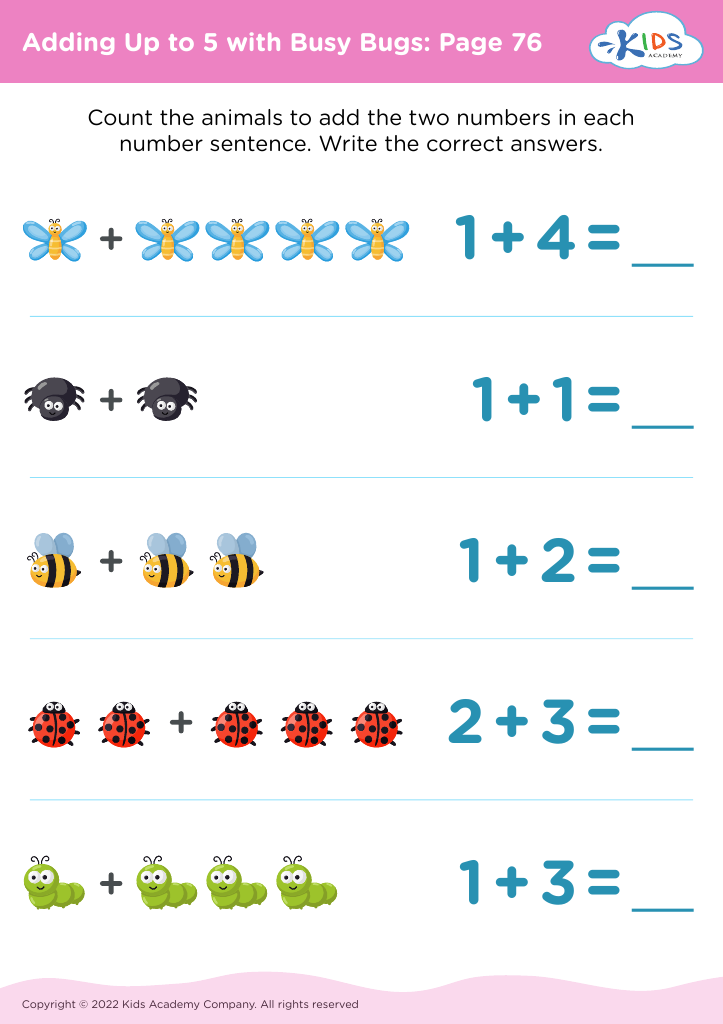
Adding Up to 5 with Busy Bugs: Page 76
Worksheet
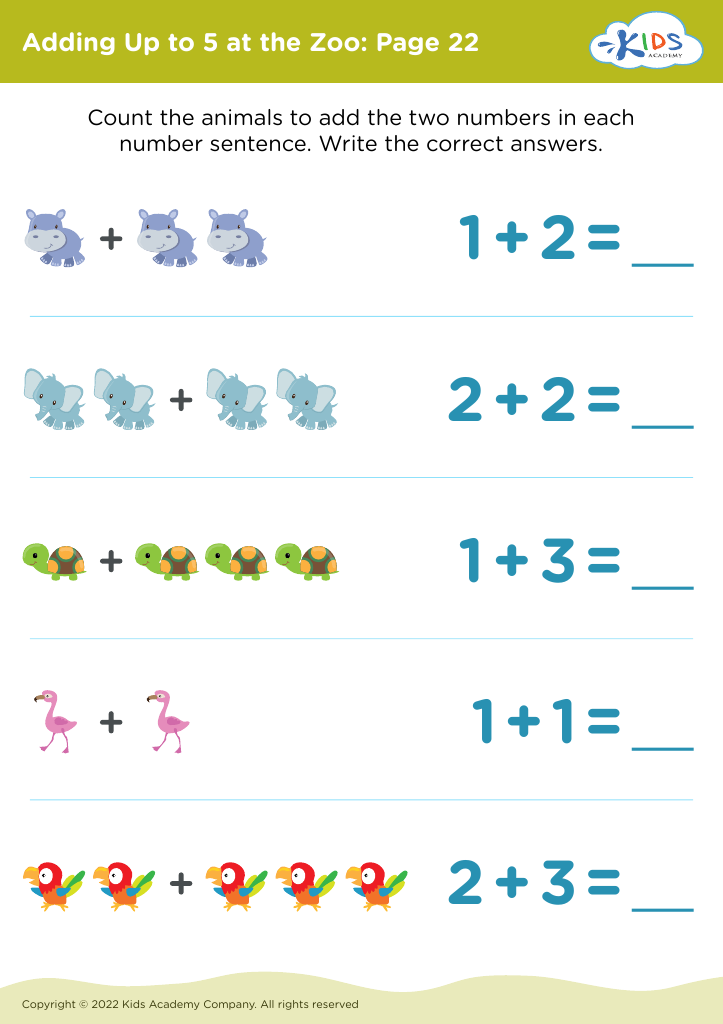
Adding Up to 5 at the Zoo: Page 22
Worksheet
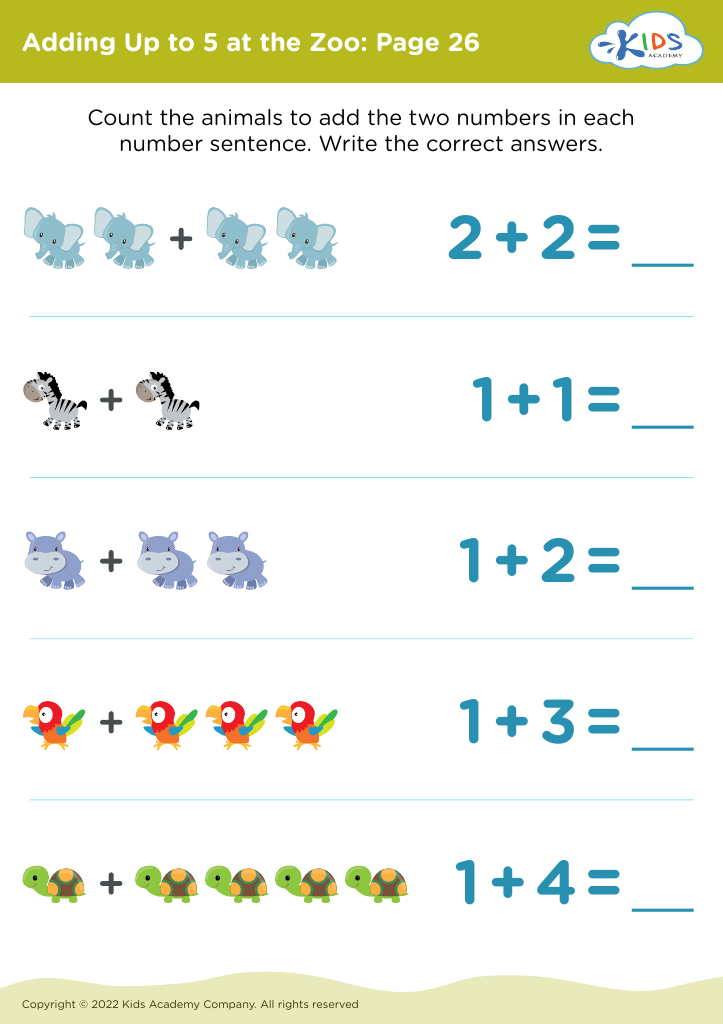
Adding Up to 5 at the Zoo: Page 26
Worksheet
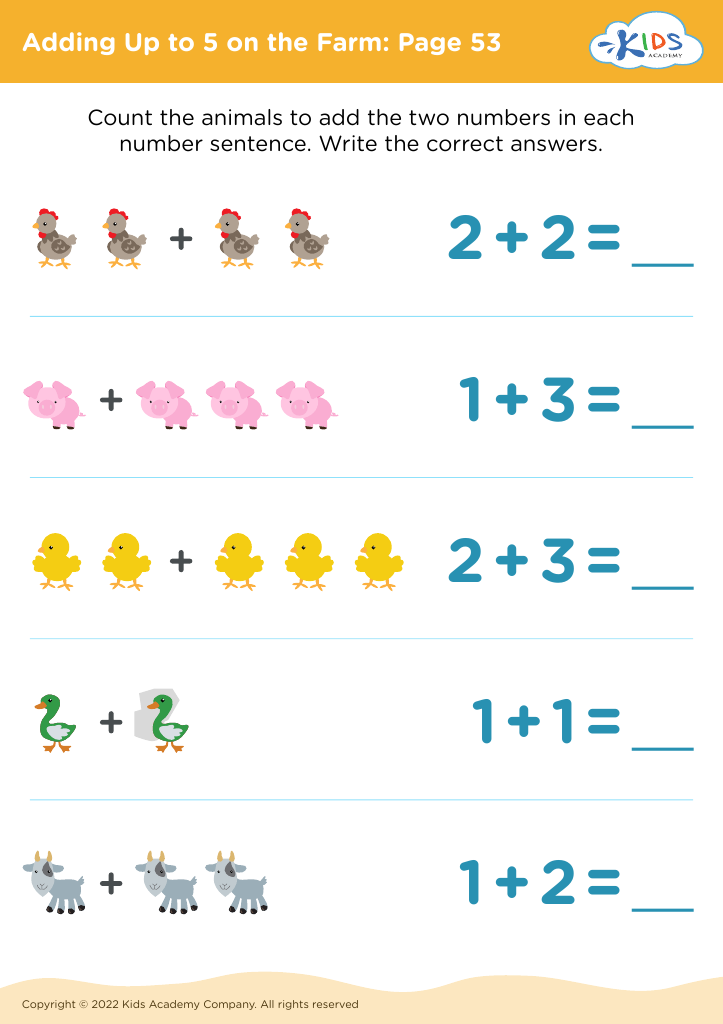
Adding Up to 5 on the Farm: Page 53
Worksheet
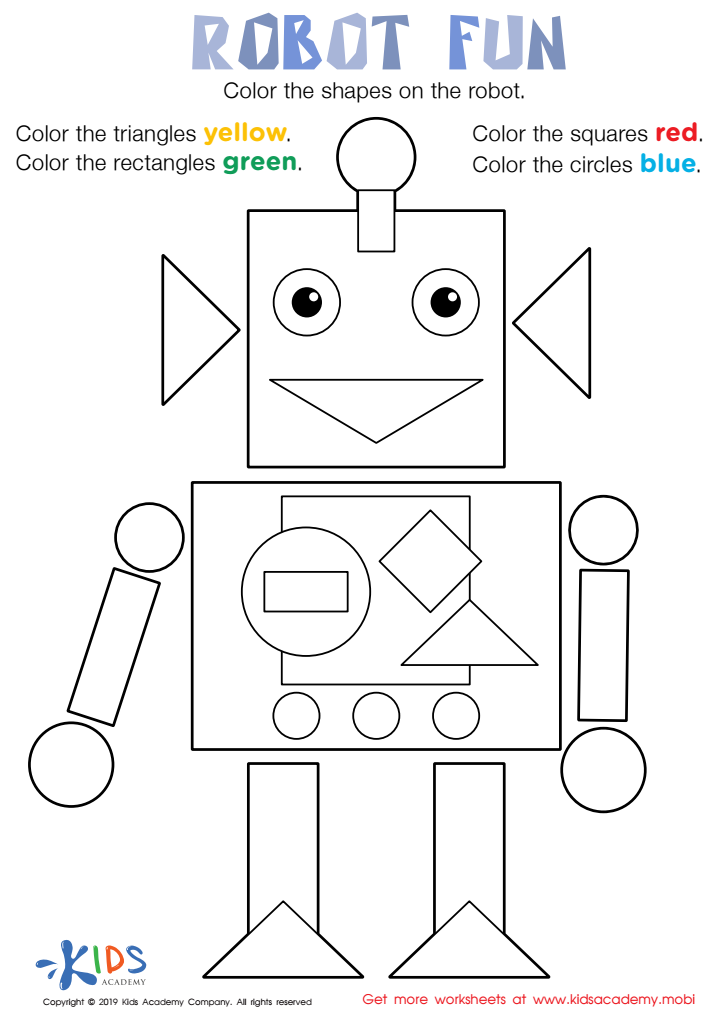
Robot Fun Worksheet
Robot Fun Worksheet

Robot Fun Worksheet

Help your child learn about basic shapes with this fun robot worksheet! Kids practice identifying circles, squares, rectangles and triangles, then color each shape according to directions. Make math practice enjoyable with this coloring page that teaches all four basic shapes - it's an important math skill!
Download (PDF)
Assign to My Students
Robot Fun Worksheet
Worksheet
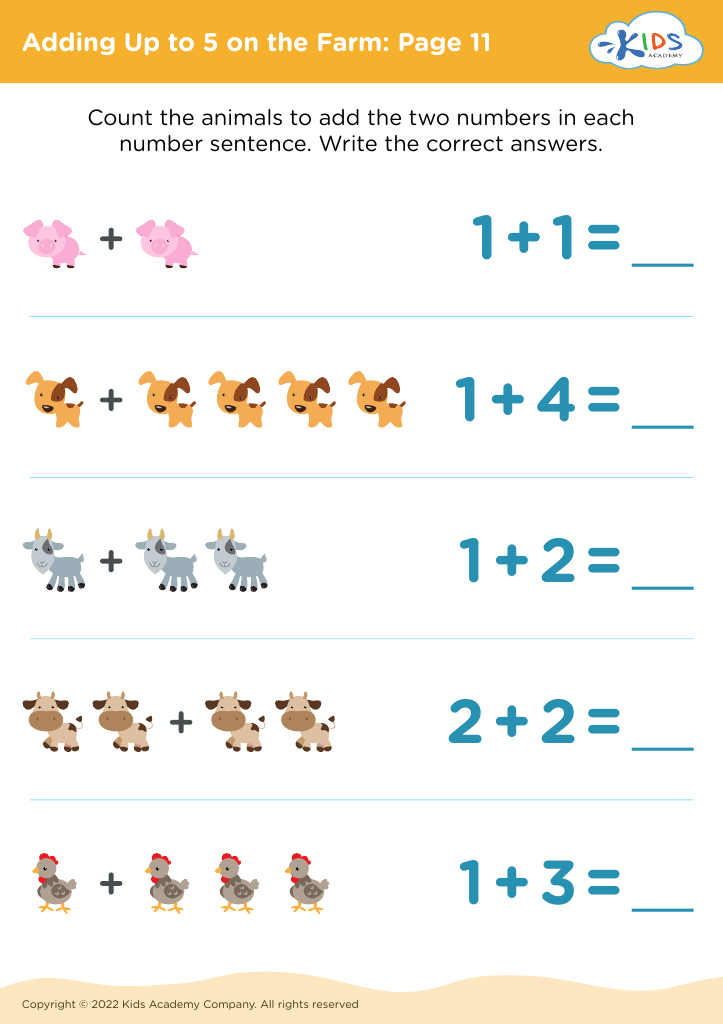
Adding Up to 5 on the Farm: Page 11
Worksheet
Pre-reading Worksheet for Kindergarten

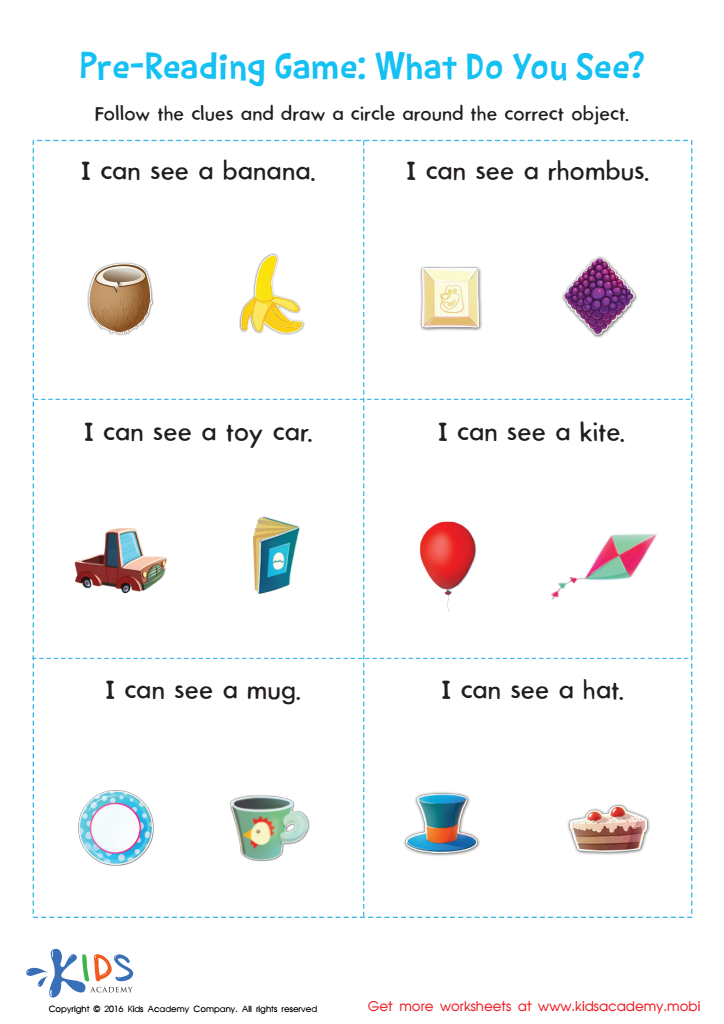
Pre–reading Worksheet: What Do You See?
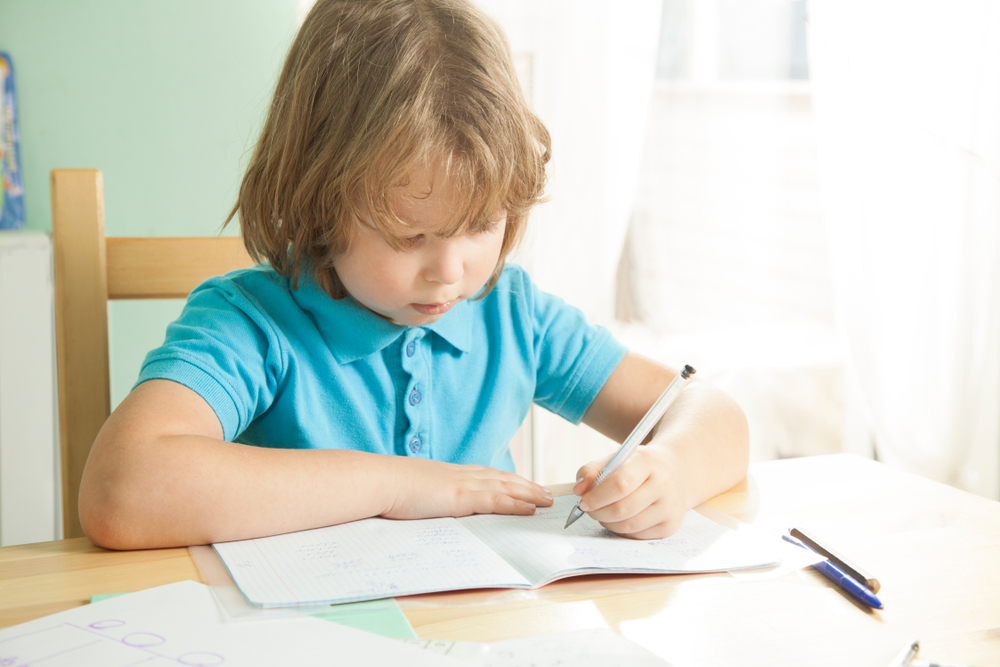
Get started with this pre-reading worksheet to build your child's early literacy skills. Model, read aloud, and provide consistent repetition for successful learning.
Pre–reading Worksheet: What Do You See?
Worksheet
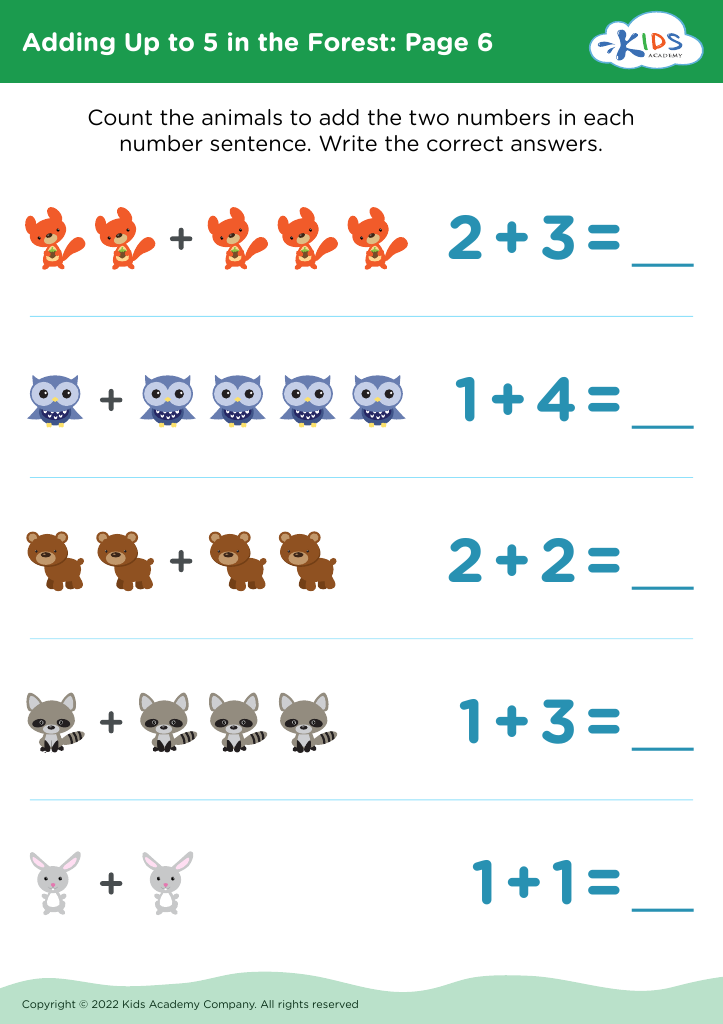
Adding Up to 5 in the Forest: Page 6
Worksheet
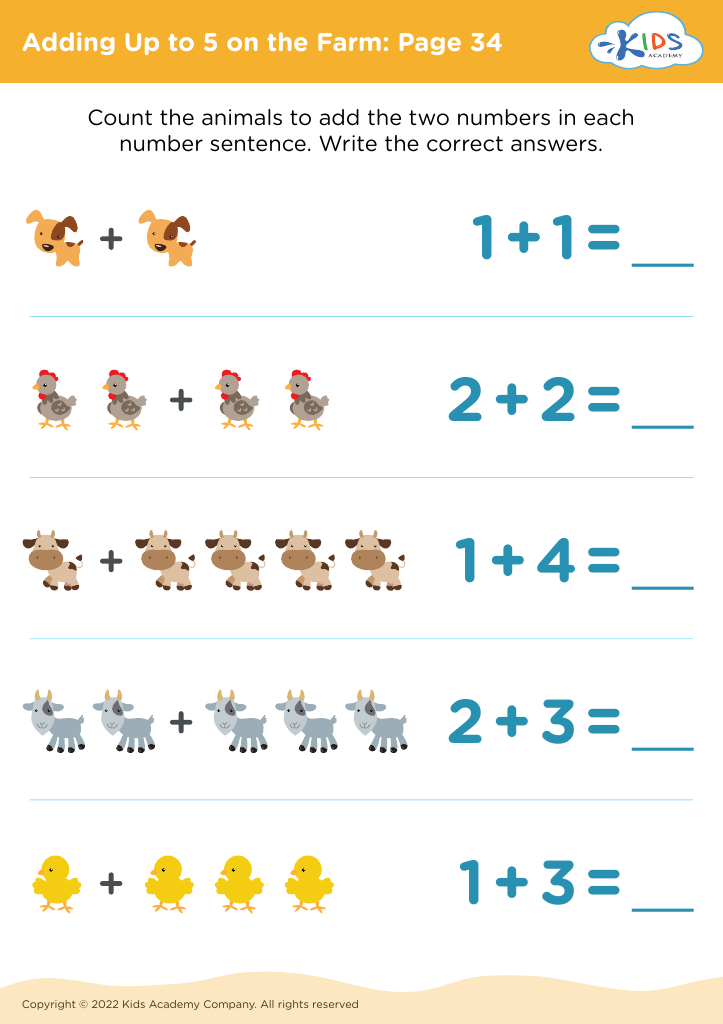
Adding Up to 5 on the Farm: Page 34
Worksheet
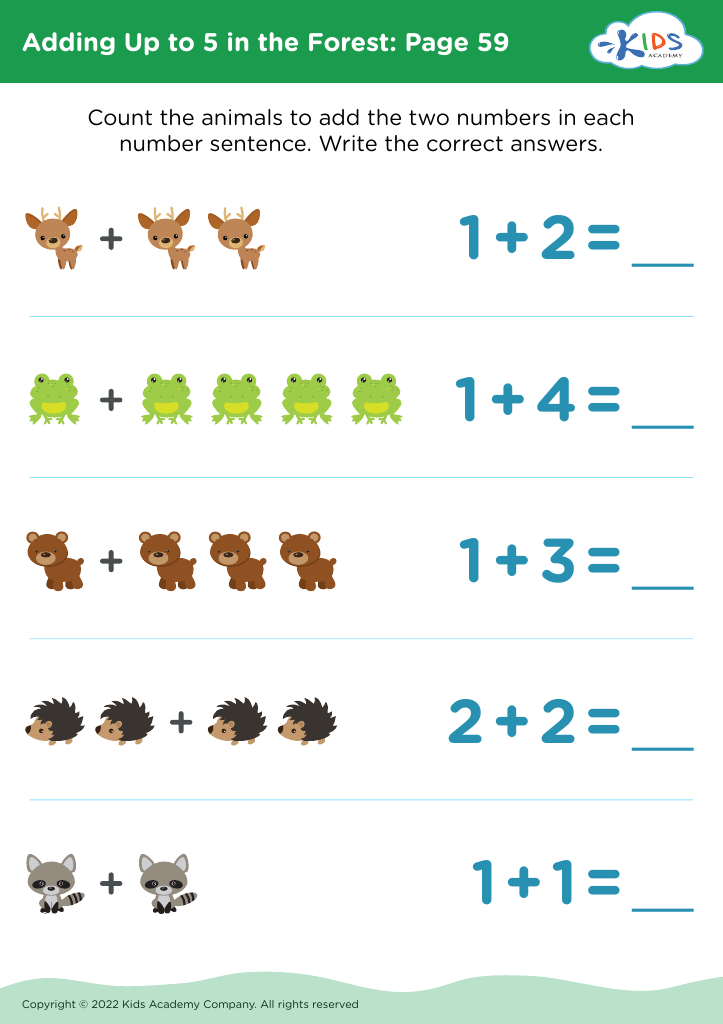
Adding Up to 5 in the Forest: Page 59
Worksheet
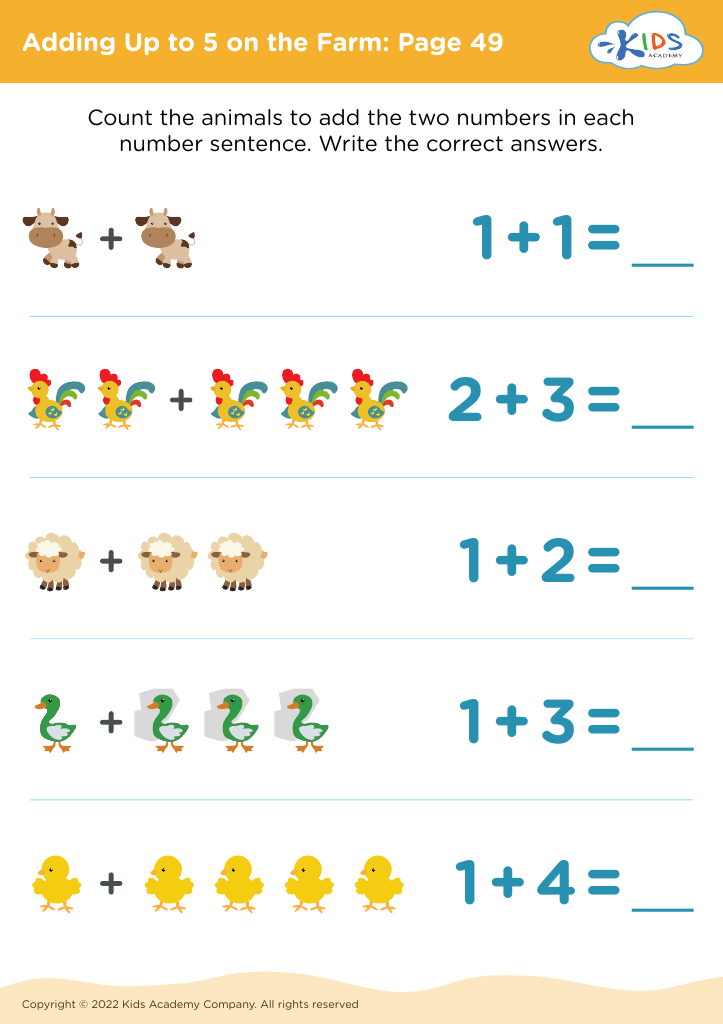
Adding Up to 5 on the Farm: Page 49
Worksheet
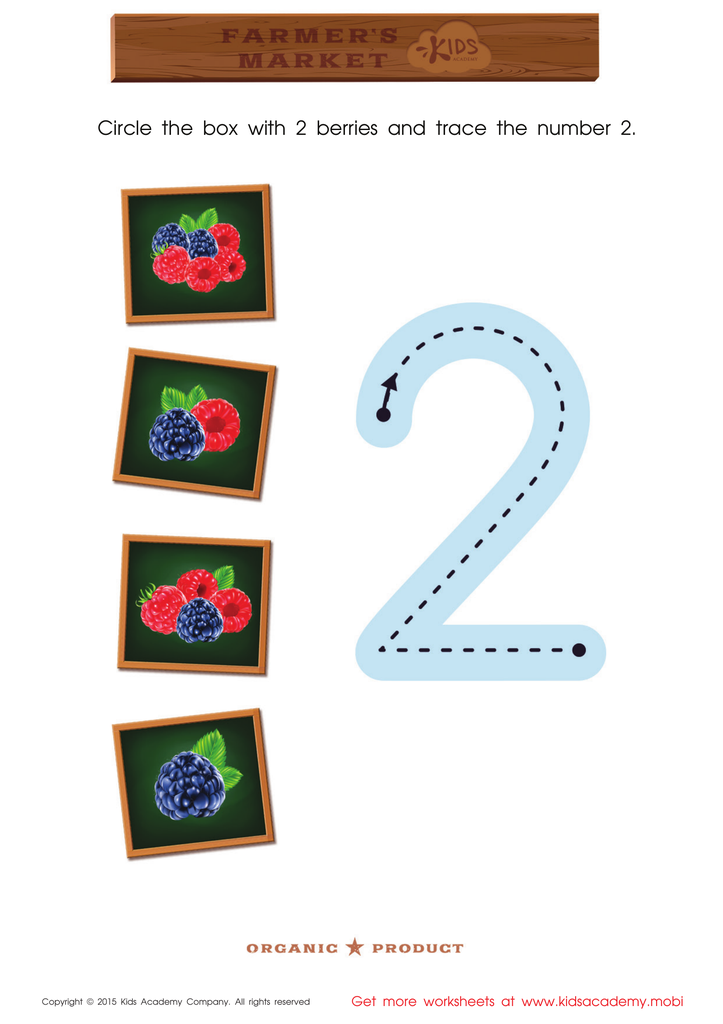
Math Game: Count the Berries and Trace the Number 2

Count the Berries and Trace the Number 2 Printable
This math worksheet by Kids Academy helps kindergartners count and write number 2. Print it out and urge your kid to count the berries in the boxes, then circle the box with 2 of them. As they trace the number 2, they practice hand motions for good handwriting. More skill-building worksheets available.
Count the Berries and Trace the Number 2 Printable
Worksheet
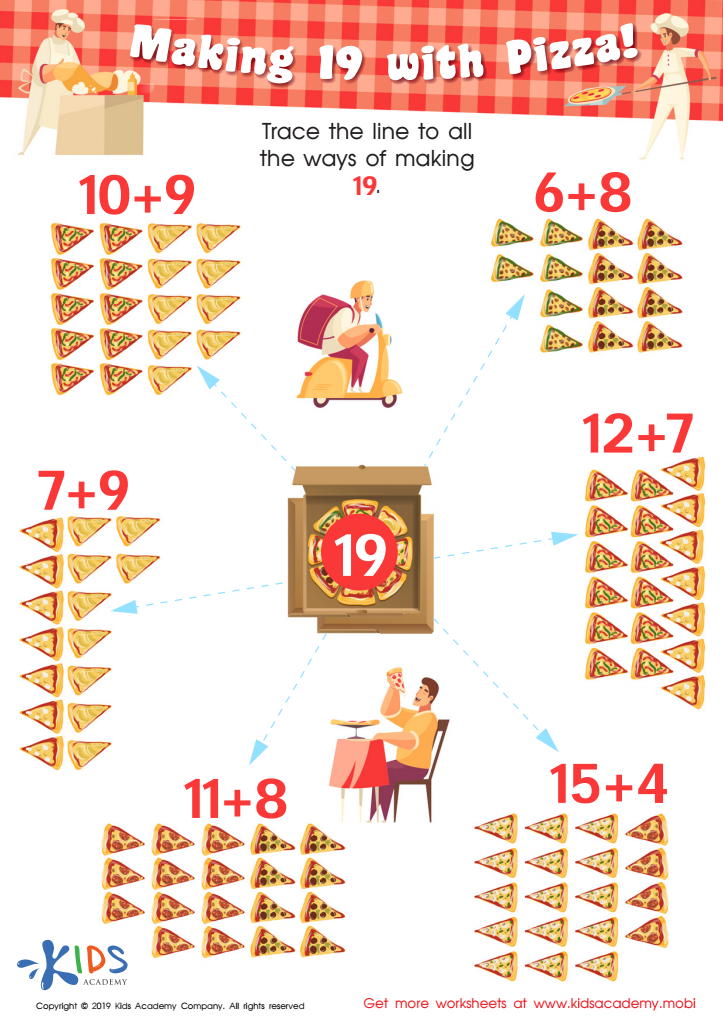
Making 19 with Pizza! Worksheet

Making 19 with Pizza! Worksheet

Who loves pizza? Your kids do! Next time you need to teach them math, make it fun by combining it with something they enjoy. This worksheet uses a pizza-themed problem to help them practice solving equations. Have them trace the line to figure out how to make 19. It's a great way to make learning math fun!
Making 19 with Pizza! Worksheet
Worksheet
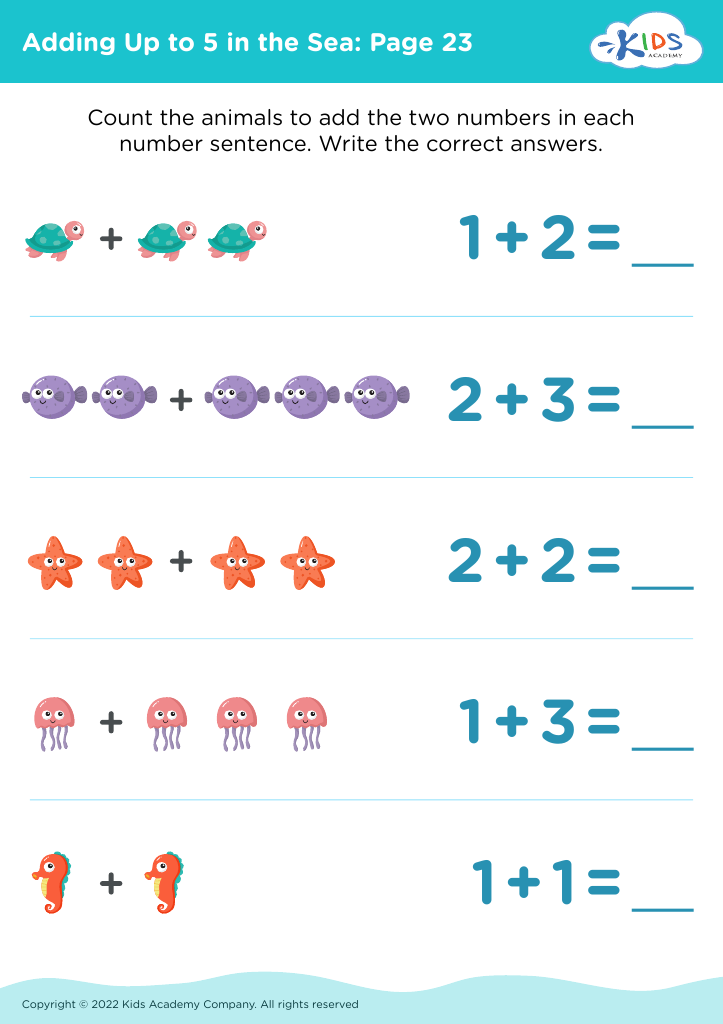
Adding Up to 5 in the Sea: Page 23
Worksheet
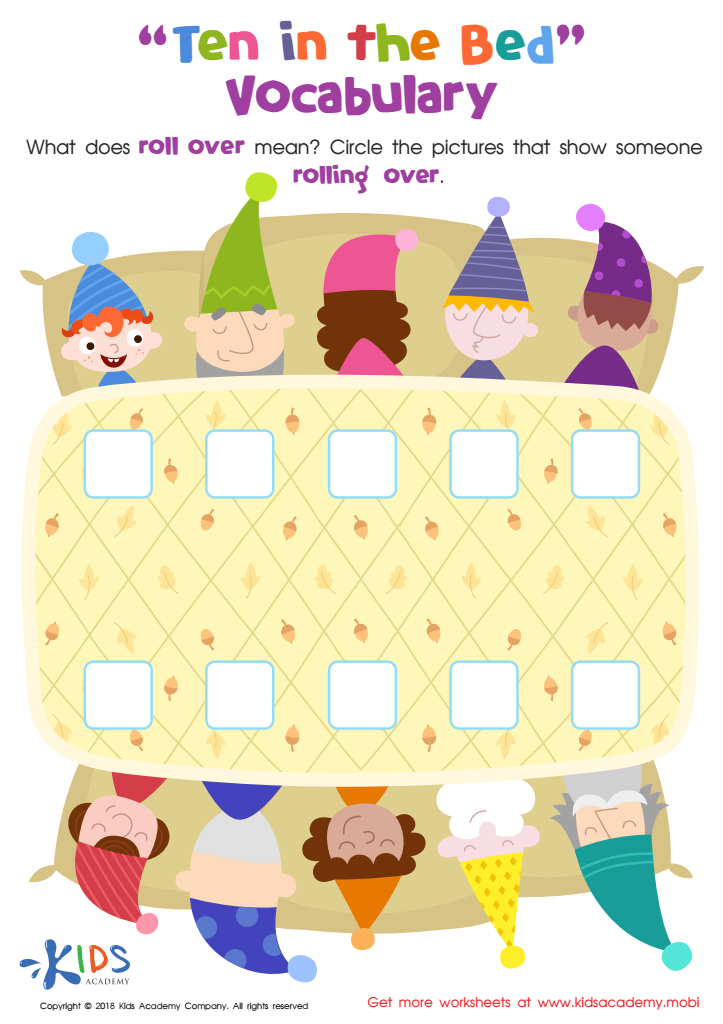
Ten in the Bed: Vocabulary Worksheet
Ten in the Bed: Vocabulary Worksheet
It's essential for emerging readers to be proficient in positional and directional words. This worksheet uses cheerful faces to help students identify who has "rolled over". Knowing these words is an essential part of reading and writing for pre-K and Kindergarteners. It also helps them to follow directions and use precise language.
Ten in the Bed: Vocabulary Worksheet
Worksheet
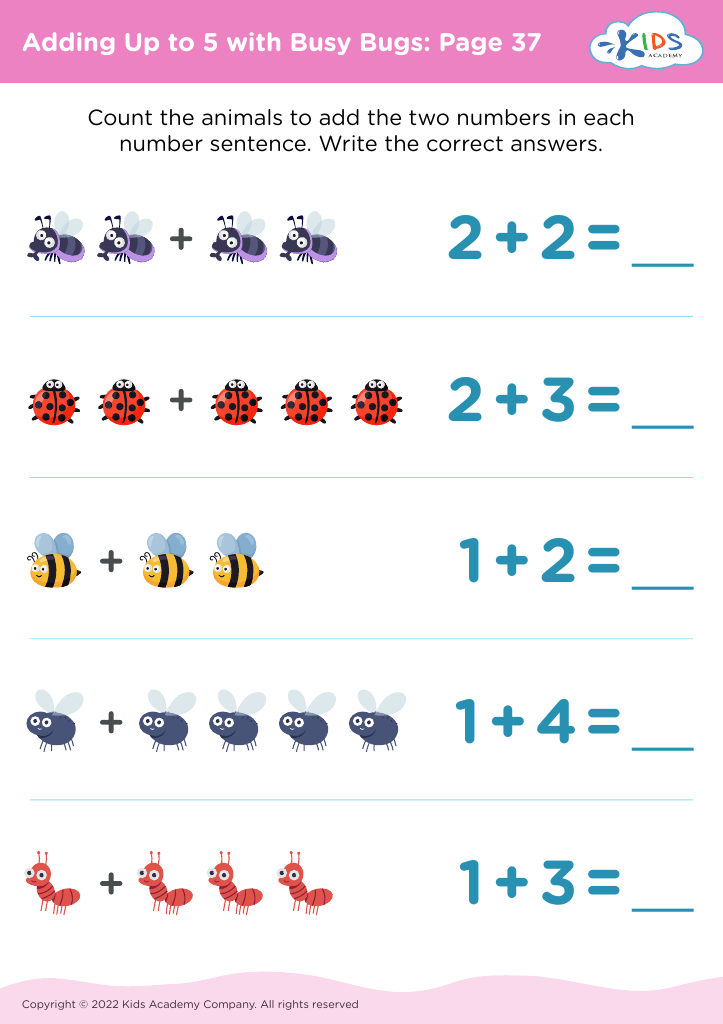
Adding Up to 5 with Busy Bugs: Page 37
Worksheet
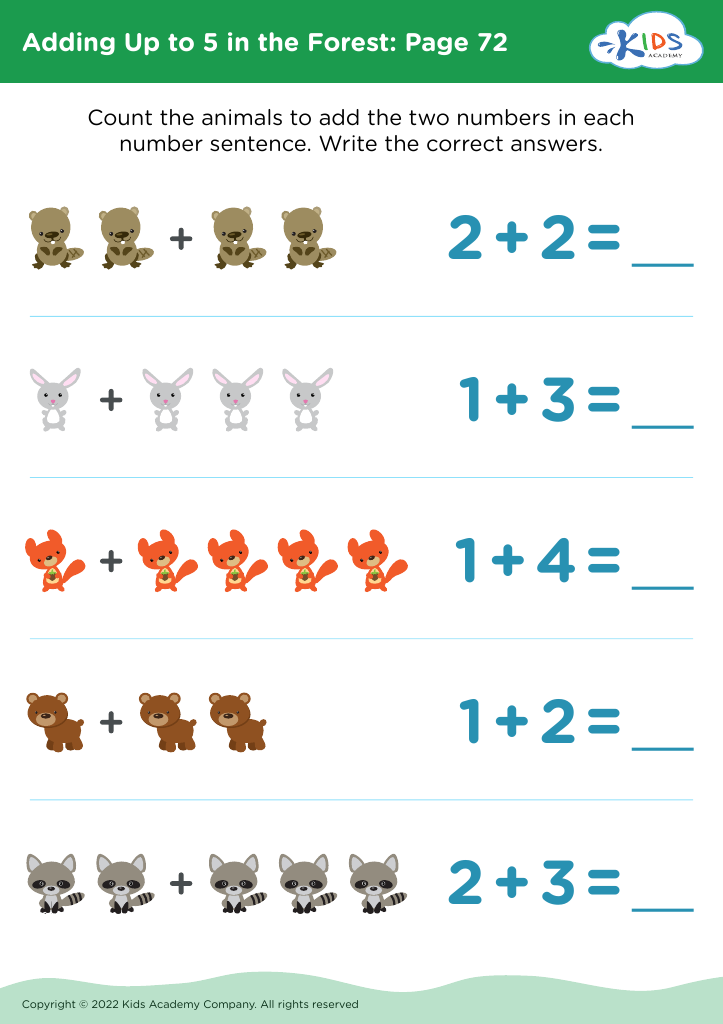
Adding Up to 5 in the Forest: Page 72
Worksheet
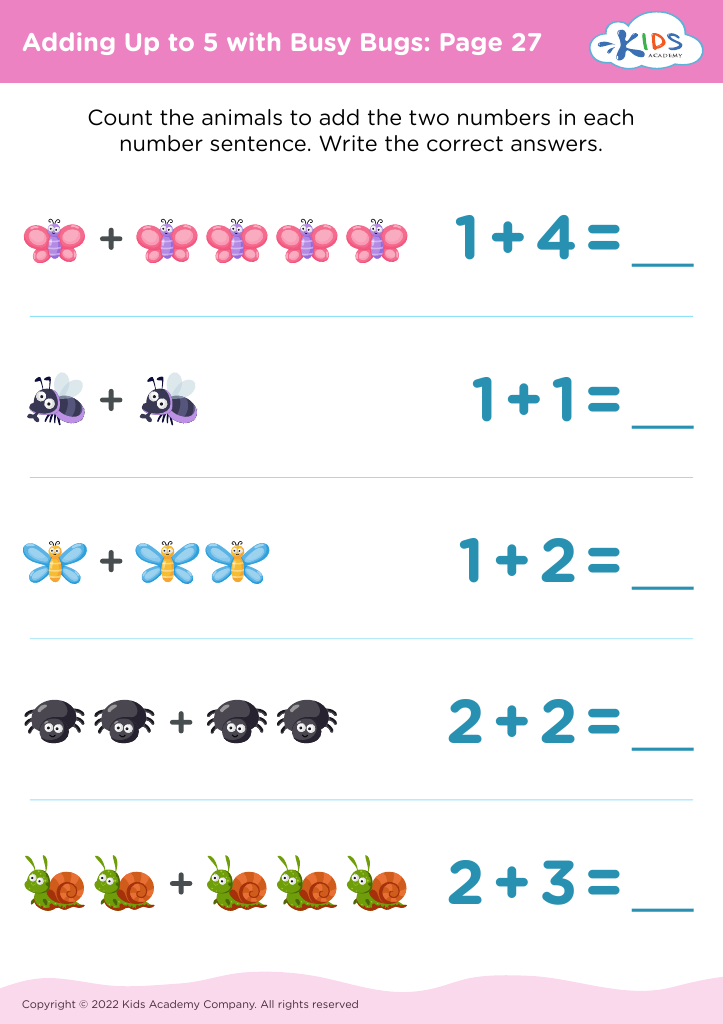
Adding Up to 5 with Busy Bugs: Page 27
Worksheet
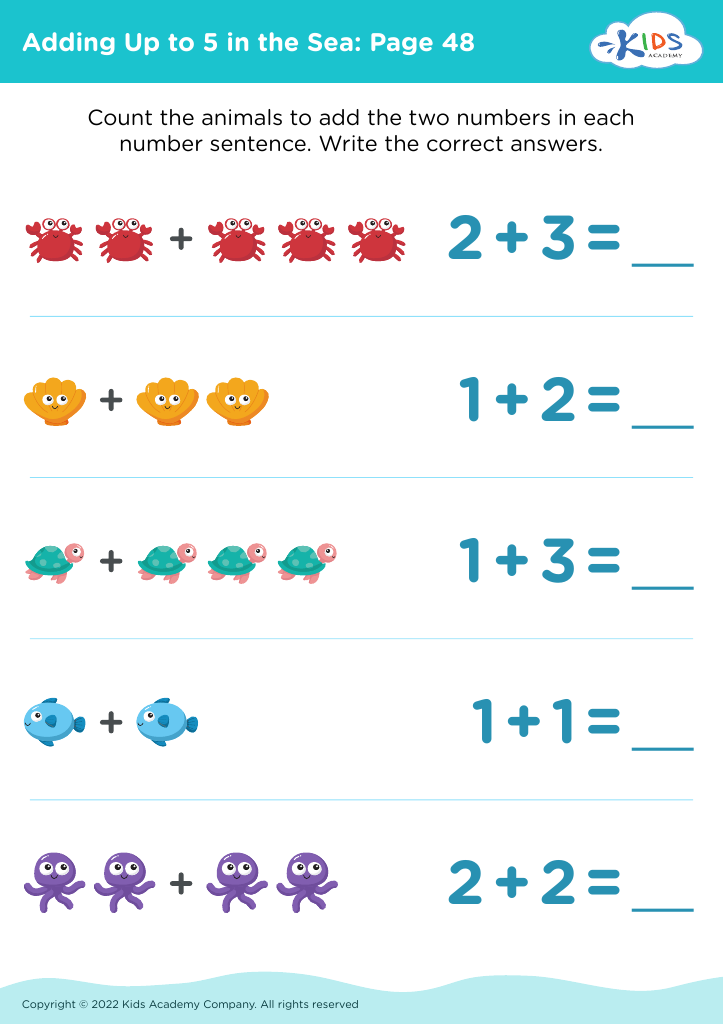
Adding Up to 5 in the Sea: Page 48
Worksheet
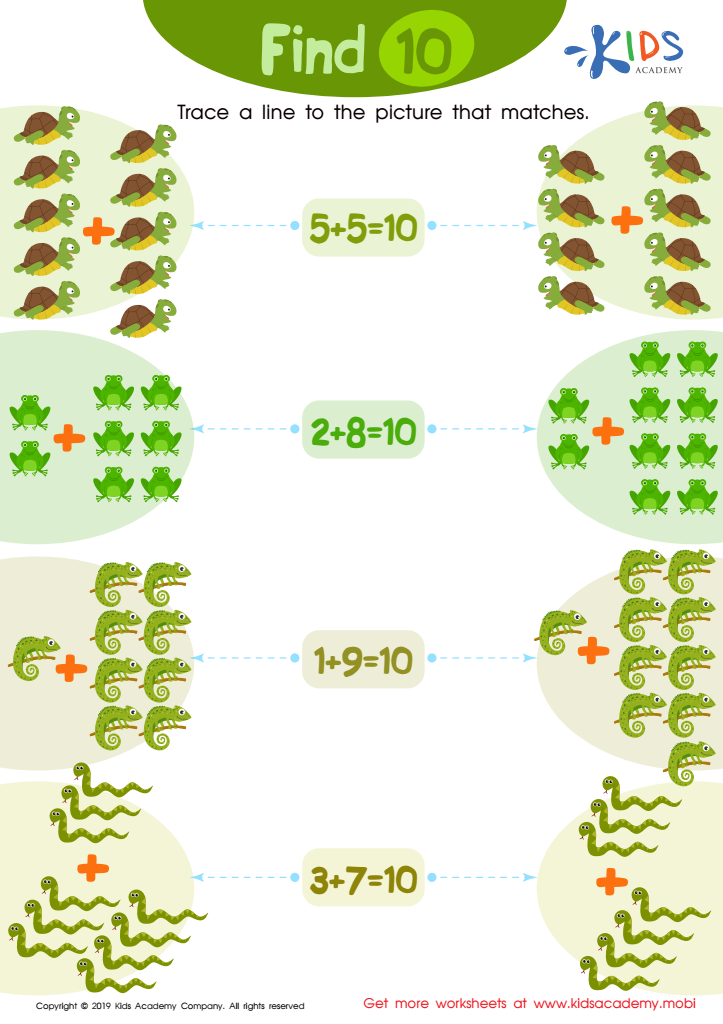
Find 10 Worksheet
Find 10 Worksheet

Find 10 Worksheet

Counting can be tricky, but your kids can master it with regular practice. Here's a fun activity to help: count the animals, then trace a line to the pictures that matches. With these tips, math will be an easy walk in the park.
Find 10 Worksheet
Worksheet
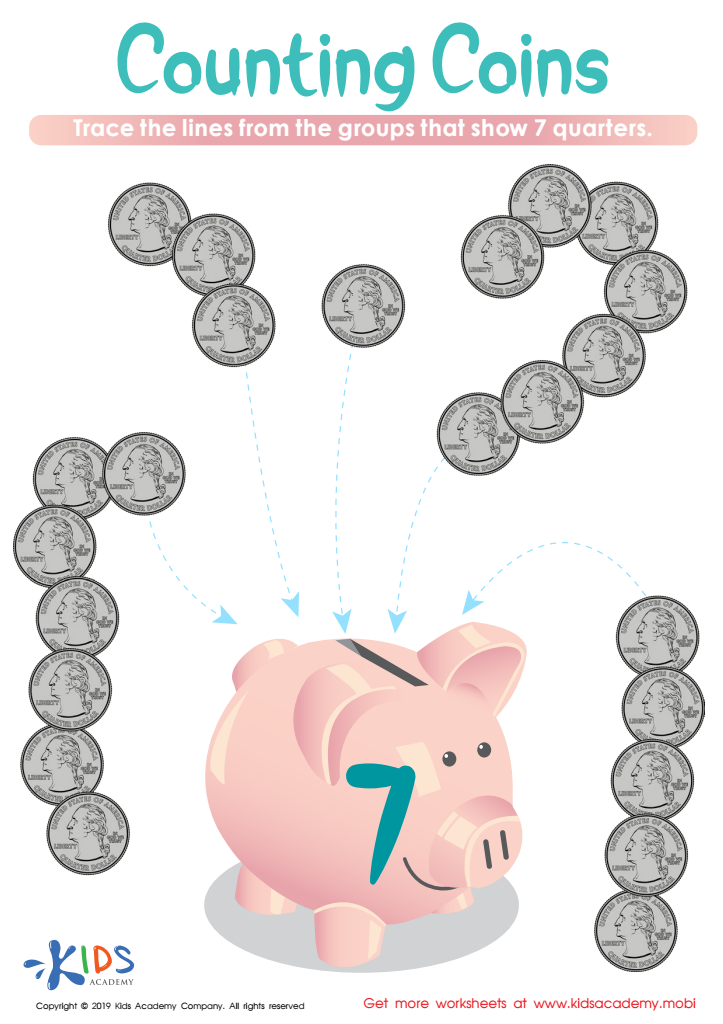
Counting Coins Worksheet

Counting Coins Worksheet

Help your students overcome their fear or aversion of counting and learning numbers with this fun worksheet! It features colorful pictures with four groups of coins. Ask the students to count each group, then trace the lines to the piggy bank. Show them it's easy to count and learn numbers!
Counting Coins Worksheet
Worksheet
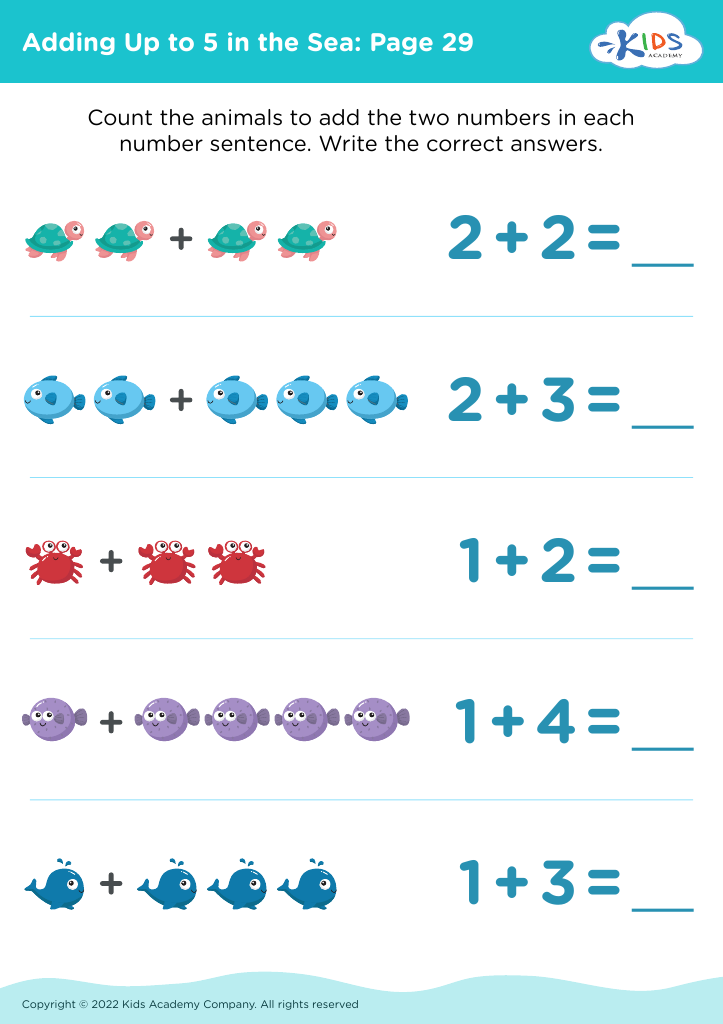
Adding Up to 5 in the Sea: Page 29
Worksheet
Counting numbers worksheet for kindergarten

Counting Numbers Worksheet For Kindergarten

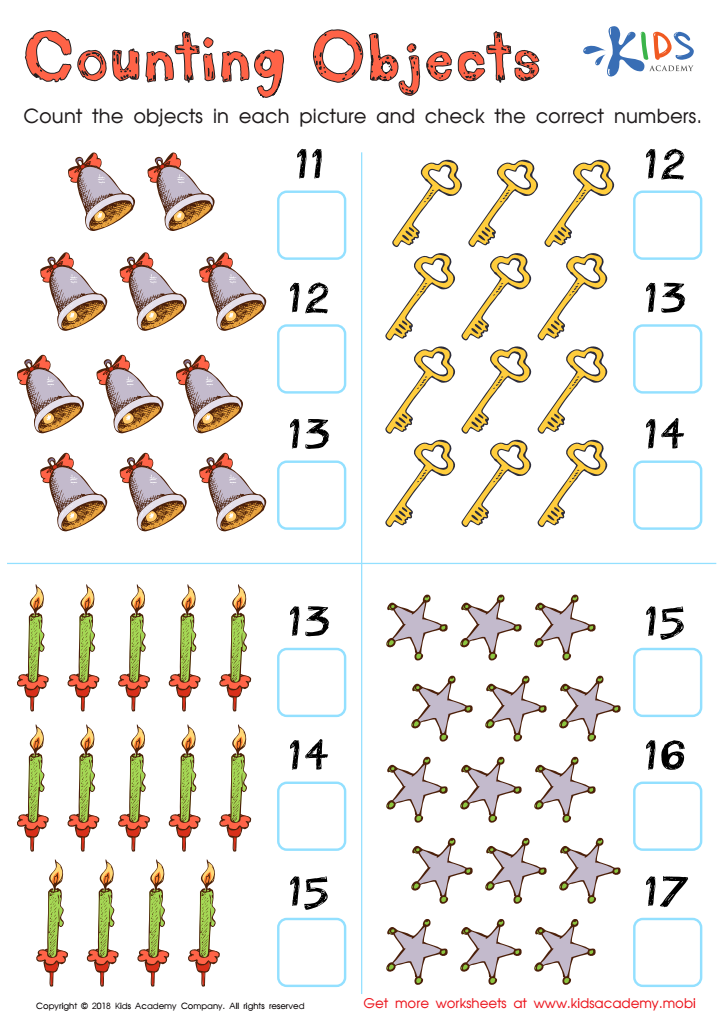
This worksheet is a great way to get your child practicing foundational math skills. With bright pictures to count, counting numbers just got a lot more fun! Get them ready for future math success and help them hone their early math skills.
Counting Numbers Worksheet For Kindergarten

Worksheet


Counting practice is fundamental for young children, particularly those aged 3-4, as it lays the groundwork for future mathematical understanding and cognitive development. At this critical age, children’s brains are highly receptive, and engaging them in counting activities helps nurture several key developmental areas.

First, counting strengthens numerical cognition, allowing children to understand numbers, their order, and their relationships. This early exposure sets the stage for more complex mathematical concepts, such as addition, subtraction, and problem-solving skills, promoting a positive long-term attitude toward math.

Second, counting activities enhance fine motor skills and eye-hand coordination, especially when children use physical objects like blocks, beads, or fingers to count. These skills are crucial for tasks in everyday life and are interlinked with cognitive abilities that impact learning and development.

Furthermore, counting supports the development of language skills. As children recite numbers, they improve their verbal fluency, memory, and listening skills. This practice helps them follow sequences, understand quantity descriptions, and better communicate their thoughts.

Finally, counting practice can be a joyful experience that fosters a sense of achievement. It boosts confidence, encourages curiosity, and creates opportunities for positive interactions between parents, teachers, and peers. Thus, counting practice plays an essential role in holistic early childhood education, emphasizing its importance for parents and teachers.