Problem-Solving Skills Sorting Worksheets for Ages 3-4
4 filtered results
-
From - To
Introduce your little ones to essential problem-solving skills with our fun and engaging Sorting Worksheets for Ages 3-4! Designed to enhance logical thinking, these worksheets encourage young learners to classify objects based on various attributes, such as color, shape, and size. As children sort items, they develop critical cognitive skills, boosting their confidence in tackling challenges. Perfect for at-home learning or in the classroom, our worksheets offer vibrant visuals and interactive activities that keep kids entertained while learning. Spark curiosity and foster a love for learning with our expertly crafted resources tailored specifically for preschoolers. Start sorting and solving today!
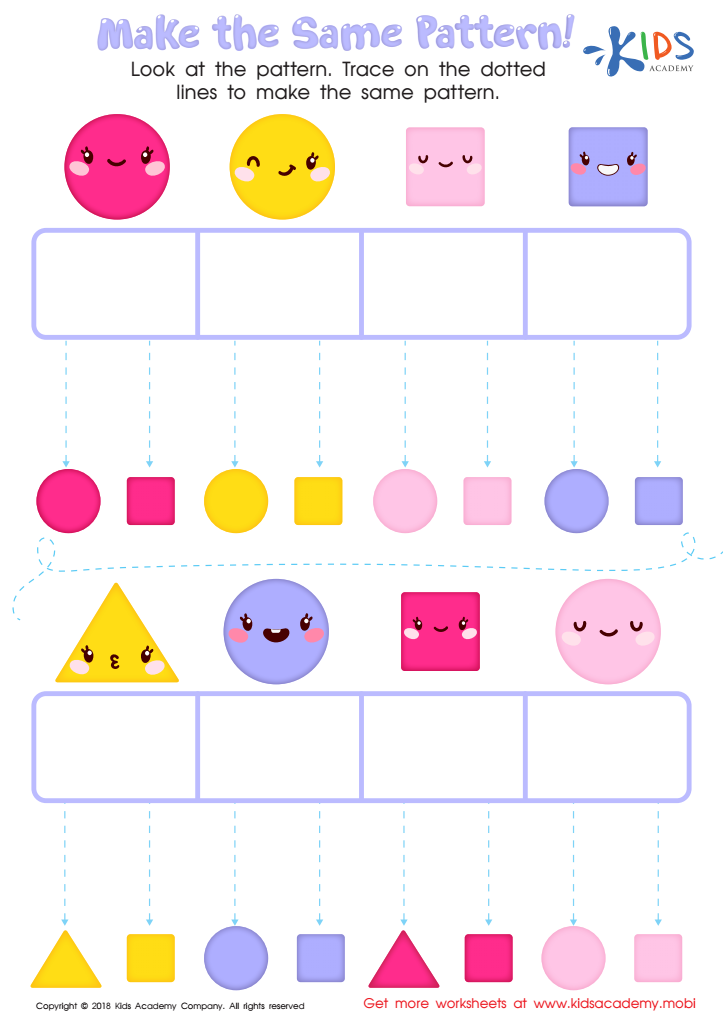
Make the Same Pattern Worksheet
 Assign to My Students
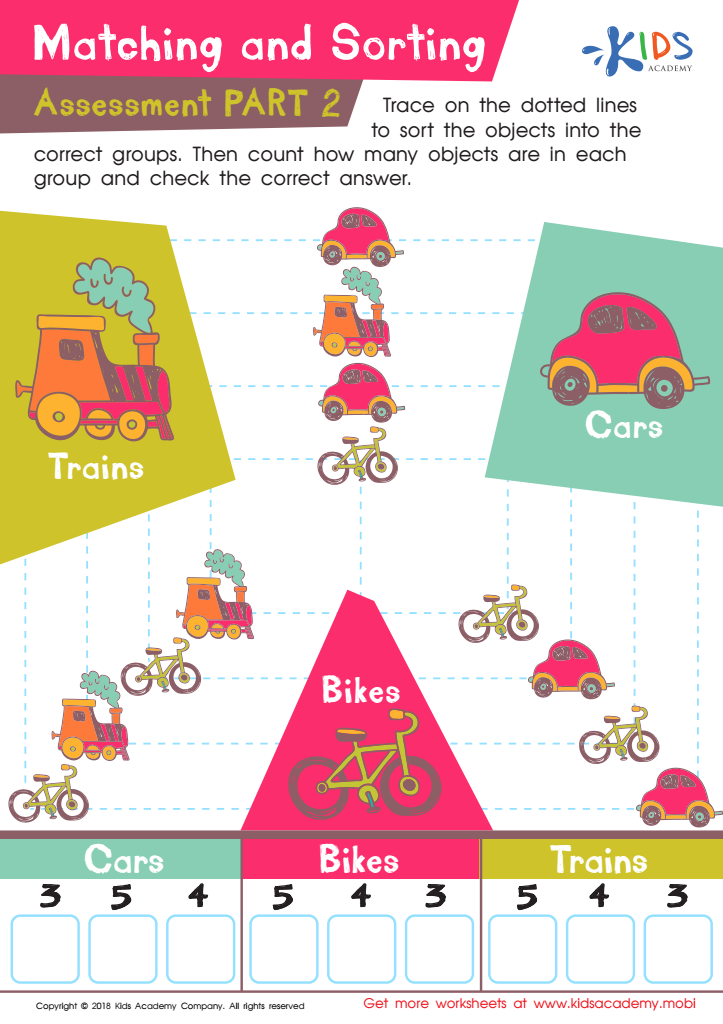
Matching and Sorting for Kindergarten: Assessment 2 Worksheet
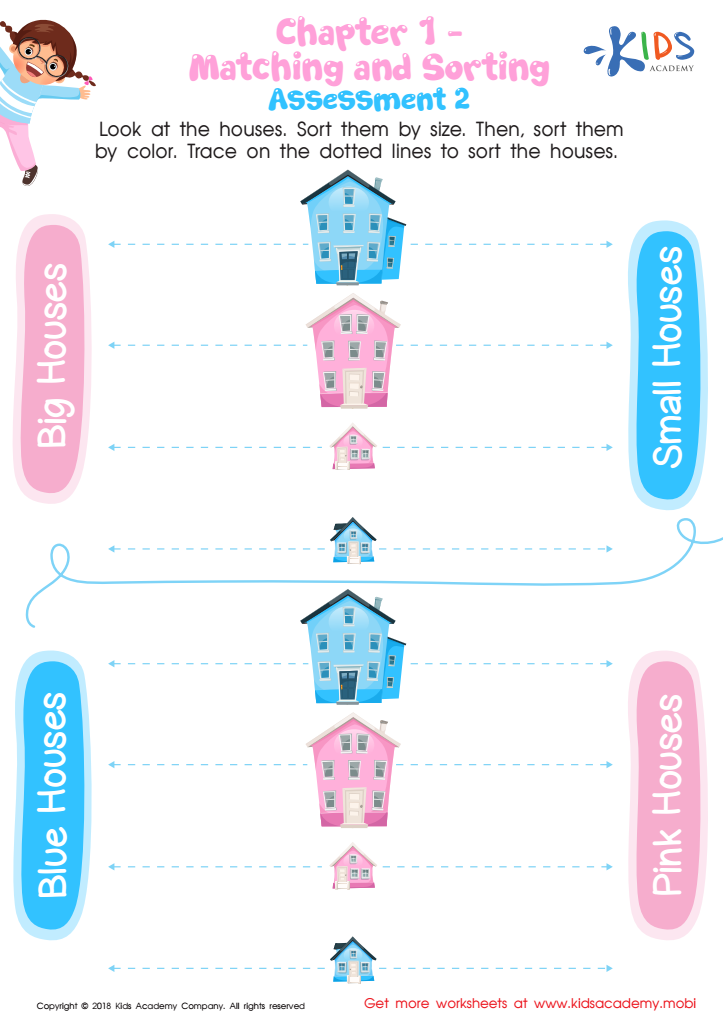
Matching and Sorting for Preschool: Assessment 2 Worksheet
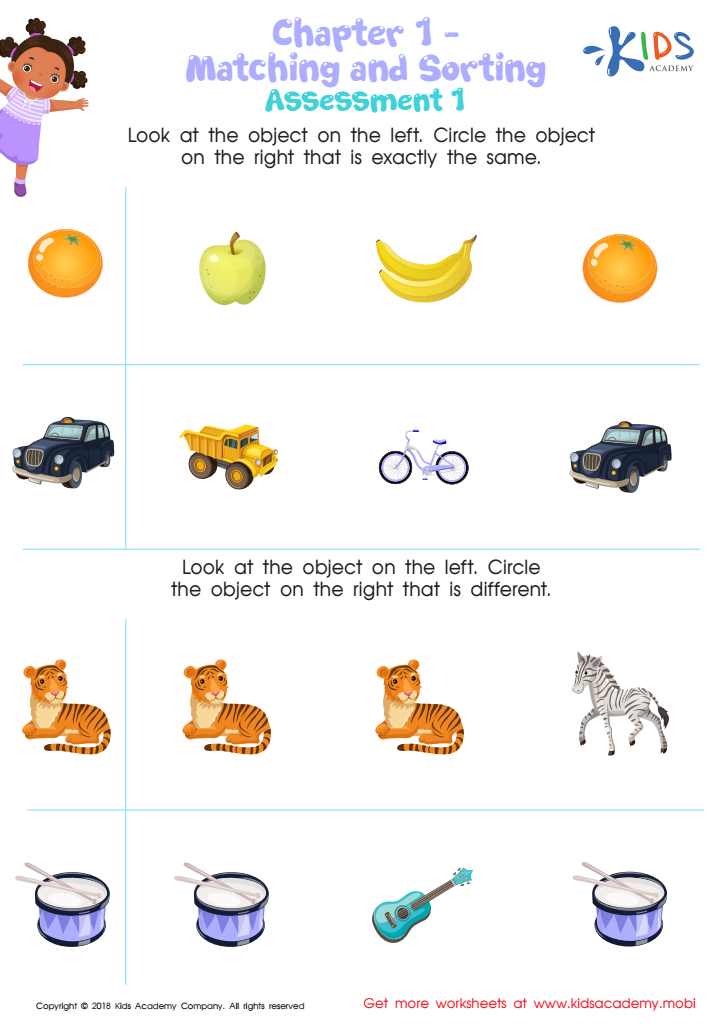
Matching and Sorting for Preschool: Assessment 1 Worksheet







Developing problem-solving skills through sorting activities for ages 3-4 is crucial for a child’s cognitive and social growth. At this age, children are naturally curious and motivated to explore the world around them. Engaging them in sorting activities helps strengthen their critical thinking abilities by encouraging them to classify objects based on size, shape, color, or type, which fosters logical reasoning.
Sorting tasks enhance fine motor skills as children manipulate items, strengthening their hand-eye coordination and dexterity. Moreover, these activities promote language development, as children learn to articulate their thought processes and describe their sorting criteria.
From a social perspective, sorting activities can be a collaborative experience. When children work alongside peers or adults, they learn to communicate, share ideas, and negotiate solutions, essential skills for future teamwork. For parents and teachers, supporting sorting activities cultivates an engaging and educational environment that boosts a child’s confidence.
Ultimately, fostering strong problem-solving skills in early childhood sets the foundation for academic success and lifelong learning, equipping children with the resilience and adaptability they need to navigate challenges as they grow. Thus, investing time in sorting activities is a worthwhile endeavor for both educators and caregivers.








