Rhyming skills development Reading Worksheets for Ages 3-4
3 filtered results
-
From - To
Enhance your child's early literacy with our Rhyming Skills Development Reading Worksheets for ages 3-4. Designed specifically for young learners, these engaging worksheets introduce the fun of rhymes through colorful illustrations and simple exercises. Children will develop essential phonemic awareness as they explore sounds and patterns in words. Our user-friendly activities encourage creativity and critical thinking, making learning enjoyable. These worksheets serve as an excellent resource for parents and educators aiming to foster a solid foundation in reading. Help your child embrace the joys of language while building confidence in their reading abilities. Start their rhyming journey today!
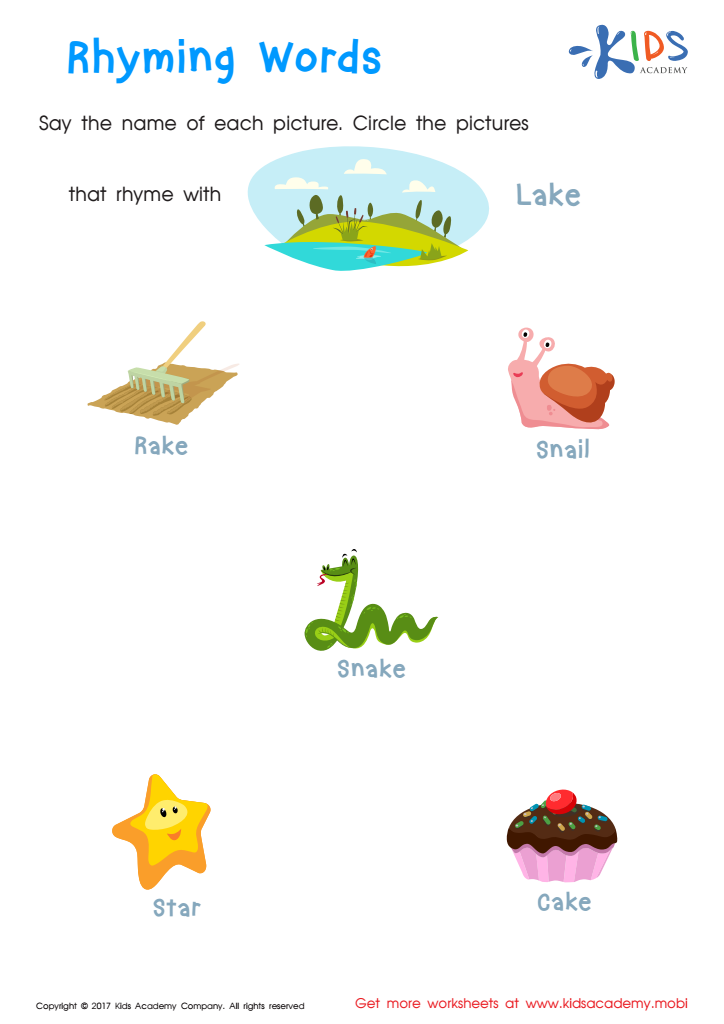
Rhyming Words Rhyming Worksheet
 Assign to My Students
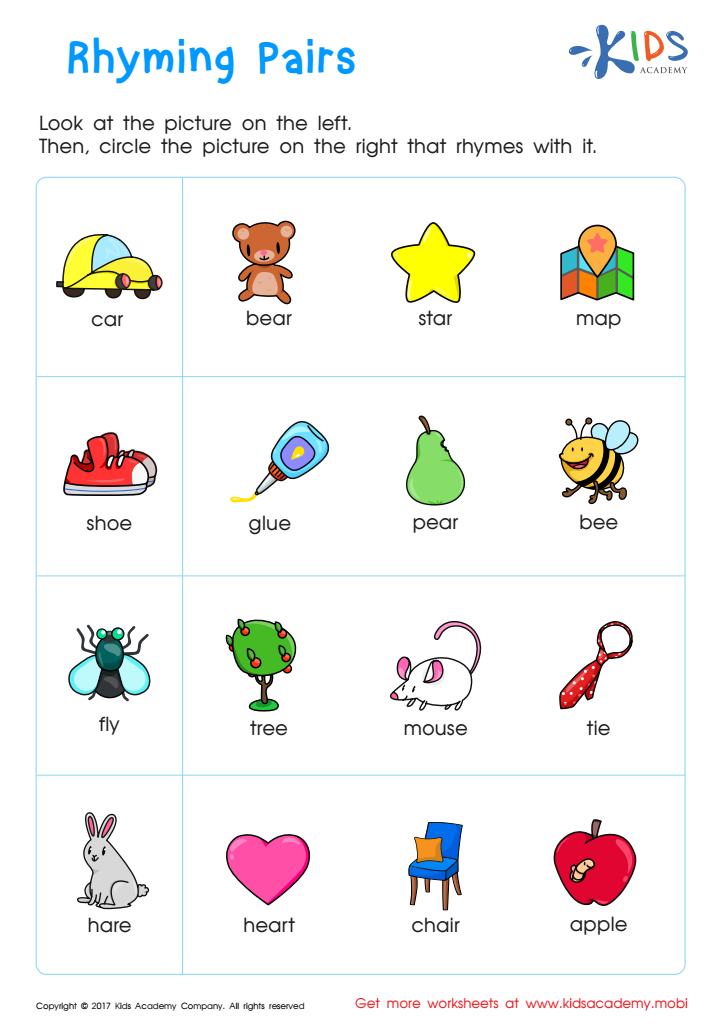

First Words: Picture Rhymes Worksheet







Rhyming skills play a crucial role in early literacy development for children ages 3-4. When parents and teachers focus on rhyming, they help children develop phonemic awareness, which is the ability to hear and manipulate sounds in spoken language. This skill is foundational for reading success, as it helps children recognize the sound patterns that make up words.
Additionally, rhyming enhances vocabulary acquisition. Children who engage with rhyming activities are more likely to experiment with language, and they become familiar with new words in a fun and engaging way. This can spark curiosity and encourage a love for reading.
Furthermore, rhyming activities, such as singing nursery rhymes or playing rhyming games, foster creativity and imagination in young learners. These playful interactions can also strengthen bonding between parents and children, creating positive associations with literacy.
By prioritizing rhyming skill development, caregivers can help build a strong foundation for later reading proficiency. Engaging children in rhyming activities in a joyful manner supports cognitive development and instills a lifelong appreciation for language and literacy. Ultimately, rhyming is not just a playful exercise; it is a stepping stone to future reading success.








