
Plant identification Science Worksheets for Ages 3-4
3 filtered results
Difficulty Level
Grade
Age
-
From - To
Subject
Activity
Standards
Discover our engaging Plant Identification Science Worksheets designed specifically for ages 3-4! These interactive and fun worksheets help young learners explore the fascinating world of plants. Children will enjoy identifying various plants and understanding their features through vibrant illustrations and simple activities. These worksheets promote early learning skills such as observation, critical thinking, and creativity, laying a foundation for a lifelong love of nature. Ideal for home or classroom use, our worksheets encourage hands-on learning, making it easier for kids to recognize and appreciate the beauty of plants around them. Access these educational resources today and inspire young botanists!
Favorites
With answer key
Interactive
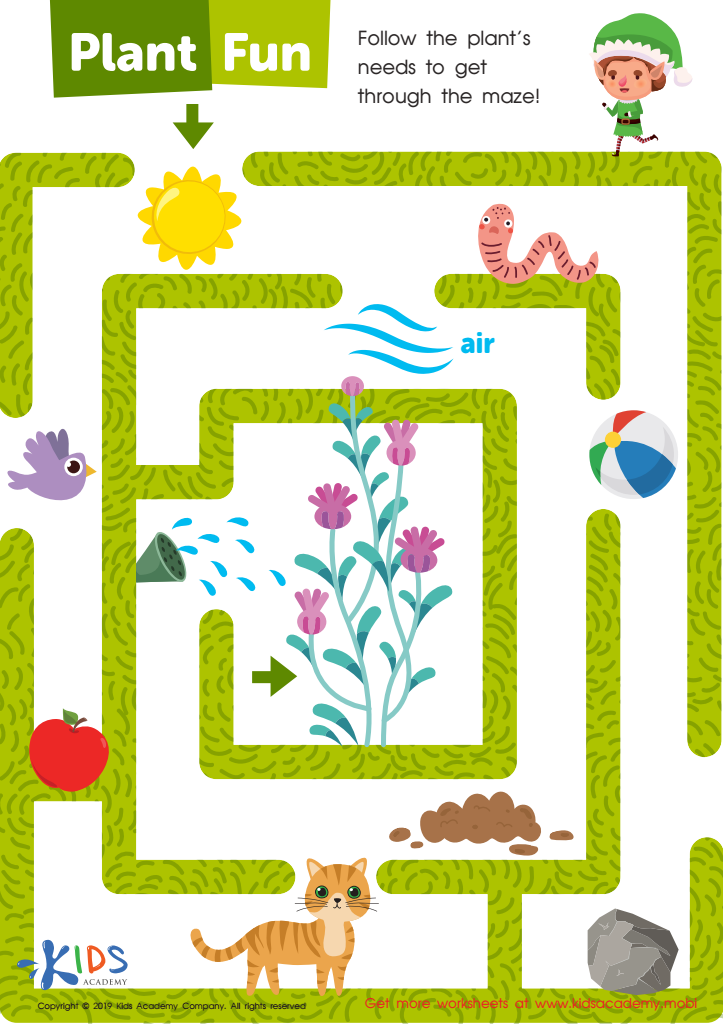
Plant Fun Worksheet
Engage your kid's mind by playing a learning maze! Ask them what plants do for us and what we need to do for the plants to help them grow. Then, help them find their way out of the maze while following the things that plants need.
Plant Fun Worksheet
Worksheet
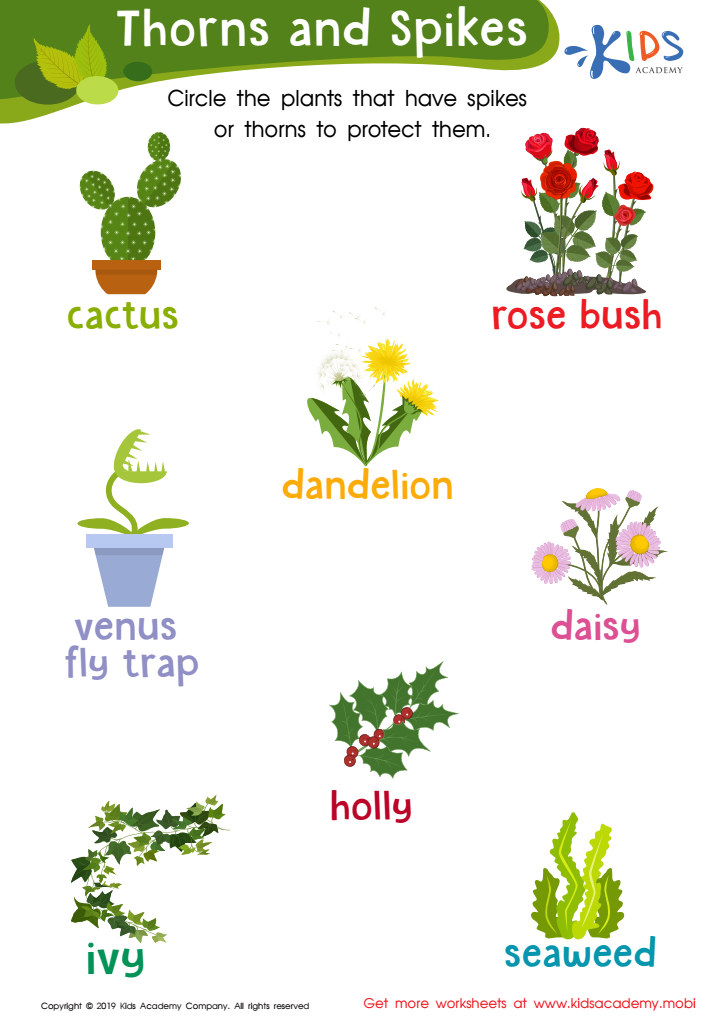
Thorns and Spikes Worksheet
Can your students name and identify the plants and flowers in this worksheet? Ask them to read out the names and circle the ones with spikes or thorns. Help them appreciate nature's beauty and understand how plants protect themselves.
Thorns and Spikes Worksheet
Worksheet
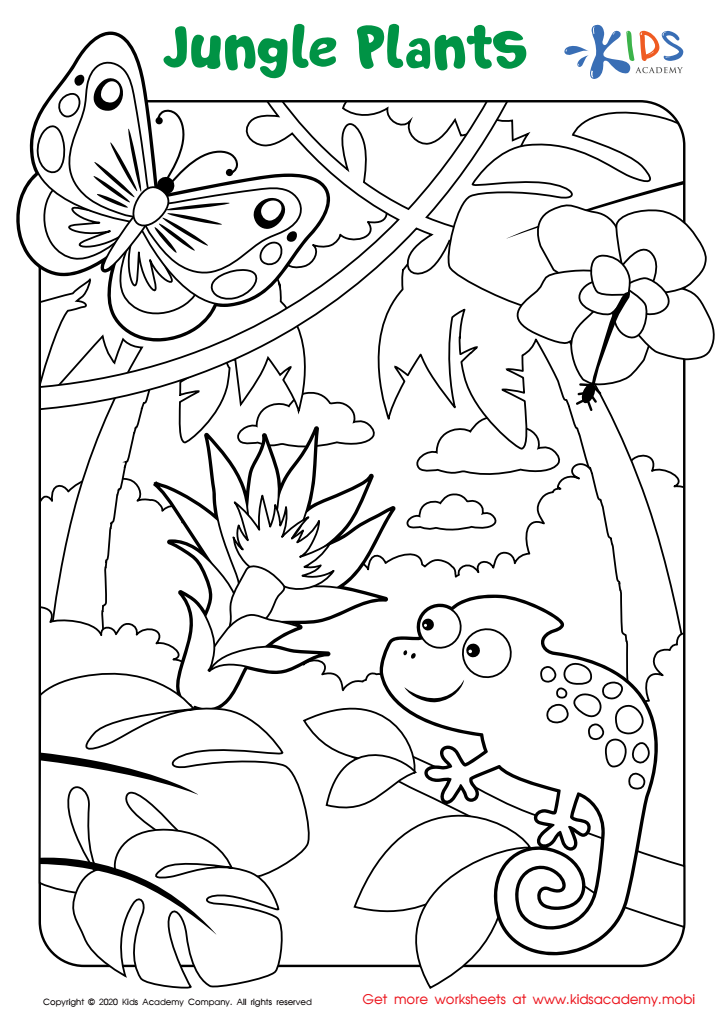
Jungle Plants Worksheet
Coloring pages can be fun and educational for kids! Print this adorable jungle worksheet with plants, a butterfly, and a lizard. Ask preschoolers to choose colors to bring the scene to life, while discussing rainforest plants and animals.
Download (PDF)
 Assign to My Students
Assign to My Students
Jungle Plants Worksheet
Worksheet
Join Kids Academy for Free
Who is primarily going to use this learning content?








Plant identification science is an essential early educational tool for children aged 3-4, enriching their learning experiences in numerous ways. First, it cultivates curiosity and fosters a love for nature. By encouraging young children to identify and understand various plants, parents and teachers can stimulate their innate inquisitiveness and observational skills. This exploration enhances their cognitive development and promotes critical thinking as they engage with their surroundings.
Furthermore, recognizing different plants contributes to children's vocabulary development. Teachers and parents can introduce new words related to botany and the environment, enhancing language skills that are vital for effective communication. It also promotes sensory development, as identifying plants often involves using touch, sight, and even smell, making learning multidisciplinary.
From a social perspective, learning about plants can nurture collaborative skills. Activities like planting seeds or going on nature walks enable cooperative play, fostering friendships and teamwork. Additionally, plant identification encourages environmental awareness from an early age, cultivating responsible guardianship of the planet. By integrating plant identification into early education, parents and teachers can provide a holistic learning experience that equips children with valuable skills and a deeper appreciation of the natural world.







