
Letter tracing skills Alphabet Worksheets for Ages 3-5
6 filtered results
Difficulty Level
Grade
Age
-
From - To
Subject
Activity
Standards
Unlock the magic of early literacy with our engaging "Letter Tracing Skills Alphabet Worksheets" designed specifically for ages 3-5. These expertly crafted worksheets help young learners master the fundamentals of the alphabet through fun and interactive tracing activities. Perfect for preschool and kindergarten children, our worksheets not only develop fine motor skills but also enhance letter recognition and handwriting proficiency. Each sheet combines vibrant visuals with easy-to-follow tracing guides, making learning an enjoyable adventure. Boost your child's confidence and early literacy skills with these essential, teacher-approved alphabet worksheets!
Favorites
With answer key
Interactive
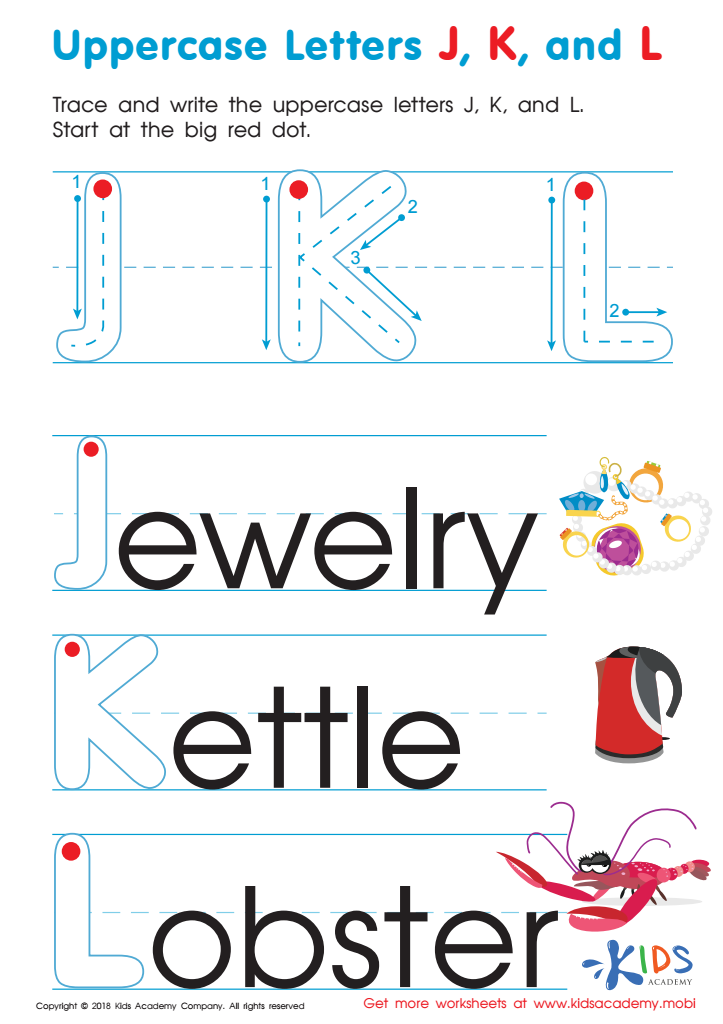
Uppercase Letters J, K, and L Worksheet
Jewelry, kettle and lobster share a common trait: their names start with J, K and L, 3 letter neighbors found in the middle of the alphabet. This traceable worksheet helps kids learn letter sounds and practice writing. Arrows and tracing lines make it easy to form neat pencil strokes. Red dot shows where kids should start. Perfect for preschoolers and kindergarteners!
Uppercase Letters J, K, and L Worksheet
Worksheet
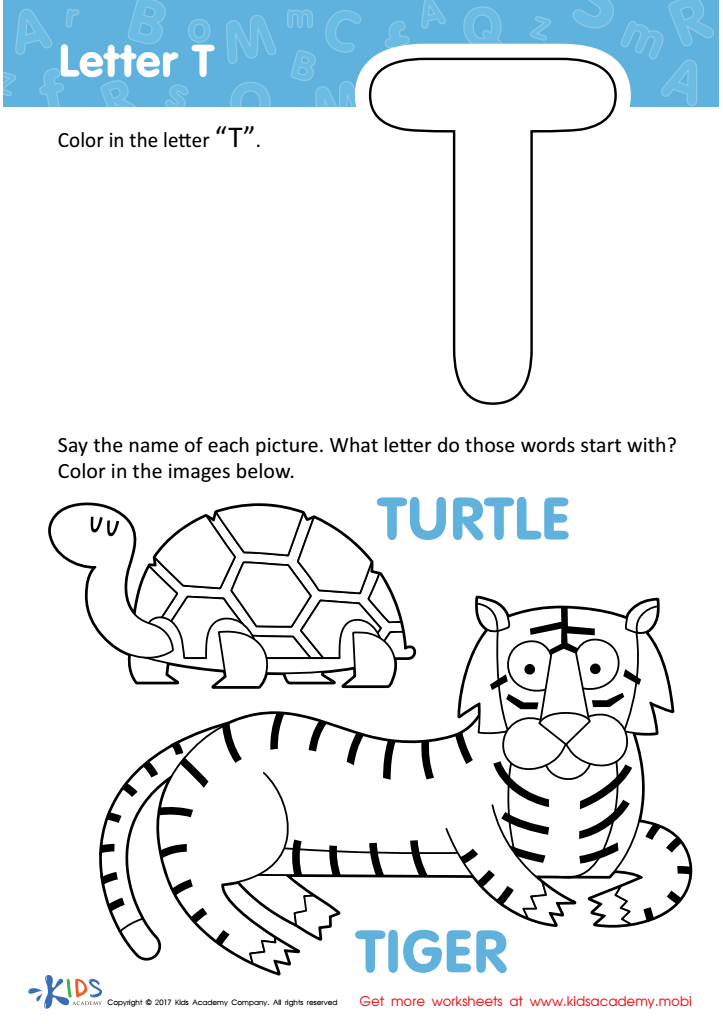
Letter T Coloring Sheet
Introduce your child to the letter "T" and its animals – turtles and tigers! With this coloring page, you can stimulate your child's imagination and creativity, while helping them recognize the letter "T". Have fun with your child and get coloring!
Download (PDF)
 Assign to My Students
Assign to My Students
Letter T Coloring Sheet
Worksheet
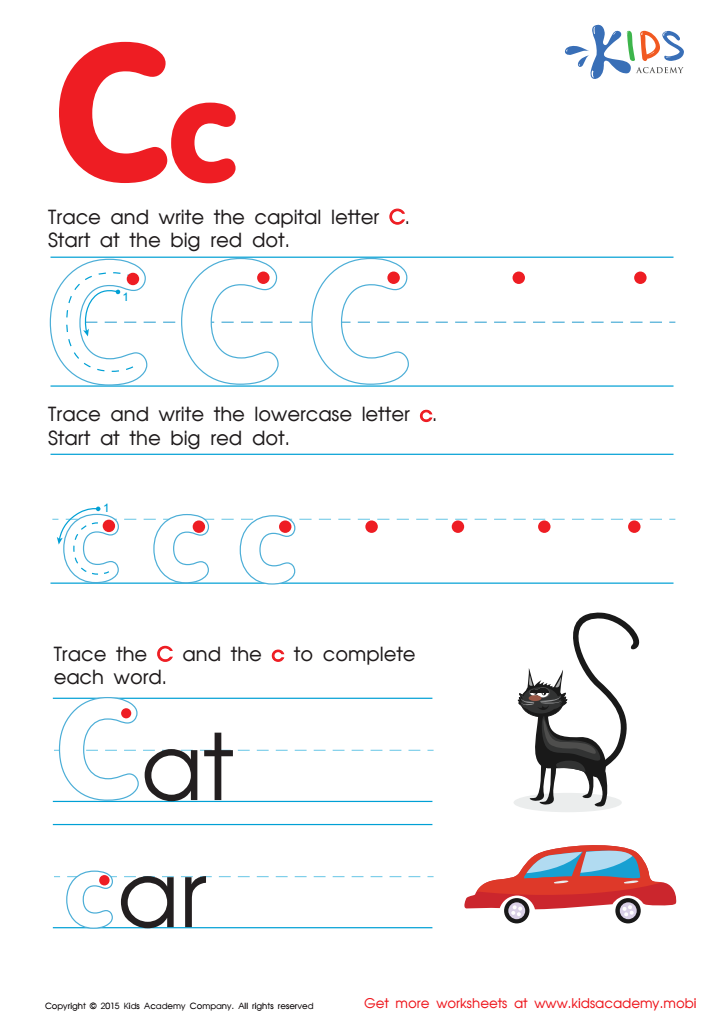
Letter C Tracing Page
Trace and write the letter 'C'! Put the pencil at the red dot then follow the lines – the capital letter first then the lowercase one. Cats love it and so will you! Get more free printables to practice tracing and writing.
Letter C Tracing Page
Worksheet
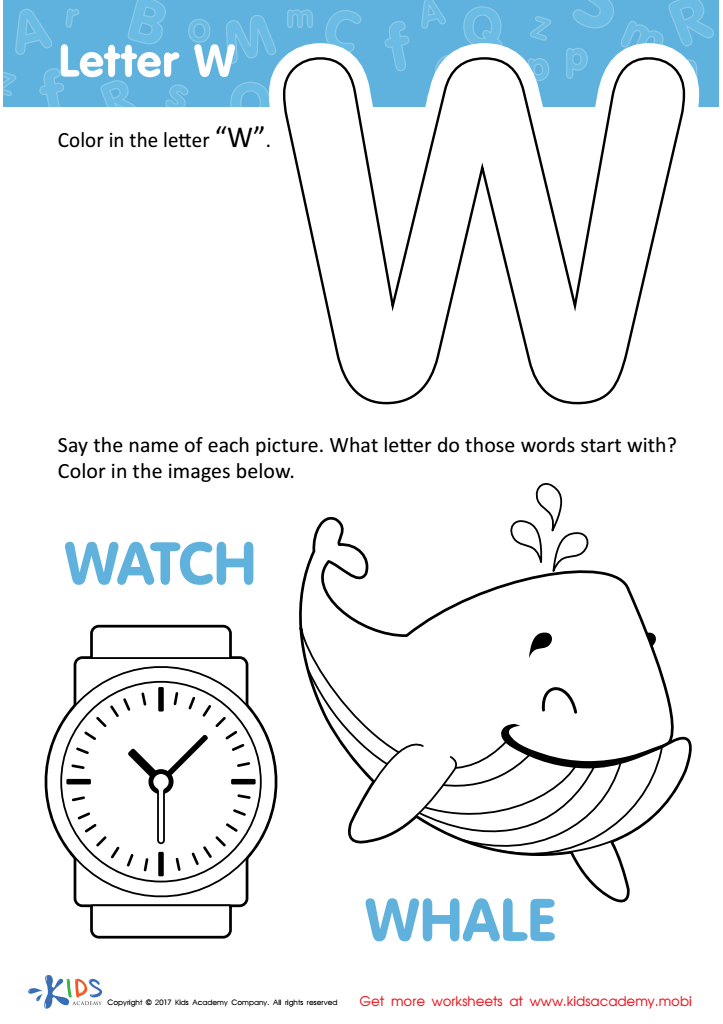
Letter W Coloring Sheet
Let your child have fun with this letter "W" coloring page! They can use their imagination to color the whale and discover the letter and its sound. Give them a helping hand to make it a whale of a time!
Download (PDF)
Assign to My Students
Assign to My Students
Letter W Coloring Sheet
Worksheet
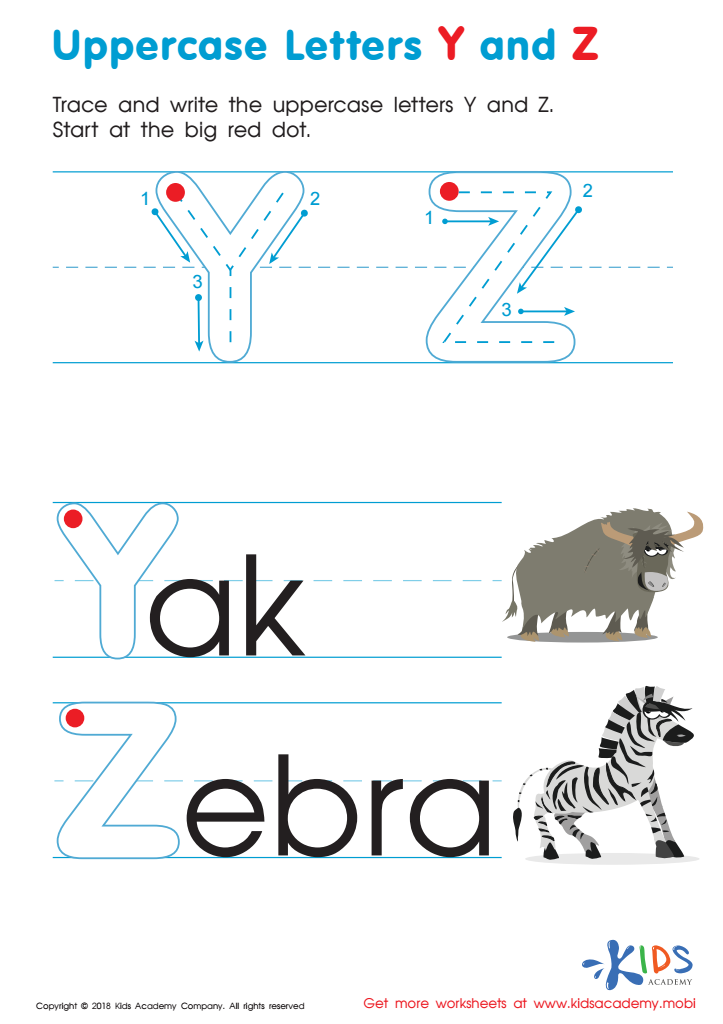
Uppercase Letters Y Z Worksheet
Help your child learn their ABCs with this fun tracing activity! They must trace and write Y and Z in uppercase form, starting from the red dot. Kids will love the fun images for extra engagement. Guiding their hand carefully will help them practice and perfect their writing skills.
Uppercase Letters Y Z Worksheet
Worksheet
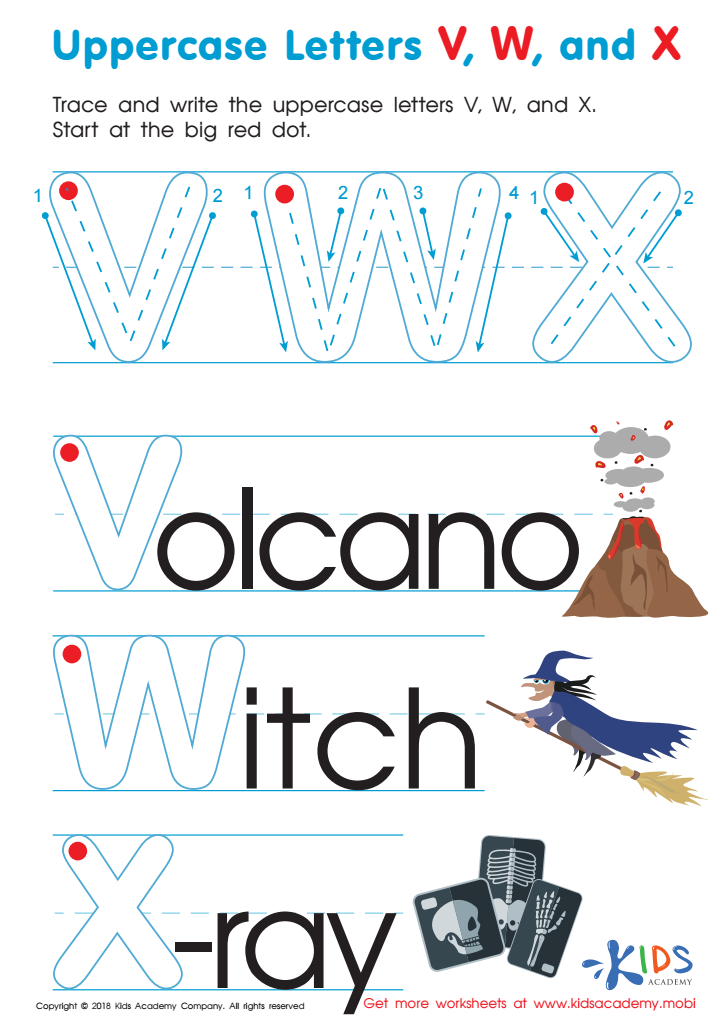
Uppercase Letters V, W, and X Worksheet
This worksheet is perfect for kids struggling to write uppercase letters V, W, and X. Warm up their brains first by having them name words starting with these letters. Then, help them trace and write each letter from the big red dot. With your assistance, they will quickly sharpen their writing skills.
Uppercase Letters V, W, and X Worksheet
Worksheet
Join Kids Academy for Free
Who is primarily going to use this learning content?








Letter tracing is a fundamental skill that sets the foundation for early literacy and fine motor development in children ages 3-5. For parents and teachers, investing time in fostering these skills provides long-term educational benefits. Letter tracing helps children recognize the shapes and forms of alphabetic characters, an essential step in learning to read and write. As they trace, they internalize the pathways used to create letters, aiding in muscle memory and coordination.
Furthermore, tracing letters develops fine motor skills, particularly hand-eye coordination, control, and dexterity, which are crucial for more advanced writing tasks. Mastery of these small motor movements is important not just for writing, but also for other activities requiring manual precision, such as using scissors, tying shoes, or buttoning clothes.
Equally significant, letter tracing builds a sense of accomplishment and boosts confidence. When children successfully trace and later write letters on their own, they experience a sense of achievement that encourages further learning. By integrating letter tracing into the daily routine, parents and teachers foster an engaging and supportive learning environment that nourishes both cognitive and emotional growth, paving the way for academic success and lifelong learning skills.







