Addition Practice Worksheets for Ages 3-5 - Page 2
108 filtered results
-
From - To
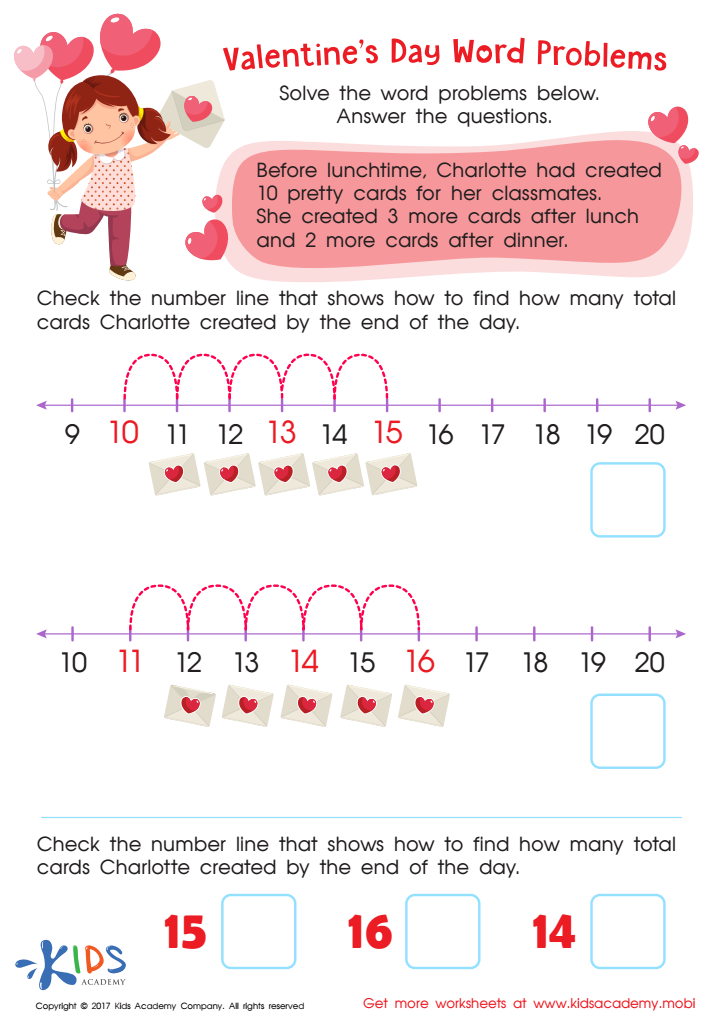
Valentines Day Word Problem Worksheet
 Assign to My Students
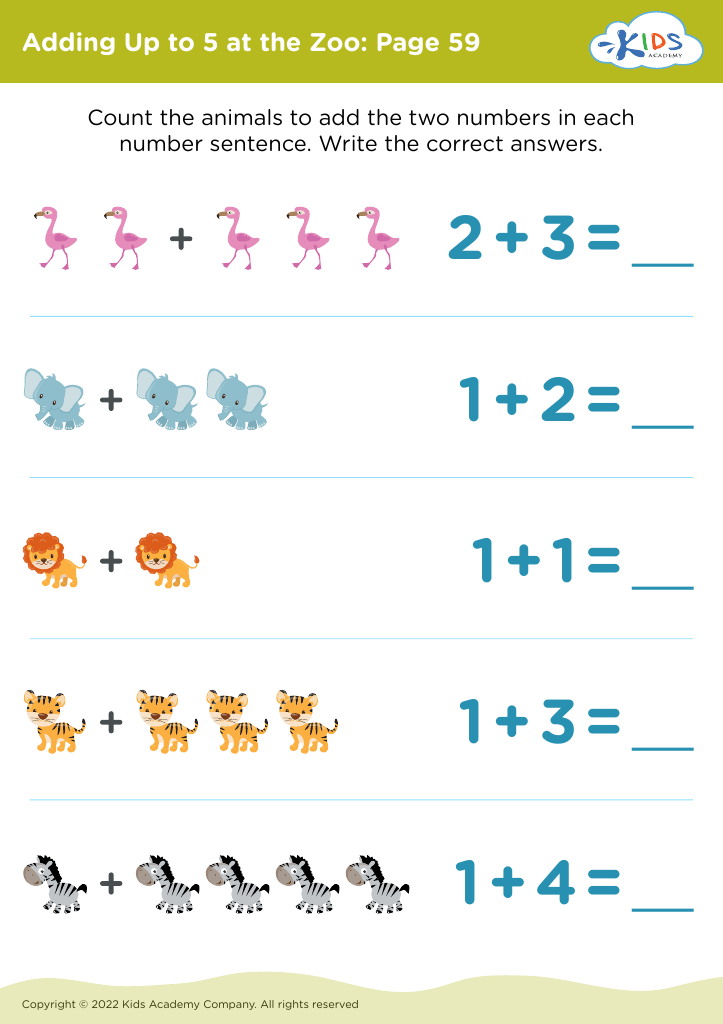
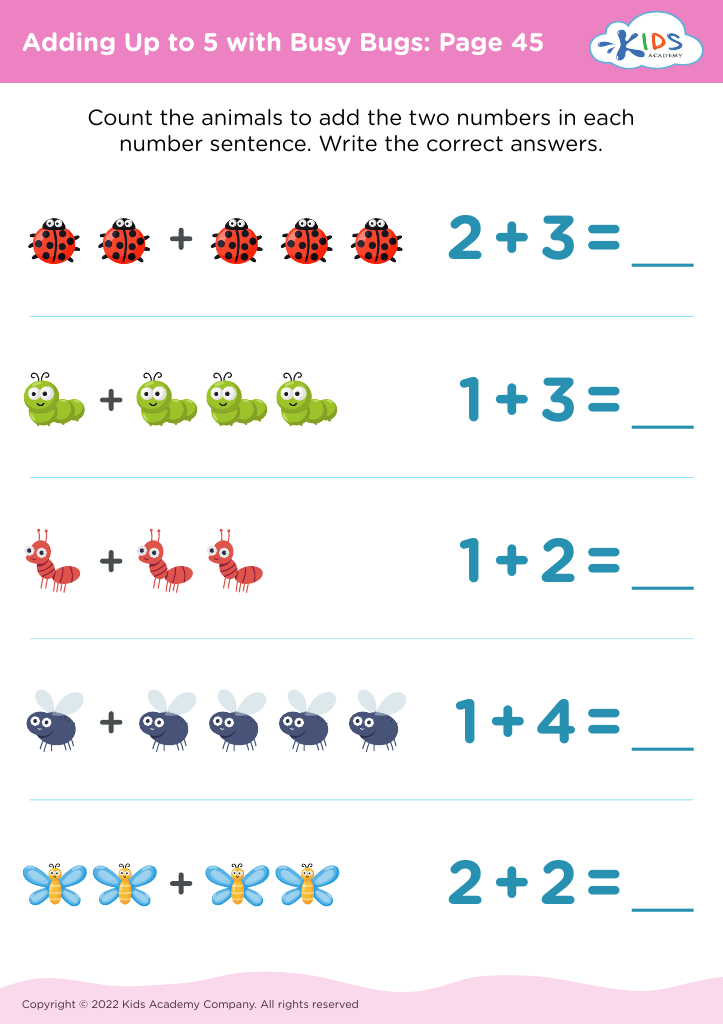
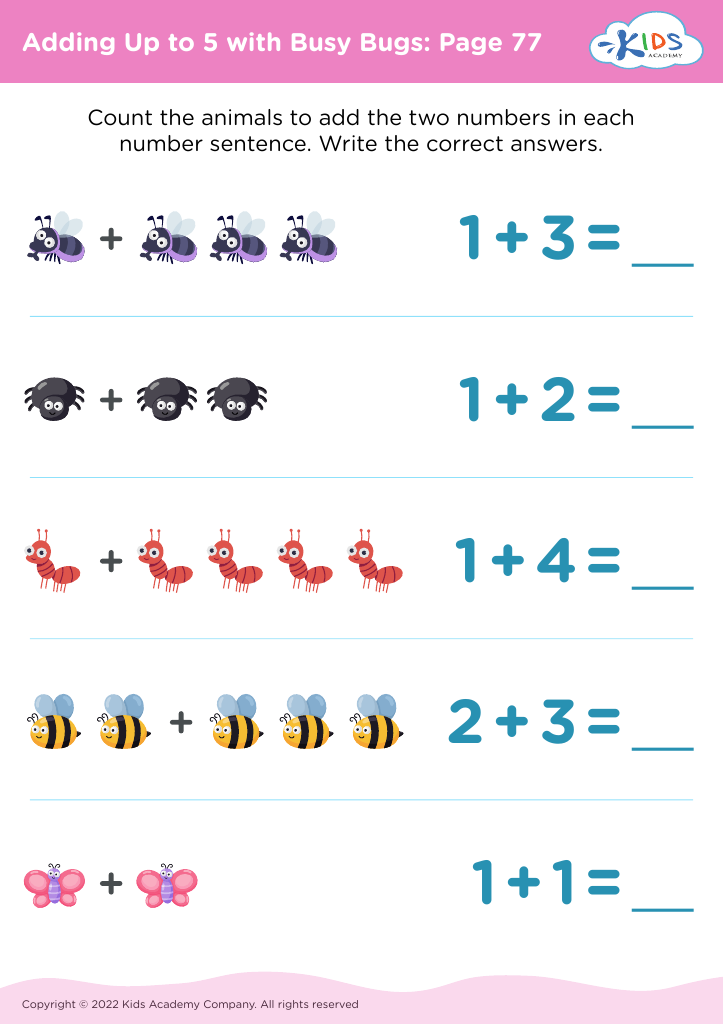
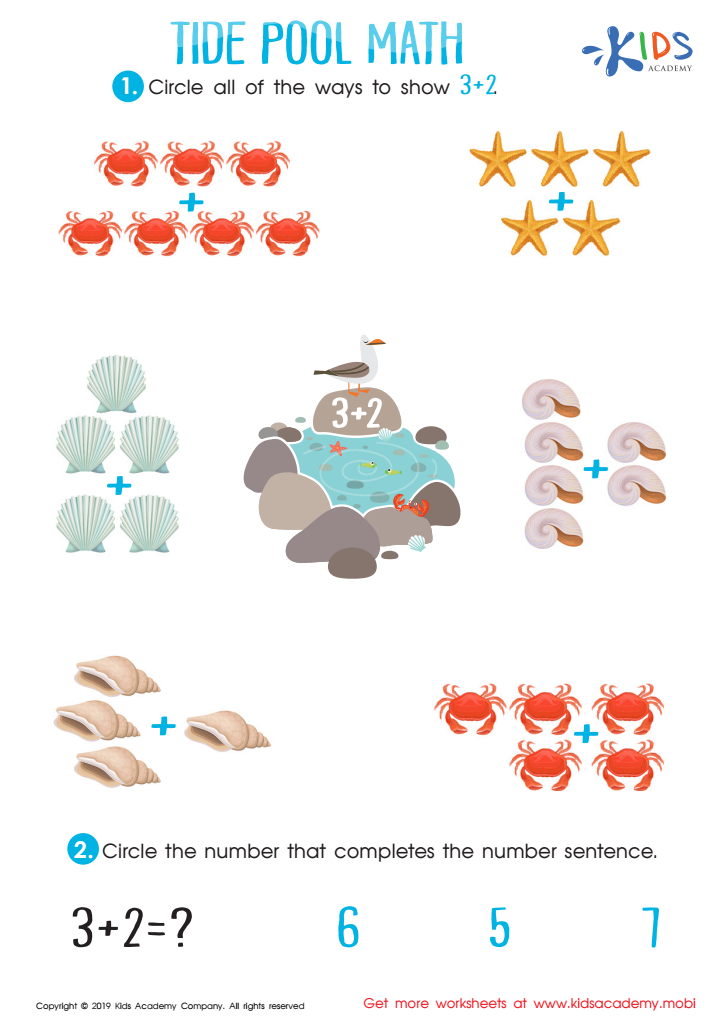
Tide Pool Math Worksheet
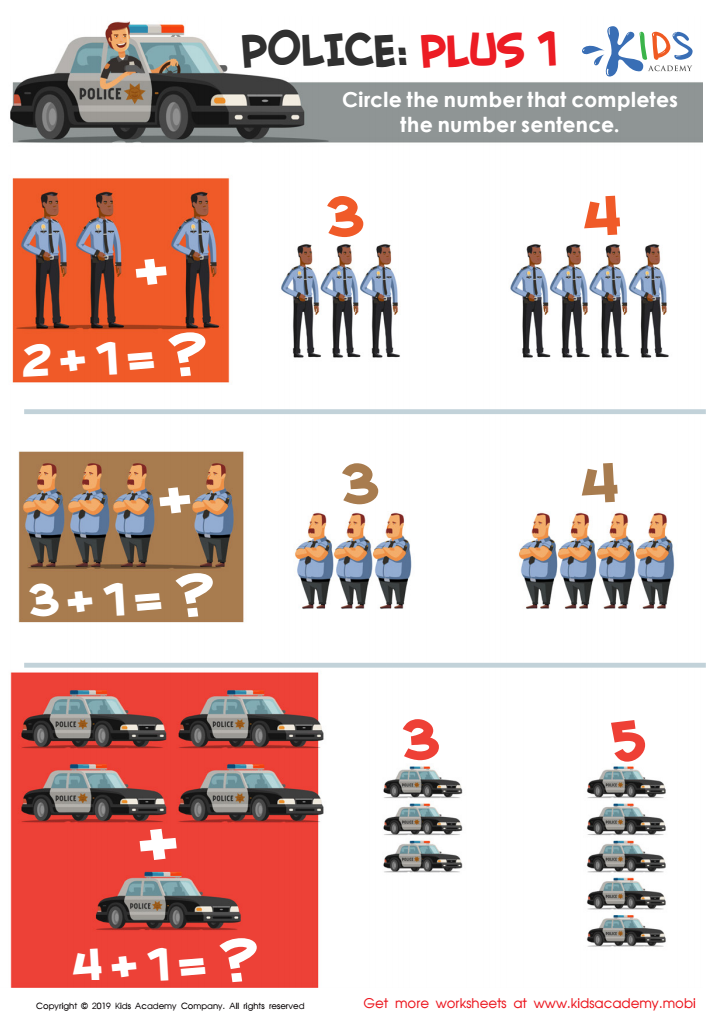
Police: Plus 1 Worksheet
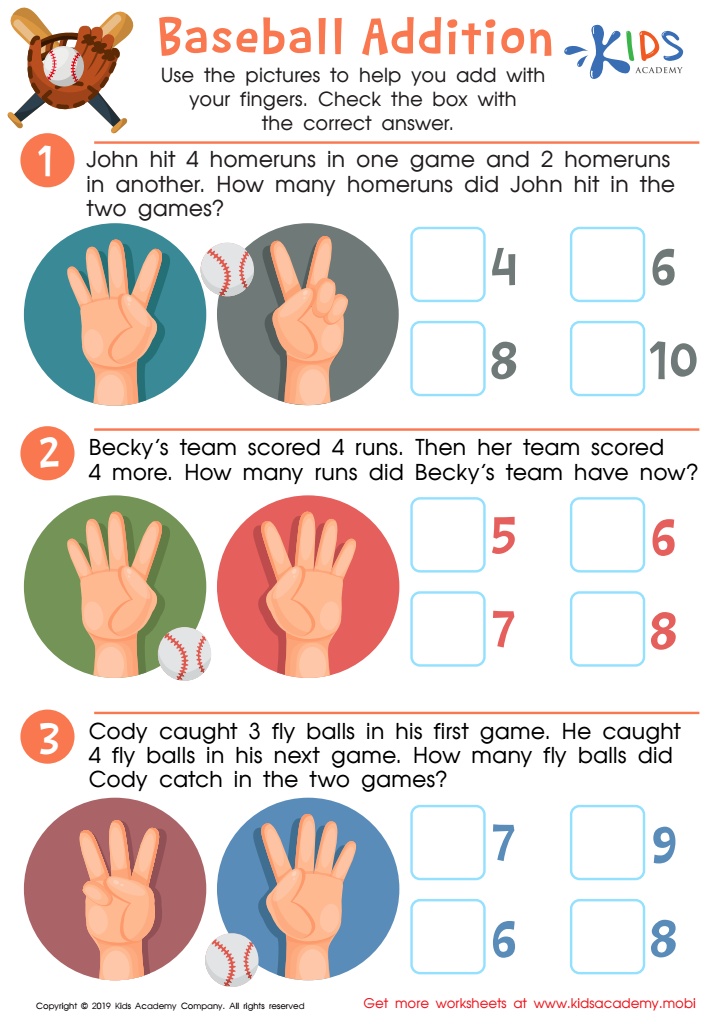
Baseball Addition Worksheet
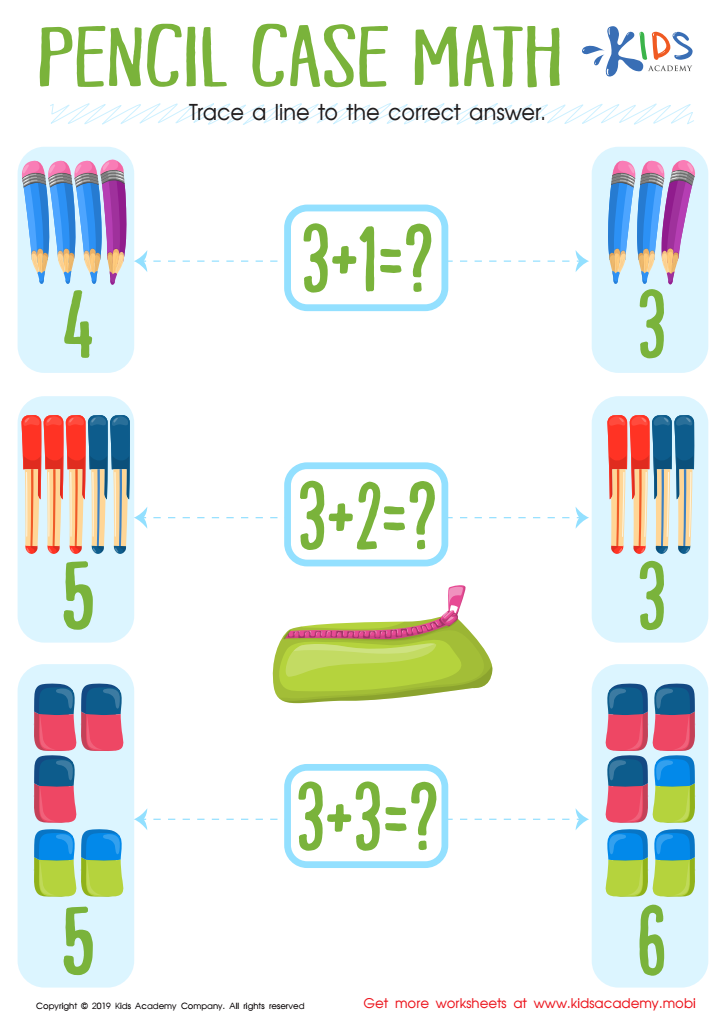
Pencil Case Math Worksheet
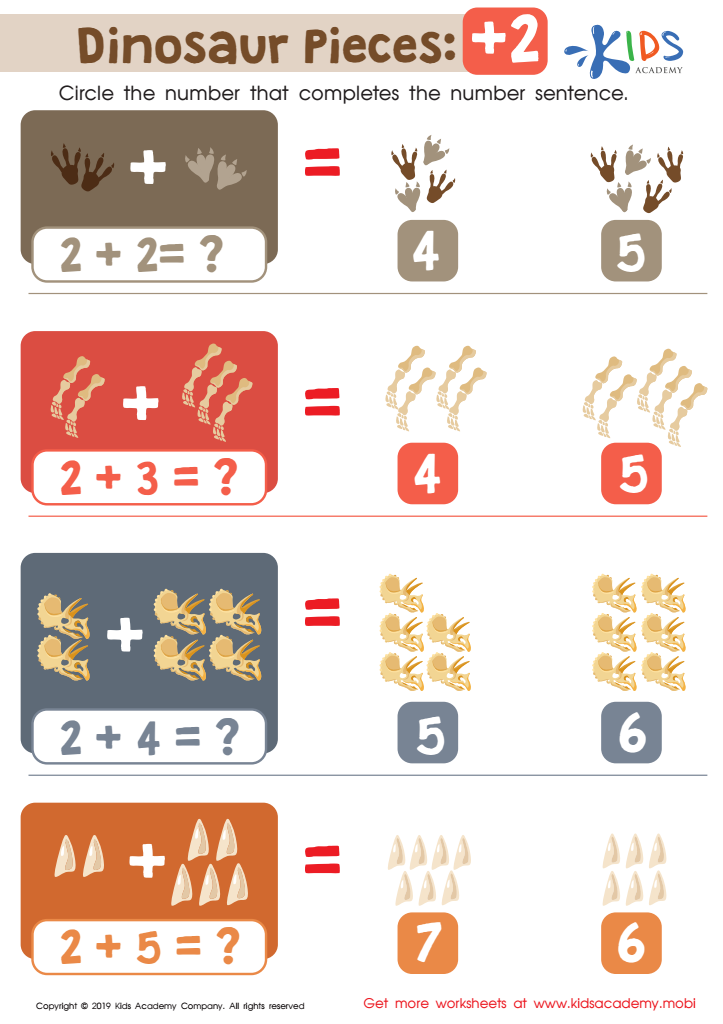
Dinosaur Pieces: +2 Worksheet
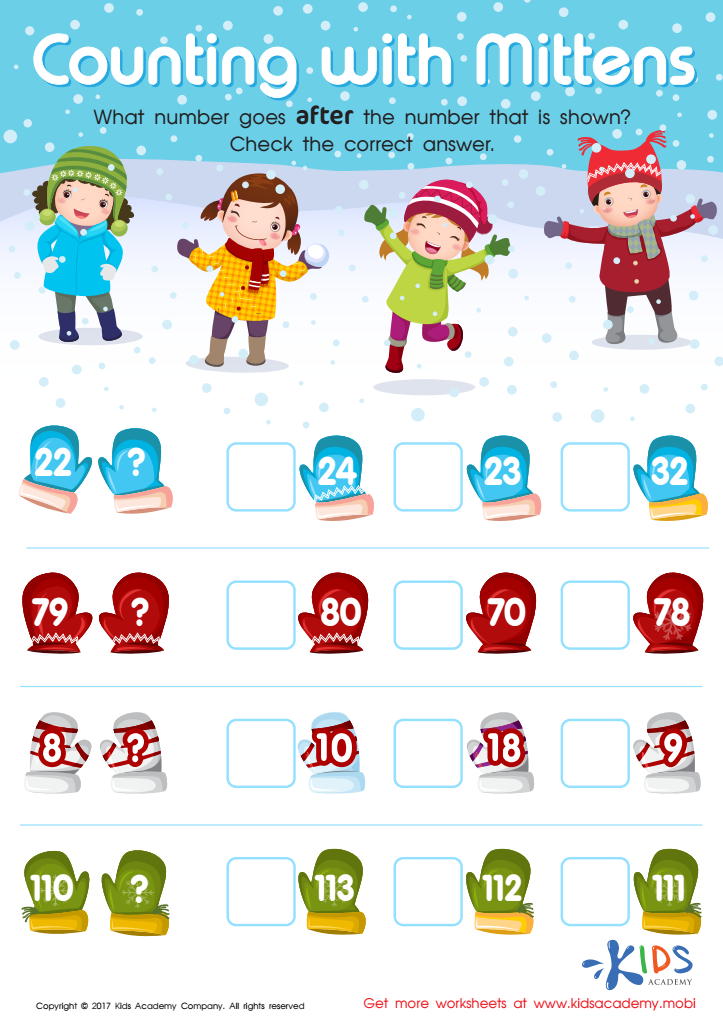
Counting with Mittens Worksheet
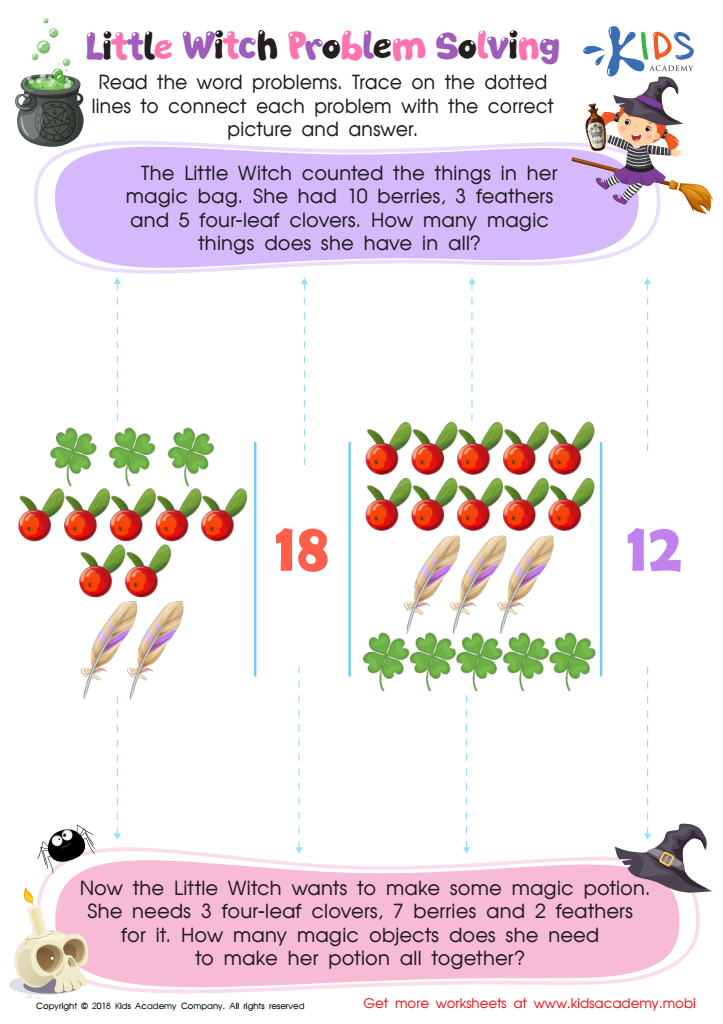
Little Witch Problem Solving Worksheet
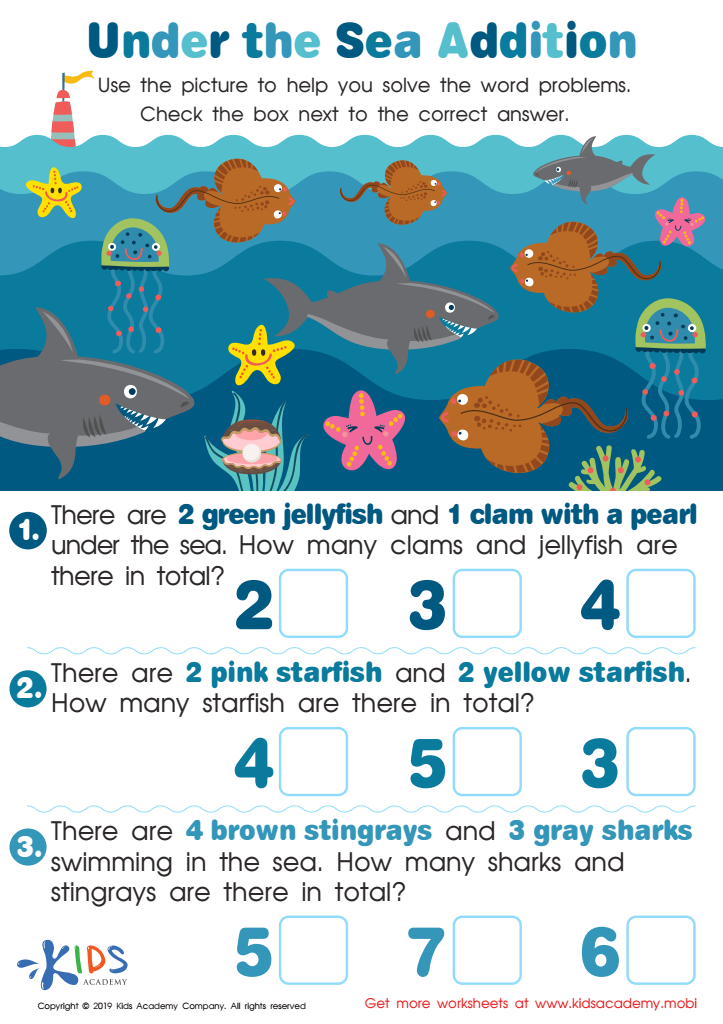
Under the Sea Addition Worksheet
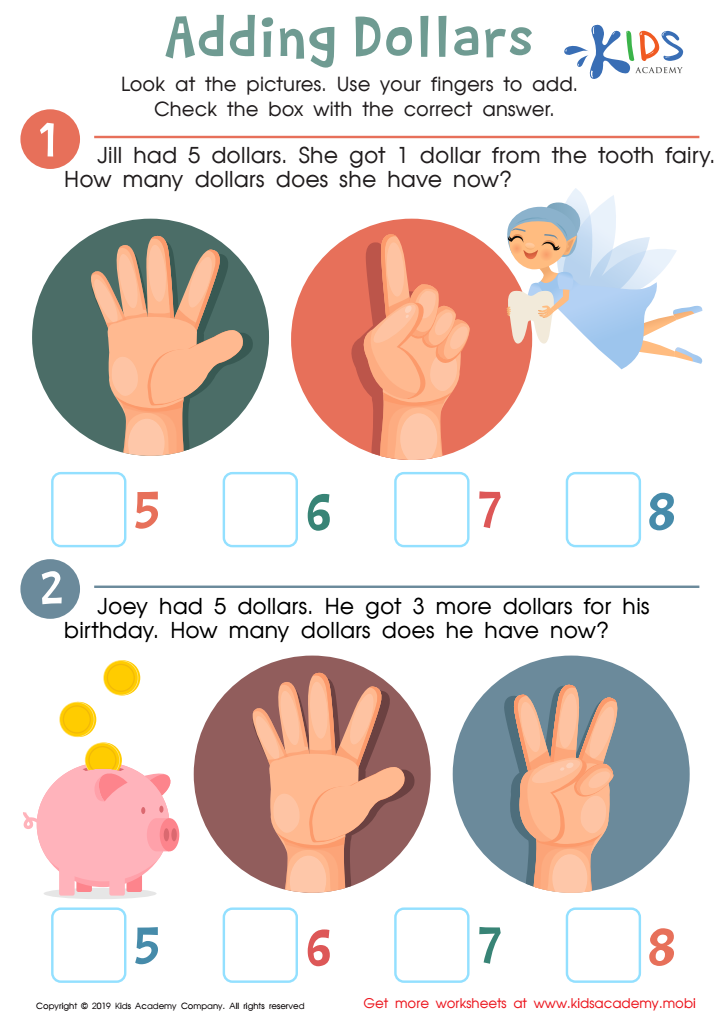
Tooth Fairy Addition Worksheet
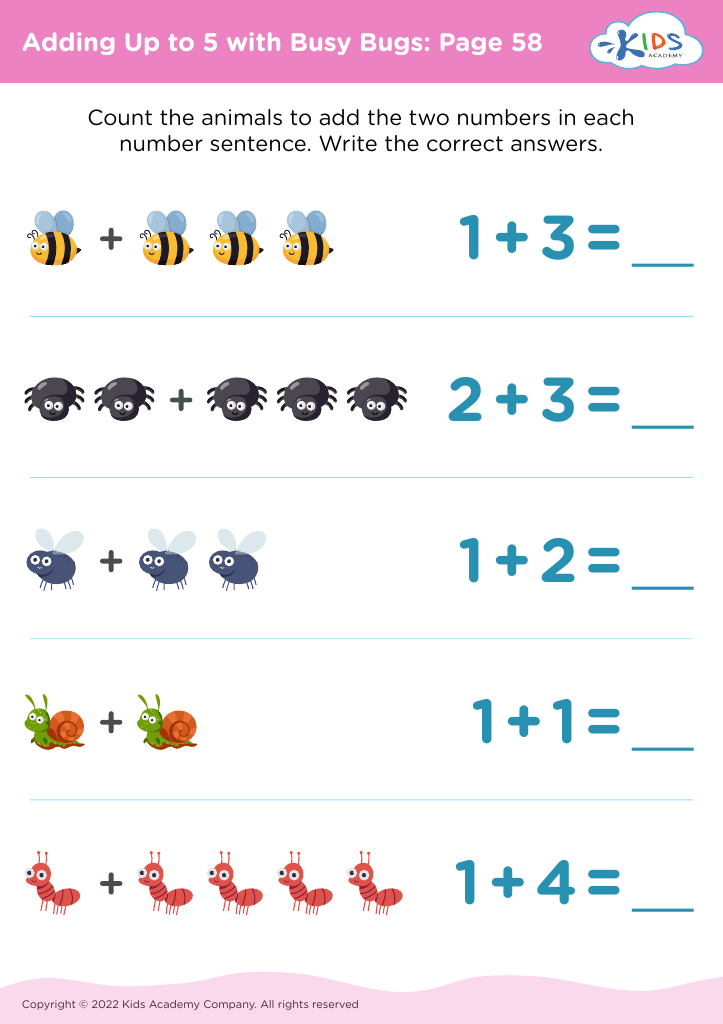
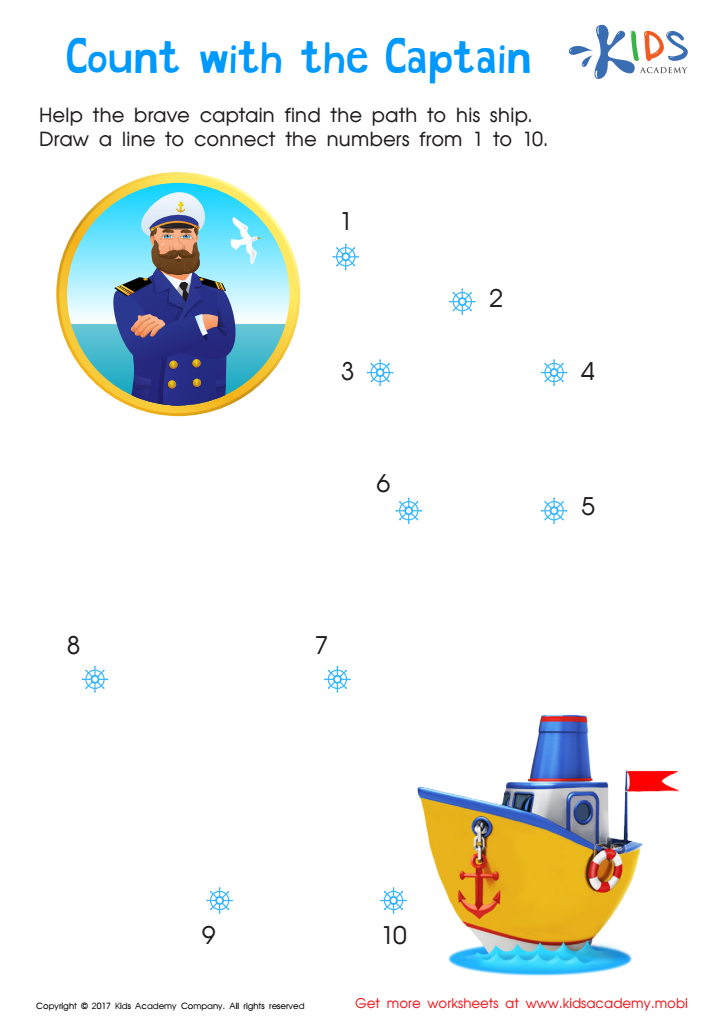
Count with the Captain Connect Dots Worksheet
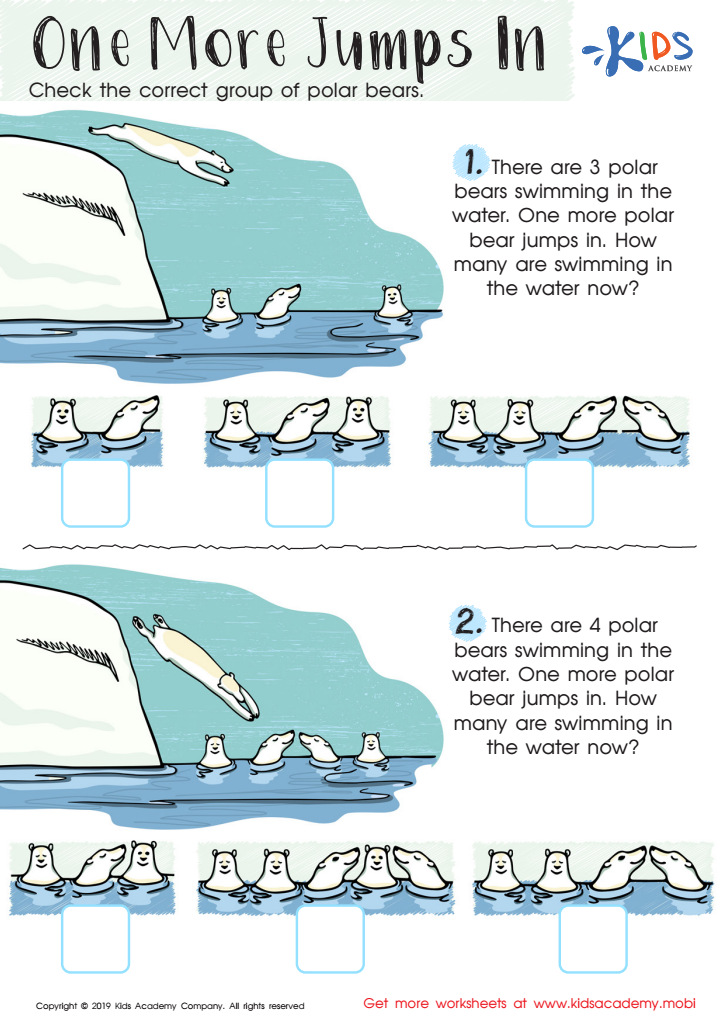
One More Jumps In Worksheet








Parents and teachers should care about addition practice for ages 3-5 because it lays a vital foundation for future mathematical understanding and cognitive development. At this early age, children's brains are incredibly receptive to new information and forming neural connections. Engaging them in simple addition helps develop numerical fluency, which is the ability to understand and manipulate numbers with ease. This fluency is critical for tackling more complex math concepts later on.
Moreover, learning addition practices enhances problem-solving skills and logical thinking. Children learn to recognize patterns and relationships between numbers, which boosts their overall intellectual capabilities. It also promotes confidence and a positive attitude toward math, which is essential, as confidence can significantly impact future academic performance.
Incorporating addition practice into daily activities ensures that children see math as an integral, enjoyable part of life. Games, songs, and interactive exercises make learning fun, helping maintain their natural curiosity and enthusiasm for learning. Furthermore, early exposure to addition can support children in meeting kindergarten readiness standards and enable them to keep up with curriculum expectations, avoiding future educational disparities. Therefore, emphasizing addition at this formative stage is crucial for nurturing well-rounded, confident, and capable learners.








