Basic addition practice Worksheets for Ages 3-5
12 filtered results
-
From - To
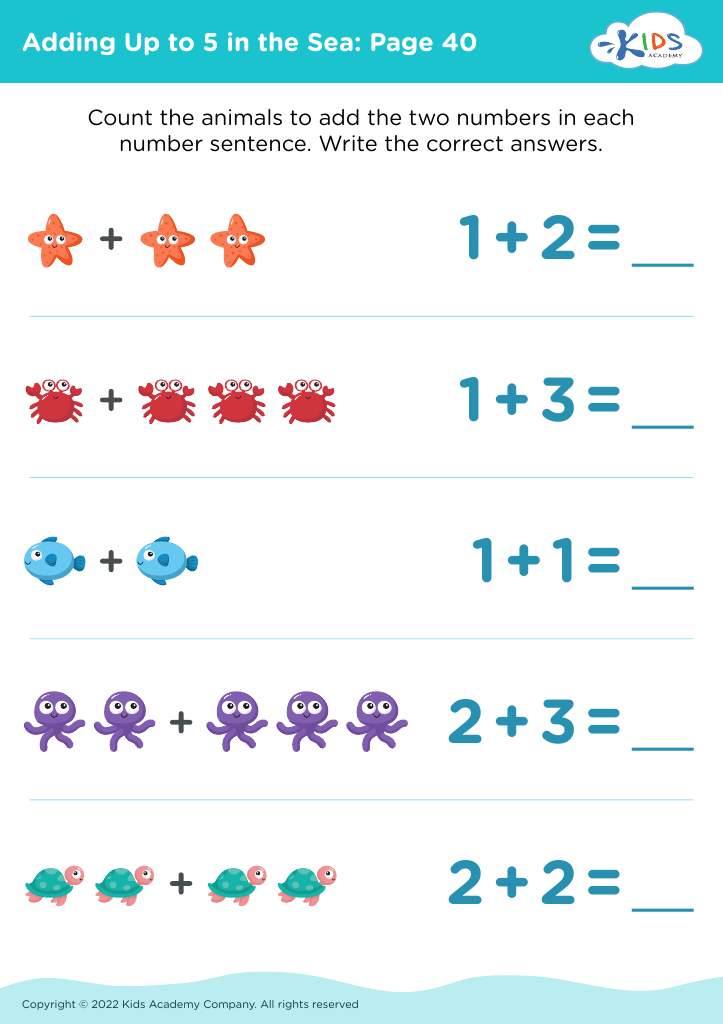
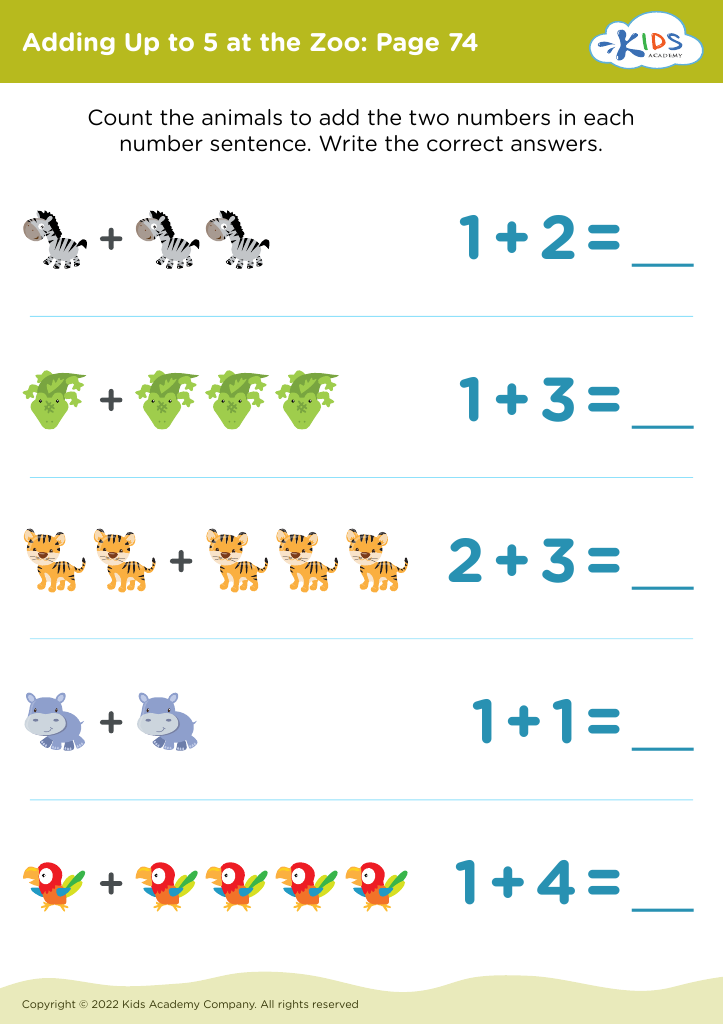
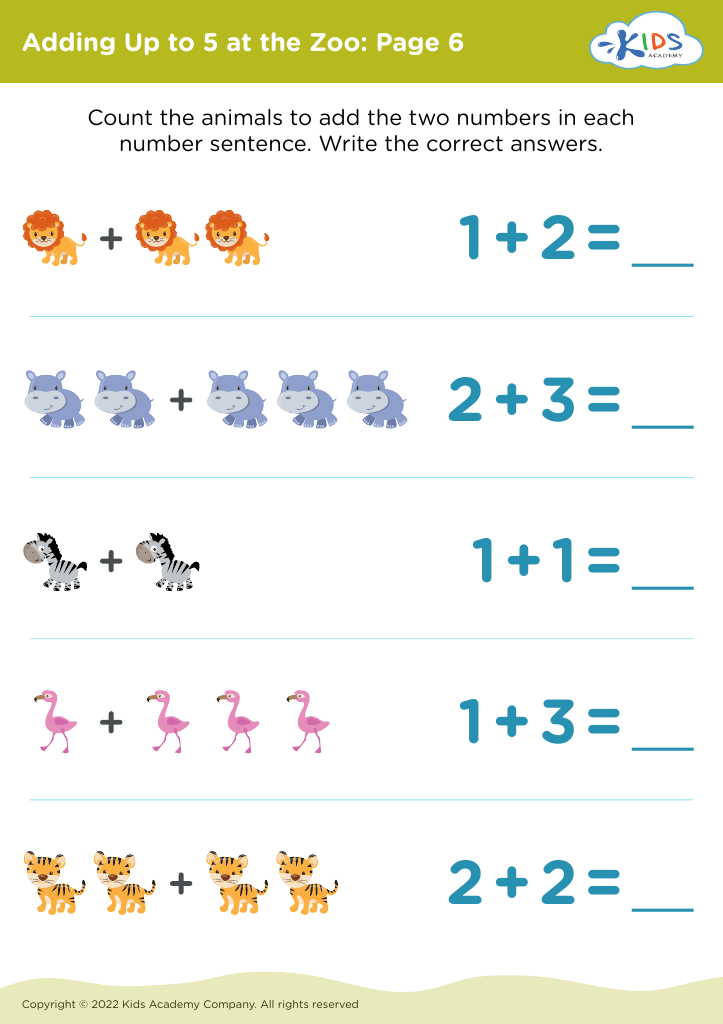
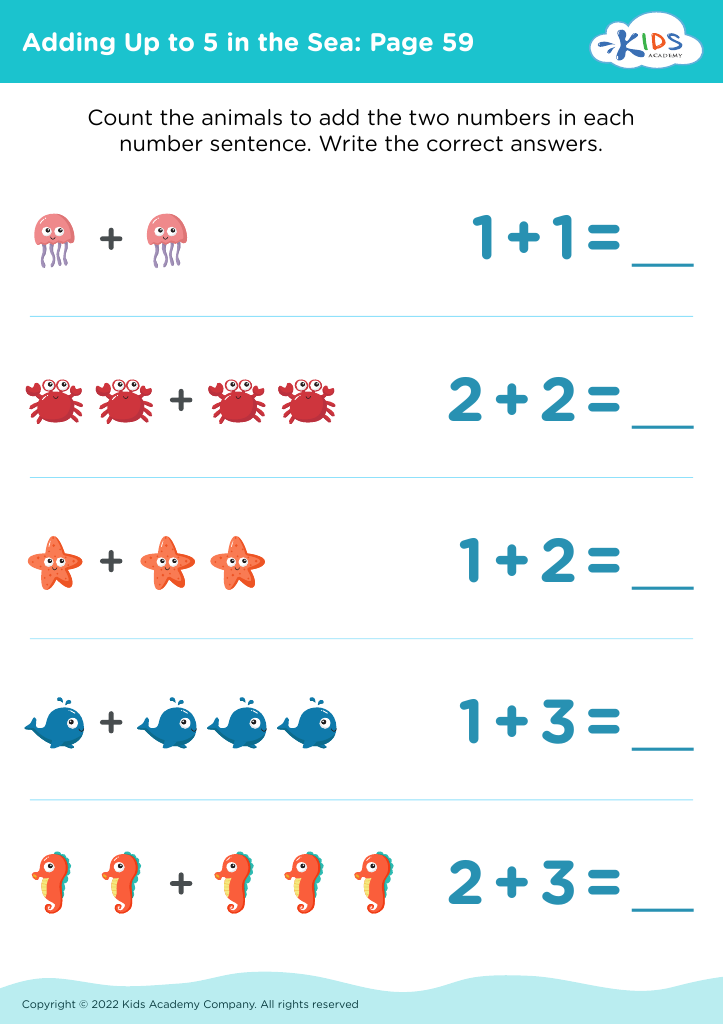
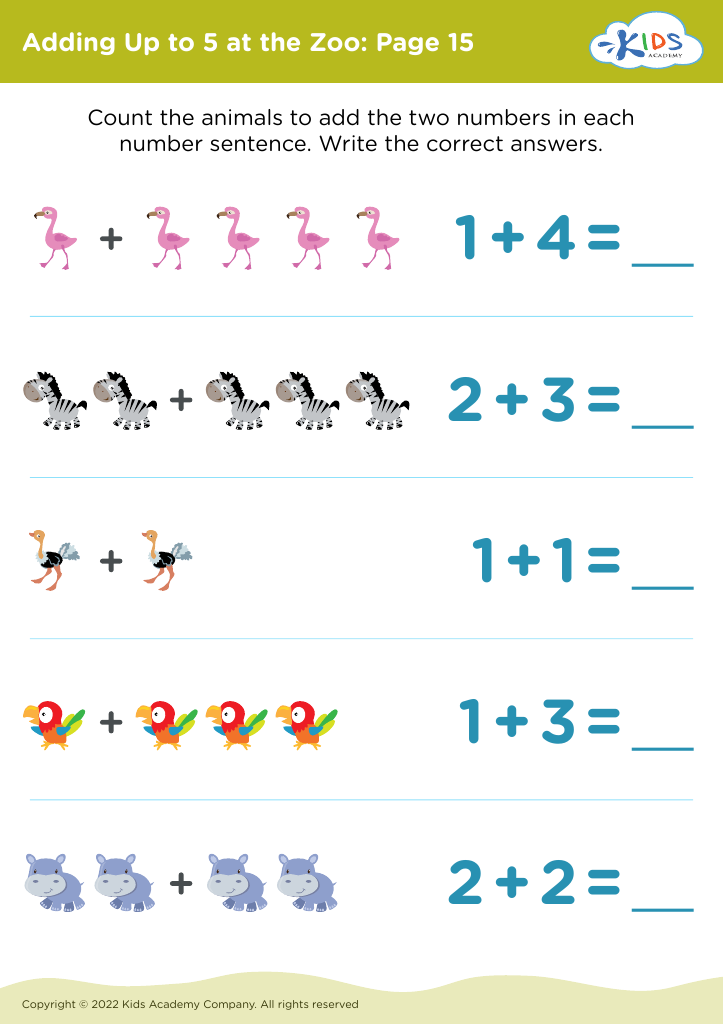
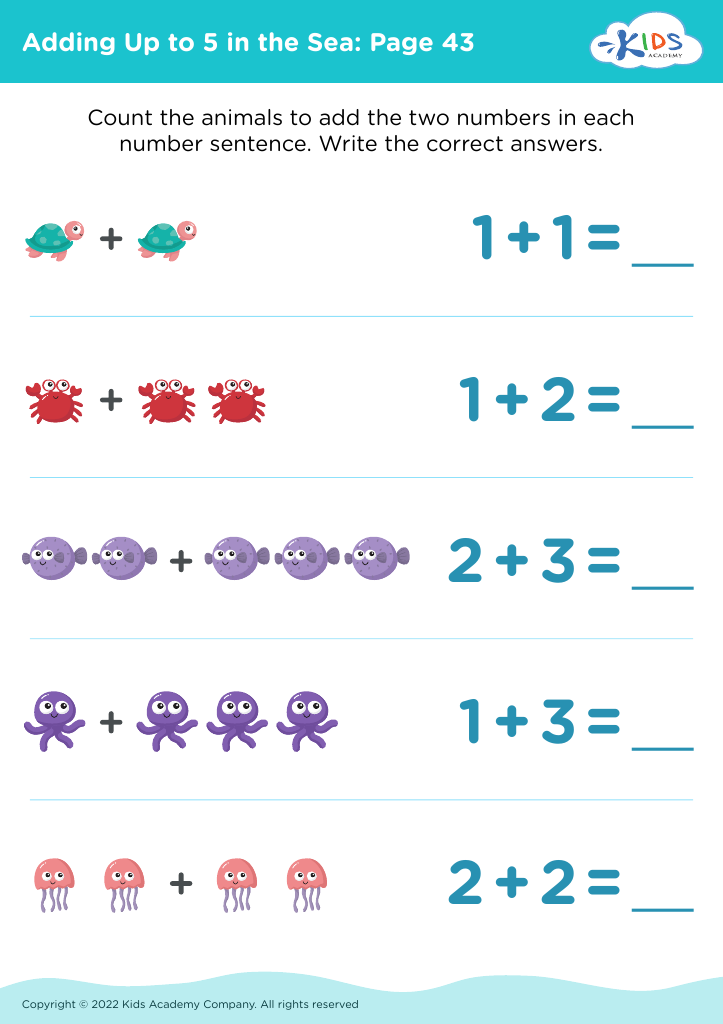
Welcome to our collection of Basic Addition Practice Worksheets designed specifically for children ages 3-5! These engaging resources facilitate early math learning by introducing the fundamentals of addition through fun, interactive activities. Your little ones will enjoy colorful illustrations and simple problems that promote number recognition and counting skills. Each worksheet is crafted to enhance confidence and build a strong mathematical foundation, making learning enjoyable and effective. Perfect for parents, educators, and homeschoolers, our worksheets offer a valuable tool to nurture a love for math in young learners. Start boosting your child's addition skills today with these playful and educational resources!
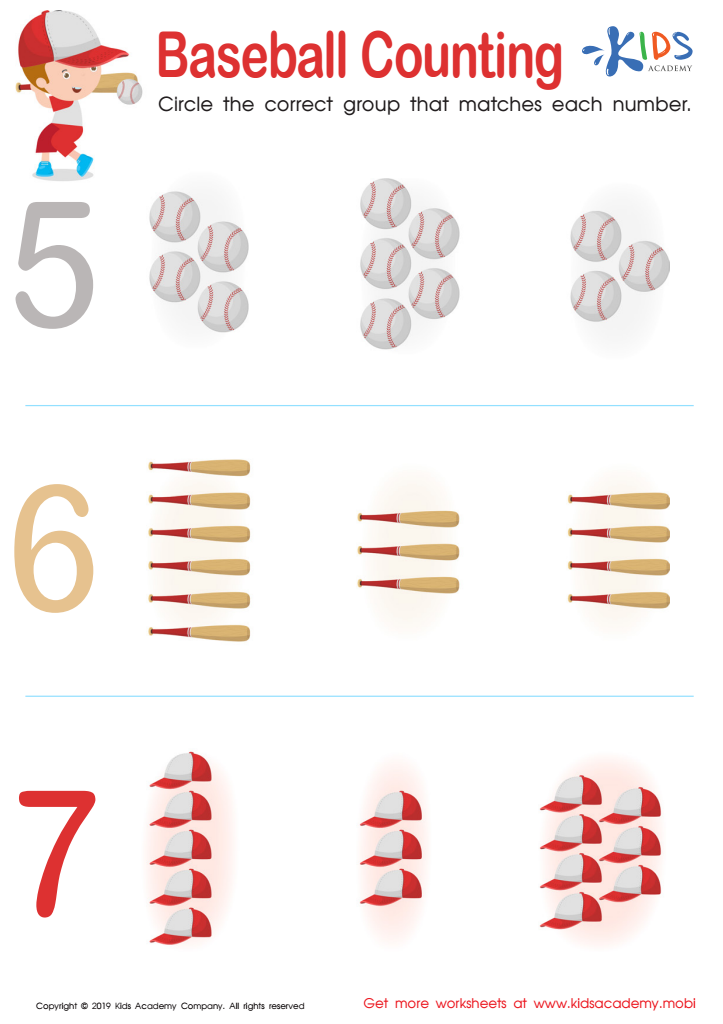
Baseball Counting Worksheet
 Assign to My Students
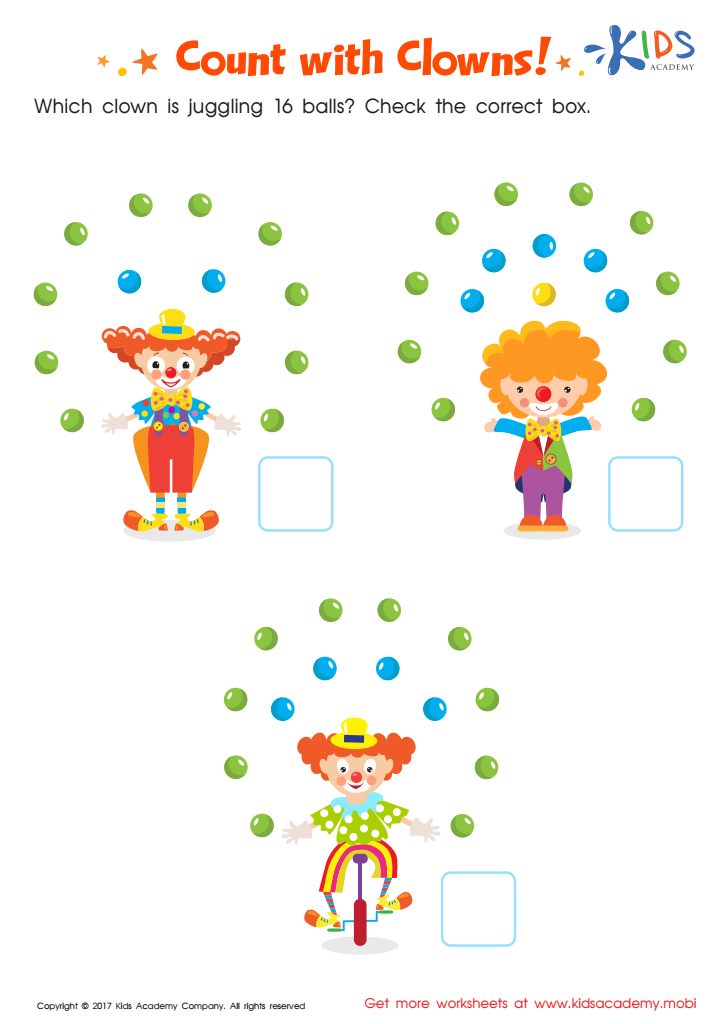
Count with Clowns Worksheet
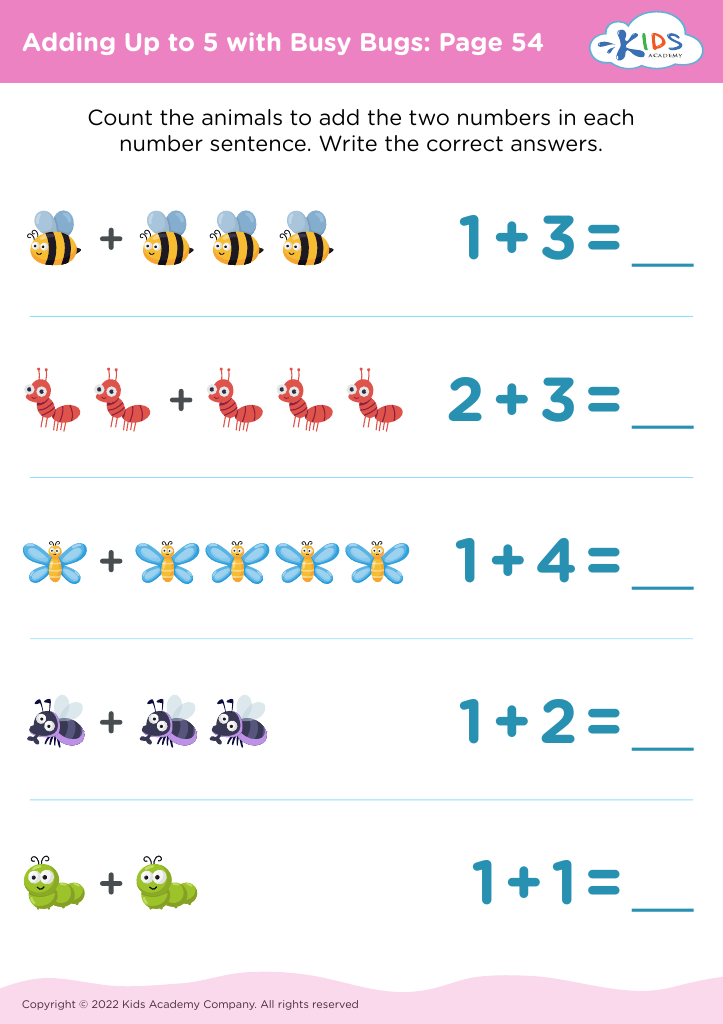
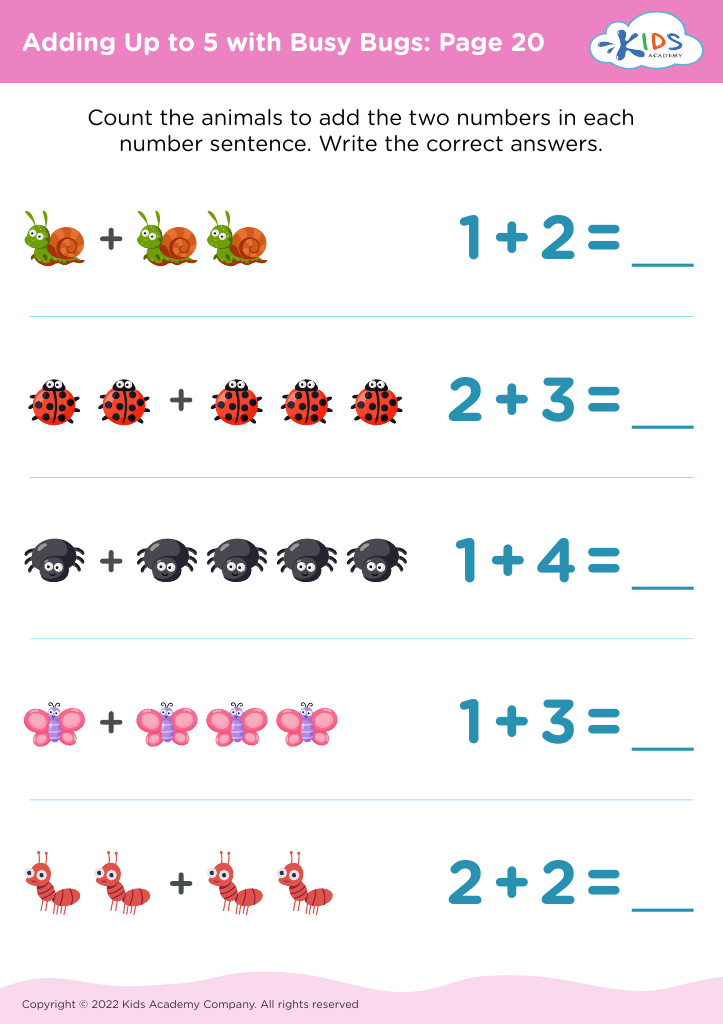
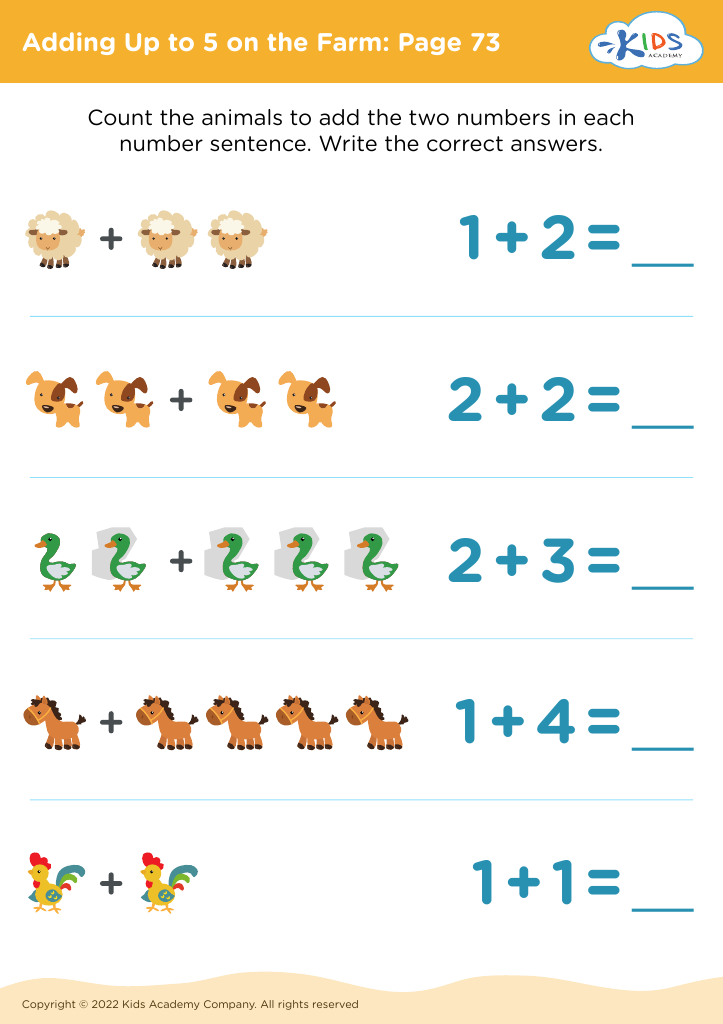
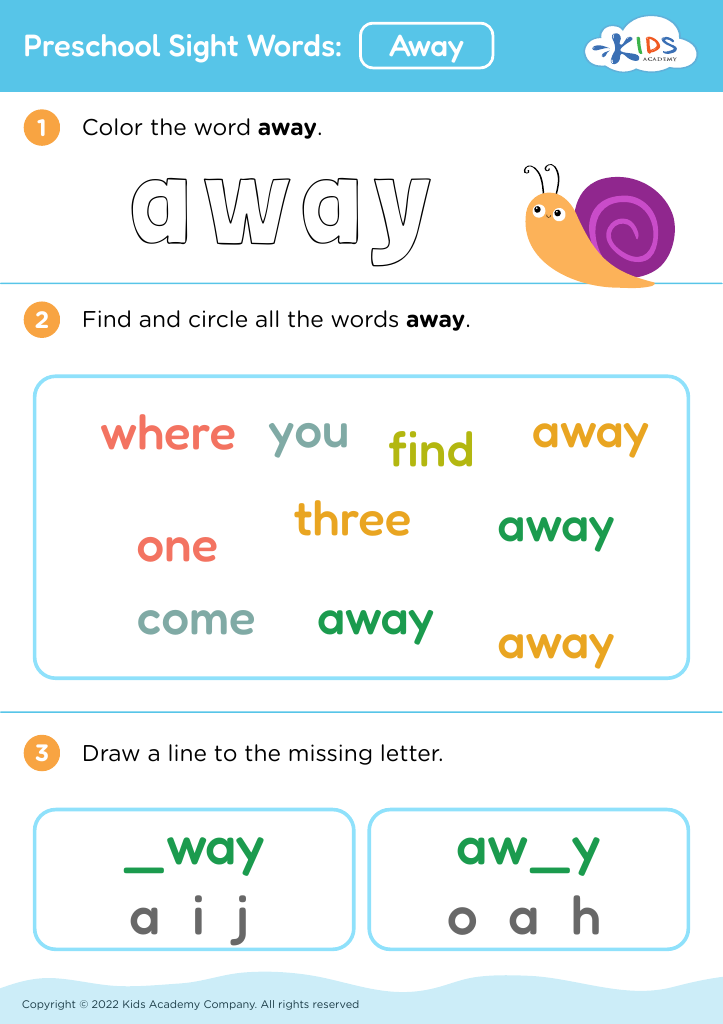






Basic addition practice for ages 3-5 lays the foundation for essential mathematical skills that children will use throughout their education and daily life. At this critical developmental stage, young learners are particularly receptive to new concepts, making it an ideal time to introduce the basics of arithmetic in a fun and engaging way. Early mastery of addition aids in the development of problem-solving abilities and logical thinking.
Parents and teachers should prioritize basic addition because it enhances cognitive development, fosters a sense of accomplishment, and increases children's confidence in their mathematical abilities. Engaging in simple addition activities, such as counting objects or using playful games, encourages children to explore numbers interactively, making learning enjoyable.
Moreover, basic addition is crucial for future academic success. As children progress in their education, a strong grasp of foundational math concepts is vital for understanding more complex mathematical operations. Early addition skills contribute to better performance in school, reduce anxiety around math, and prepare children for real-life situations where calculations are required.
Ultimately, investing time in basic addition practice not only nurtures cognitive skills but also supports emotional growth, enabling children to confidently tackle challenges throughout their educational journey.








