
Enhancing problem-solving skills Worksheets for Ages 3-5
6 filtered results
Difficulty Level
Grade
Age
-
From - To
Subject
Activity
Standards
Discover our engaging "Enhancing Problem-Solving Skills Worksheets" designed specifically for children aged 3-5. These worksheets provide a fun way to develop critical thinking and reasoning abilities through interactive activities. Children will tackle puzzles, shape recognition, and pattern identification, all crafted to boost their cognitive skills while promoting creativity and independence. Each activity is designed to captivate young minds and encourage exploration, making learning both effective and enjoyable. Ideal for home or classroom use, these worksheets support early childhood education by providing essential tools to foster young learners' problem-solving capabilities. Explore our collection today and help your child thrive!
Favorites
With answer key
Interactive
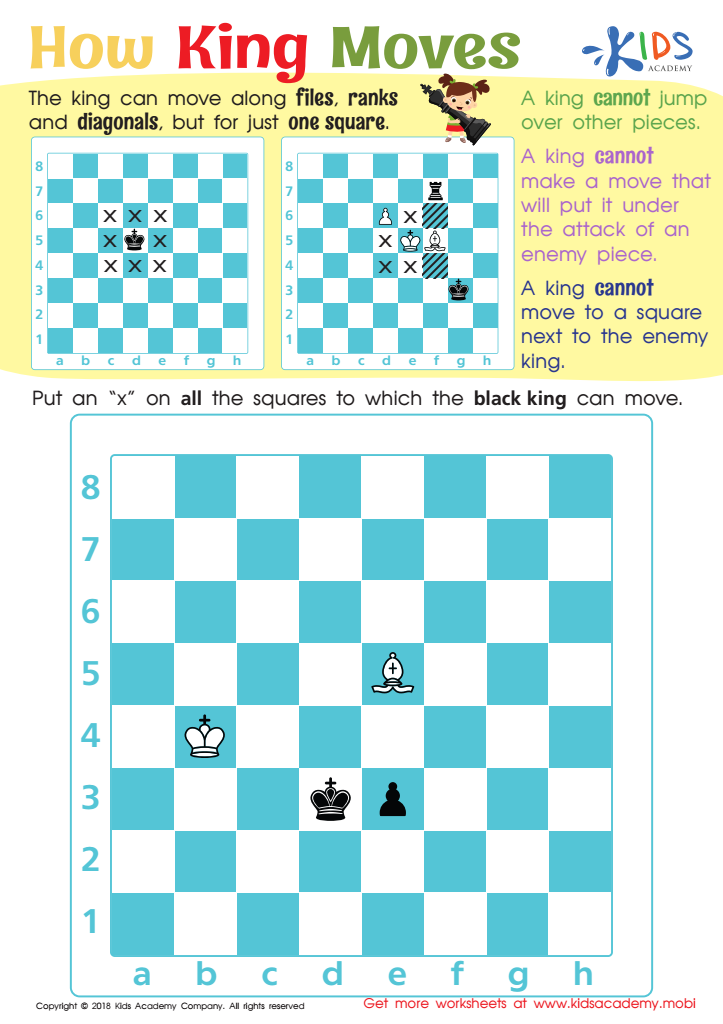
How King Moves Worksheet
Teach your kids the fundamentals of chess with this worksheet! The goal is to checkmate the opponent's king, so it must be protected at all times. The king moves along files, ranks, and diagonals (except one square at a time), and cannot move to a square next to the enemy king. Your kids will soon master the art of checkmate!
 Assign to My Students
How King Moves Worksheet
Worksheet
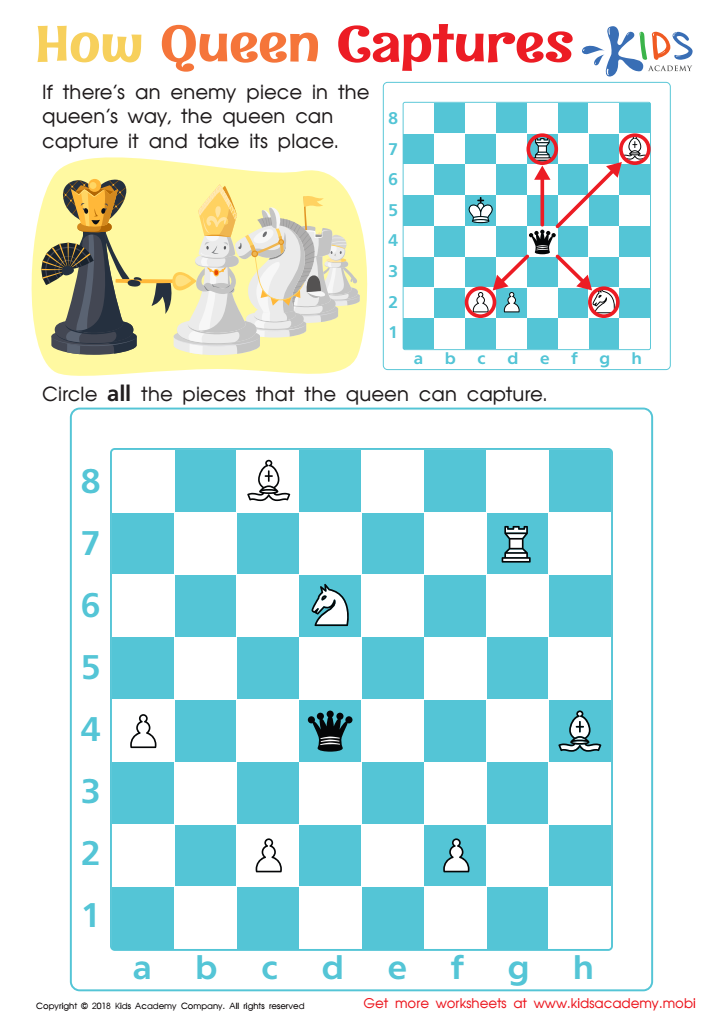
How Queen Captures Worksheet
Chess is a great game for sharpening math skills, strategic thinking, and knowledge of how each piece moves. If your child is interested, introduce them with this worksheet. It demonstrates how the queen can capture opposing pieces, such as another queen, and take their place.
How Queen Captures Worksheet
Worksheet
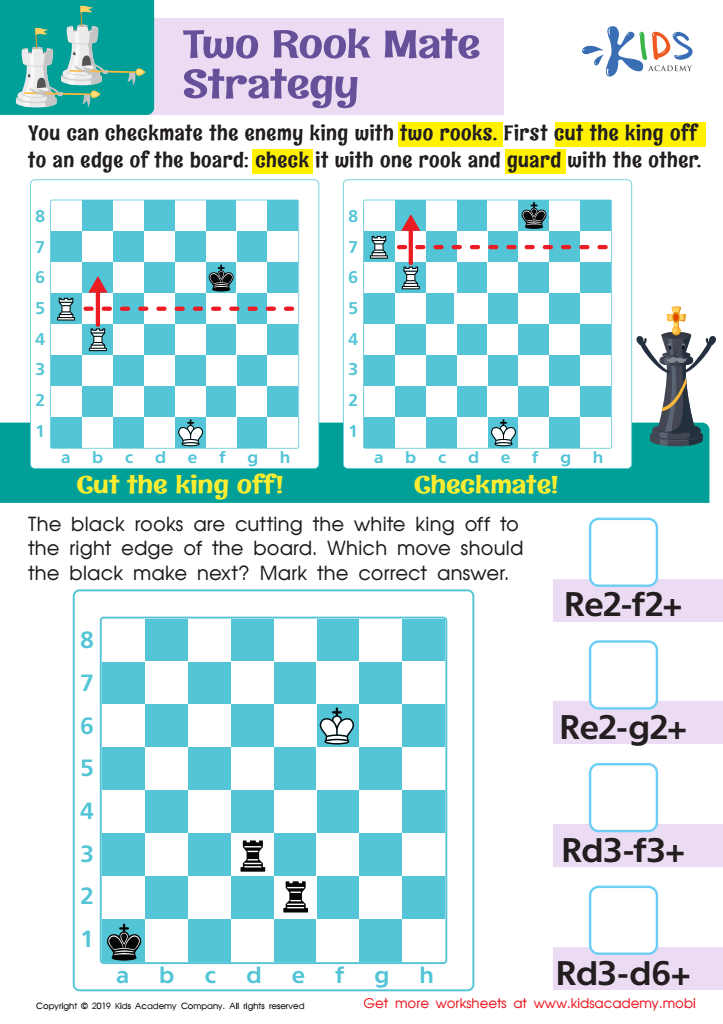
Two Rook Mate Strategy Worksheet
Kids who can play stress gain better reasoning, logic and critical thinking skills. This worksheet can teach kids the Two Rook Mate strategy to checkmate their opposite king. They'll discover how to close in the enemy king and protect with another rook, all the while enjoying a screen-free activity!
Two Rook Mate Strategy Worksheet
Worksheet
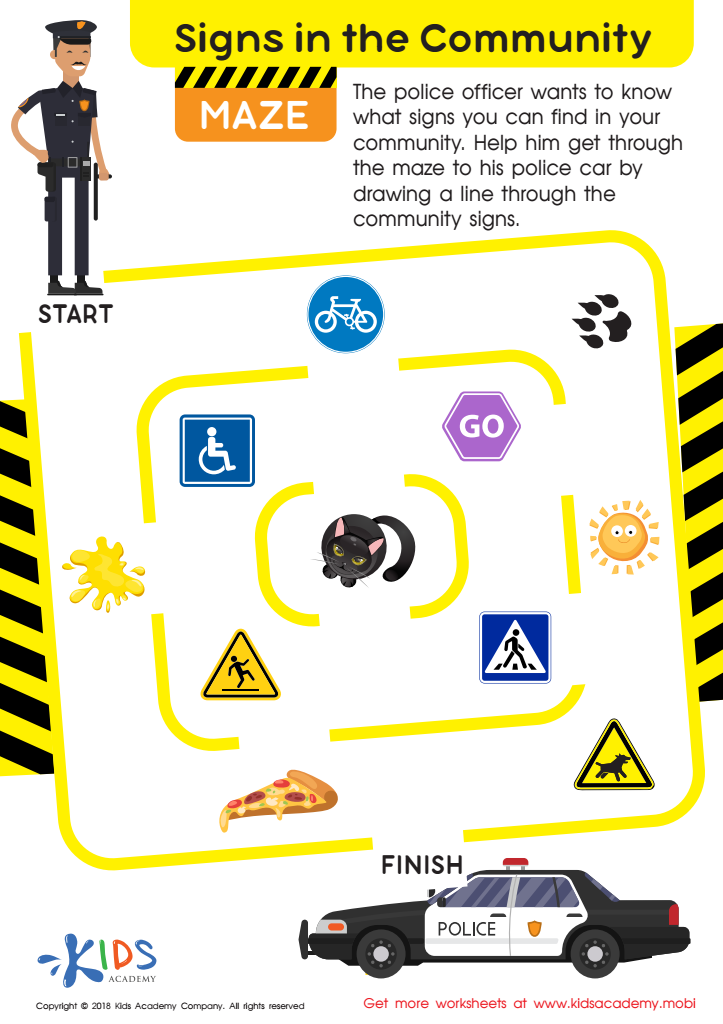
Signs in the Community: Maze Worksheet
This worksheet helps kids build writing skills like good hand grasp, pencil grip and how to hold a pencil. They can trace a path for the community helper to reach the car, learning community signs and strengthening fine-motor and pre-literacy skills while they enjoy the bright, colourful pictures.
Signs in the Community: Maze Worksheet
Worksheet
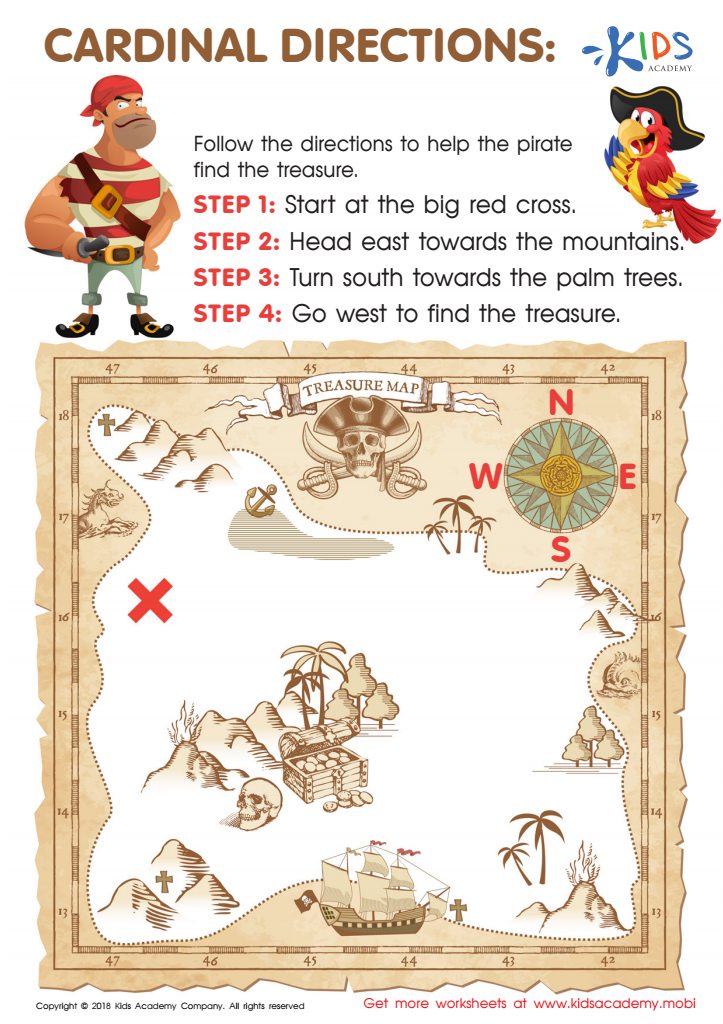
Cardinal Directions Treasure Map Maze Worksheet
Kids who love adventure will enjoy this fun activity! Read steps aloud and help your child follow the directions to help a pirate find treasure. There are four steps; with each one, your kid will be one step closer to the X that marks the spot! In the end, they'll have found the treasure if they've followed the instructions correctly.
Cardinal Directions Treasure Map Maze Worksheet
Worksheet
Learning Skills
Join Kids Academy for Free
Who is primarily going to use this learning content?







Enhancing problem-solving skills in children aged 3-5 is crucial, as these foundational years significantly shape their cognitive development and future learning. During this stage, children are naturally curious and eager to explore their environment. Encouraging them to tackle challenges promotes critical thinking, creativity, and resilience.
Problem-solving activities, such as puzzles, simple games, and open-ended questions, help children learn to navigate obstacles, develop reasoning skills, and think independently. When parents or teachers engage in these activities, they not only bolster children's cognitive abilities but also foster a sense of accomplishment and confidence.
Moreover, strong problem-solving skills support social development. Children learn to collaborate, negotiate, and communicate effectively with peers, essential skills for building relationships and working in teams. This competence translates into better academic performance and equips them with the emotional intelligence needed for future challenges.
In a rapidly changing world, teaching young children how to approach problems equips them to adapt to new situations, setting them up for success in school and beyond. Prioritizing problem-solving skills now reflects a commitment to nurturing well-rounded, resilient individuals capable of tackling tomorrow’s complexities.








