Enhance your child's fine motor skills with our engaging "Writing Numbers" worksheets designed for ages 3-5. These printable resources are perfect for early learners, providing a fun and interactive way to practice number tracing and writing. Each worksheet features colorful illustrations and activities that promote hand-eye coordination and refine pencil grip. By using these worksheets, children develop the essential skills needed for writing in a playful environment. Ideal for home or classroom settings, our worksheets encourage creativity and confidence in young learners as they master the fundamentals of numbers. Download and let the learning begin today!

Check out this FREE "Fine motor skills (writing numbers)" Trial Lesson for age 3-5!

Match Objects that Fit Together

Favorites
With answer key
Interactive
  • 3-5
  • Fine motor skills (writing numbers)
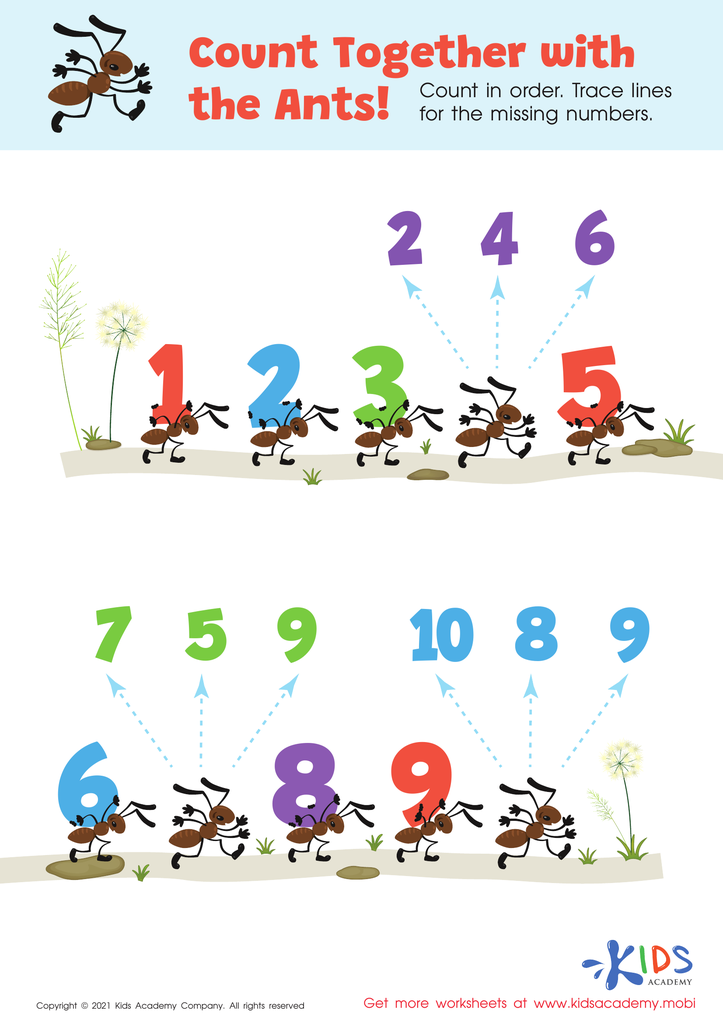
Count Together with the Ants Worksheet
Count Together with the Ants Worksheet
Rather than letting kids get too deep in online games, keep them engaged with learning worksheets. Ask them to identify the insect in the picture, then count the ants. Help them trace lines to the missing numbers. It's simple and straightforward for young children to comprehend.
Count Together with the Ants Worksheet
Worksheet
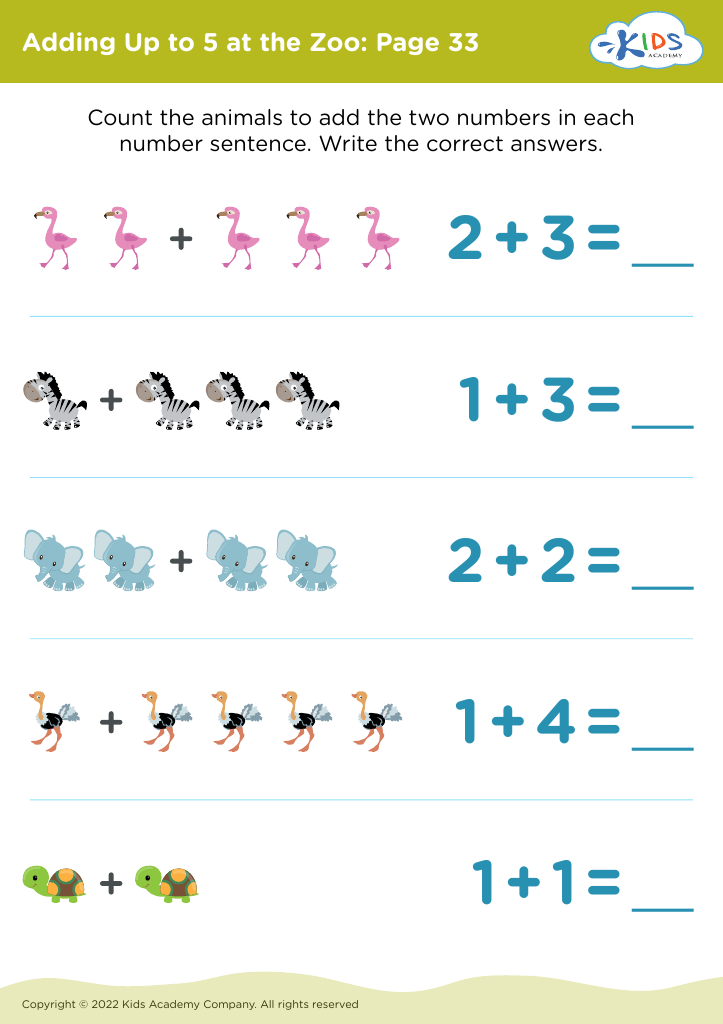
Adding Up to 5 at the Zoo: Page 33
Worksheet
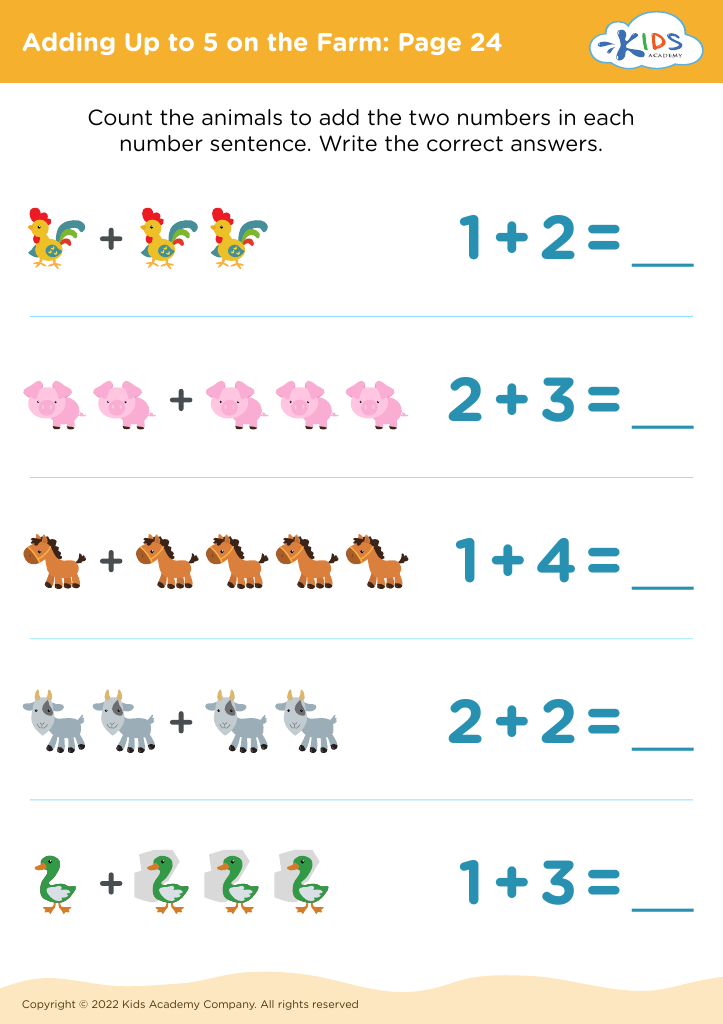
Adding Up to 5 on the Farm: Page 24
Worksheet
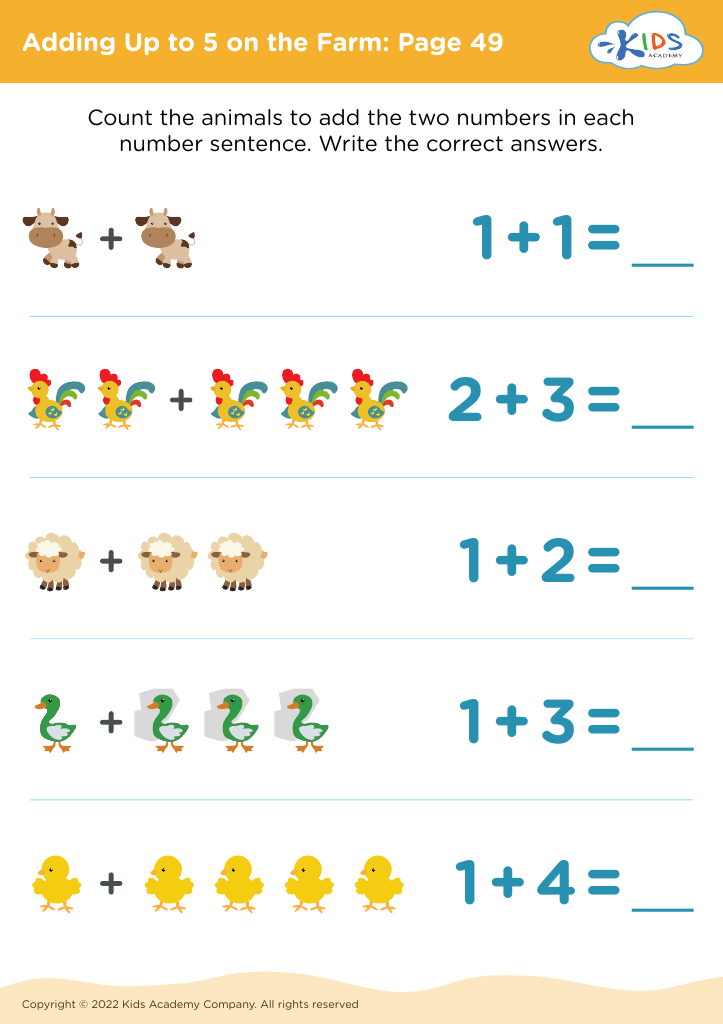
Adding Up to 5 on the Farm: Page 49
Worksheet
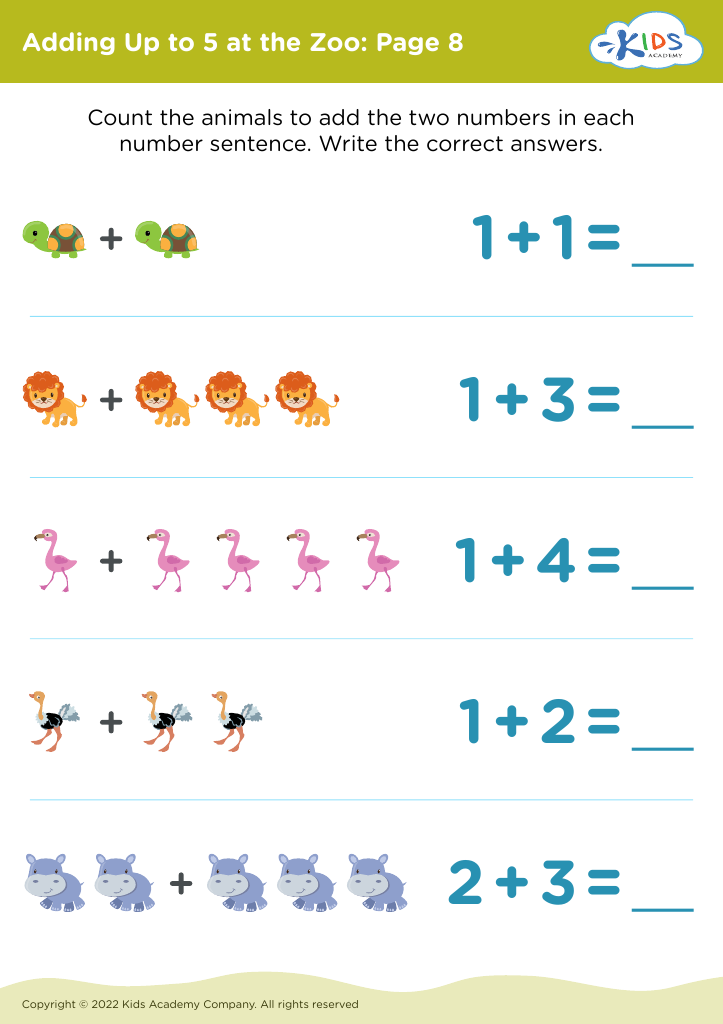
Adding Up to 5 at the Zoo: Page 8

Adding Up to 5 at the Zoo: Page 8

Adding Up to 5 at the Zoo: Page 8
Worksheet
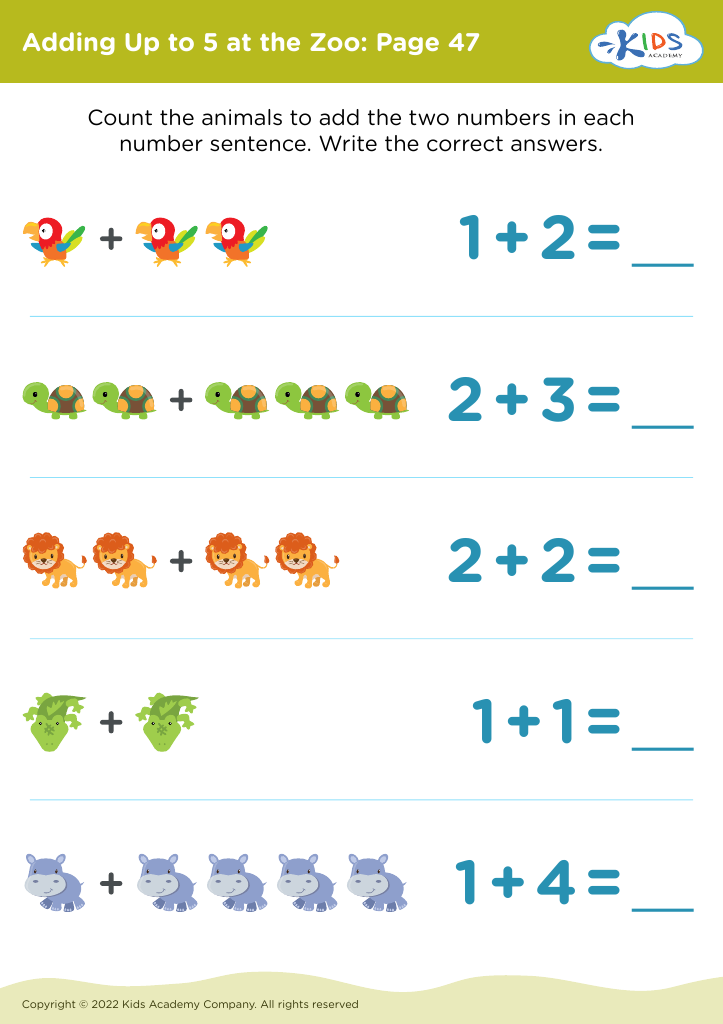
Adding Up to 5 at the Zoo: Page 47
Worksheet
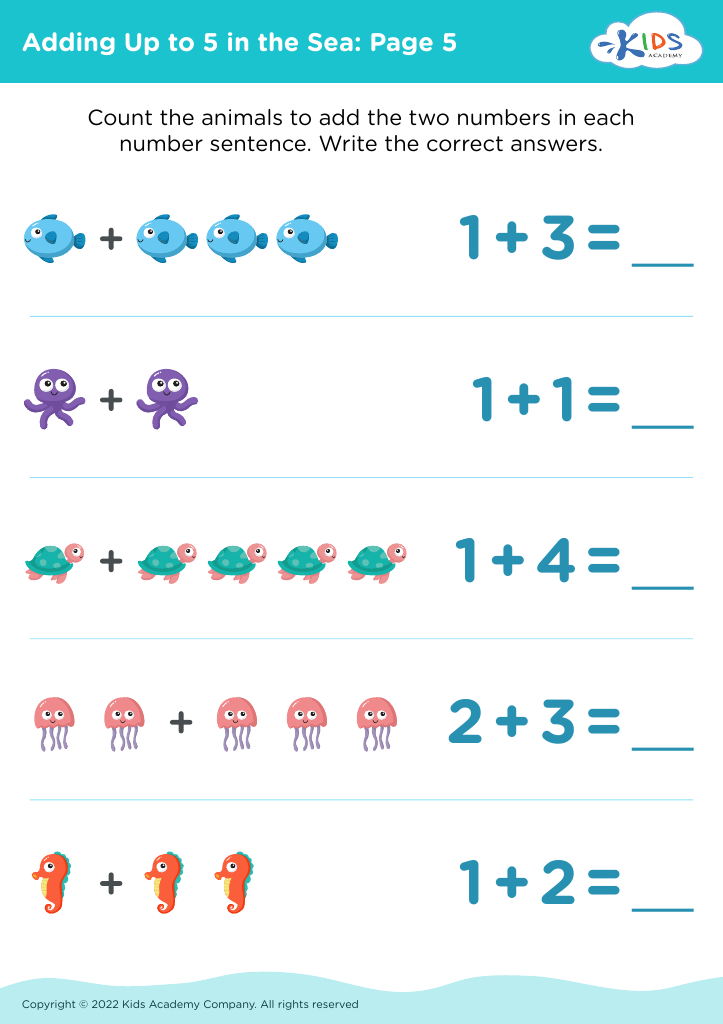
Adding Up to 5 in the Sea: Page 5

Adding Up to 5 in the Sea: Page 5

Adding Up to 5 in the Sea: Page 5
Worksheet
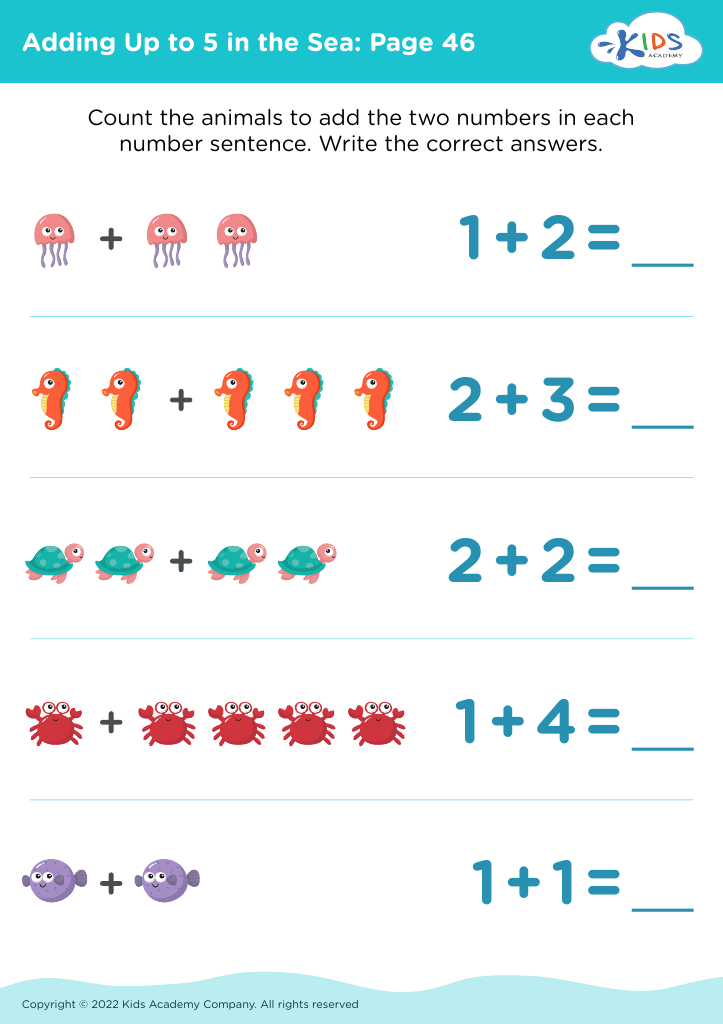
Adding Up to 5 in the Sea: Page 46
Worksheet
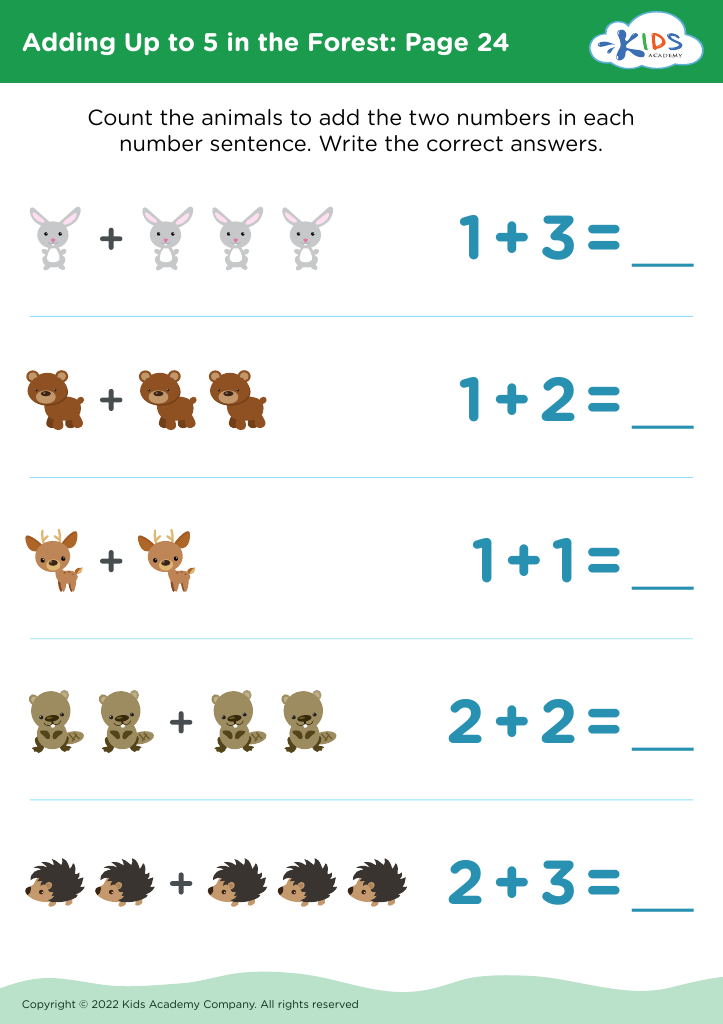
Adding Up to 5 in the Forest: Page 24
Worksheet
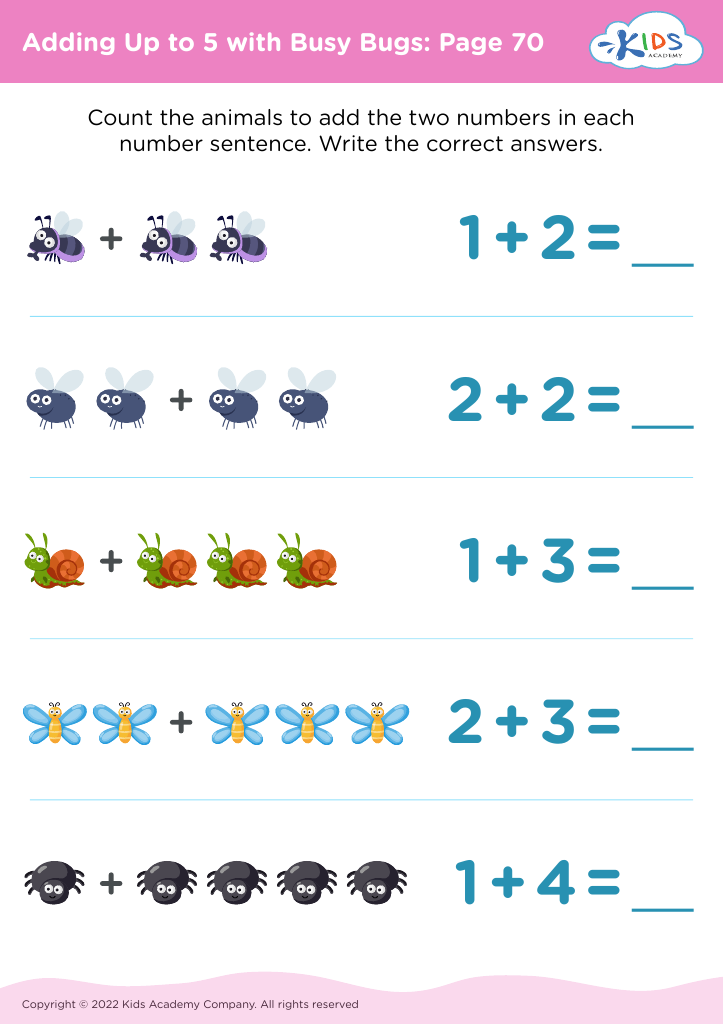
Adding Up to 5 with Busy Bugs: Page 70
Worksheet
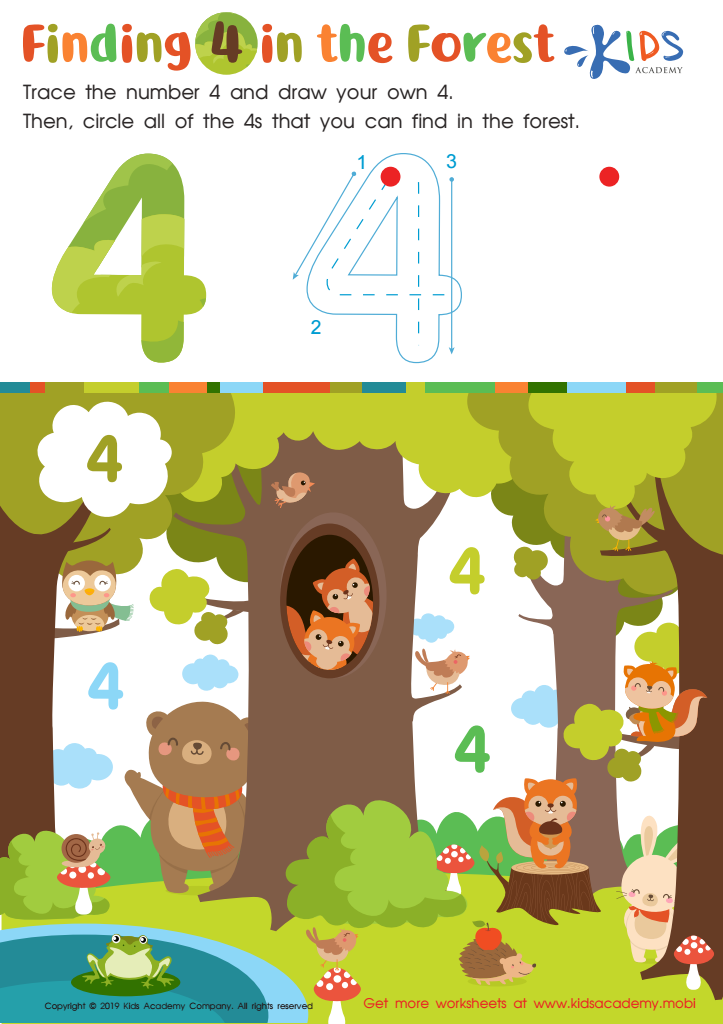
Finding 4 in the Forest Worksheet

Finding 4 in the Forest Worksheet

Before starting, have your kids count as high as they can. Ask them to identify the setting and point out the 4s. Trace 4 and draw your own. Help your kids circle all the 4s they can find in the forest. How far can they count? How well did they find the hidden 4s?
Finding 4 in the Forest Worksheet
Worksheet
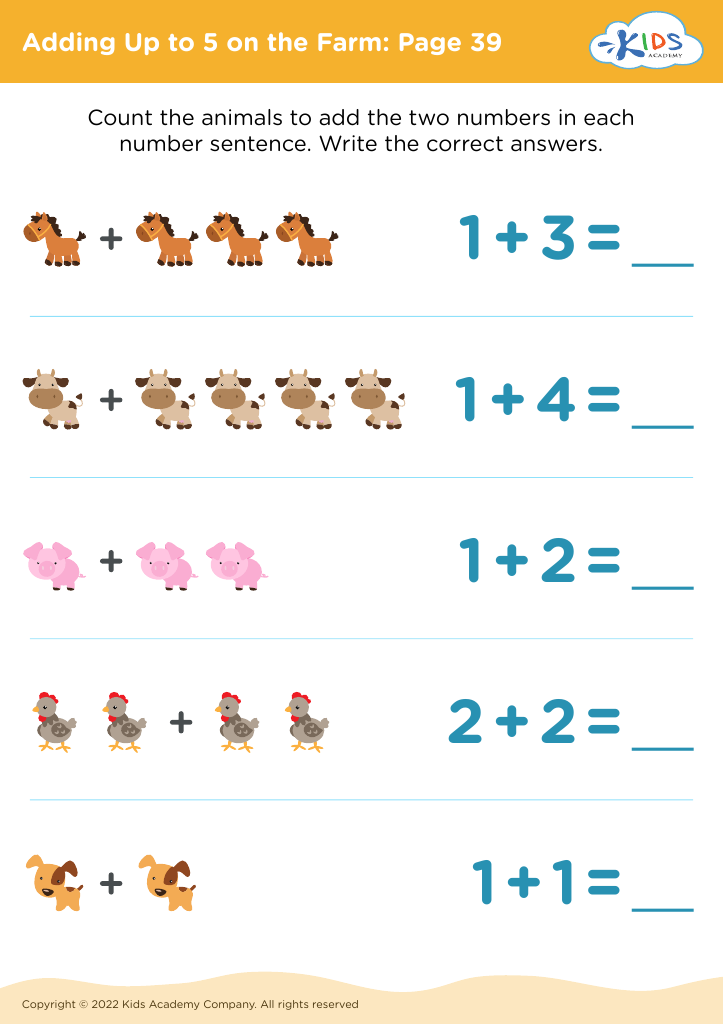
Adding Up to 5 on the Farm: Page 39
Worksheet
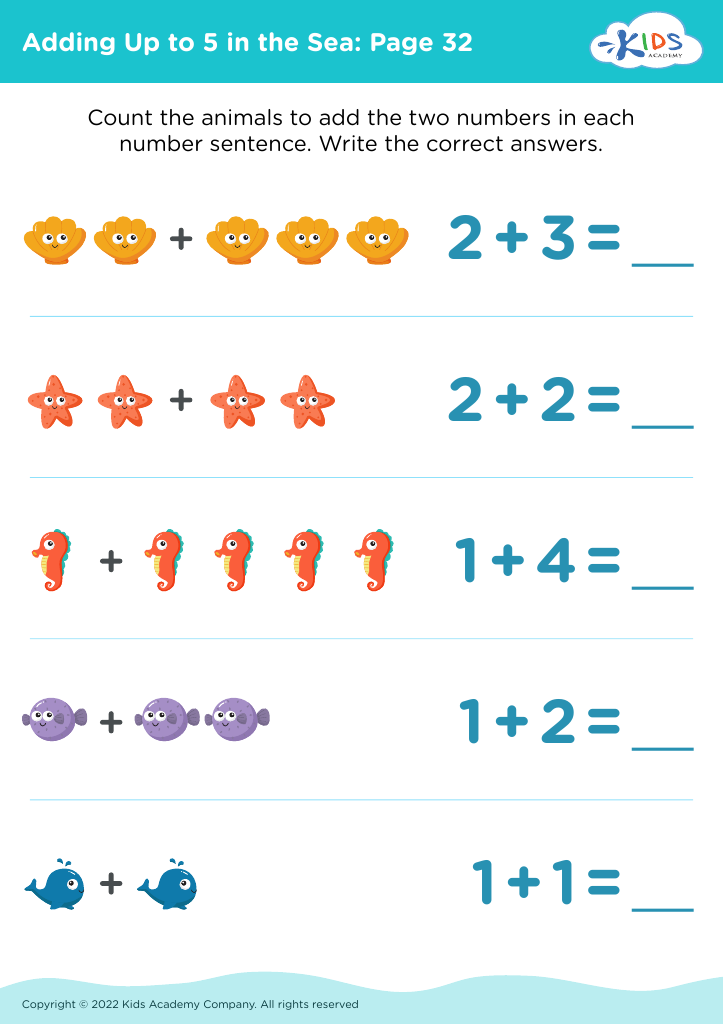
Adding Up to 5 in the Sea: Page 32
Worksheet
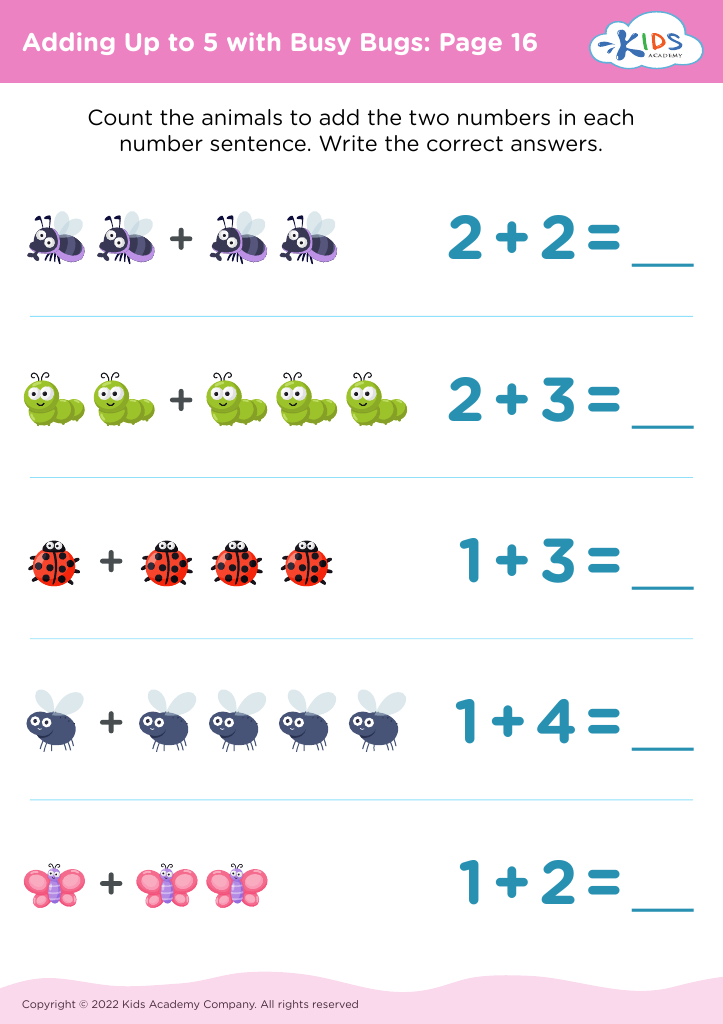
Adding Up to 5 with Busy Bugs: Page 16
Worksheet
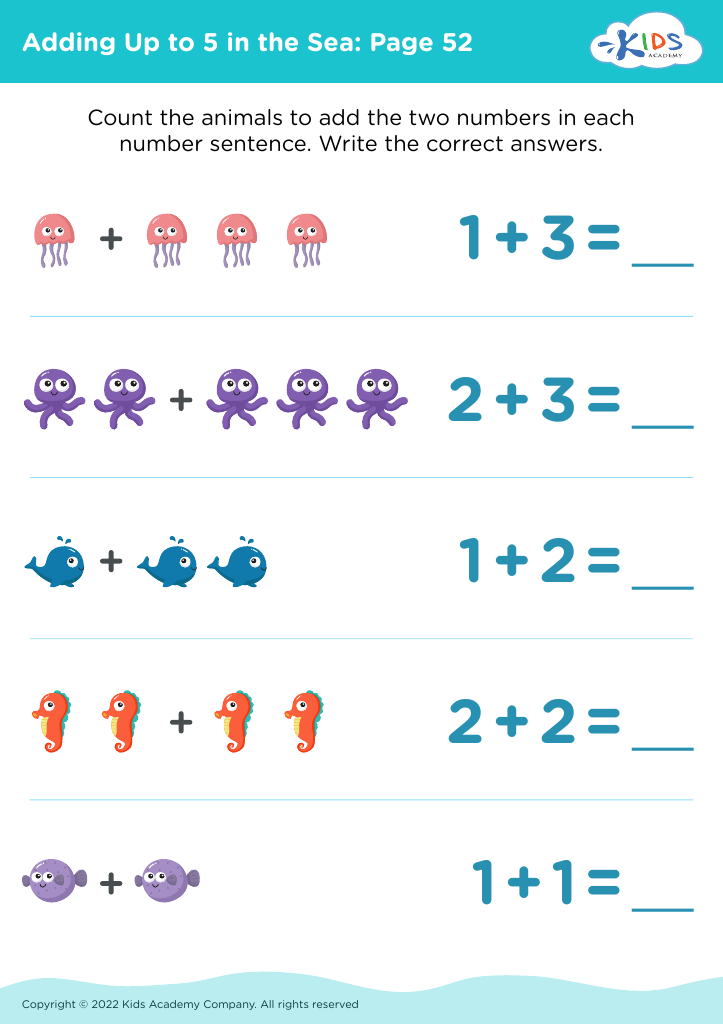
Adding Up to 5 in the Sea: Page 52
Worksheet


Fine motor skills are essential for young children, especially between the ages of 3-5, as they form the foundation for vital daily tasks and academic growth. Developing these skills through activities like writing numbers enhances hand-eye coordination, hand strength, and dexterity. When children practice writing numbers, they are not only learning to recognize and replicate shapes but also developing spatial awareness and control over their movements.

Parents and teachers should care about fine motor skills because they directly impact a child's ability to perform not just academic tasks but also practical life skills. Successfully mastering number formation lays the groundwork for more complex tasks like writing letters, using scissors, and eventually typing. Moreover, engaging in fine motor activities boosts confidence and encourages a sense of accomplishment in young learners.

Additionally, fine motor skill development is linked to cognitive growth. As children refine these skills, they foster problem-solving and critical thinking abilities that are crucial for their overall development. By prioritizing fine motor activities such as writing numbers, caregivers can help children build a strong foundation for future learning, enhancing their academic readiness and building pathways for lifelong success.