Time reading skills Worksheets for Ages 3-5
4 filtered results
-
From - To
Introducing our "Time Reading Skills Worksheets for Ages 3-5", thoughtfully designed to make learning to tell time fun and engaging for preschoolers and kindergarteners. These vibrant, age-appropriate worksheets help young learners grasp the basics of reading both analog and digital clocks. Through playful activities, children develop a strong foundational understanding of hours, minutes, and daily routines. Perfect for parents and educators alike, these printables support early math skills and enhance cognitive development. Download now and watch your little ones confidently master the essential life skill of telling time while having a blast!
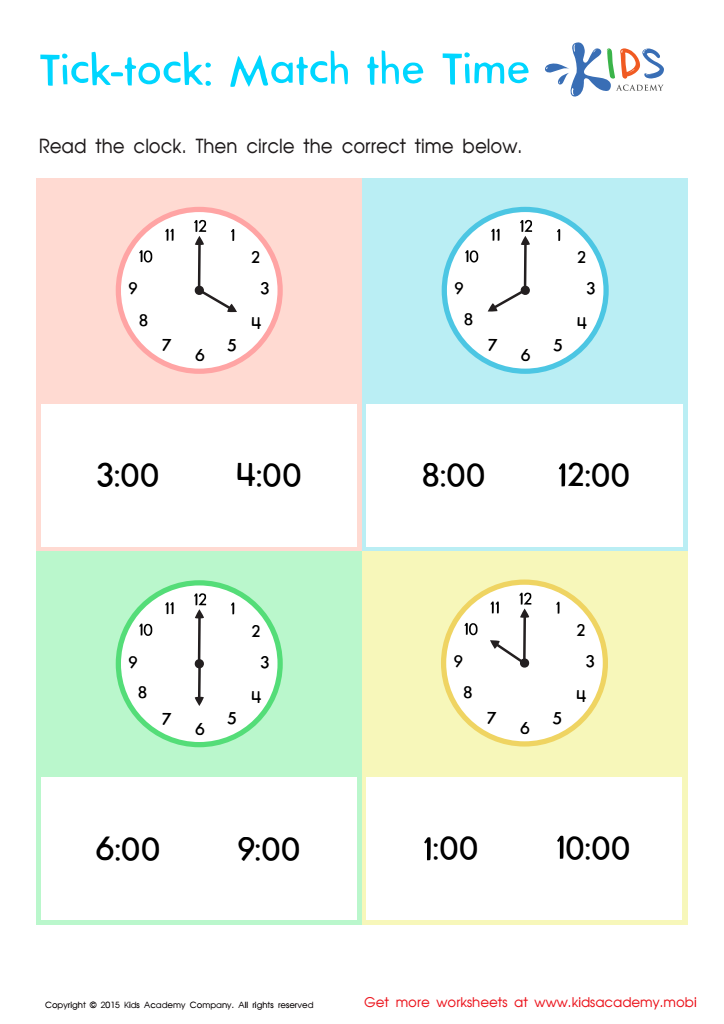
Telling The Time Worksheet: Part 4
 Assign to My Students
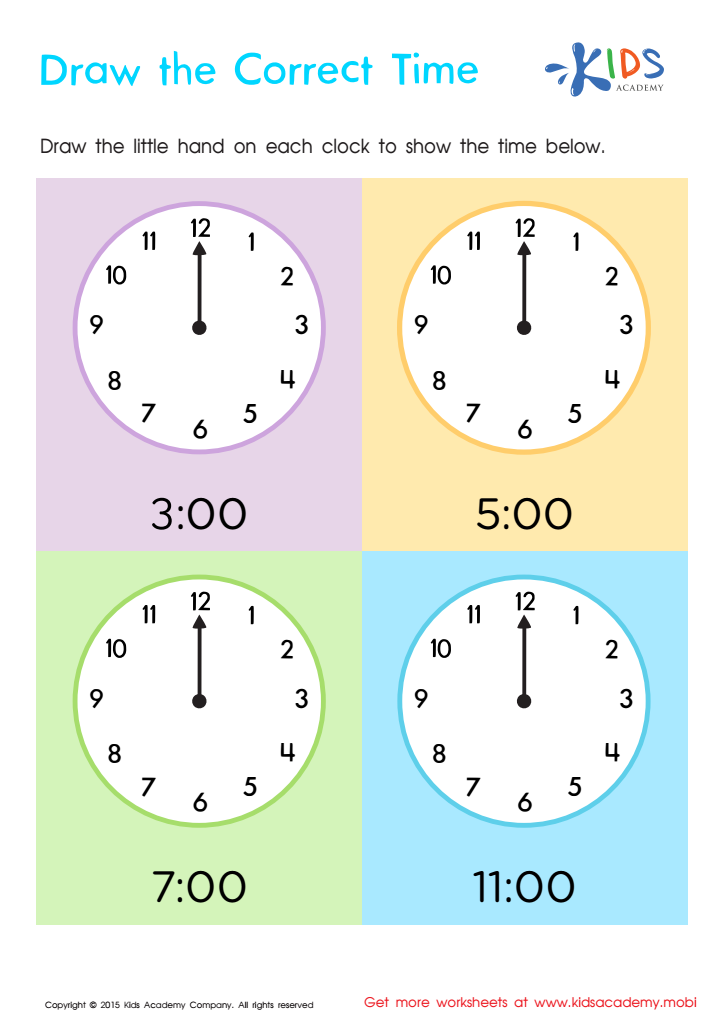
Telling The Time Worksheet: Part 1
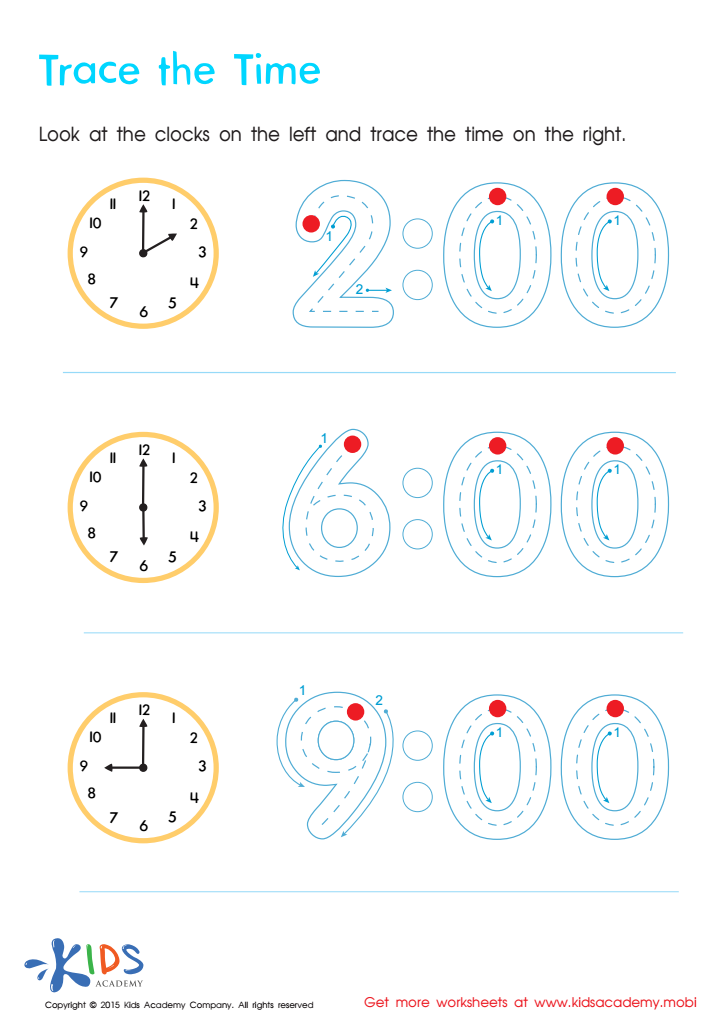
Telling The Time Worksheet: Part 2
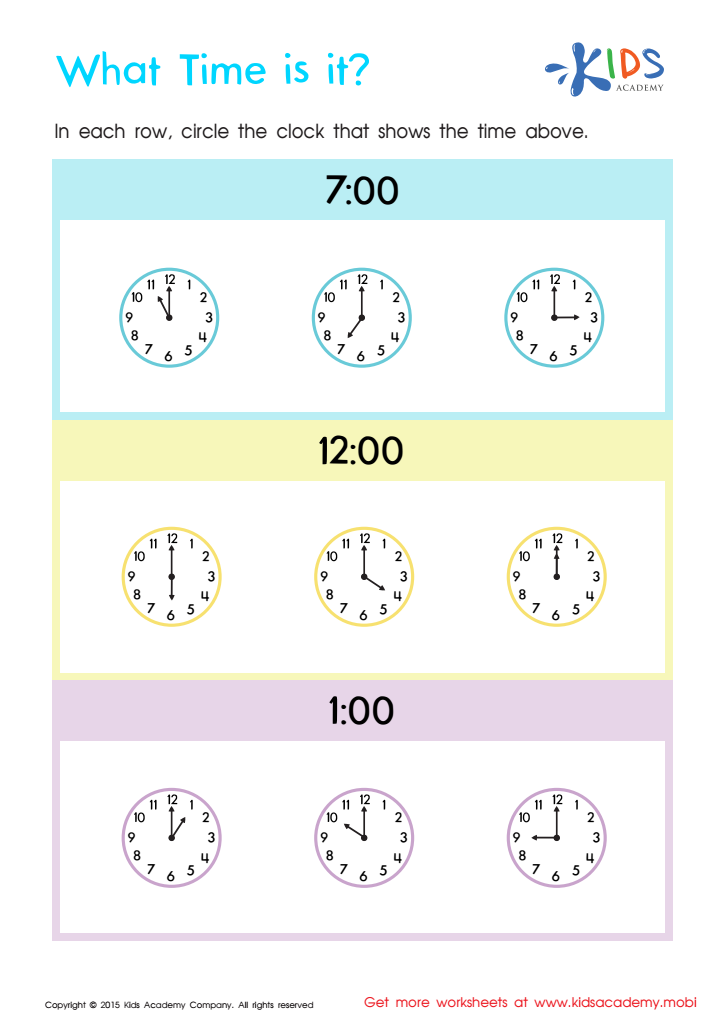
Telling The Time Worksheet: Part 3








Time reading skills, even at an early age, play a crucial role in a child's cognitive and daily life development. For ages 3-5, understanding and mastering the concept of time aids in establishing routines, which are essential for providing children with a sense of security and predictability. This routine helps reduce anxiety, making children feel more in control and confident in their daily activities.
Parents and teachers focusing on time reading skills contribute significantly to enhancing a child's executive functioning skills. By learning to read clocks and grasping notions of "before" and "after," kids start understanding sequences, which are important for logical thinking and planning. This awareness also supports the development of patience, helping children learn to wait for certain events, thereby fostering self-regulation.
Moreover, introductory time reading enriches mathematical skills, as children begin recognizing numbers and counting. It integrates well with learning shapes and comparing sizes. Comprehending terms like "hour" and "minute" introduces basic concepts of time management, setting the stage for future organizational skills that are essential throughout their life.
Overall, prioritizing time reading lays a foundational brick in a child's early educational experience, knitting together their growing sense of routine, structure, numeracy, and cognitive development into a cohesive whole that's vital for their ongoing and future academic and personal success.








