Visual perception Worksheets for Ages 3-5 - Page 3
49 filtered results
-
From - To
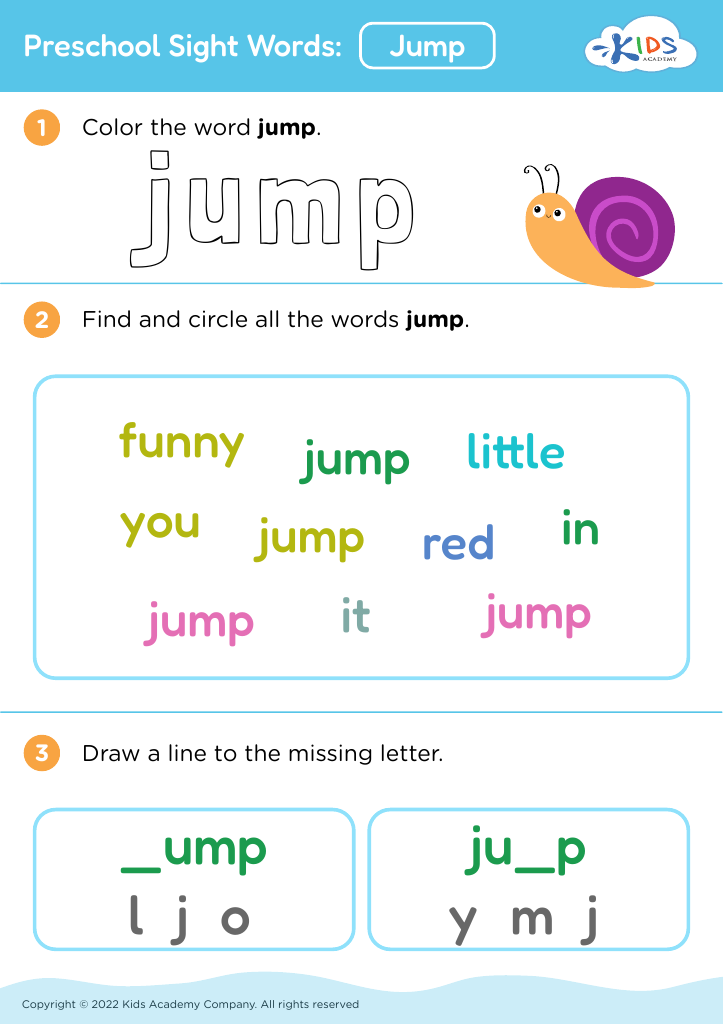






Visual perception is fundamentally important for children aged 3-5 as it forms the foundation for many key developmental milestones. During these early years, children learn to interpret and understand the world primarily through visual experiences. Visual perception includes skills such as visual discrimination, figure-ground perception, and spatial relationships, which are crucial for tasks like reading, writing, and navigating their surroundings.
Good visual perception enables children to recognize letters and numbers, differences in shapes and sizes, and the positions of objects. These skills are essential when children start school and begin learning more complex tasks. For example, distinguishing between similar letters such as 'b' and 'd' or numbers like '6' and '9' relies heavily on visual discriminatory abilities. In life skills, identifying toys, tracking objects in motion, or understanding spatial awareness when playing, all depend on a well-developed visual perceptual system.
On a social-emotional level, strong visual perception helps children engage confidently with peers and adults, as they can better read facial expressions and body language. Teachers and parents play a crucial role in guiding visual perceptual skills development through activities like puzzles, drawing, sorting games, and interactive play, thereby setting a sturdy foundation for future learning and daily life interactions. Therefore, supporting visual perception in early childhood fosters overall cognitive, motor, and emotional development.








