Visual Learning Adding in the Sea Worksheets for Ages 3-5
18 filtered results
-
From - To
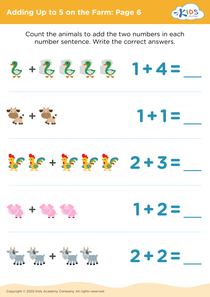
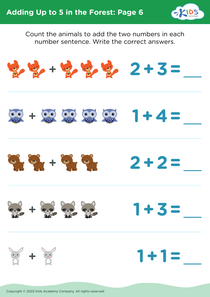
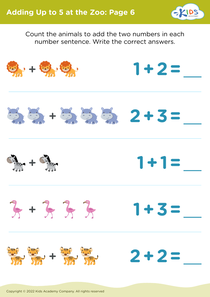
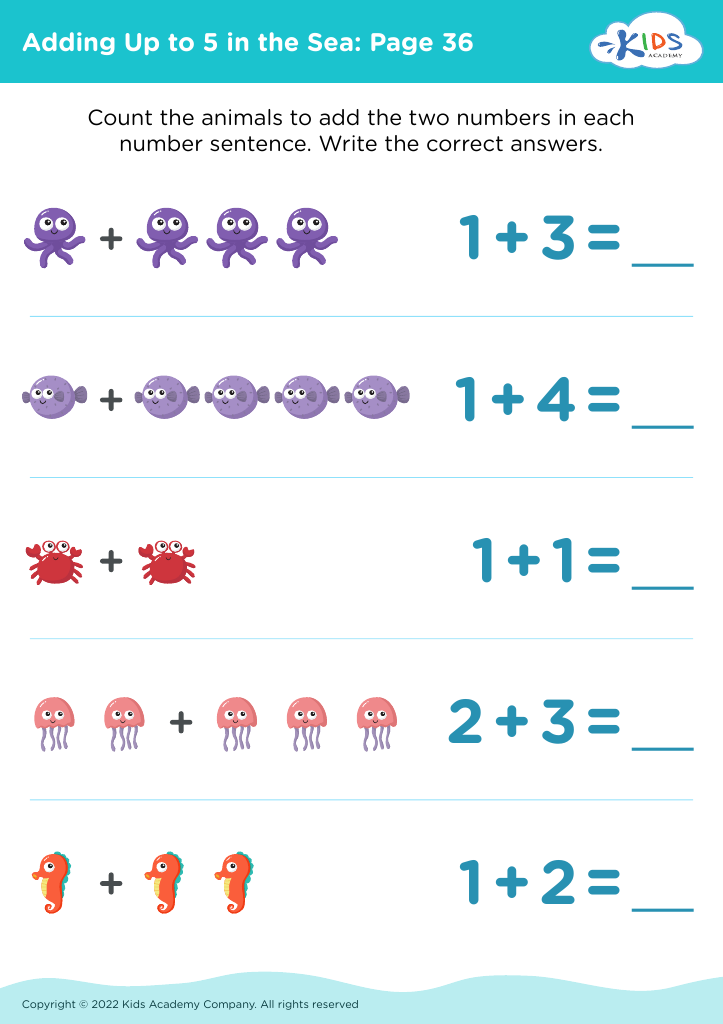
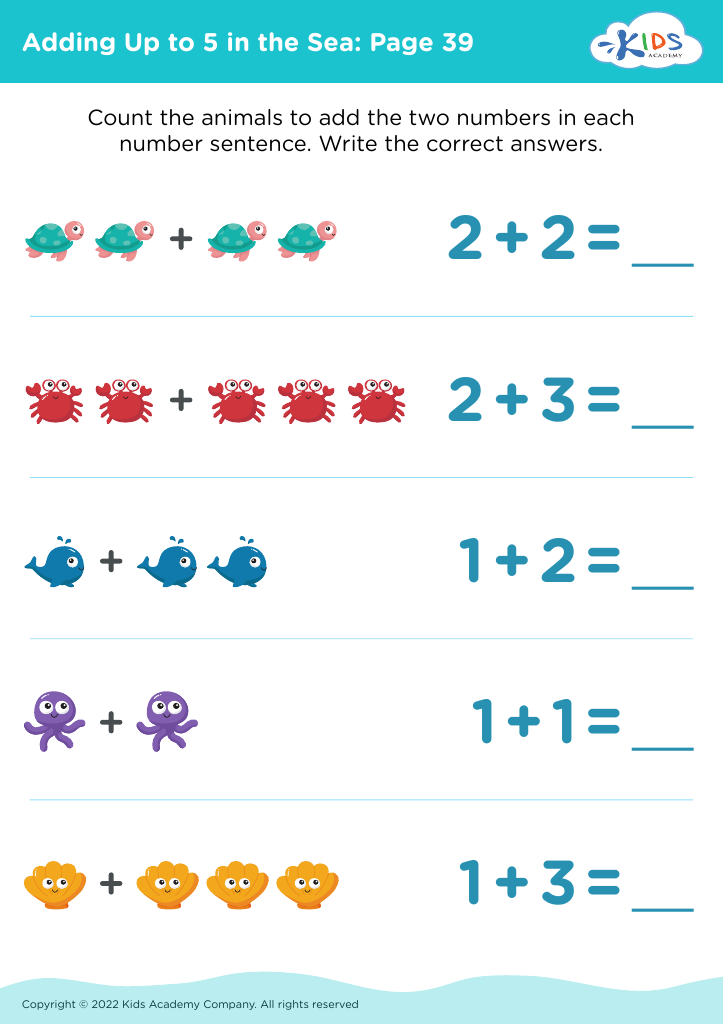
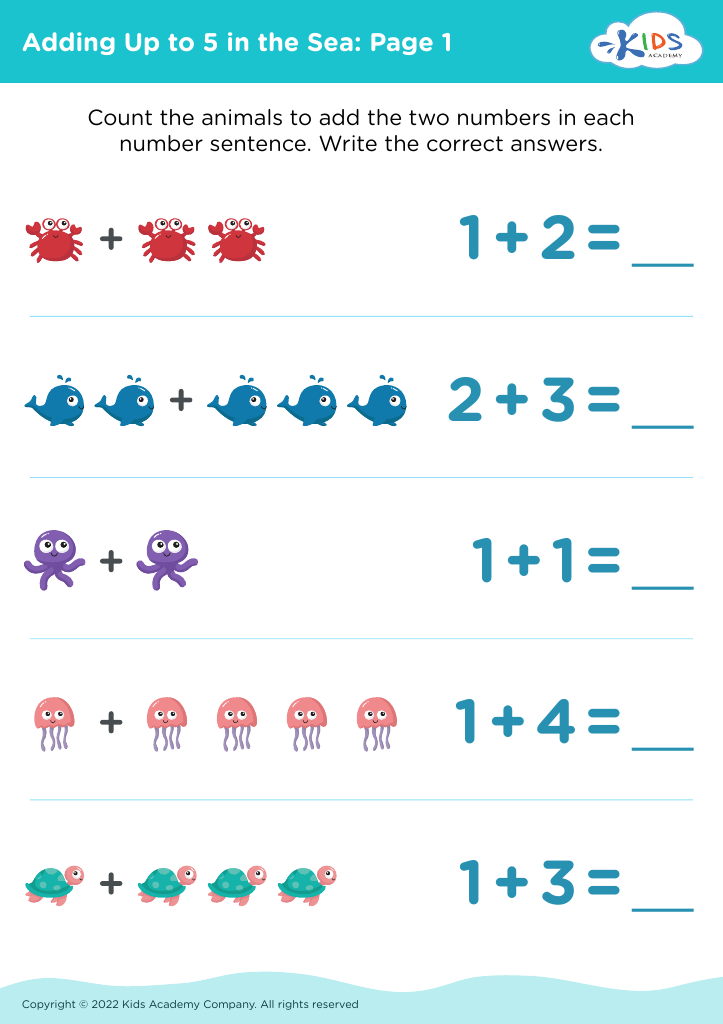
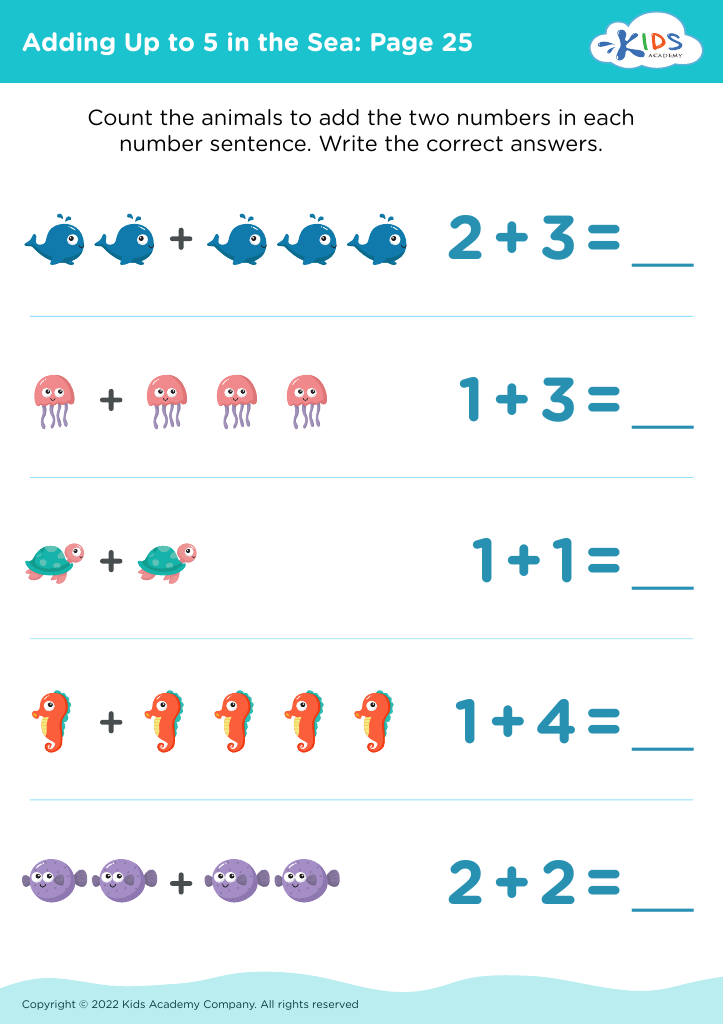
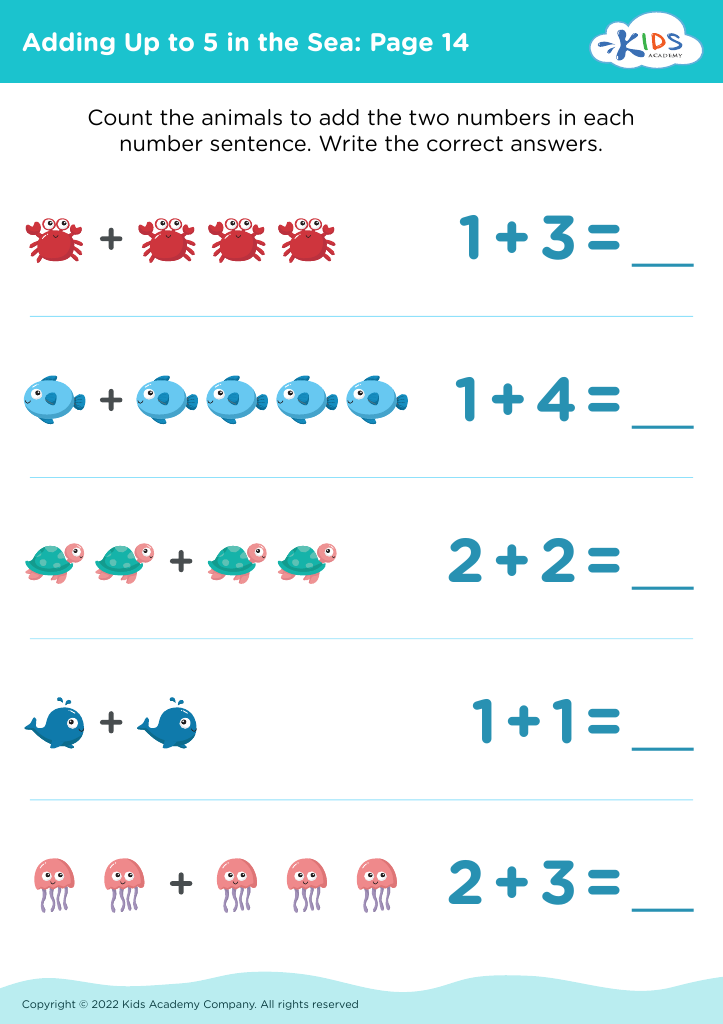
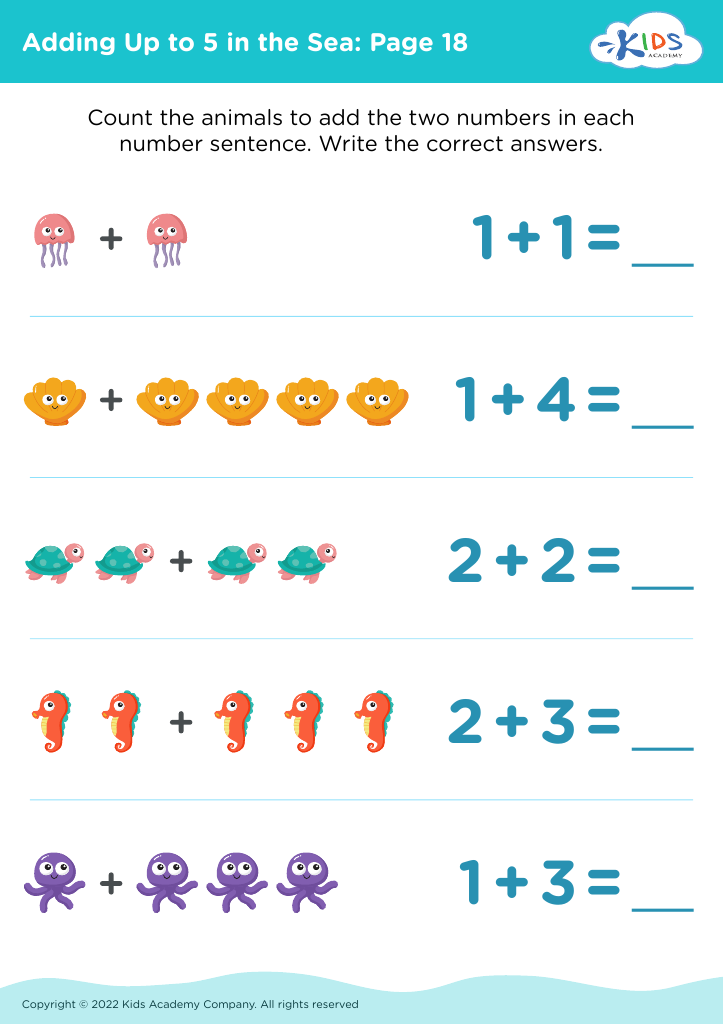
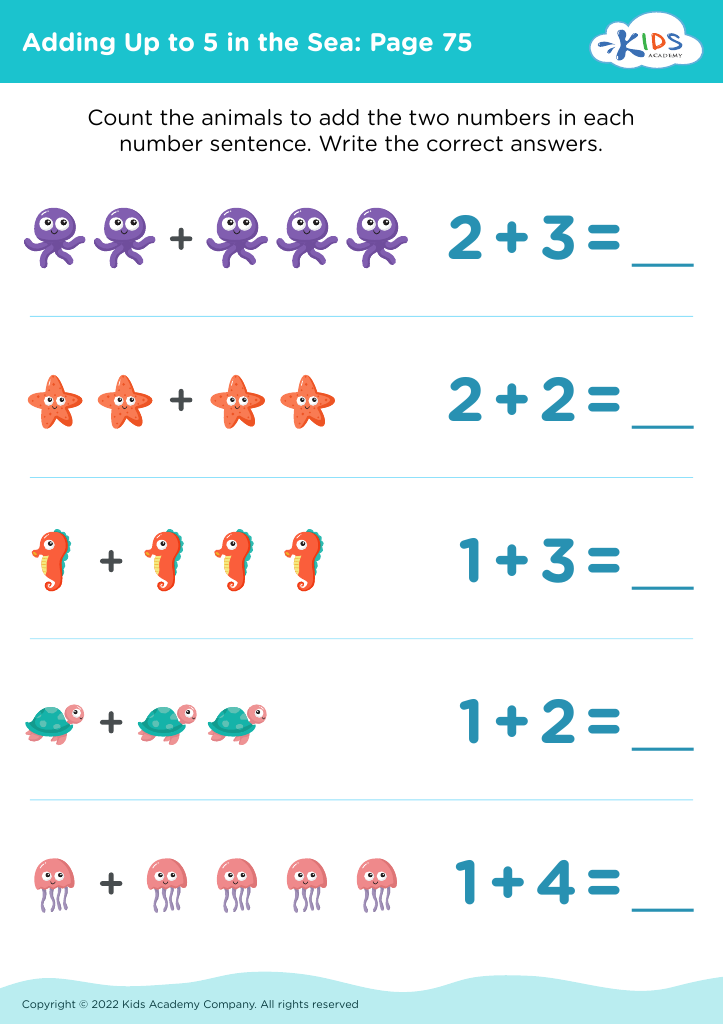
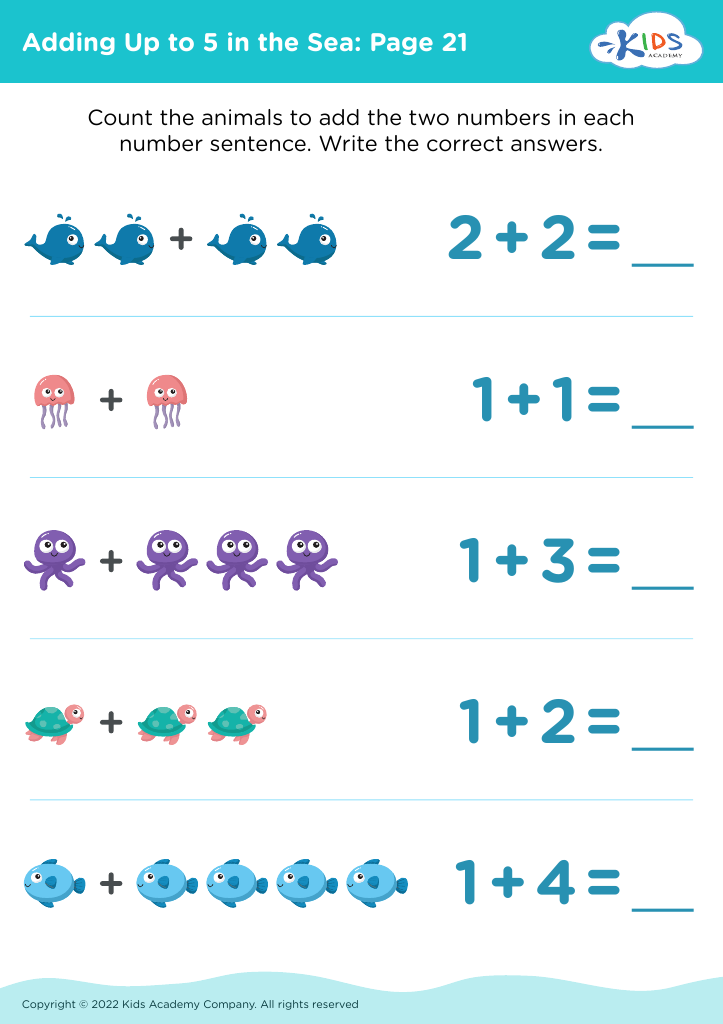
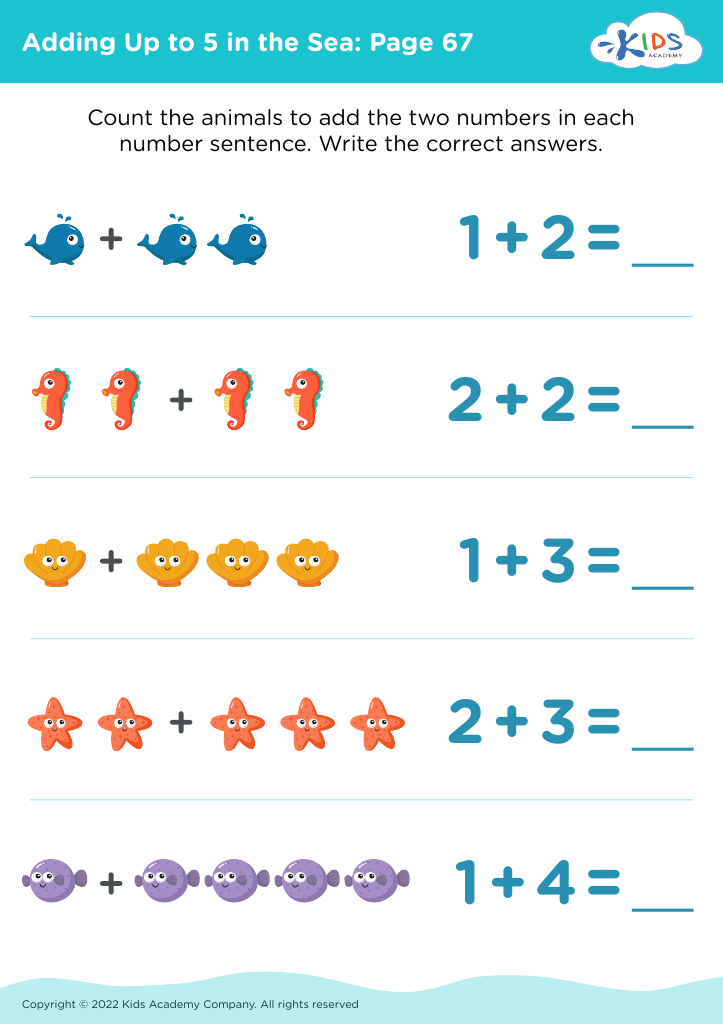
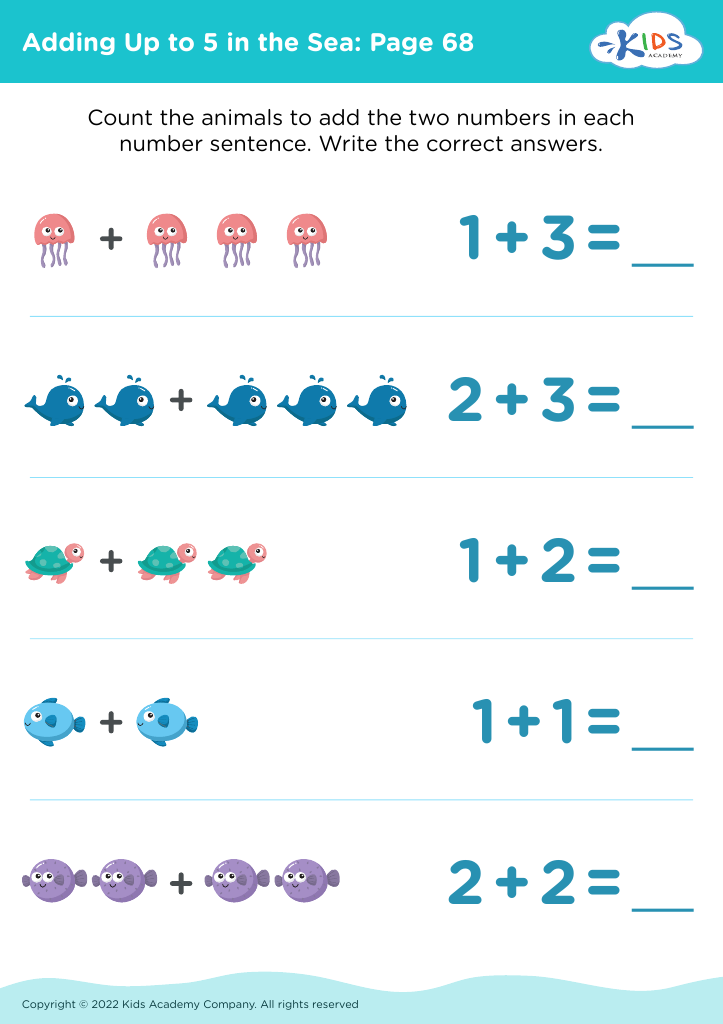
Dive into the world of visual learning with our engaging "Adding in the Sea Worksheets" designed specifically for ages 3-5! These vibrant worksheets utilize captivating underwater themes to make learning addition fun and interactive. Children will explore aquatic characters and colorful illustrations that stimulate their imagination and enhance their understanding of basic math concepts. Each activity promotes visual recognition and counting skills, supporting early development and fostering a love for learning. Perfect for preschool classrooms or home activities, these worksheets aid in creating a solid mathematical foundation while encouraging critical thinking. Make math an adventure for your little ones today!
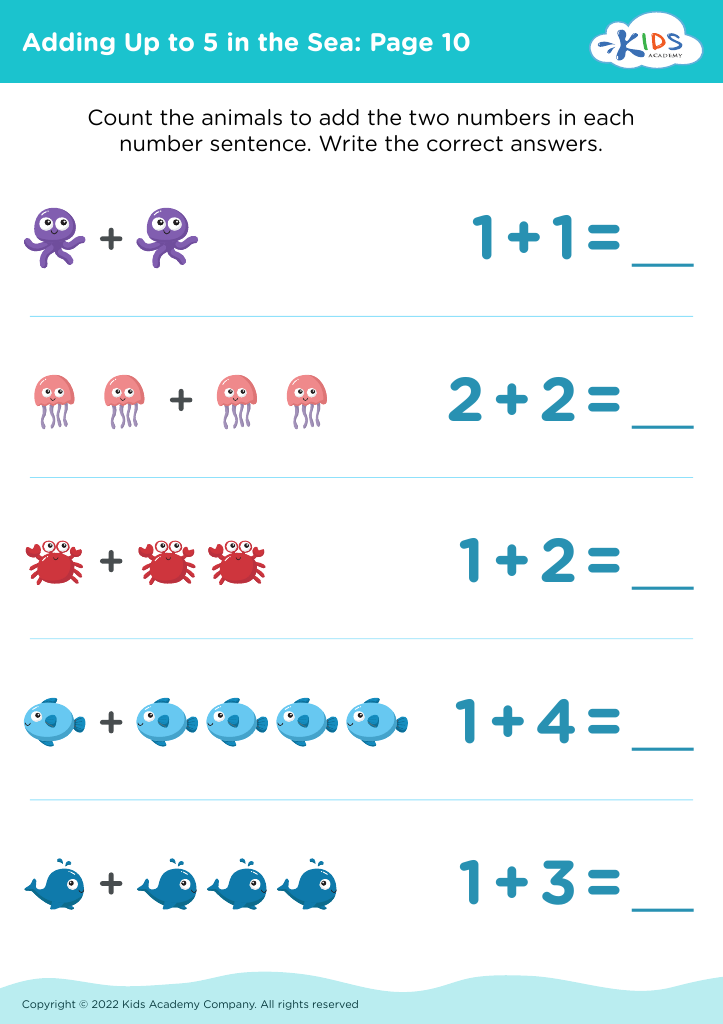
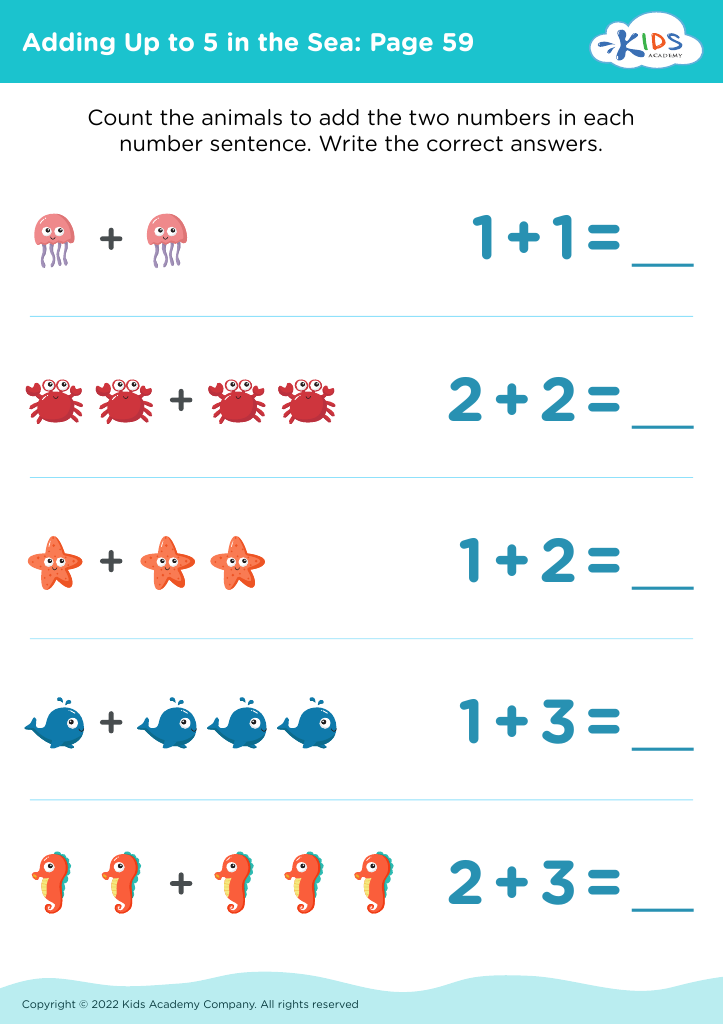
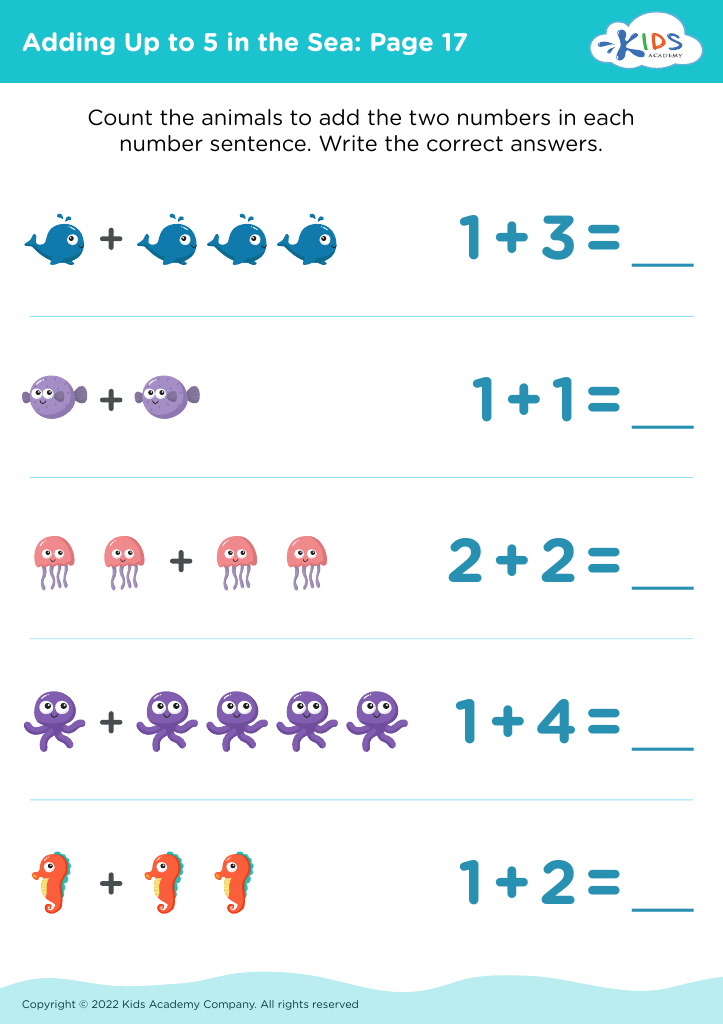
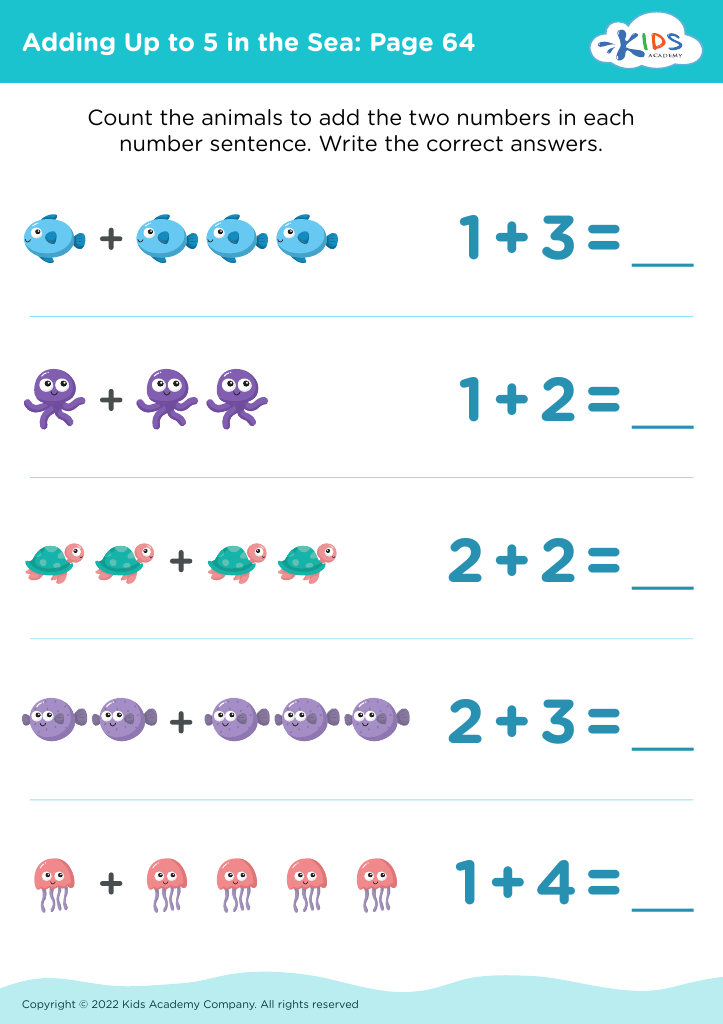
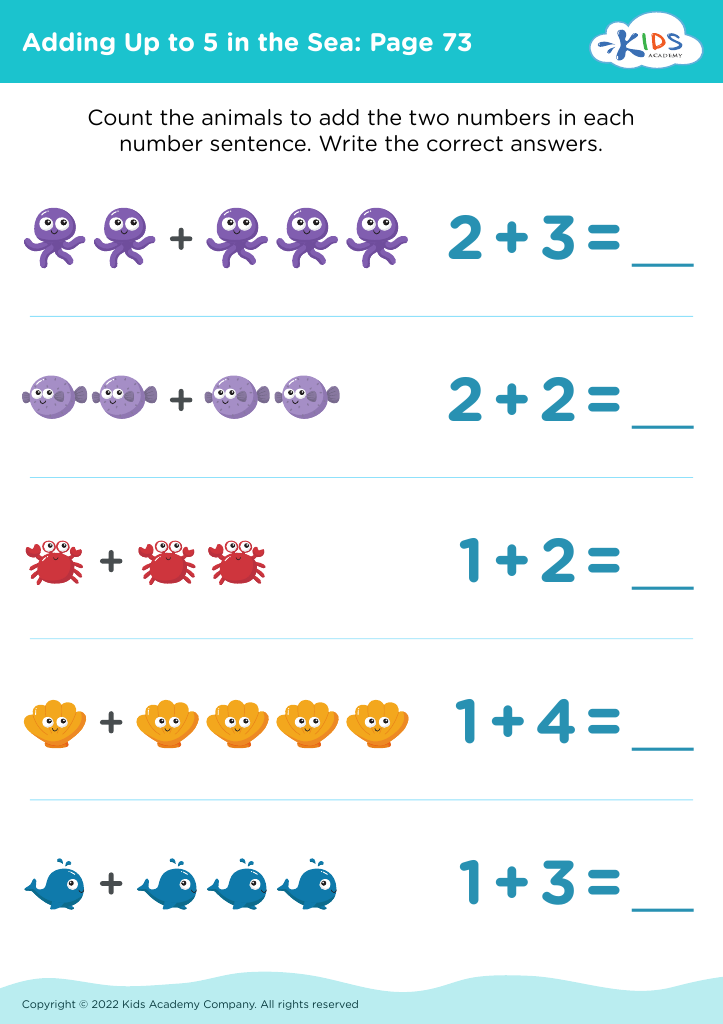
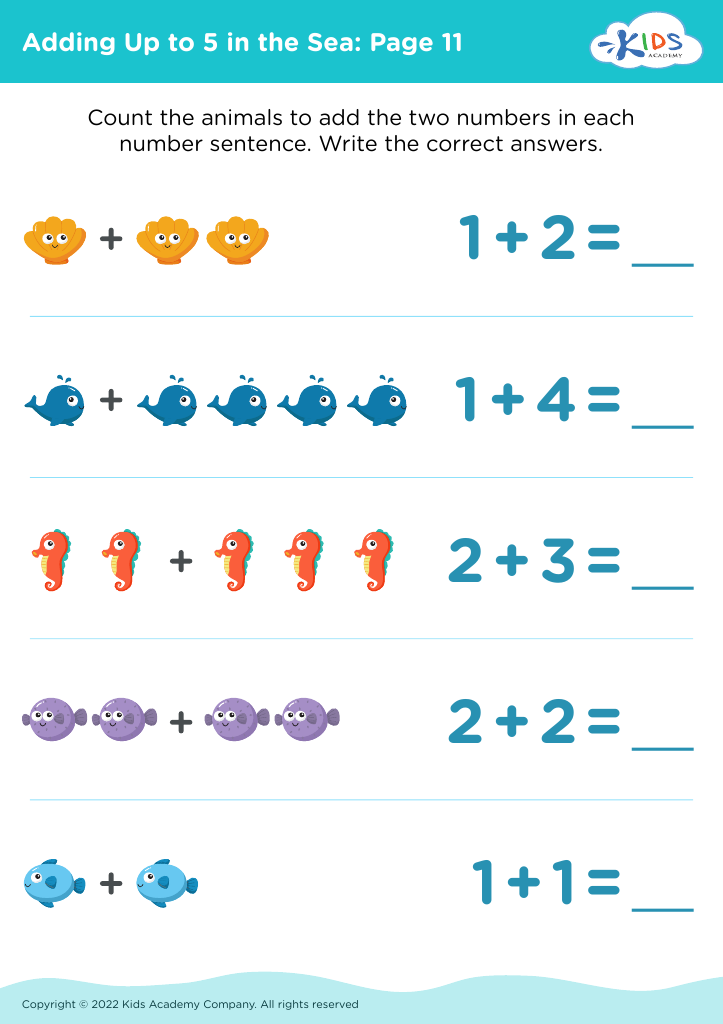
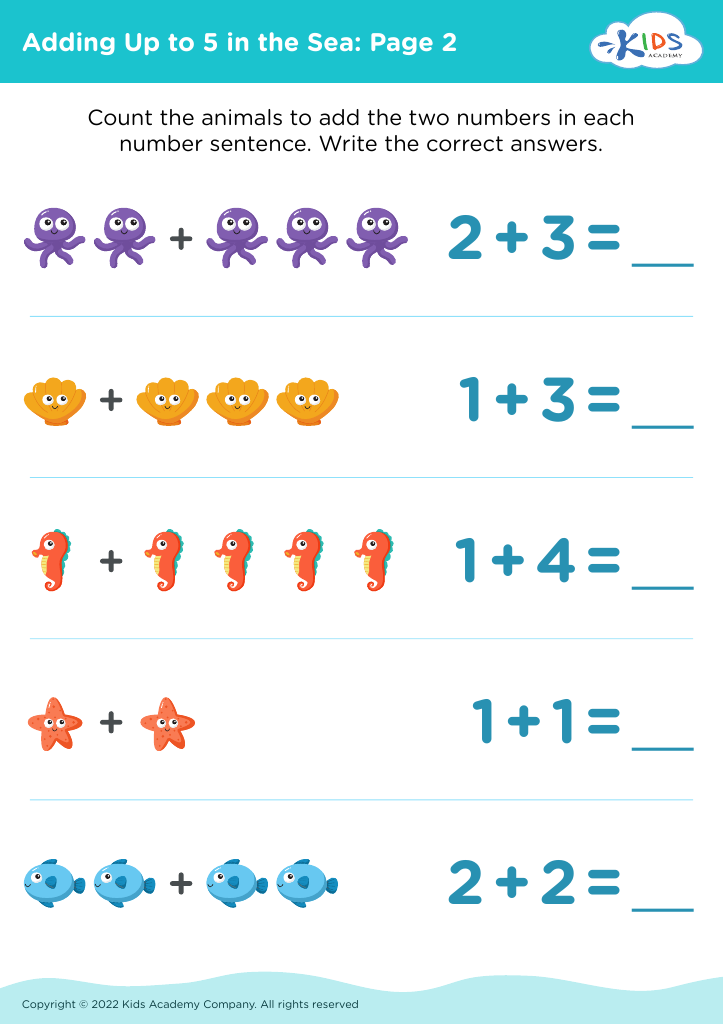
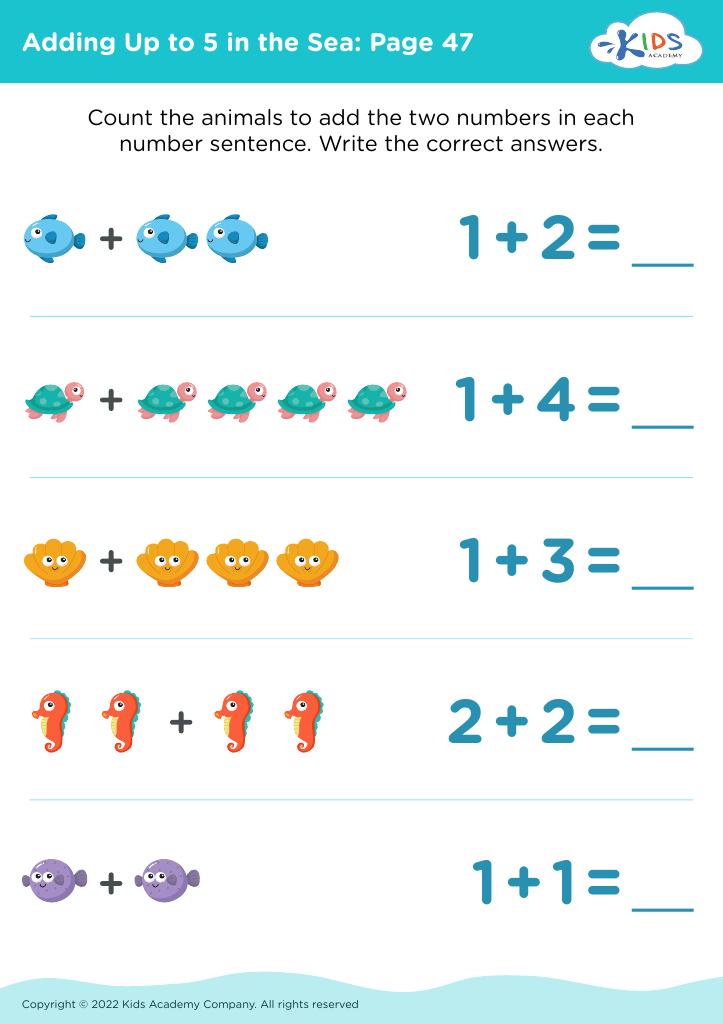



Visual learning is a crucial pedagogical approach for young learners aged 3 to 5, as it engages children’s natural curiosity and diverse ways of understanding. At this stage, children are highly receptive to visual stimuli, making visual learning strategies effective for retention and comprehension. By incorporating visuals, such as pictures, diagrams, and interactive materials, educators can enhance children's engagement with subjects like marine science and conservation, fostering a deeper appreciation for the ocean ecosystem.
Parents and teachers should care about visual learning because it caters to different learning styles, allowing each child to progress at their own pace. Visual aids can simplify complex concepts, making learning about the sea both accessible and enjoyable. For example, vivid pictures of sea creatures can help children recognize animals, while colors and shapes facilitate understanding of the marine environment.
Moreover, visual learning supports language development as children learn to associate words with images, enriching their vocabulary. Encouraging discussions around visual content can also develop critical thinking and communication skills. Ultimately, prioritizing visual learning not only broadens children's knowledge about the oceans but also promotes a lifelong love for learning, exploration, and environmental awareness. Thus, it is essential for parents and educators to integrate visual learning in early education.