Filters

248 filtered results

Clear all filters
Favorites
With answer key
Interactive

248 filtered results

Difficulty Level

Grade


Check out this FREE Trial Lesson on Addition & Subtraction for age 3-5!

P

Favorites
With answer key
Interactive
  • 3-5
  • Counting practice
  • Addition & Subtraction
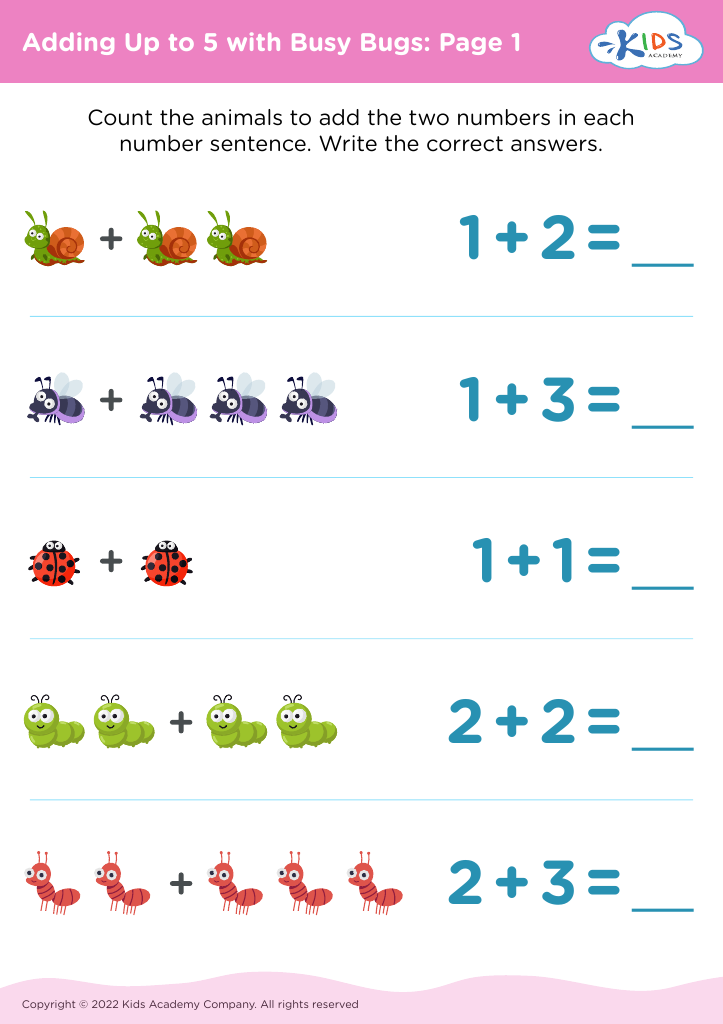
Adding Up to 5 with Busy Bugs: Page 1
Worksheet
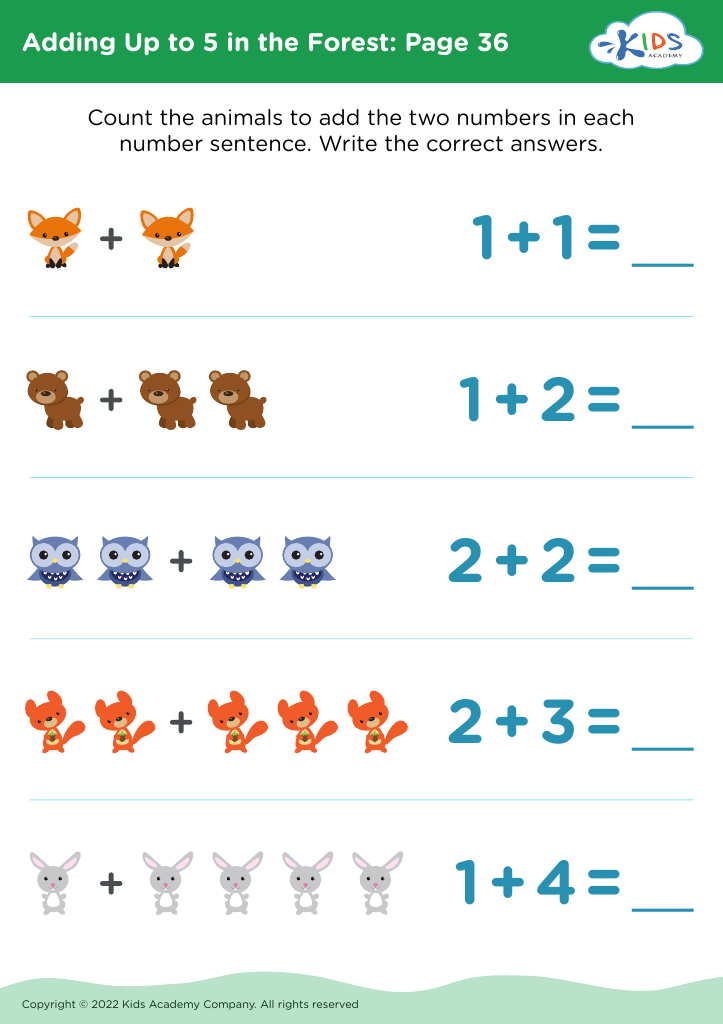
Adding Up to 5 in the Forest: Page 36
Worksheet
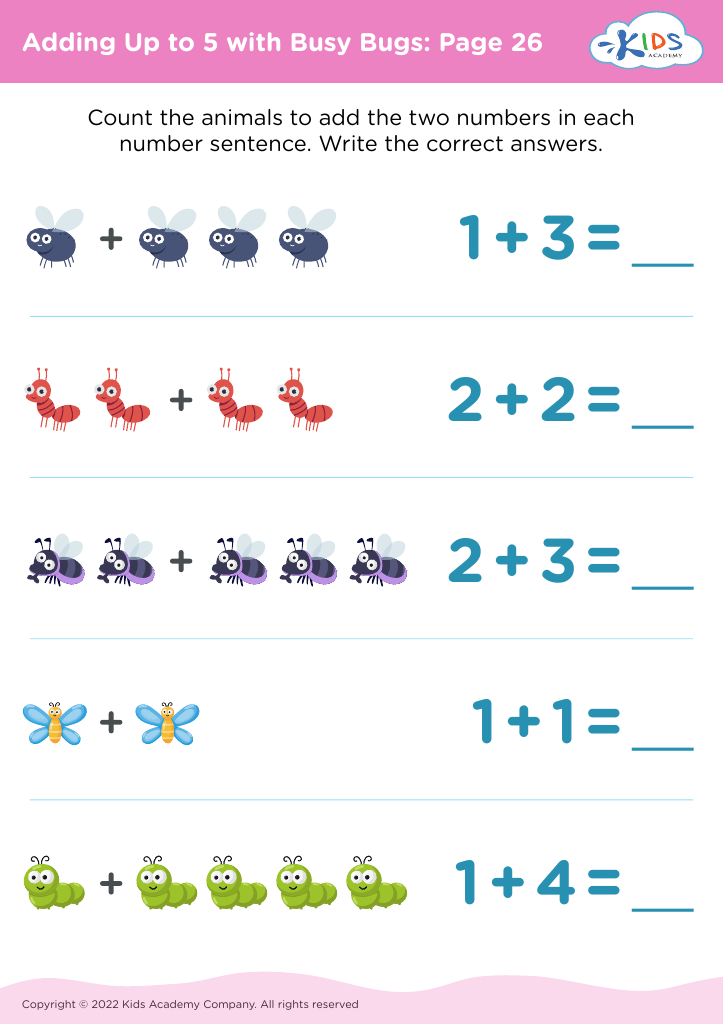
Adding Up to 5 with Busy Bugs: Page 26
Worksheet
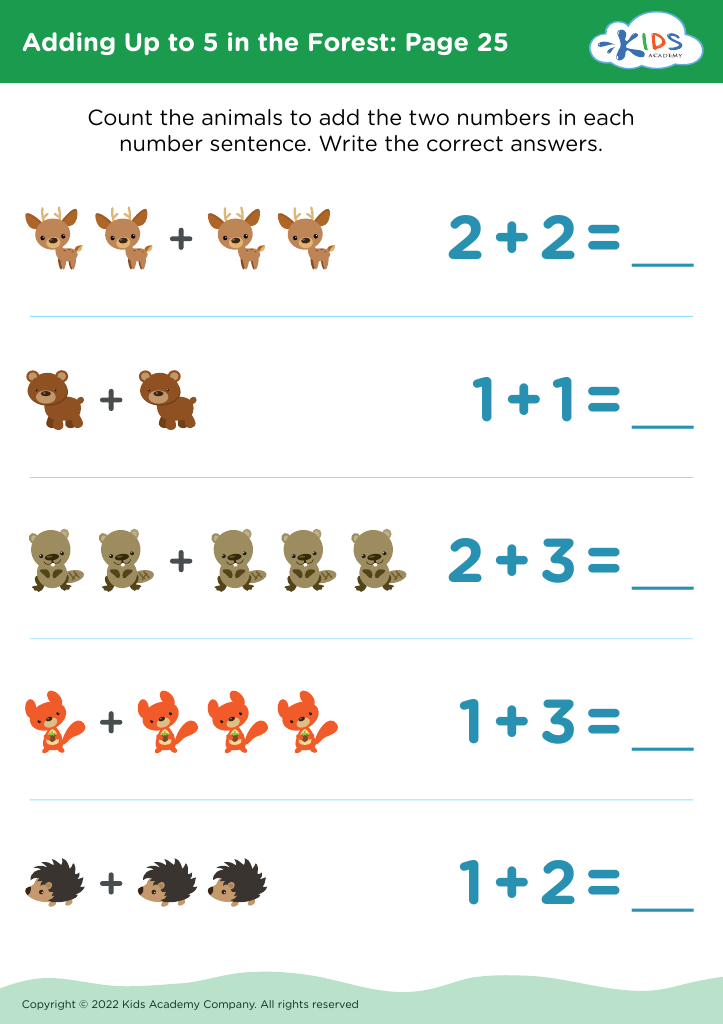
Adding Up to 5 in the Forest: Page 25
Worksheet
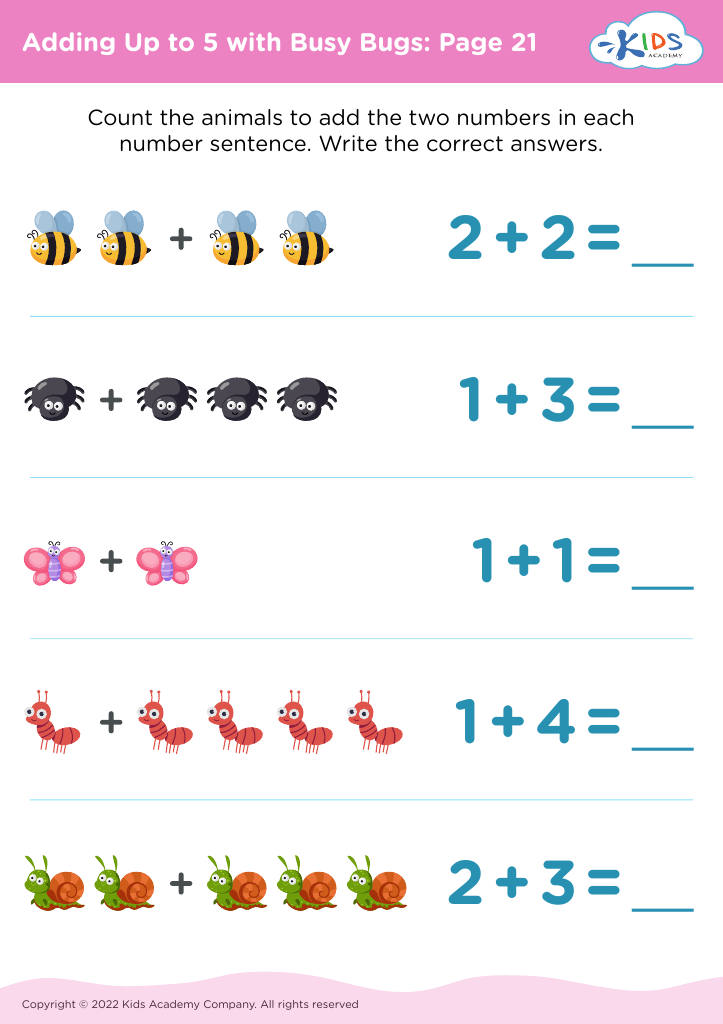
Adding Up to 5 with Busy Bugs: Page 21
Worksheet
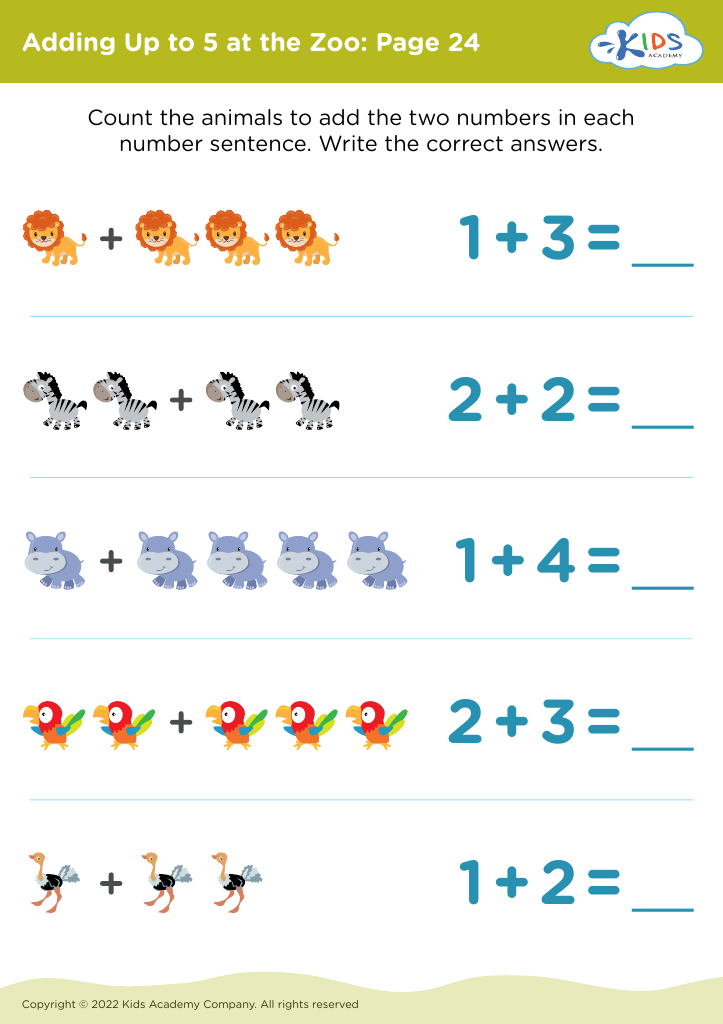
Adding Up to 5 at the Zoo: Page 24
Worksheet
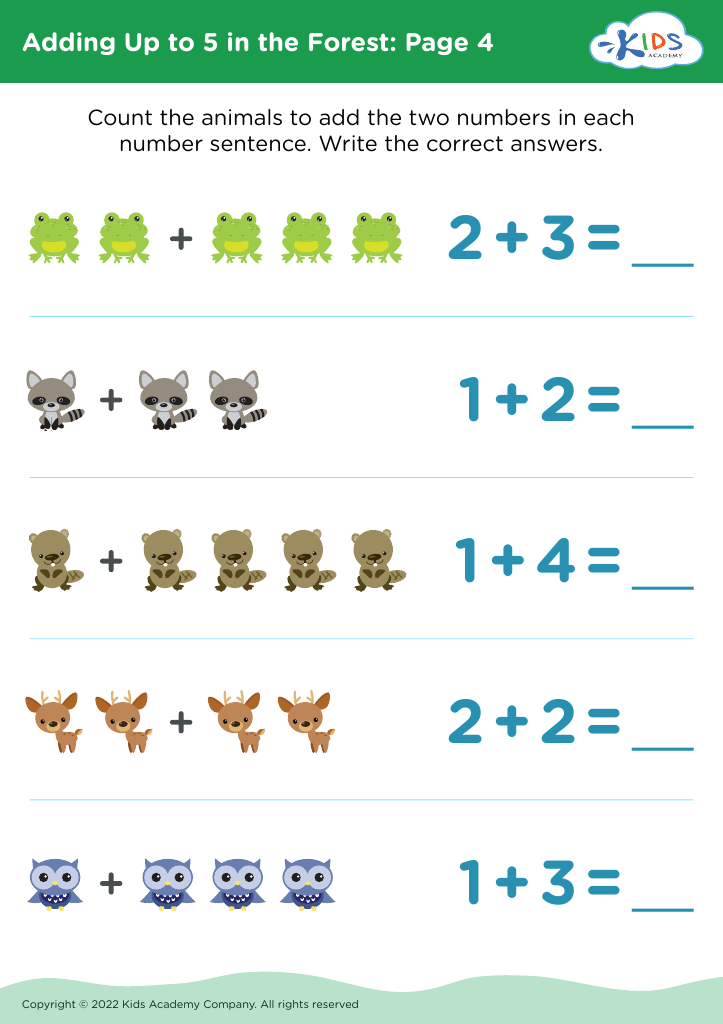
Adding Up to 5 in the Forest: Page 4
Worksheet
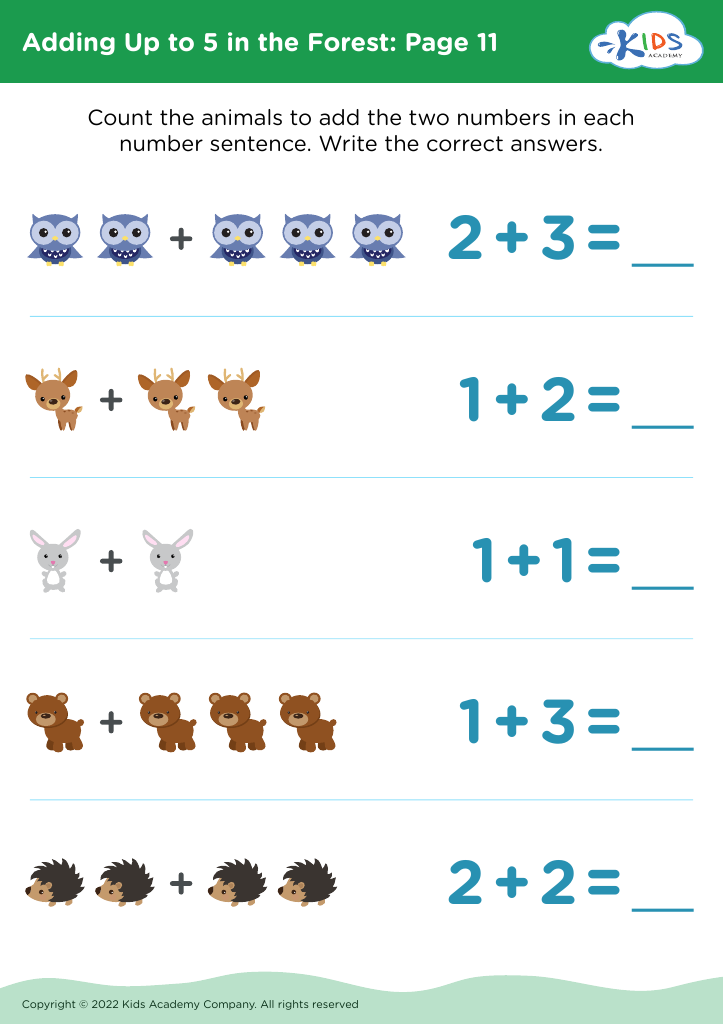
Adding Up to 5 in the Forest: Page 11
Worksheet
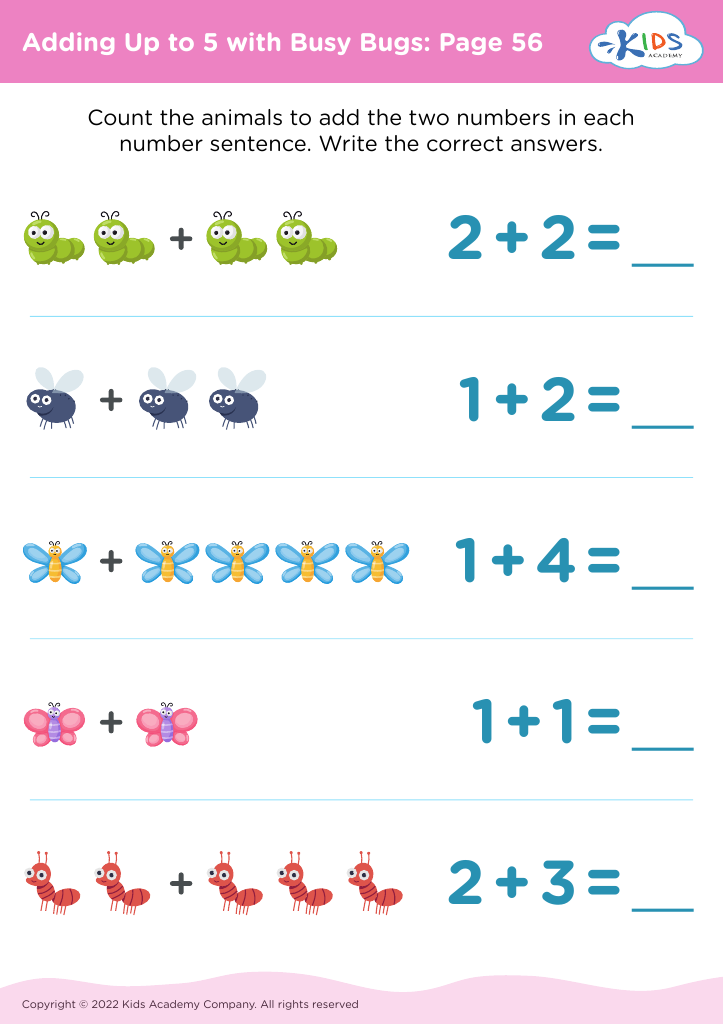
Adding Up to 5 with Busy Bugs: Page 56
Worksheet
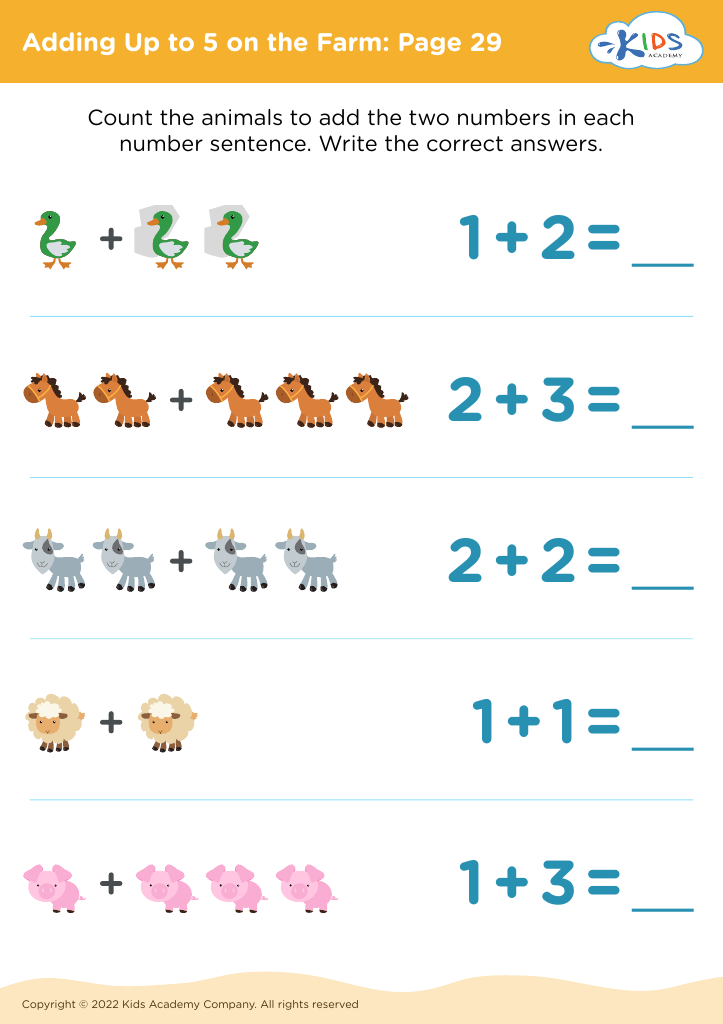
Adding Up to 5 on the Farm: Page 29
Worksheet
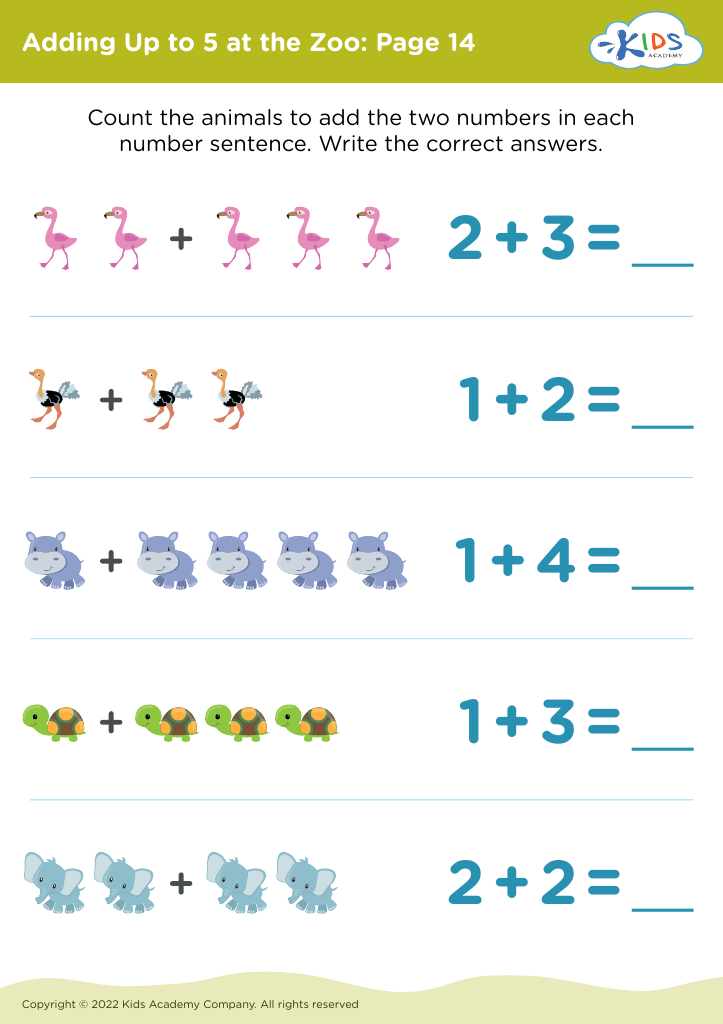
Adding Up to 5 at the Zoo: Page 14
Worksheet
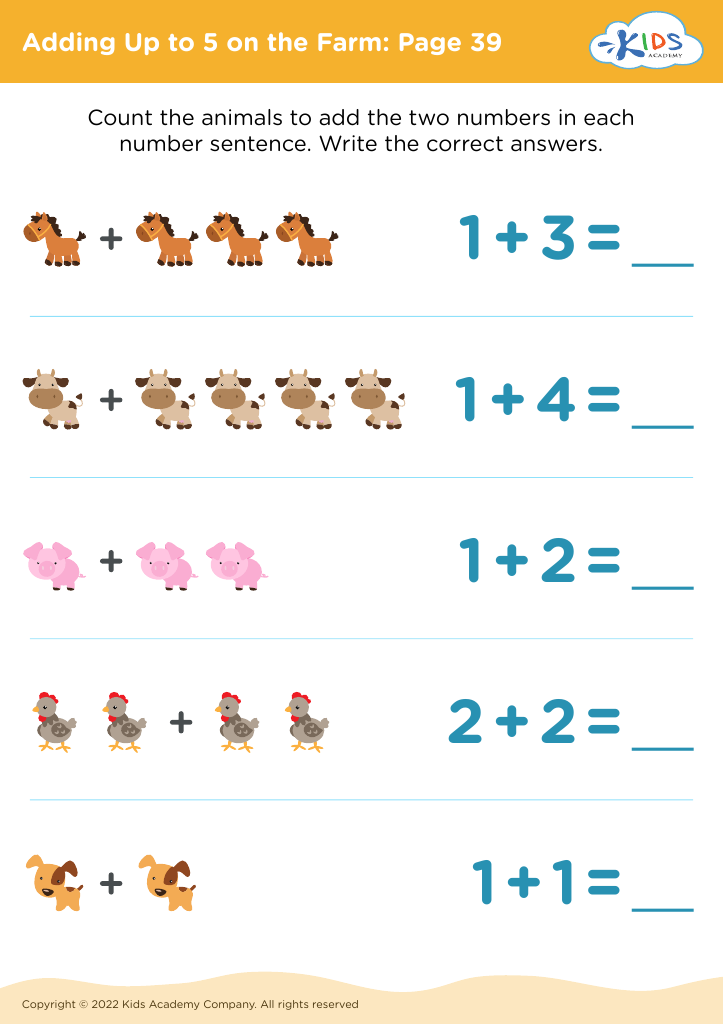
Adding Up to 5 on the Farm: Page 39
Worksheet
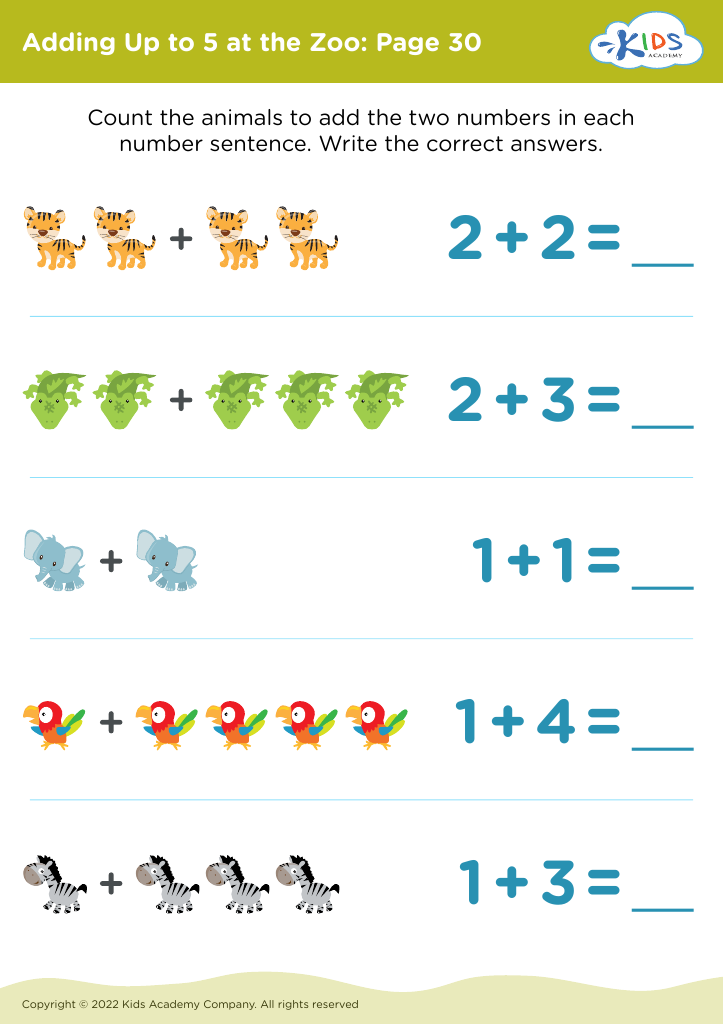
Adding Up to 5 at the Zoo: Page 30
Worksheet
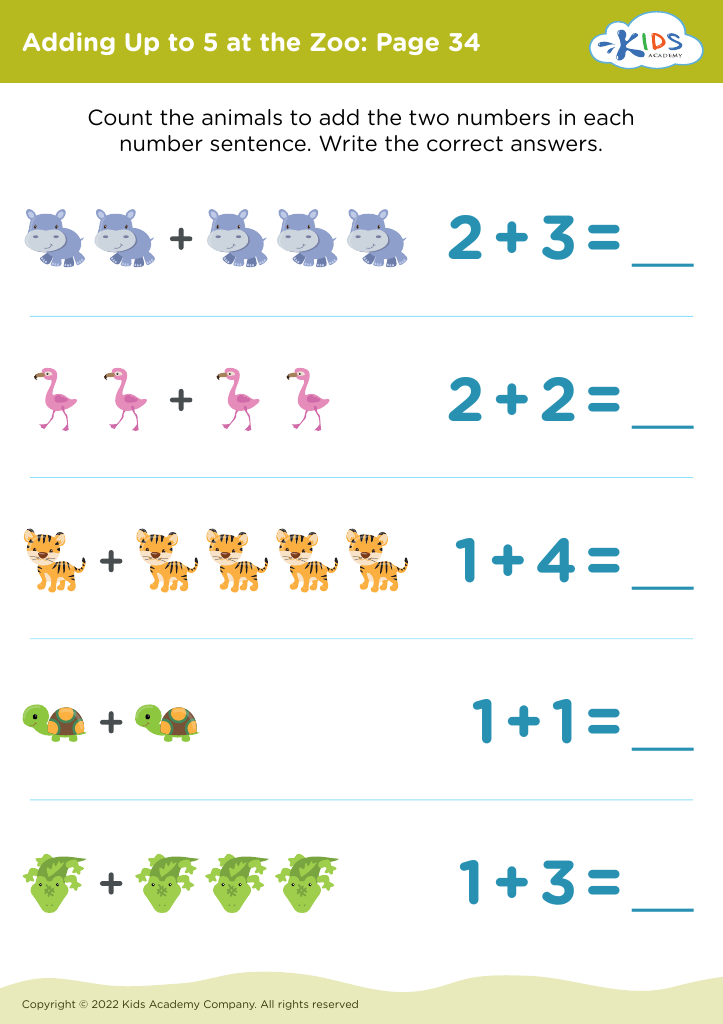
Adding Up to 5 at the Zoo: Page 34
Worksheet
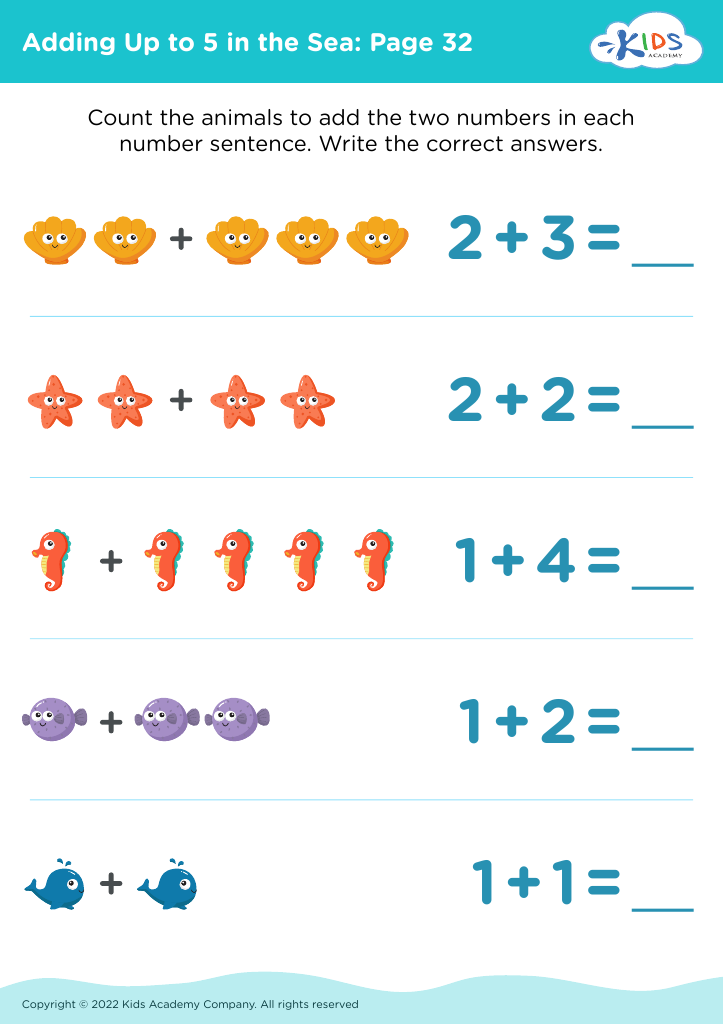
Adding Up to 5 in the Sea: Page 32
Worksheet
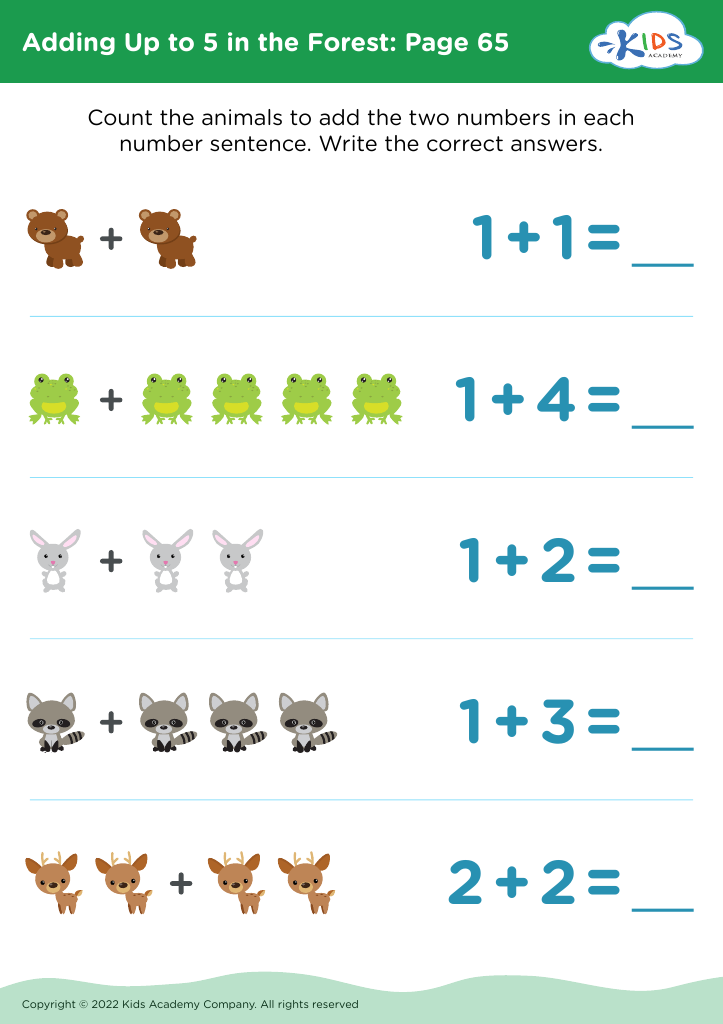
Adding Up to 5 in the Forest: Page 65
Worksheet
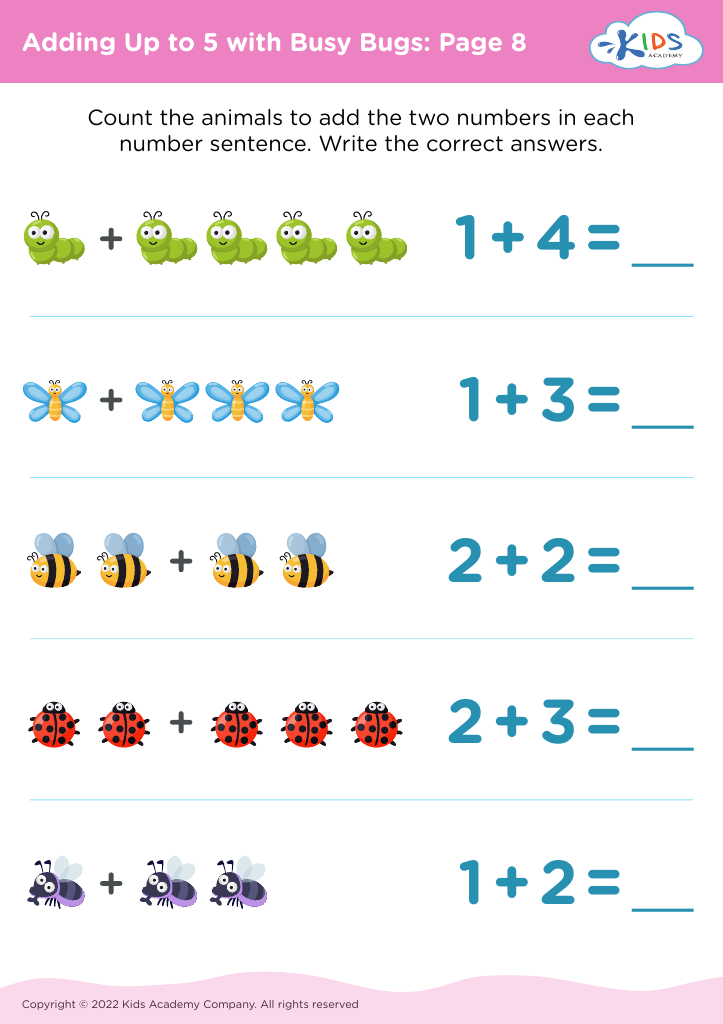
Adding Up to 5 with Busy Bugs: Page 8
Worksheet
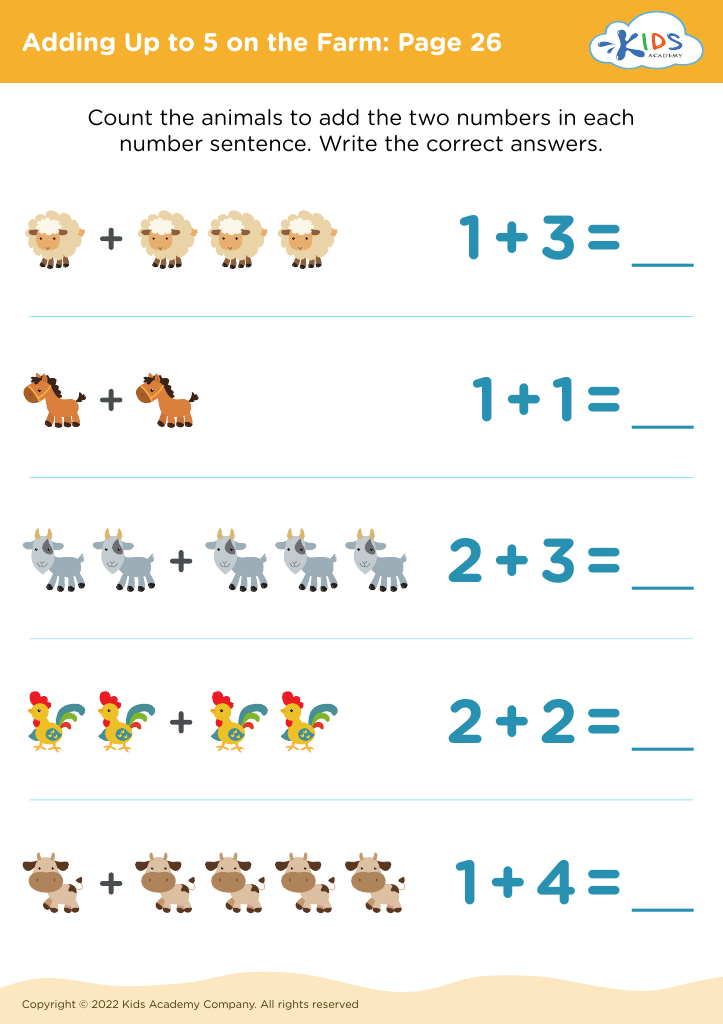
Adding Up to 5 on the Farm: Page 26
Worksheet
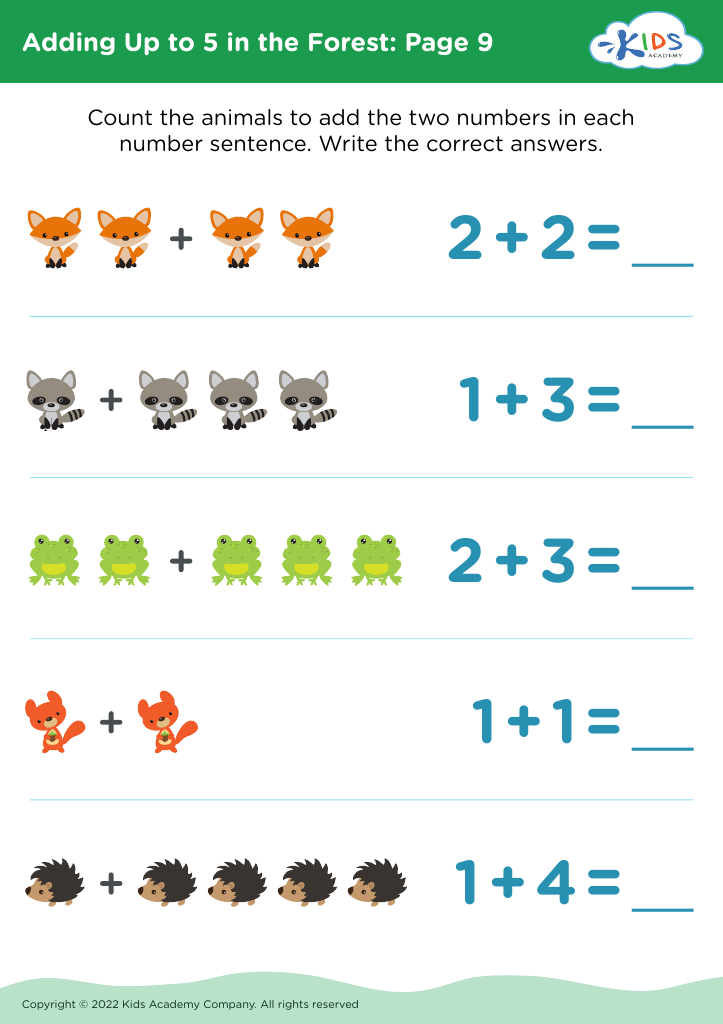
Adding Up to 5 in the Forest: Page 9
Worksheet
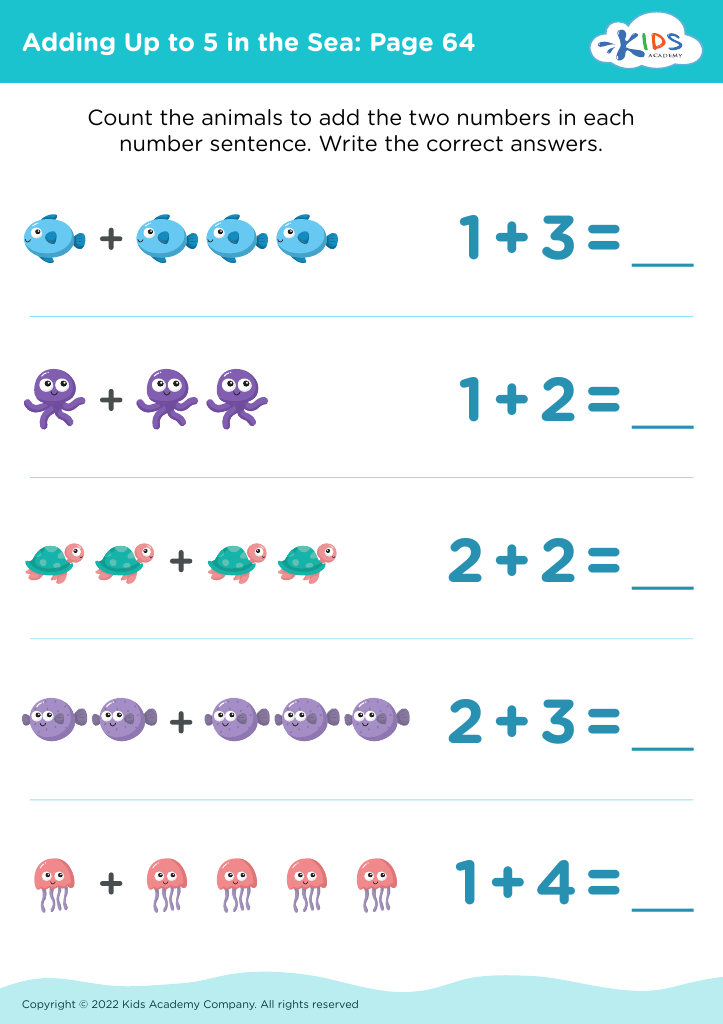
Adding Up to 5 in the Sea: Page 64
Worksheet
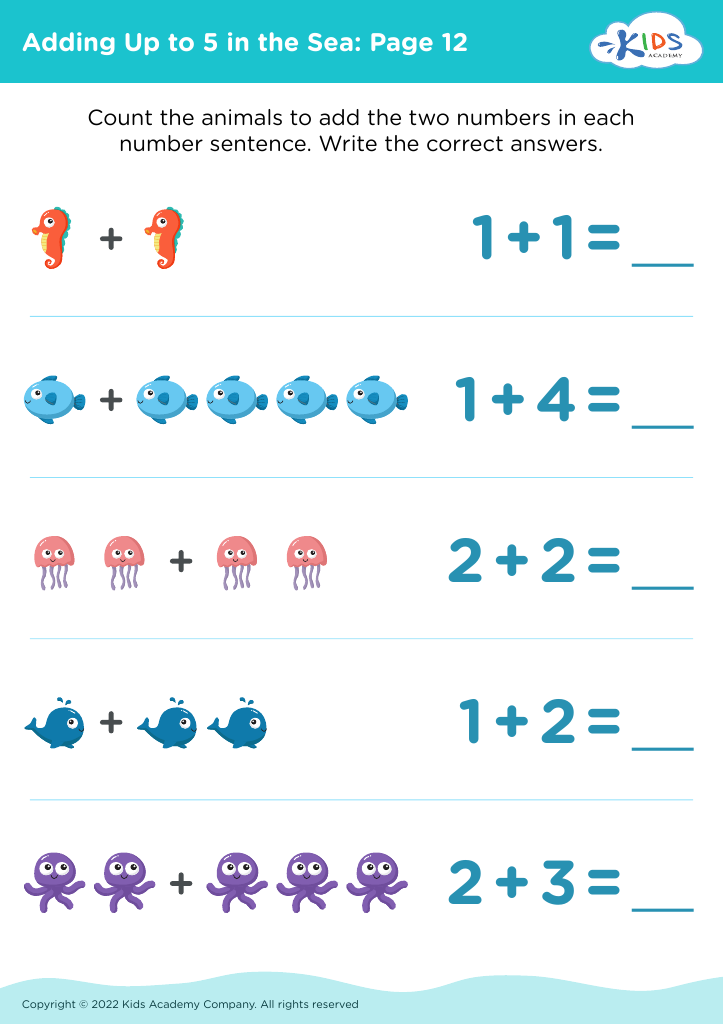
Adding Up to 5 in the Sea: Page 12
Worksheet
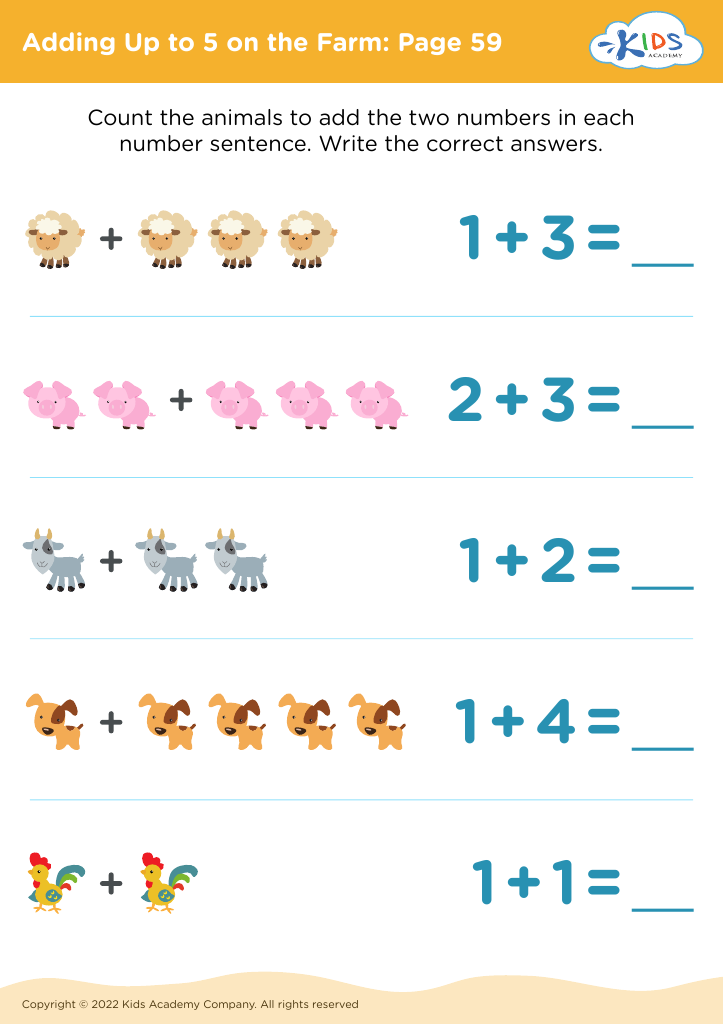
Adding Up to 5 on the Farm: Page 59
Worksheet
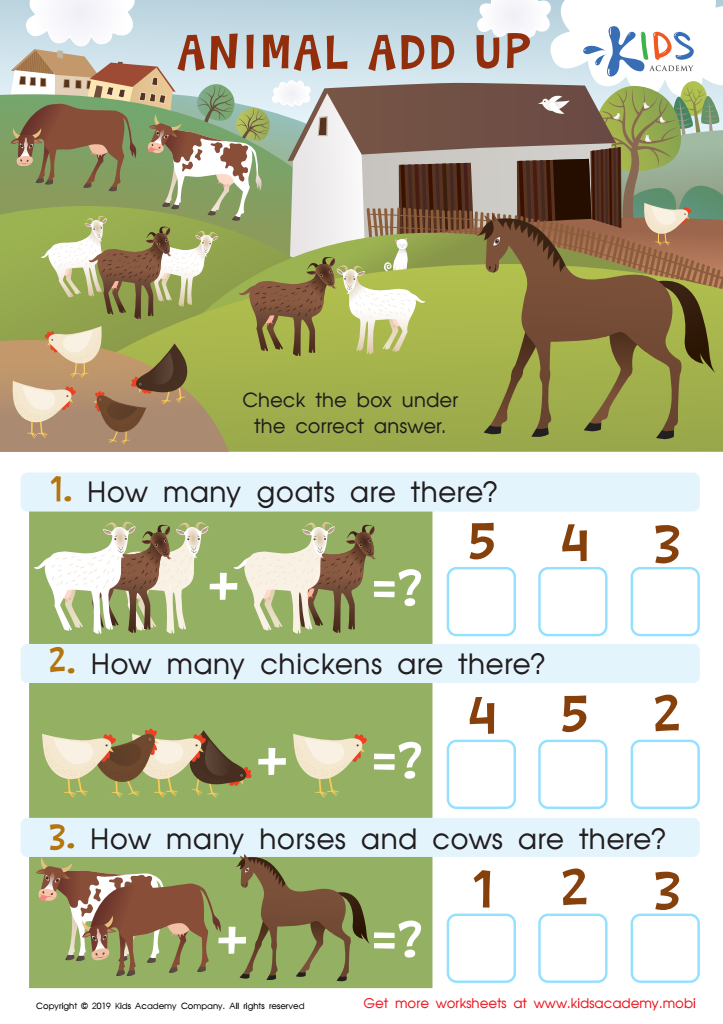
Animal Add Up Worksheet

Animal Add Up Worksheet

Animals are fun to observe and interact with. They can be seen at the zoo, parks, farms and in homes with pets. This worksheet helps kids identify animals, and build addition skills. Look at the picture with them and help name each animal. After that, add the animals up and check the box for the correct answer. 80 words.
Animal Add Up Worksheet
Worksheet
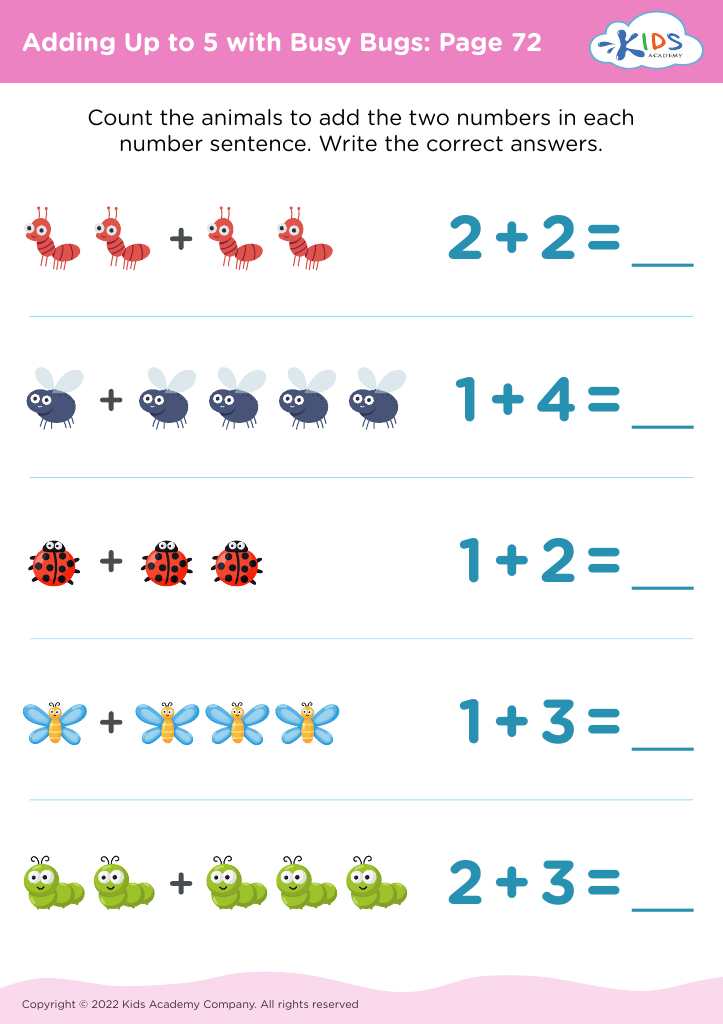
Adding Up to 5 with Busy Bugs: Page 72
Worksheet


Counting practice in addition and subtraction for children aged 3-5 is crucial for several reasons. First, it lays the foundation for essential math skills that children will use throughout their academic journey. Early exposure to counting helps enhance number recognition, which is key for developing mathematical understanding.

Second, engaging in counting activities fosters cognitive development. Children learn to group objects, recognize patterns, and understand quantities. These skills are not only important for math but also enhance critical thinking and problem-solving abilities.

Additionally, counting practice promotes language development. As parents and teachers engage with children in counting games and activities, they introduce mathematical vocabulary, strengthening communication skills and comprehension.

Moreover, incorporating these practices creates opportunities for social interaction, whether through structured playdates or classroom activities. Children learn to work together, share, and explain their thinking, building their social and emotional skills.

Ultimately, consistent and enjoyable counting practice in addition and subtraction promotes lifelong learning habits, helps develop a positive attitude toward math, and prepares children for future academic challenges. Thus, parents and teachers should prioritize these early math experiences, recognizing the significant impact they have on children's overall development.