Check out this FREE Trial Lesson on Addition for age 3-5!

Short and Long Vowel Sort

Favorites
With answer key
Interactive
  • 3-5
  • Basic Addition Skills
  • Addition
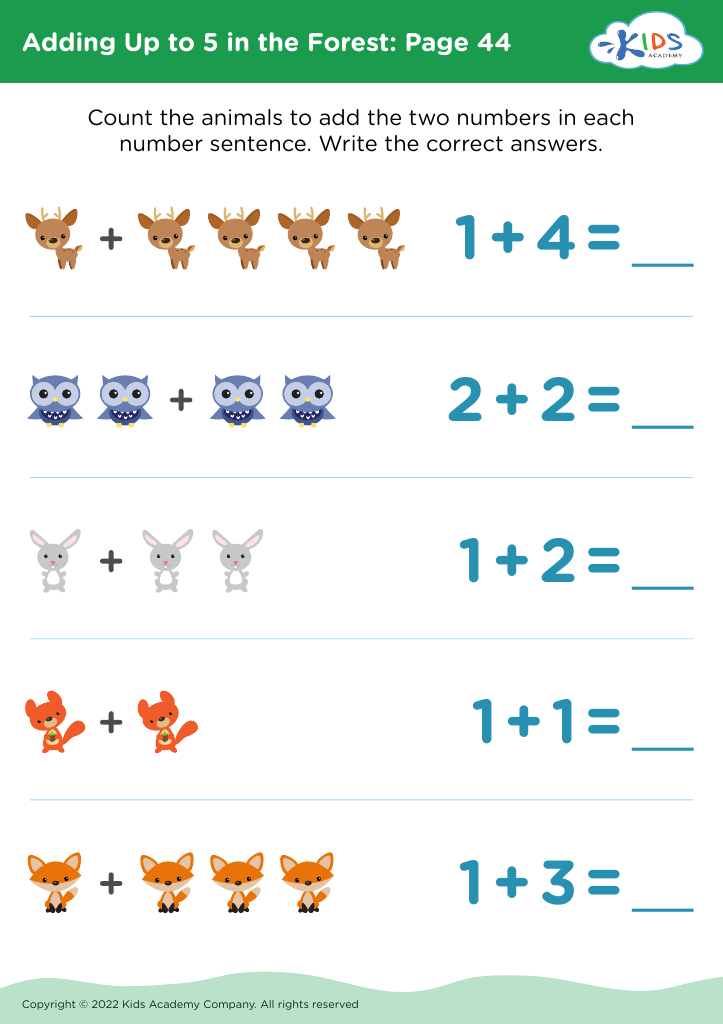
Adding Up to 5 in the Forest: Page 44
Worksheet
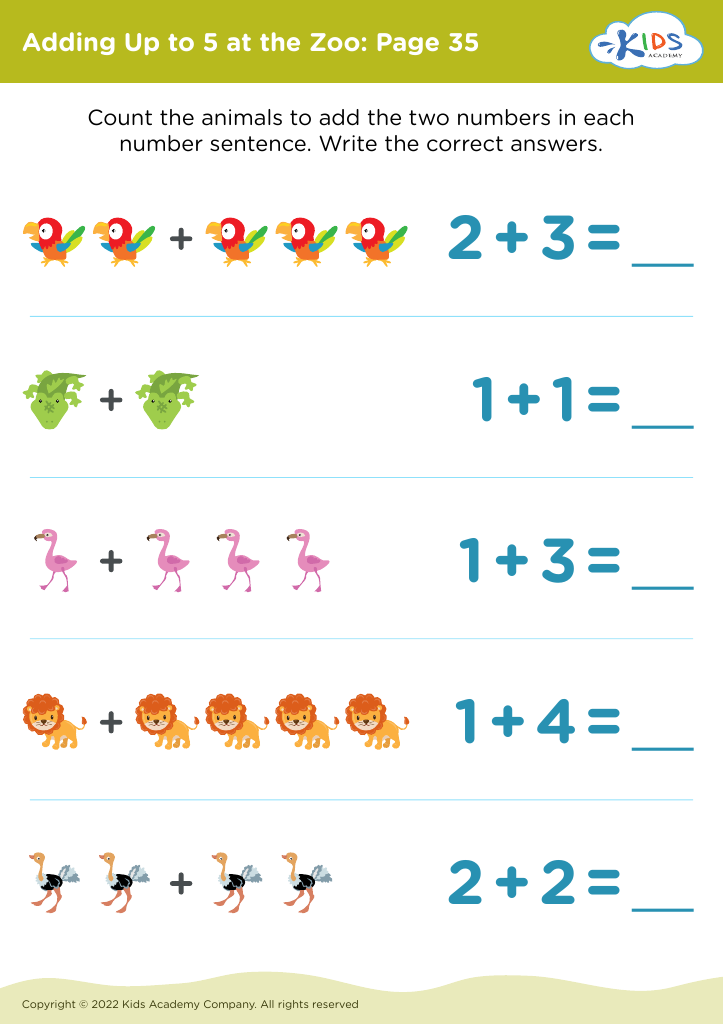
Adding Up to 5 at the Zoo: Page 35
Worksheet
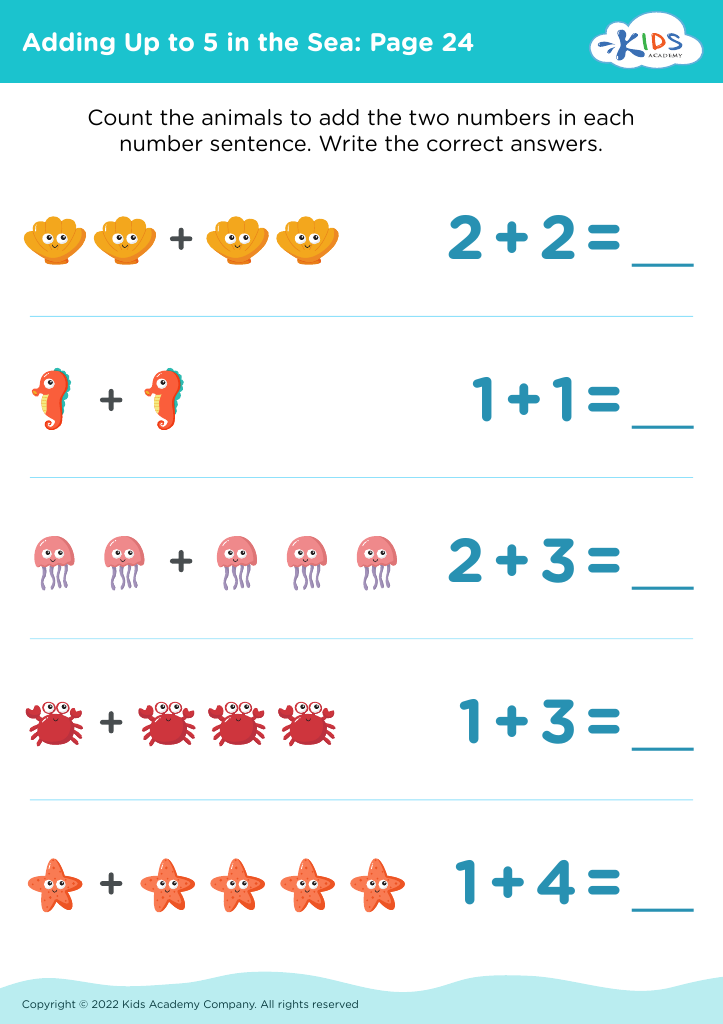
Adding Up to 5 in the Sea: Page 24
Worksheet
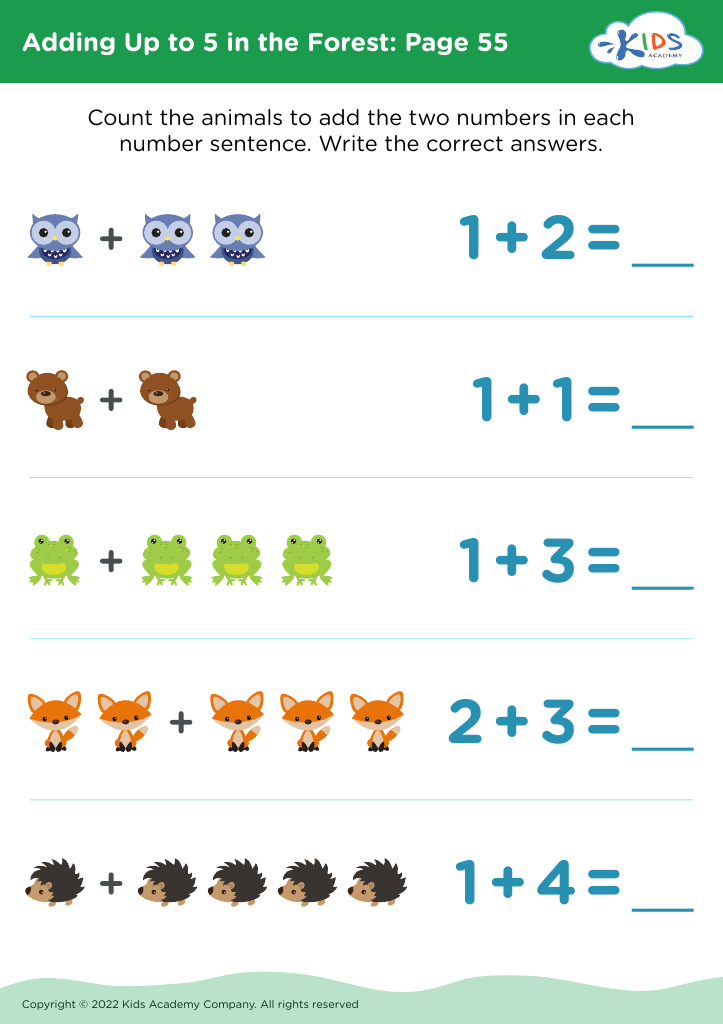
Adding Up to 5 in the Forest: Page 55
Worksheet
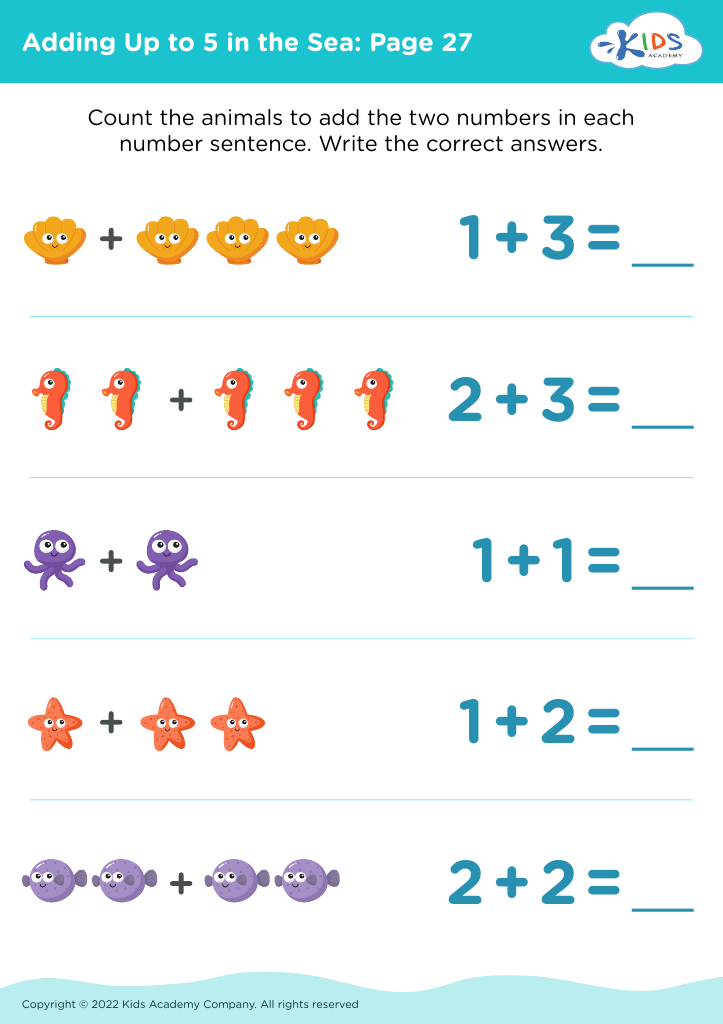
Adding Up to 5 in the Sea: Page 27
Worksheet
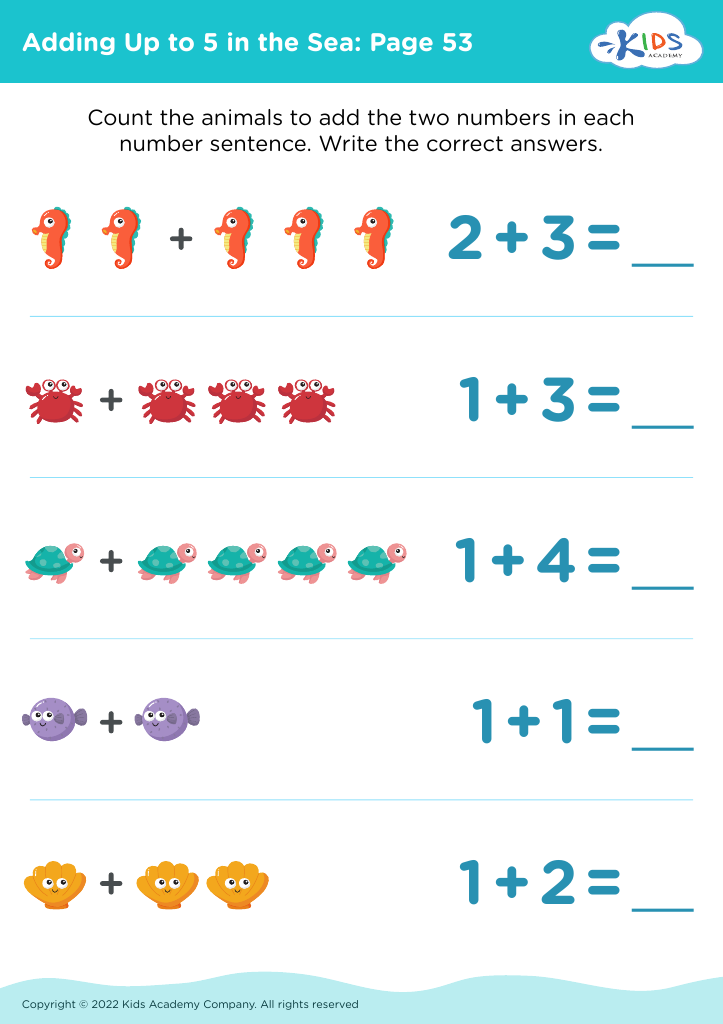
Adding Up to 5 in the Sea: Page 53
Worksheet
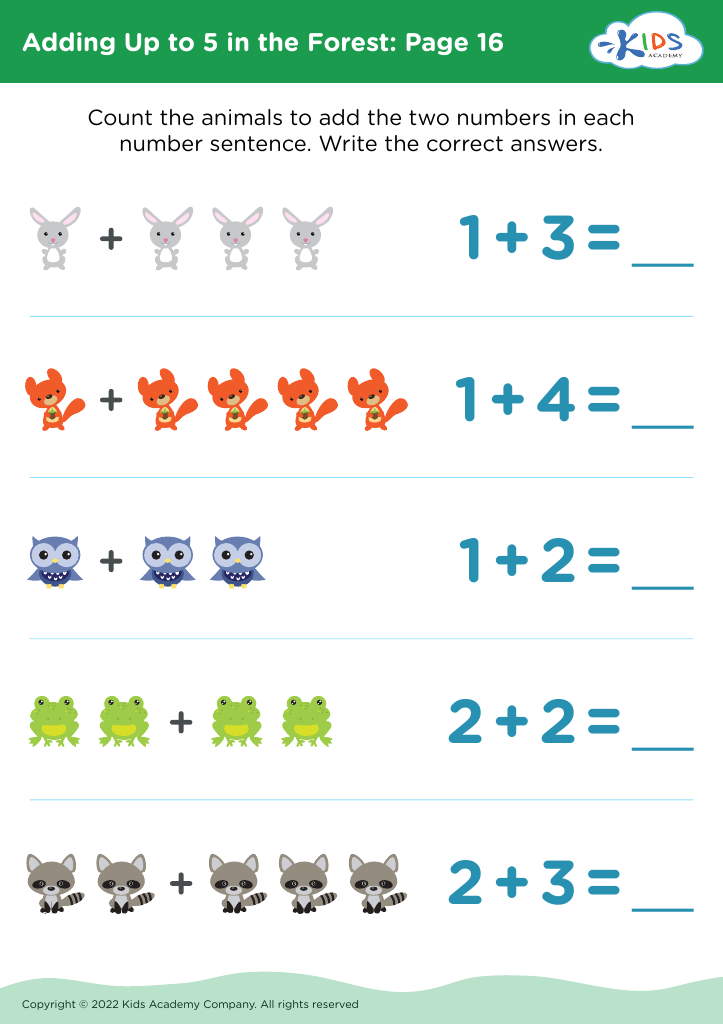
Adding Up to 5 in the Forest: Page 16
Worksheet
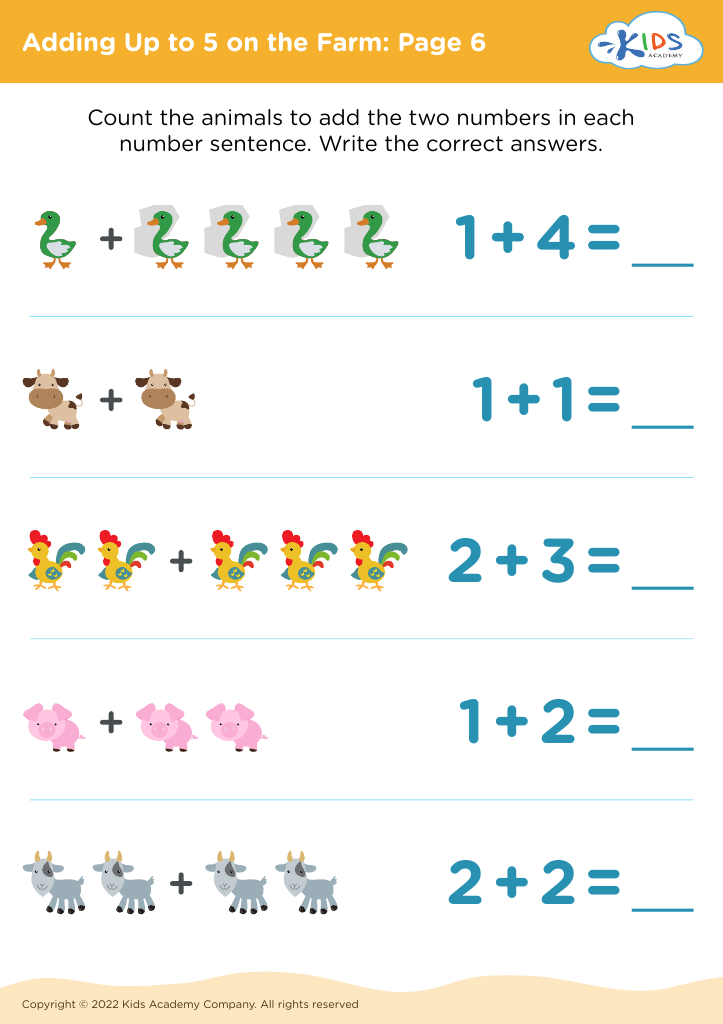
Adding Up to 5 on the Farm: Page 6
Worksheet
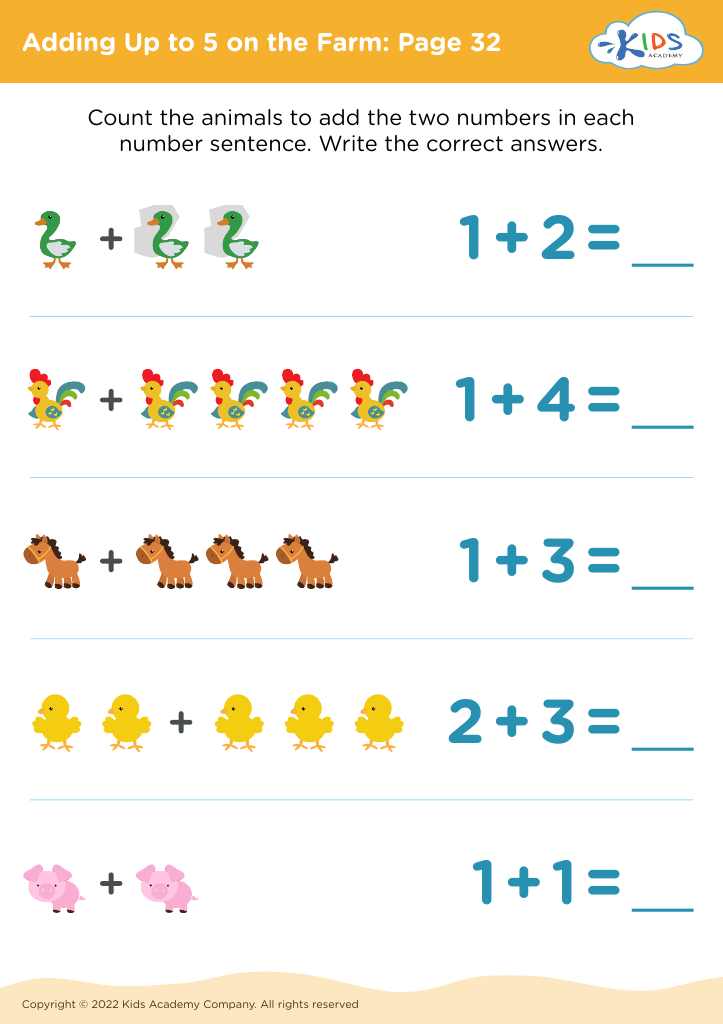
Adding Up to 5 on the Farm: Page 32
Worksheet
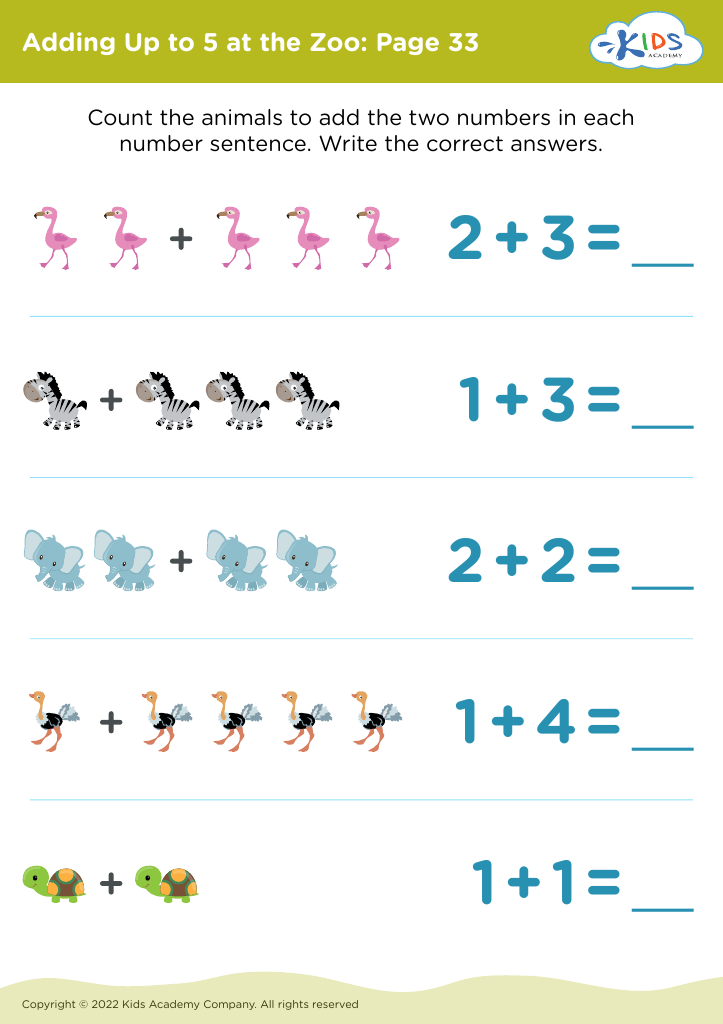
Adding Up to 5 at the Zoo: Page 33
Worksheet
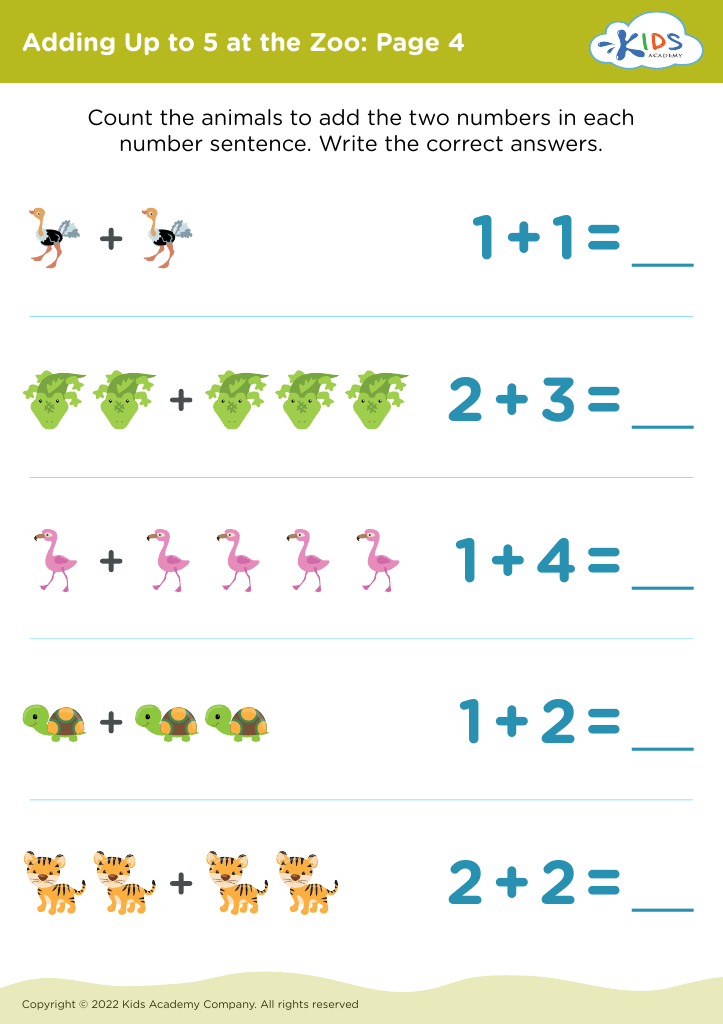
Adding Up to 5 at the Zoo: Page 4

Adding Up to 5 at the Zoo: Page 4

Adding Up to 5 at the Zoo: Page 4
Worksheet
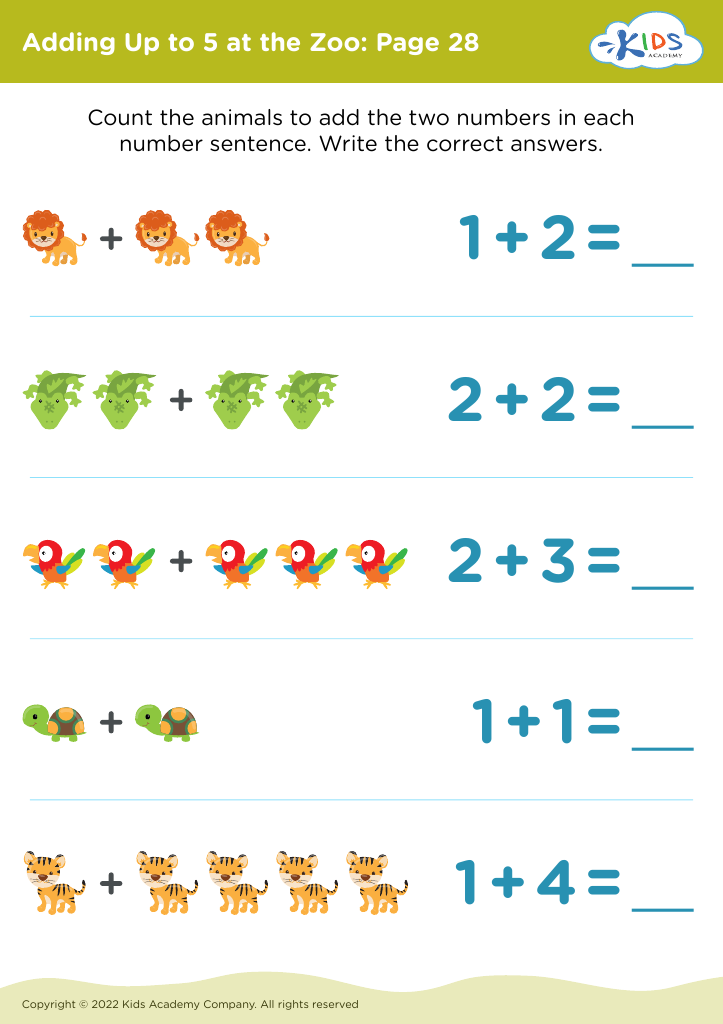
Adding Up to 5 at the Zoo: Page 28
Worksheet
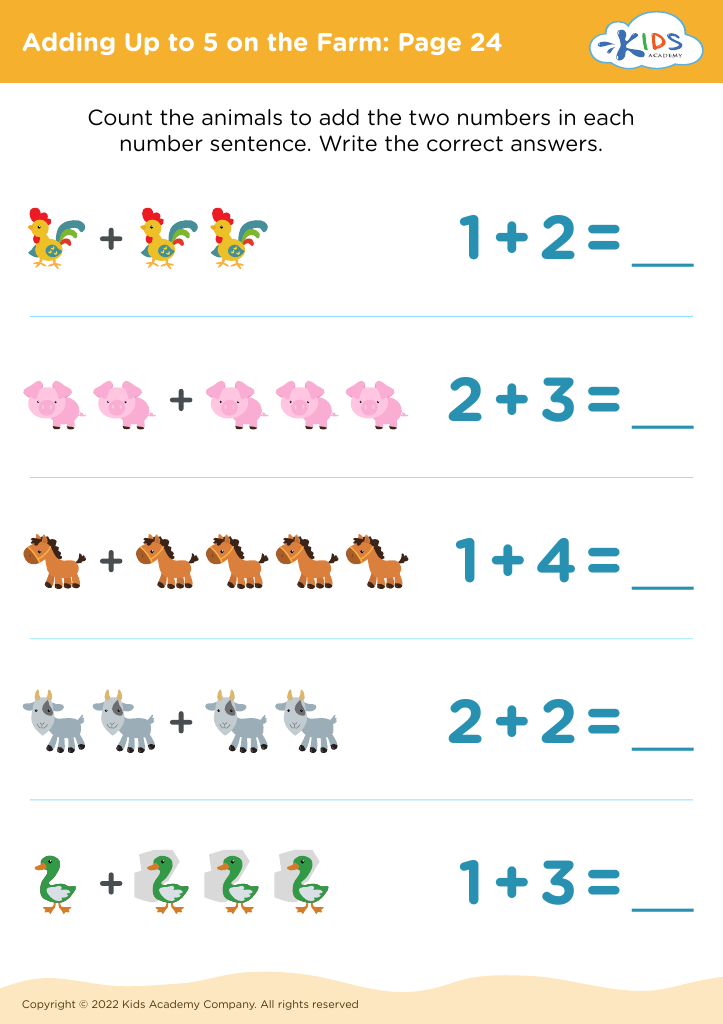
Adding Up to 5 on the Farm: Page 24
Worksheet
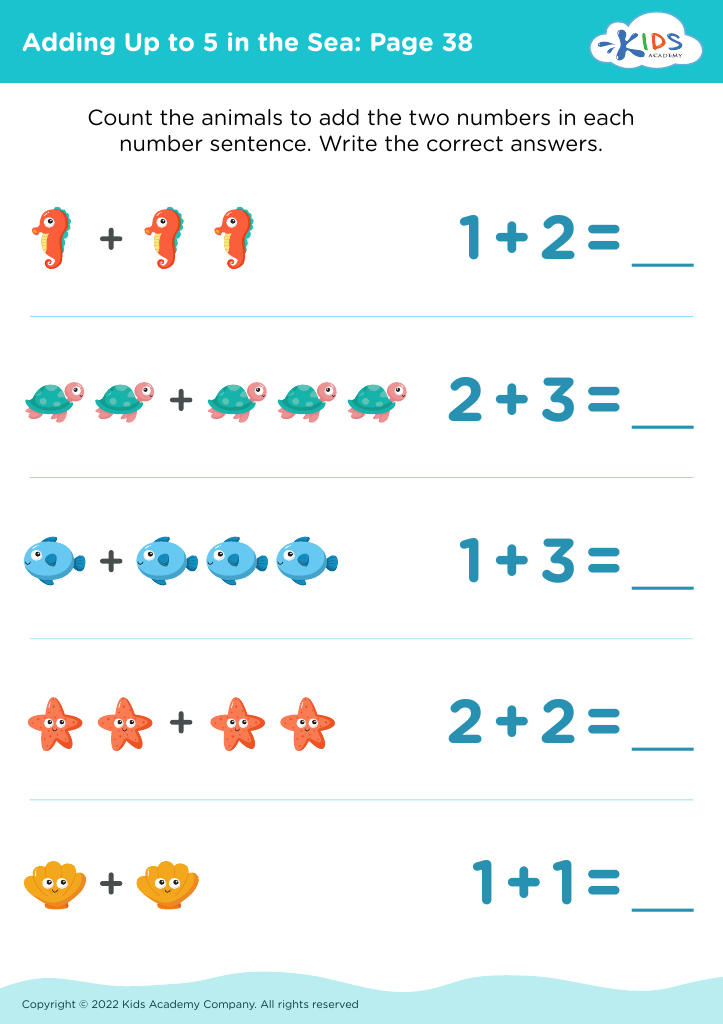
Adding Up to 5 in the Sea: Page 38
Worksheet
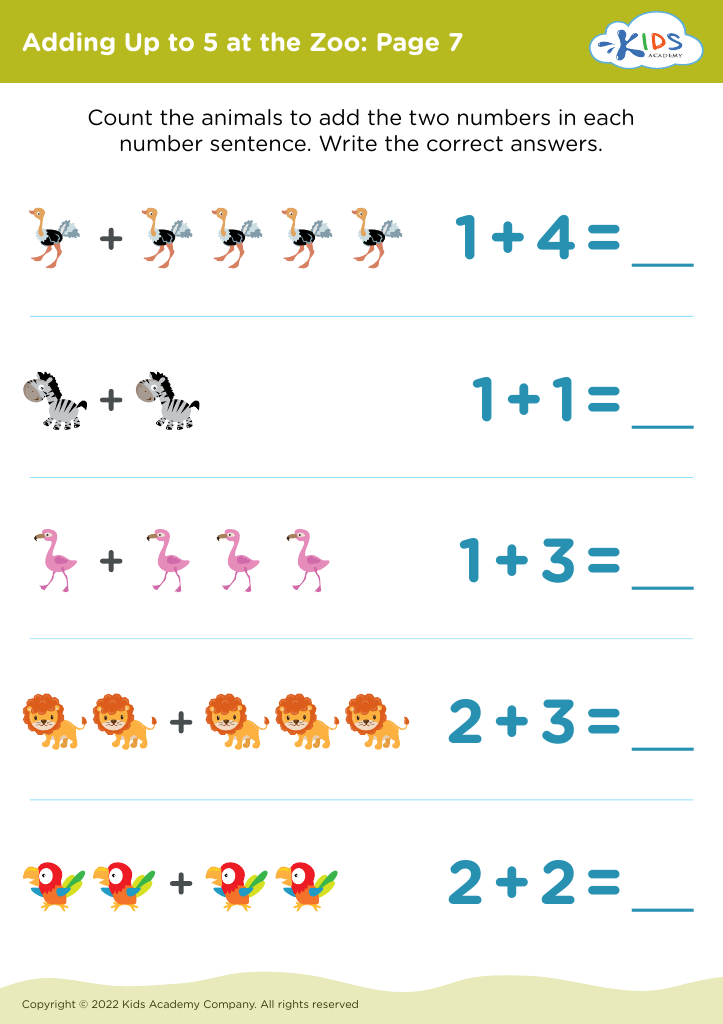
Adding Up to 5 at the Zoo: Page 7

Adding Up to 5 at the Zoo: Page 7

Adding Up to 5 at the Zoo: Page 7
Worksheet
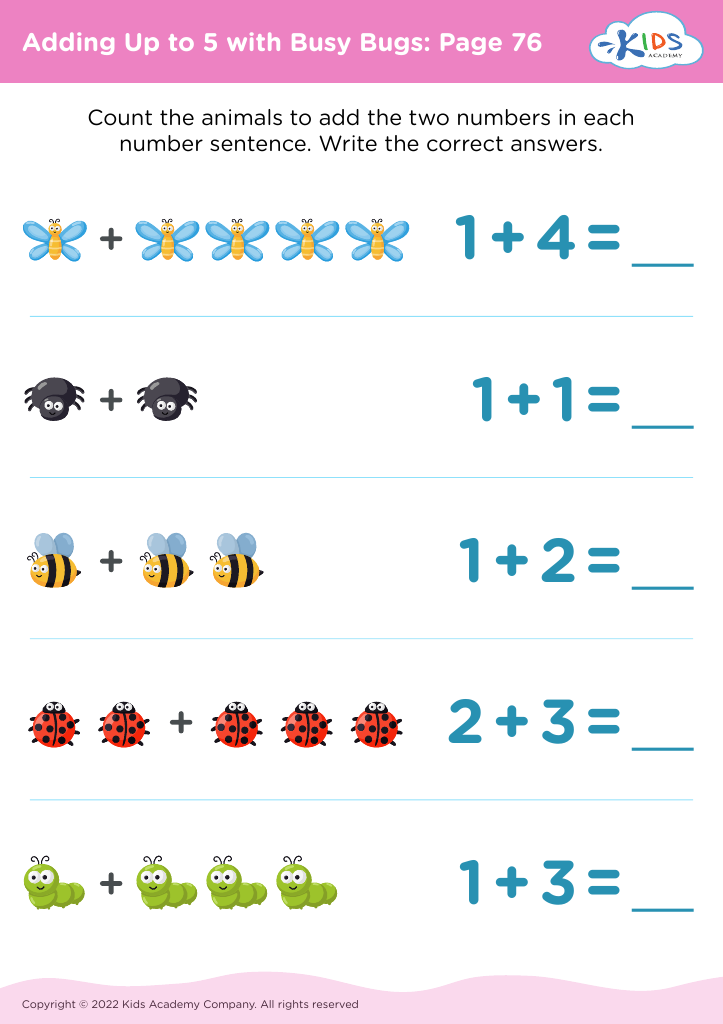
Adding Up to 5 with Busy Bugs: Page 76
Worksheet
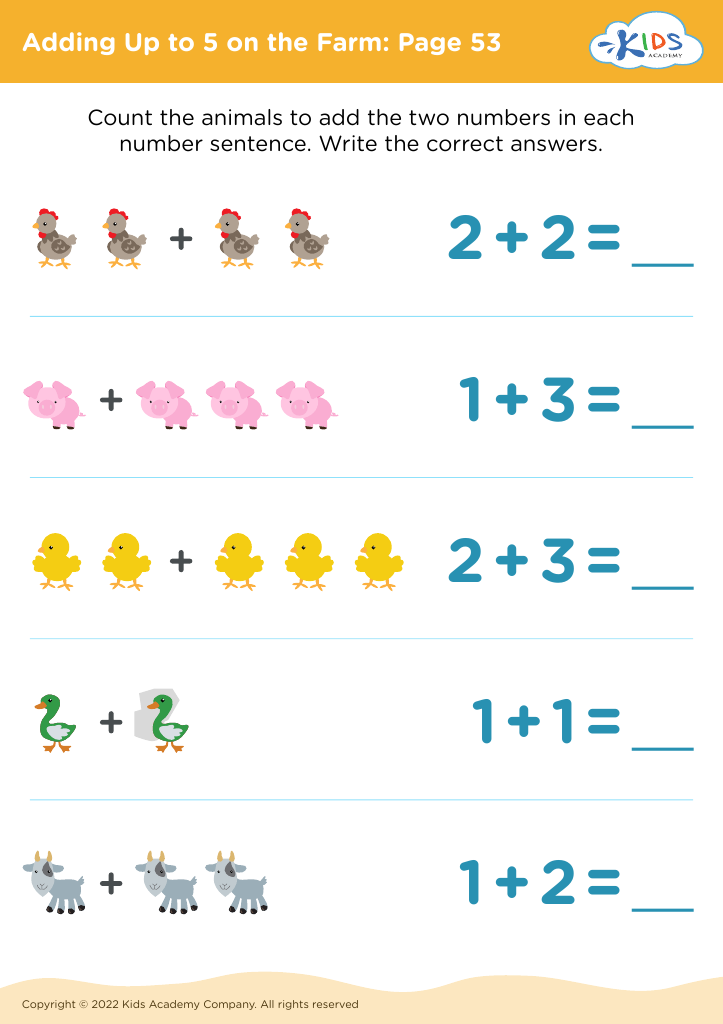
Adding Up to 5 on the Farm: Page 53
Worksheet
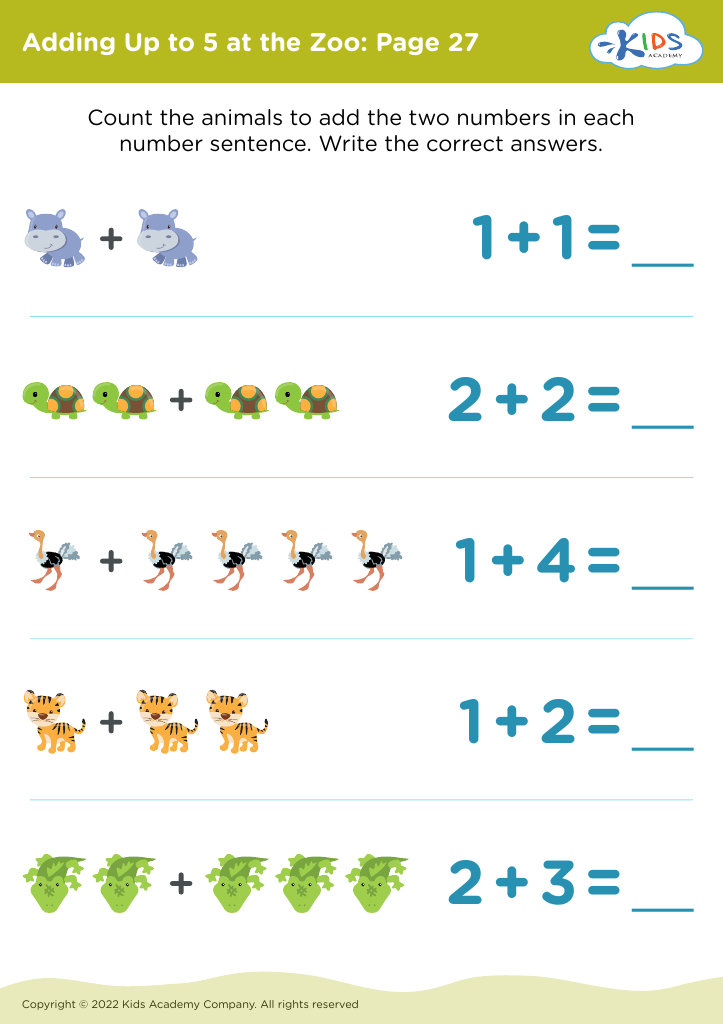
Adding Up to 5 at the Zoo: Page 27
Worksheet
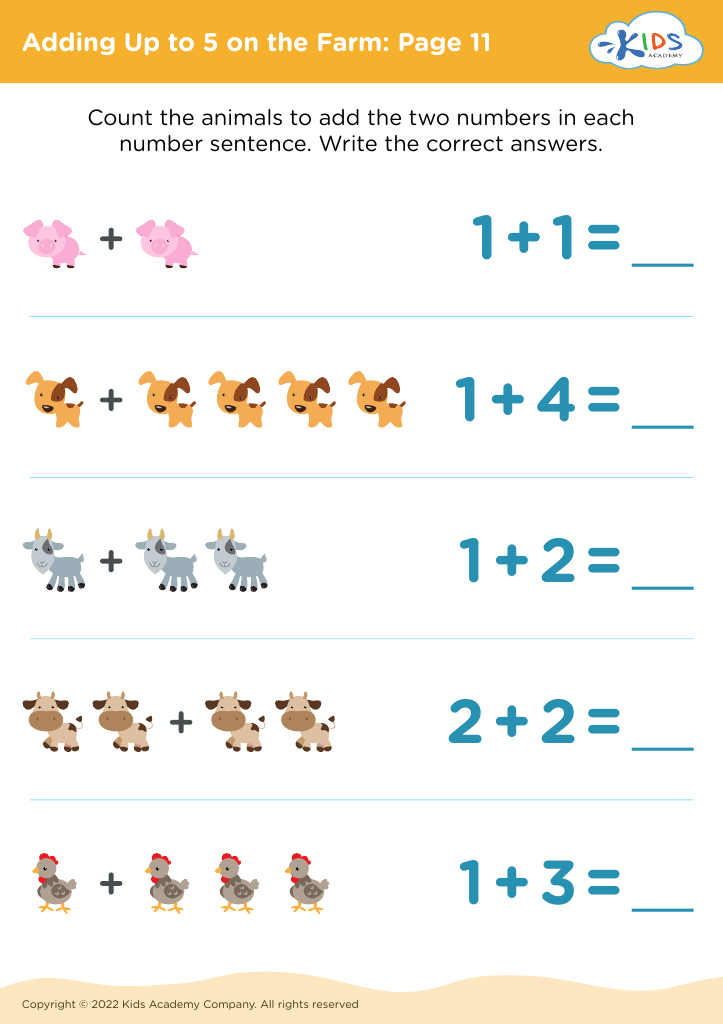
Adding Up to 5 on the Farm: Page 11
Worksheet
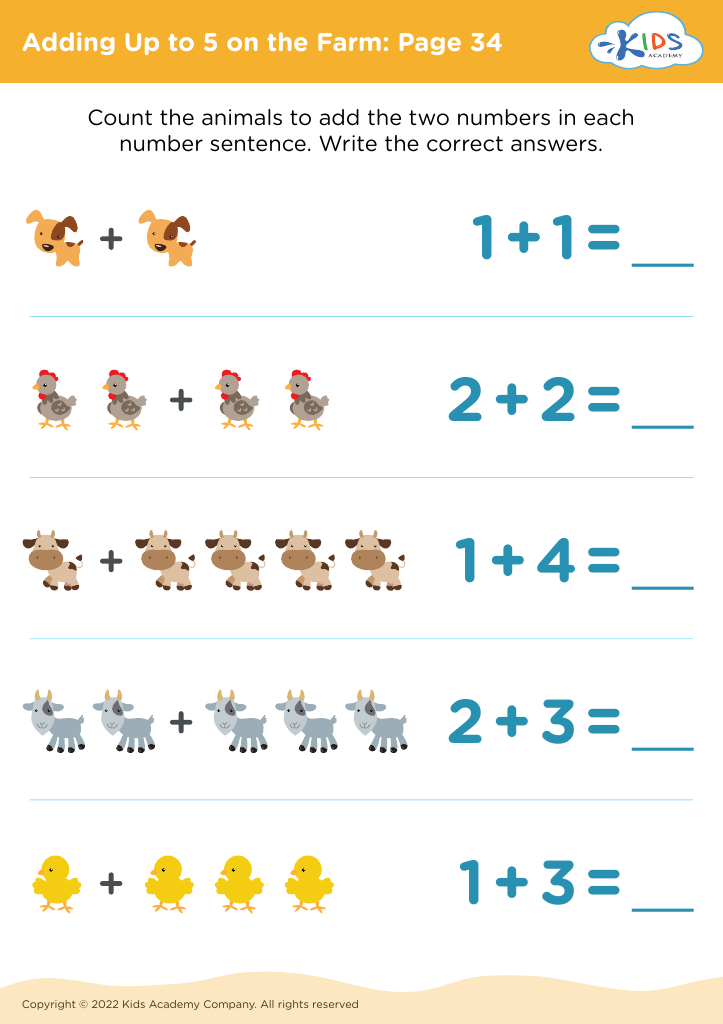
Adding Up to 5 on the Farm: Page 34
Worksheet
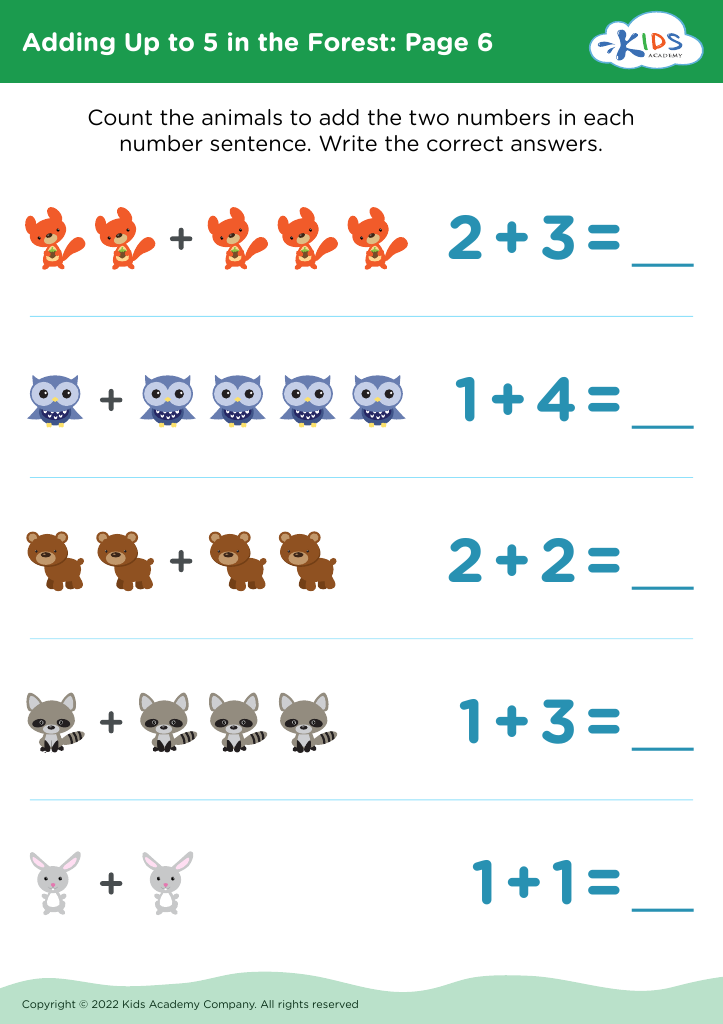
Adding Up to 5 in the Forest: Page 6
Worksheet
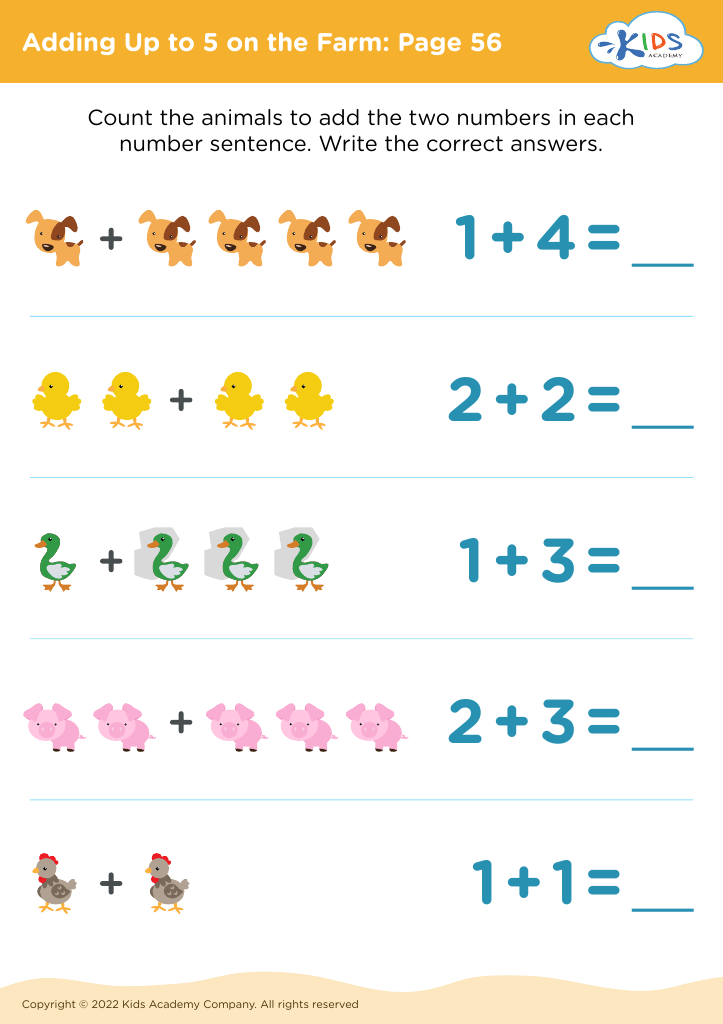
Adding Up to 5 on the Farm: Page 56
Worksheet
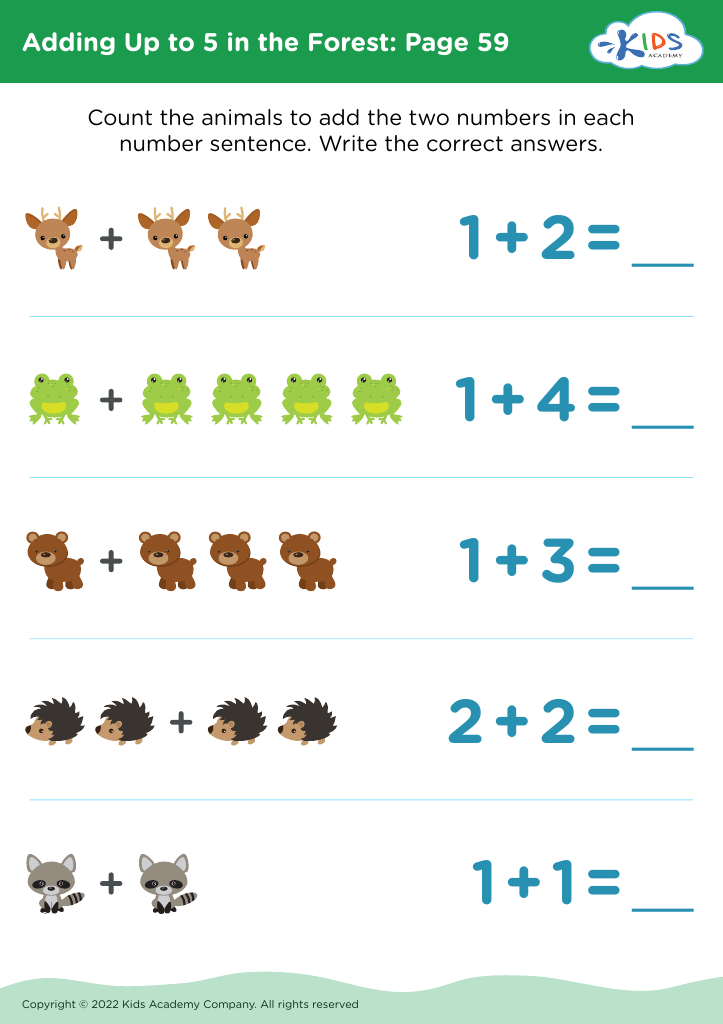
Adding Up to 5 in the Forest: Page 59
Worksheet
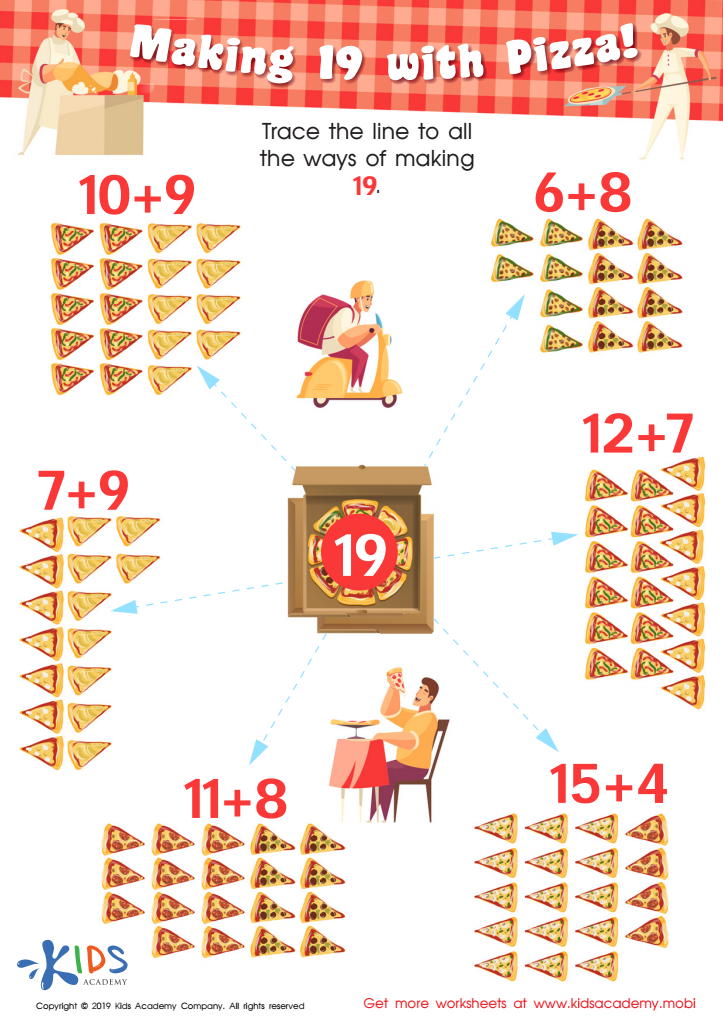
Making 19 with Pizza! Worksheet

Making 19 with Pizza! Worksheet

Who loves pizza? Your kids do! Next time you need to teach them math, make it fun by combining it with something they enjoy. This worksheet uses a pizza-themed problem to help them practice solving equations. Have them trace the line to figure out how to make 19. It's a great way to make learning math fun!
Making 19 with Pizza! Worksheet
Worksheet


Basic addition skills are fundamental building blocks for young children, especially those aged 3-5. At this developmental stage, their brains are highly receptive to new information, making it an ideal time to introduce foundational math concepts. Understanding basic addition helps to form the basis for more advanced mathematical operations later on.

Firstly, early proficiency in addition promotes cognitive development. It encourages logical thinking, problem-solving skills, and spatial awareness. These abilities are not only crucial for math but also for reading, writing, and everyday decision-making.

Secondly, mastering basic addition boosts a child's confidence and enthusiasm for learning. Early success in math can make them more likely to approach future academic challenges with a positive attitude. This confidence can open doors to a wide array of educational and career opportunities down the line.

Lastly, math is interwoven into our daily lives, from sorting and counting objects to figuring out distances, time, and money. Parents and teachers fostering these early skills prepare children to function more effectively in their everyday environments.

By supporting young children in learning basic addition, parents and teachers lay the groundwork for their continued academic success and practical life competence. This foundational step aids kids in unlocking their full potential, both inside and outside the classroom.