Filters

240 filtered results

Clear all filters
Favorites
With answer key
Interactive

240 filtered results

Difficulty Level

Grade


Check out this FREE Trial Lesson on Addition for age 3-5!

Match Exactly the Same

Favorites
With answer key
Interactive
  • 3-5
  • Counting practice
  • Addition
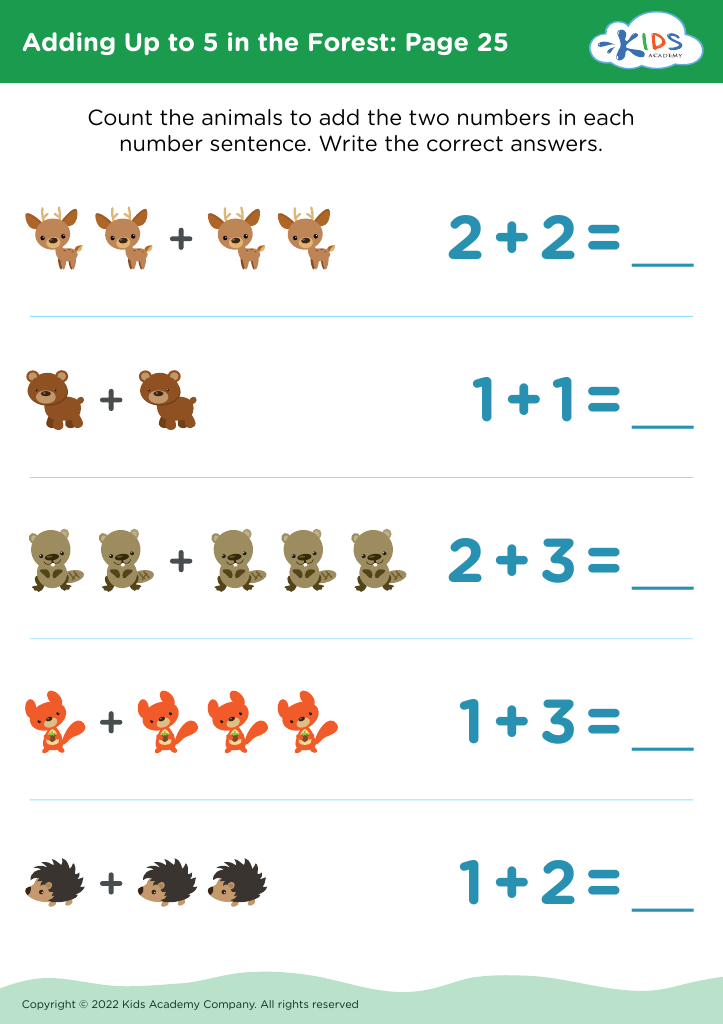
Adding Up to 5 in the Forest: Page 25
Worksheet
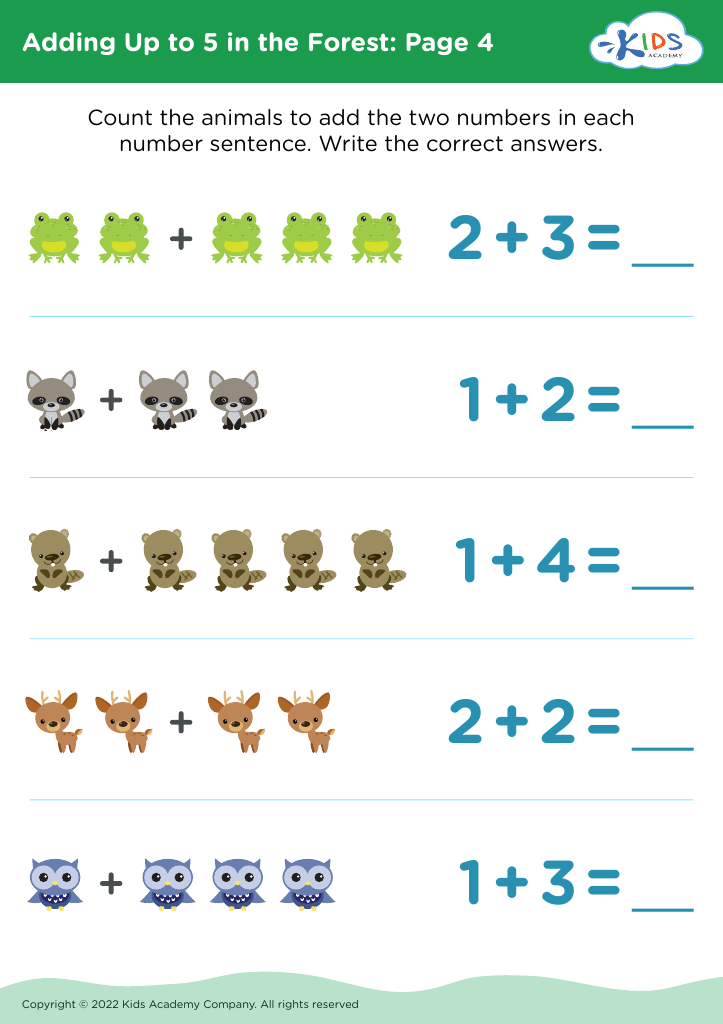
Adding Up to 5 in the Forest: Page 4
Worksheet
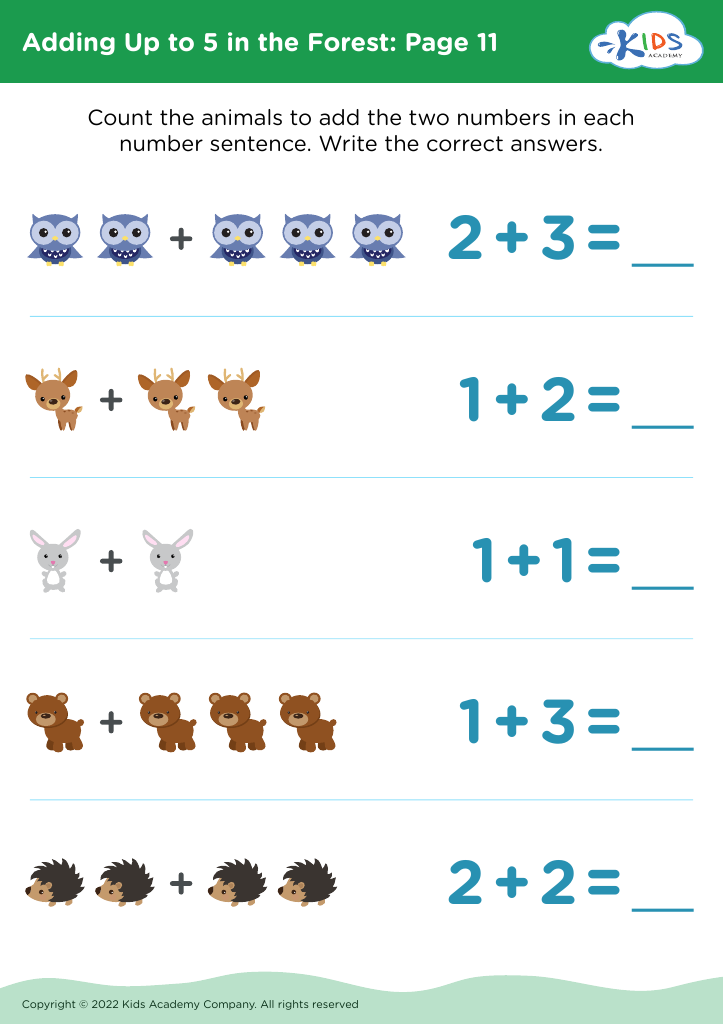
Adding Up to 5 in the Forest: Page 11
Worksheet
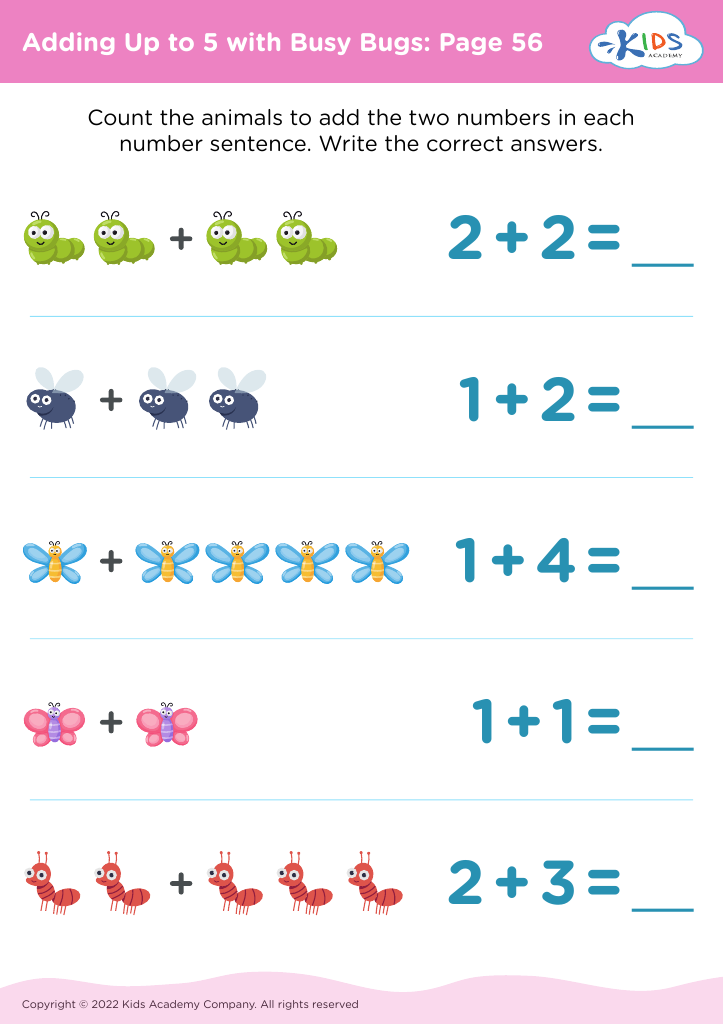
Adding Up to 5 with Busy Bugs: Page 56
Worksheet
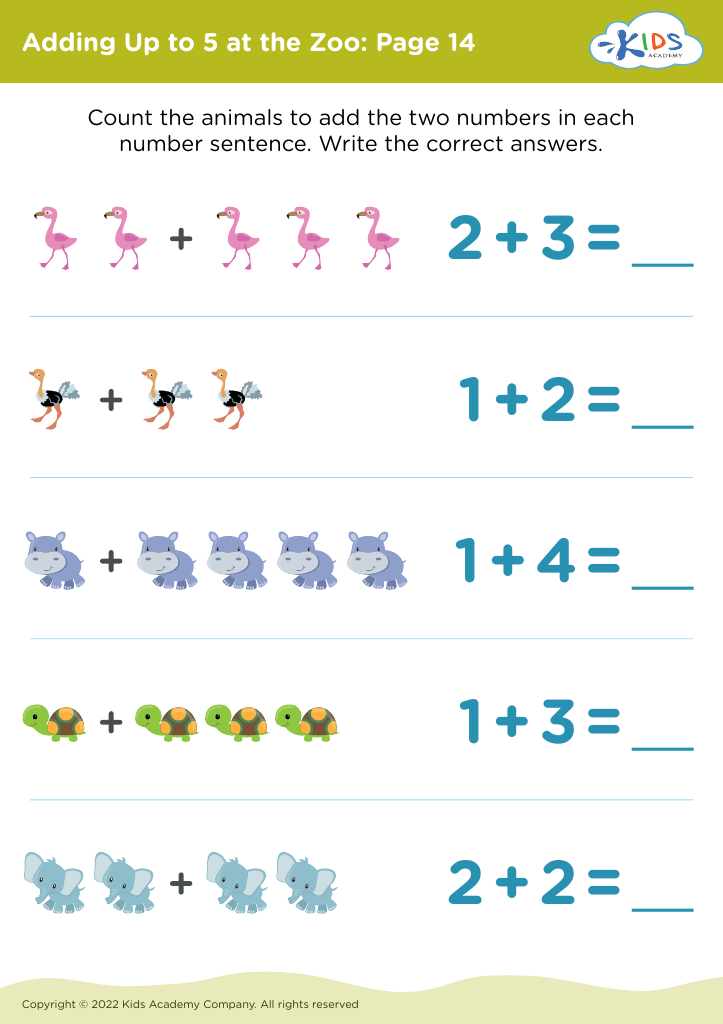
Adding Up to 5 at the Zoo: Page 14
Worksheet
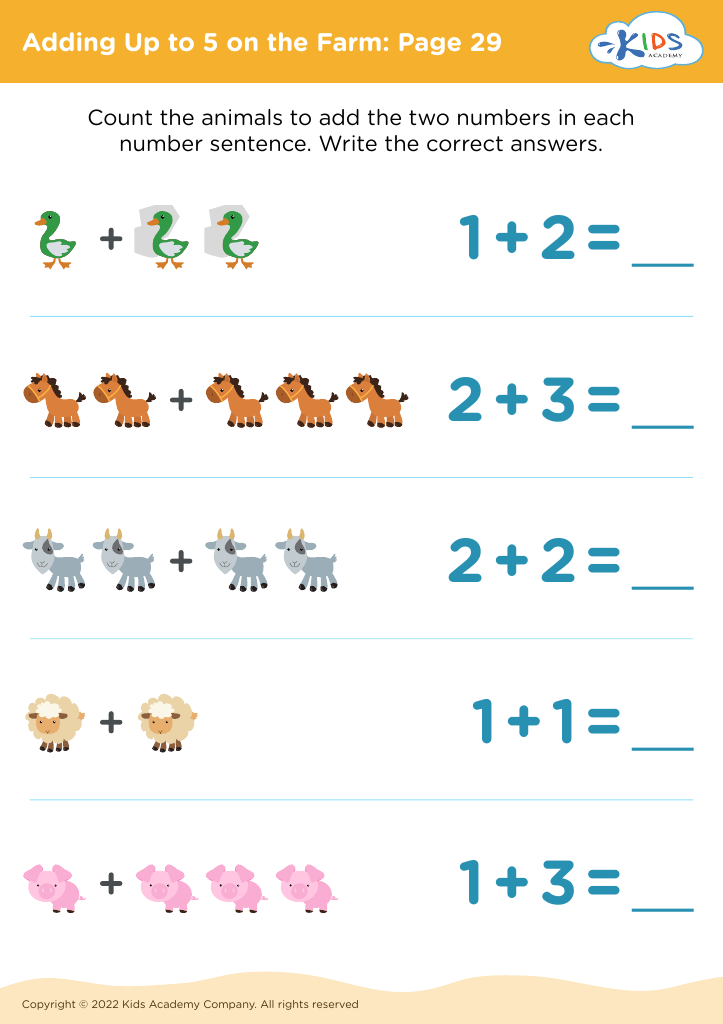
Adding Up to 5 on the Farm: Page 29
Worksheet
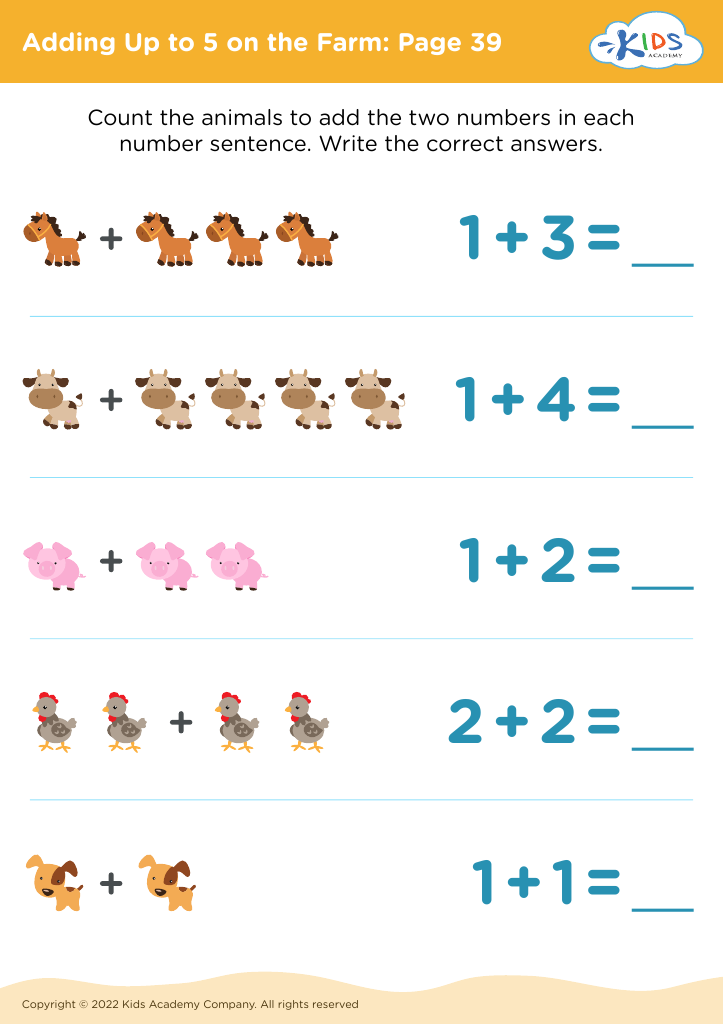
Adding Up to 5 on the Farm: Page 39
Worksheet
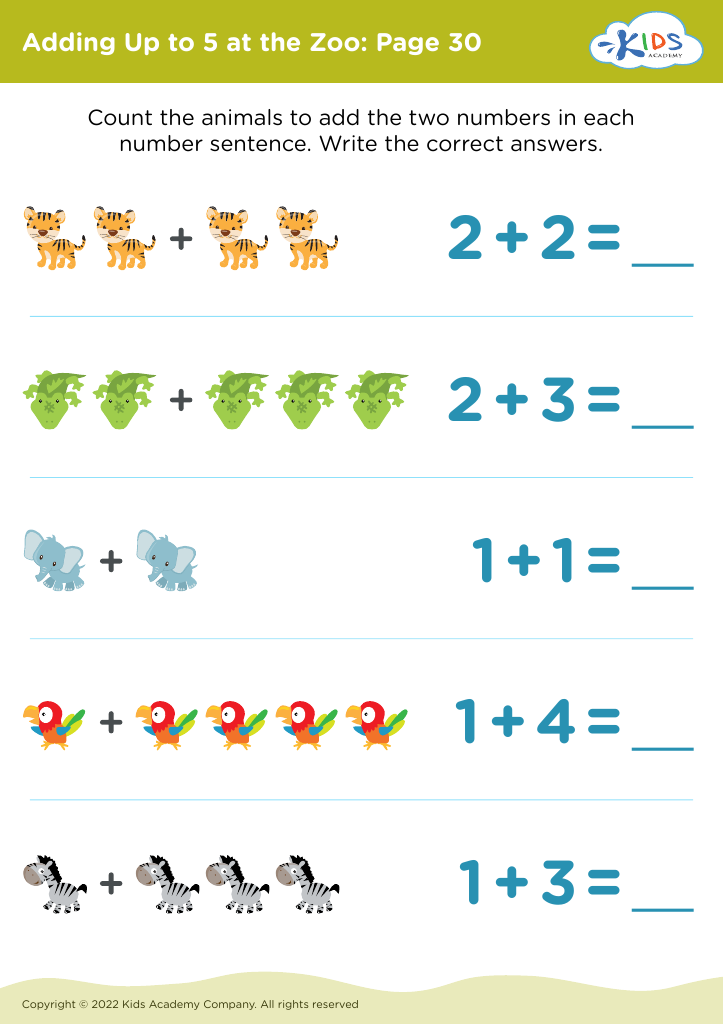
Adding Up to 5 at the Zoo: Page 30
Worksheet
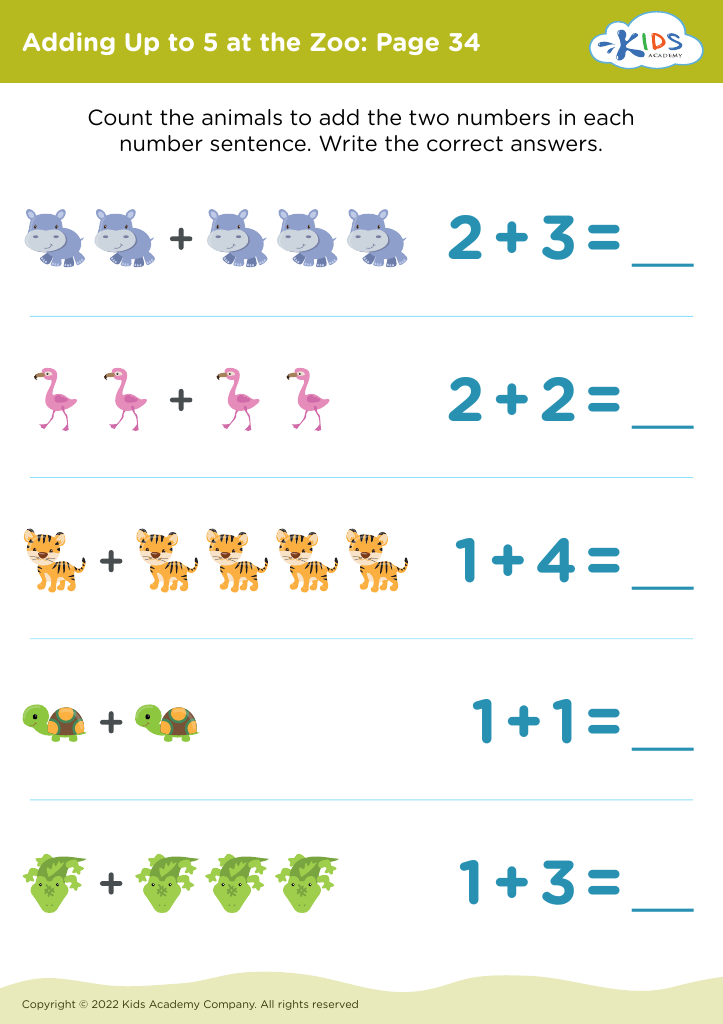
Adding Up to 5 at the Zoo: Page 34
Worksheet
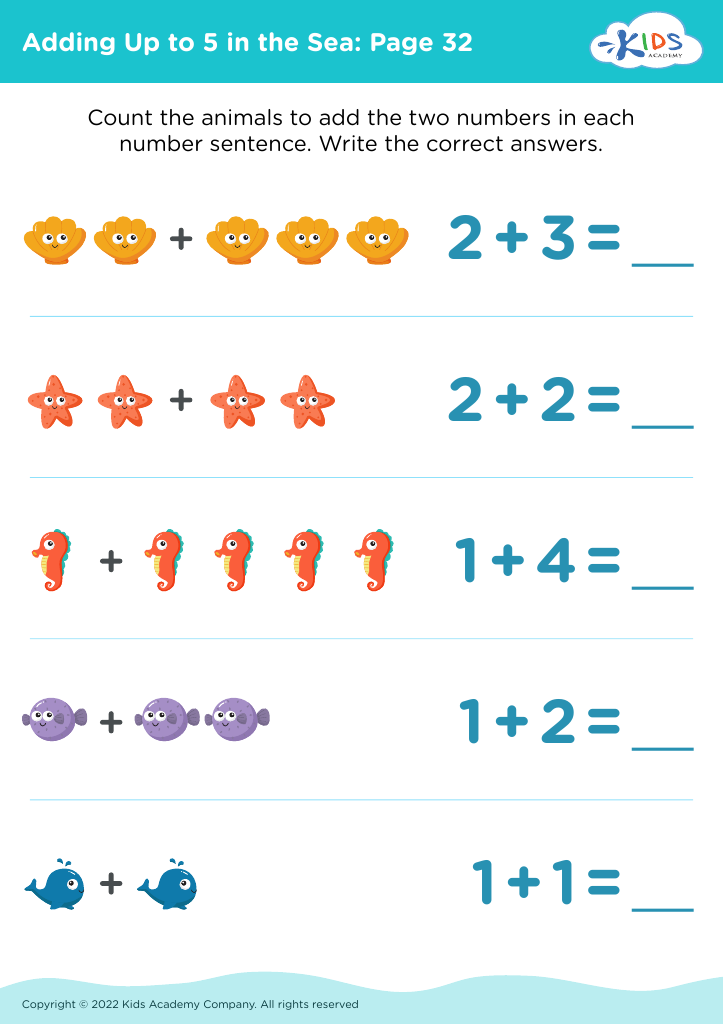
Adding Up to 5 in the Sea: Page 32
Worksheet
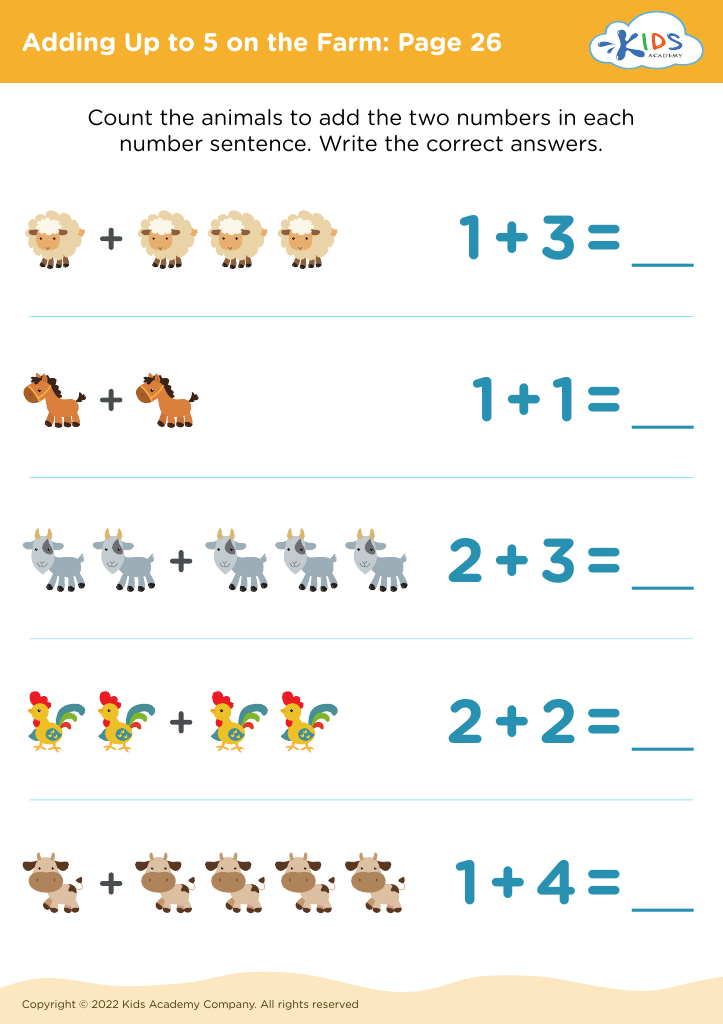
Adding Up to 5 on the Farm: Page 26
Worksheet
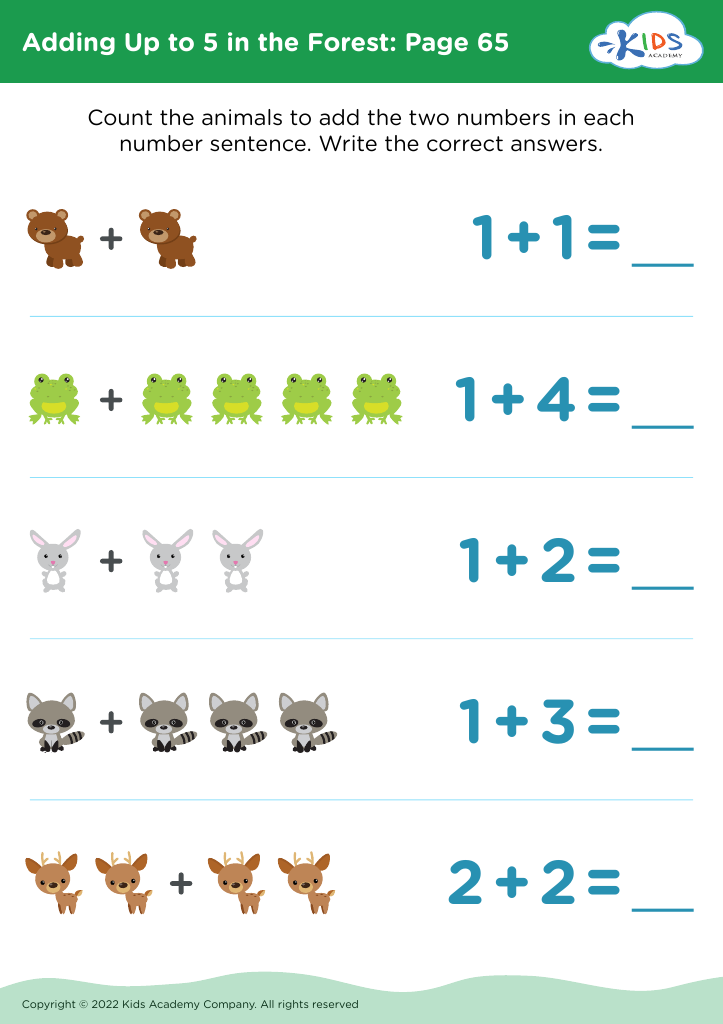
Adding Up to 5 in the Forest: Page 65
Worksheet
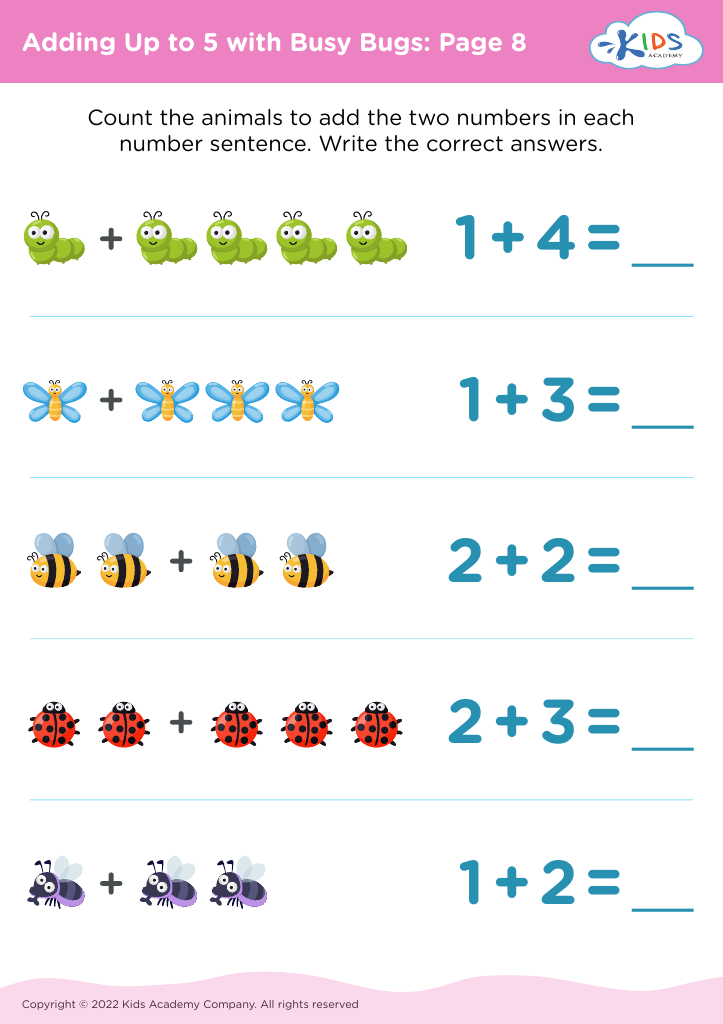
Adding Up to 5 with Busy Bugs: Page 8
Worksheet
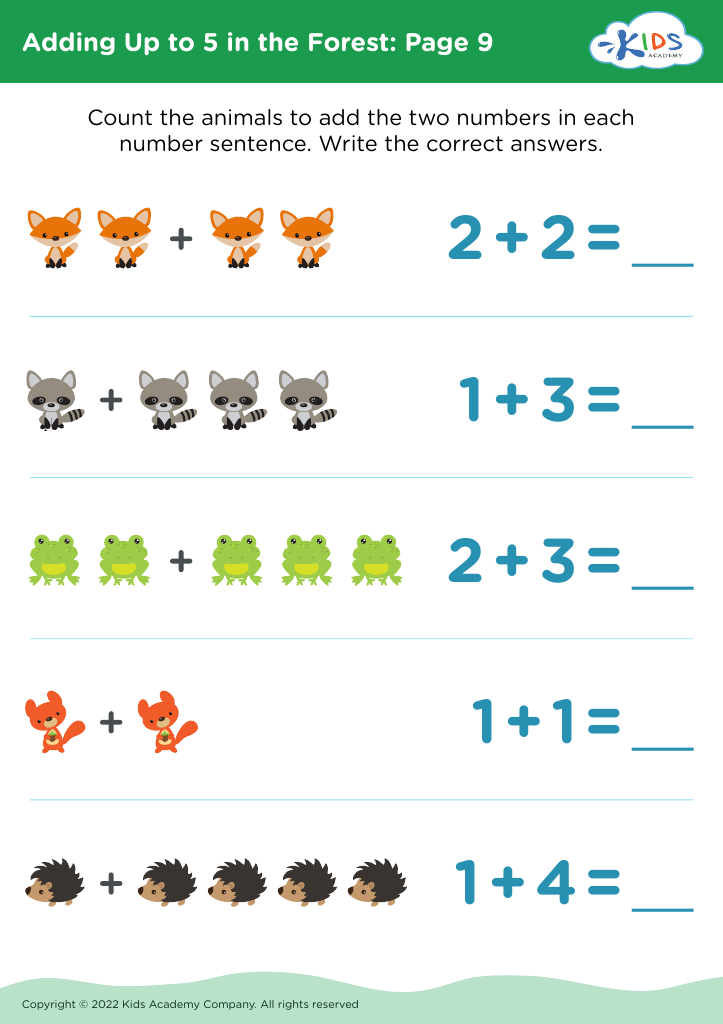
Adding Up to 5 in the Forest: Page 9
Worksheet
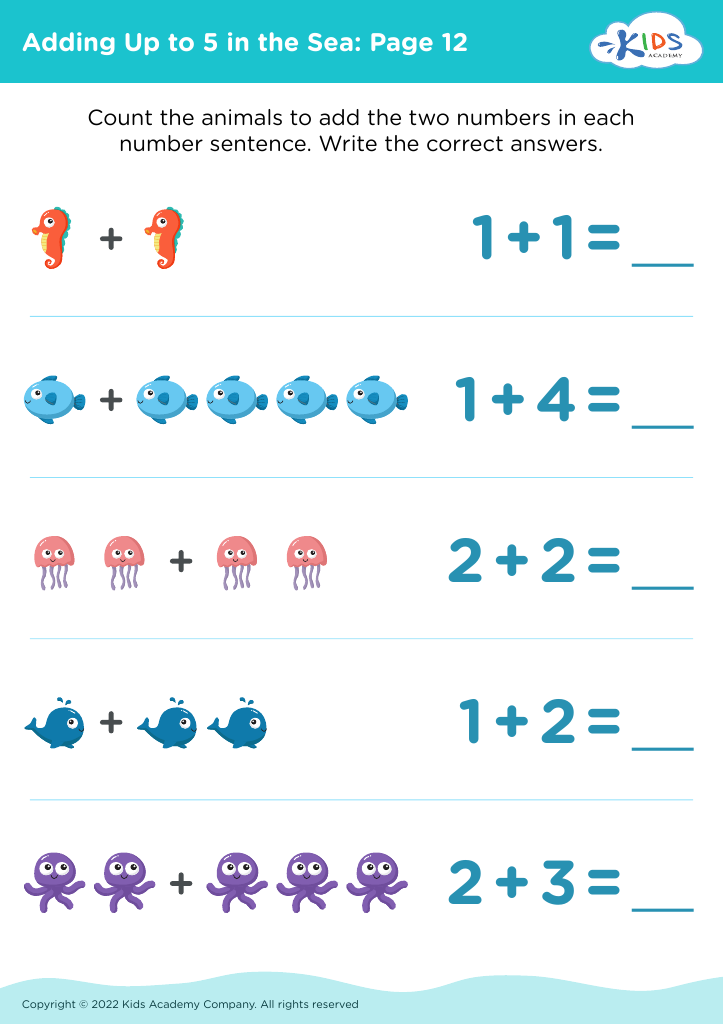
Adding Up to 5 in the Sea: Page 12
Worksheet
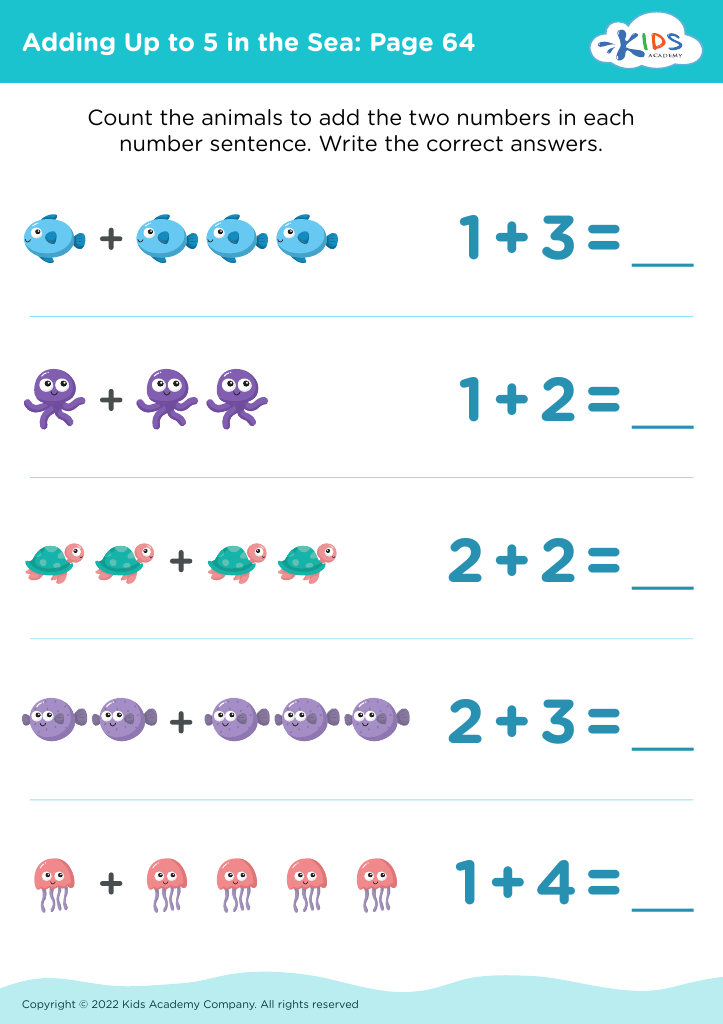
Adding Up to 5 in the Sea: Page 64
Worksheet
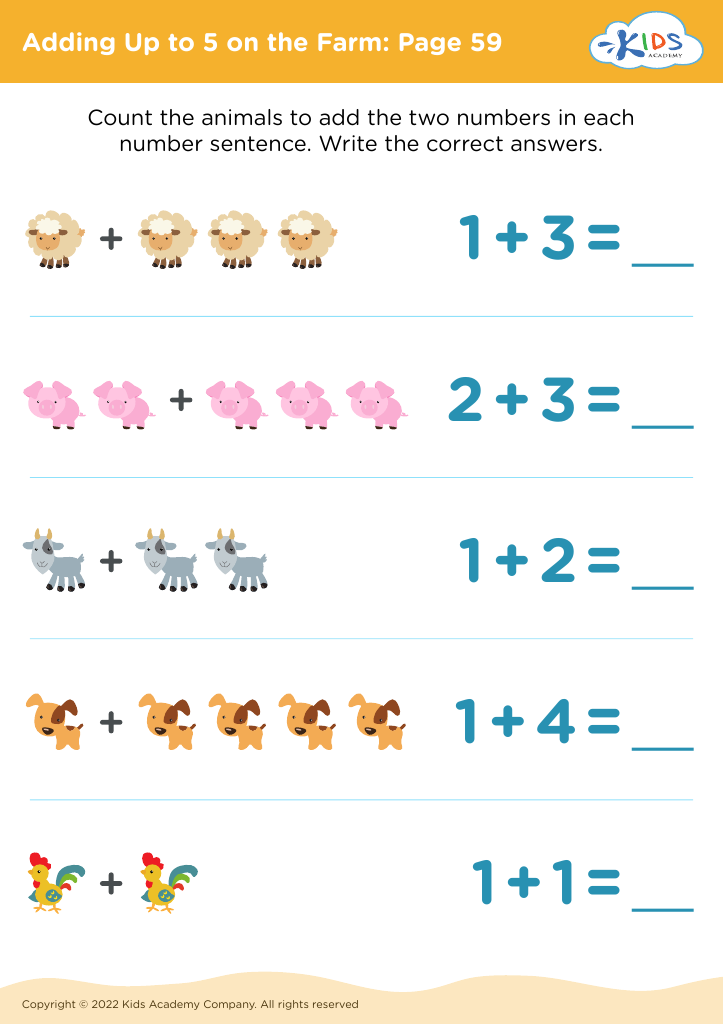
Adding Up to 5 on the Farm: Page 59
Worksheet
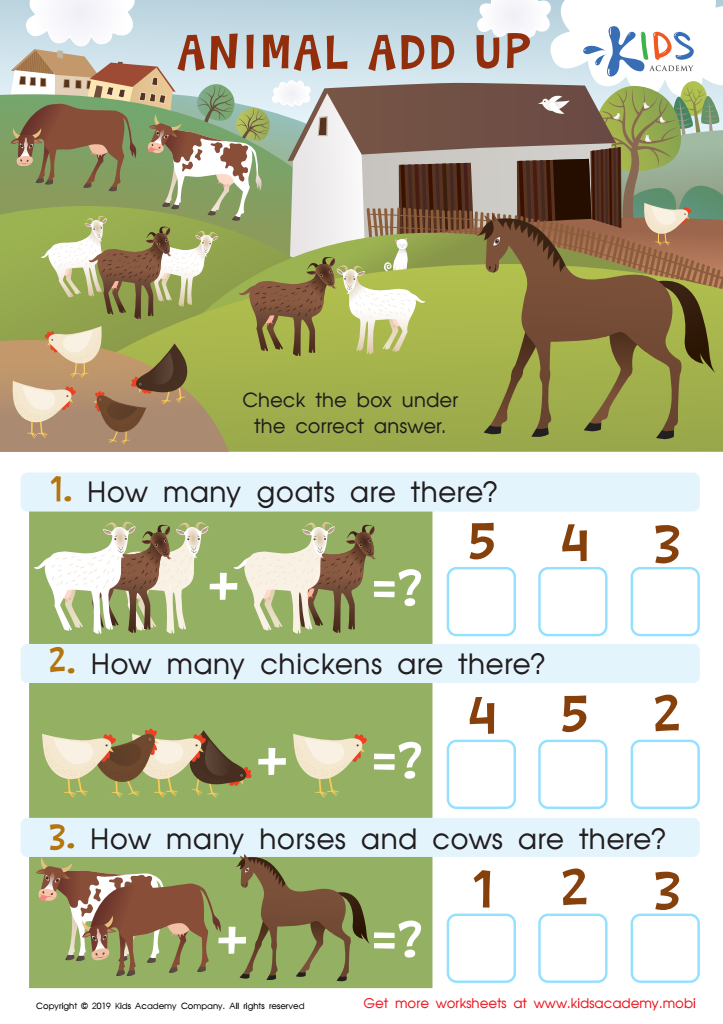
Animal Add Up Worksheet

Animal Add Up Worksheet

Animals are fun to observe and interact with. They can be seen at the zoo, parks, farms and in homes with pets. This worksheet helps kids identify animals, and build addition skills. Look at the picture with them and help name each animal. After that, add the animals up and check the box for the correct answer. 80 words.
Animal Add Up Worksheet
Worksheet
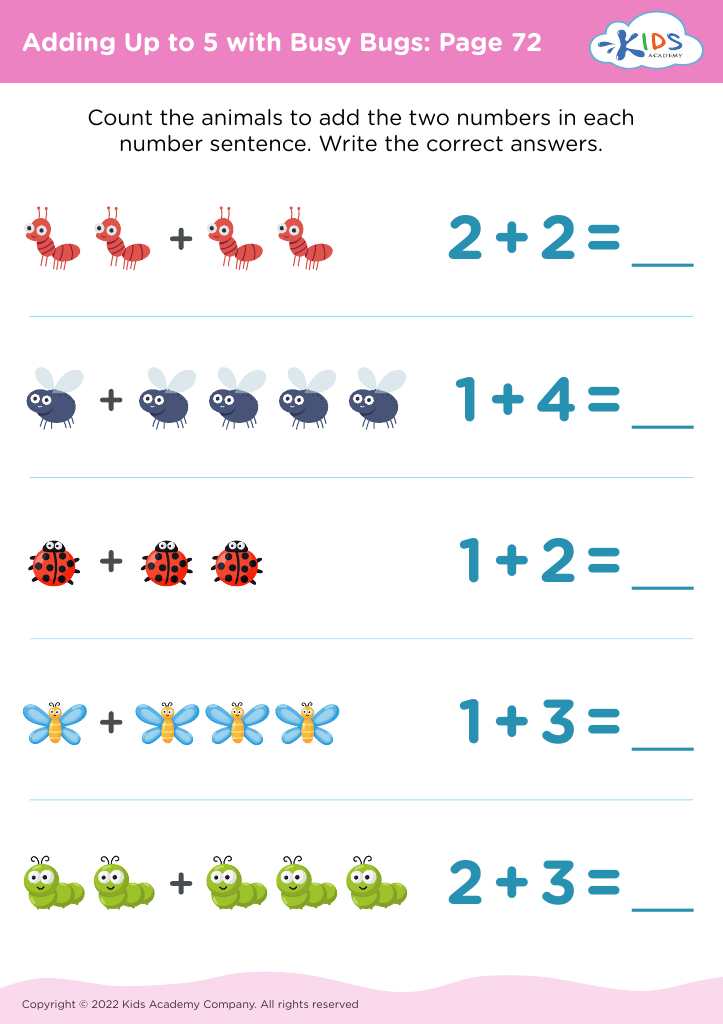
Adding Up to 5 with Busy Bugs: Page 72
Worksheet
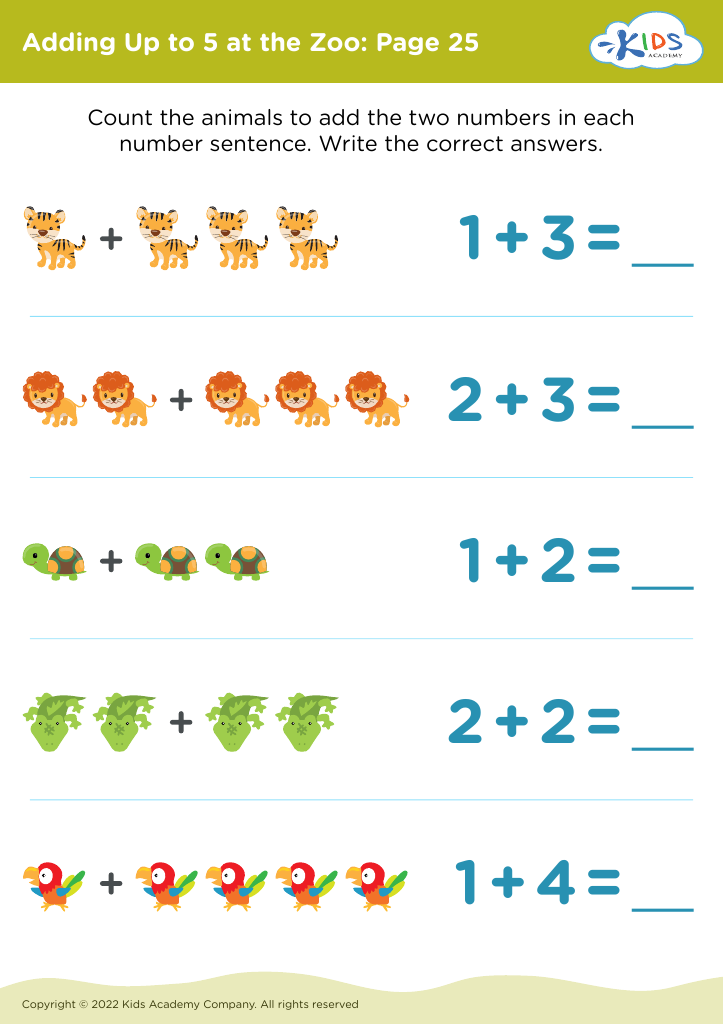
Adding Up to 5 at the Zoo: Page 25
Worksheet
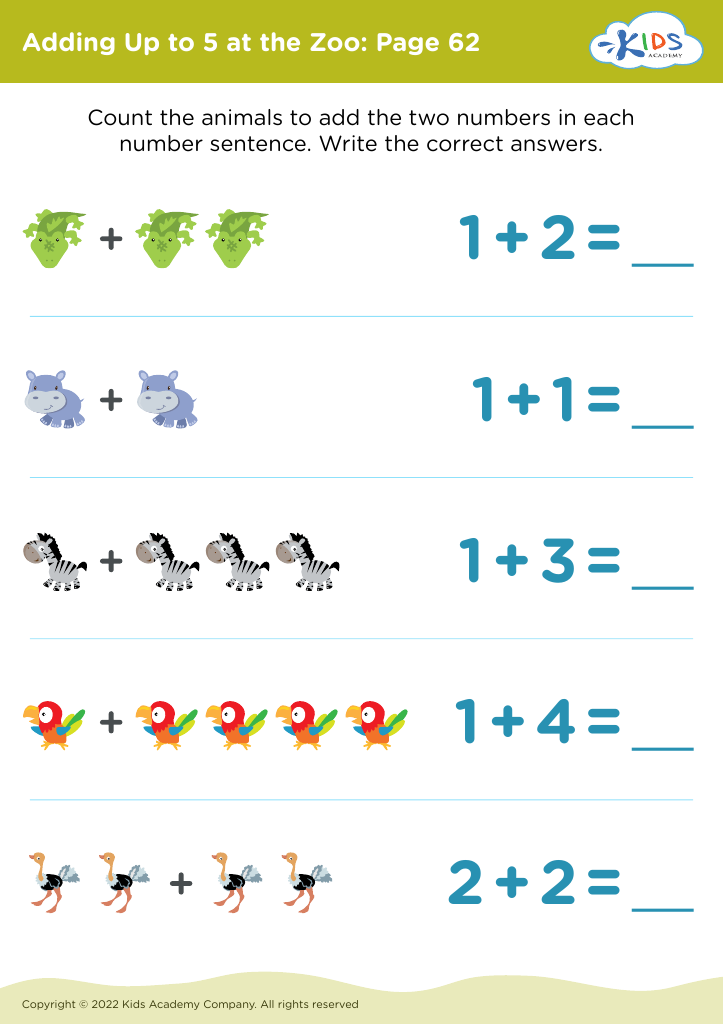
Adding Up to 5 at the Zoo: Page 62
Worksheet
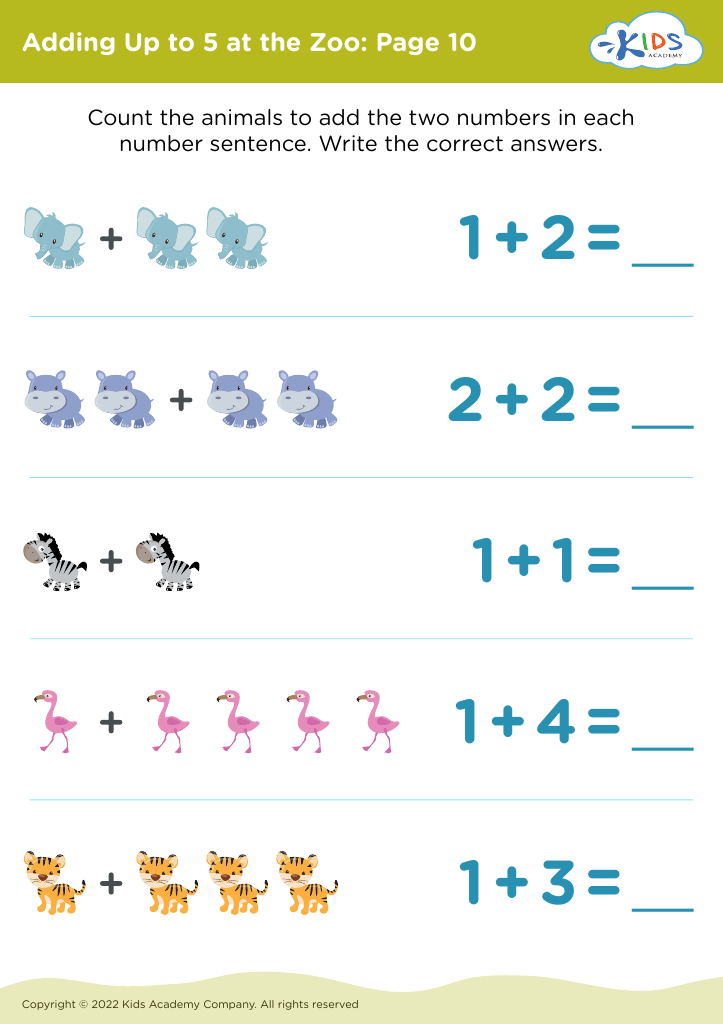
Adding Up to 5 at the Zoo: Page 10
Worksheet
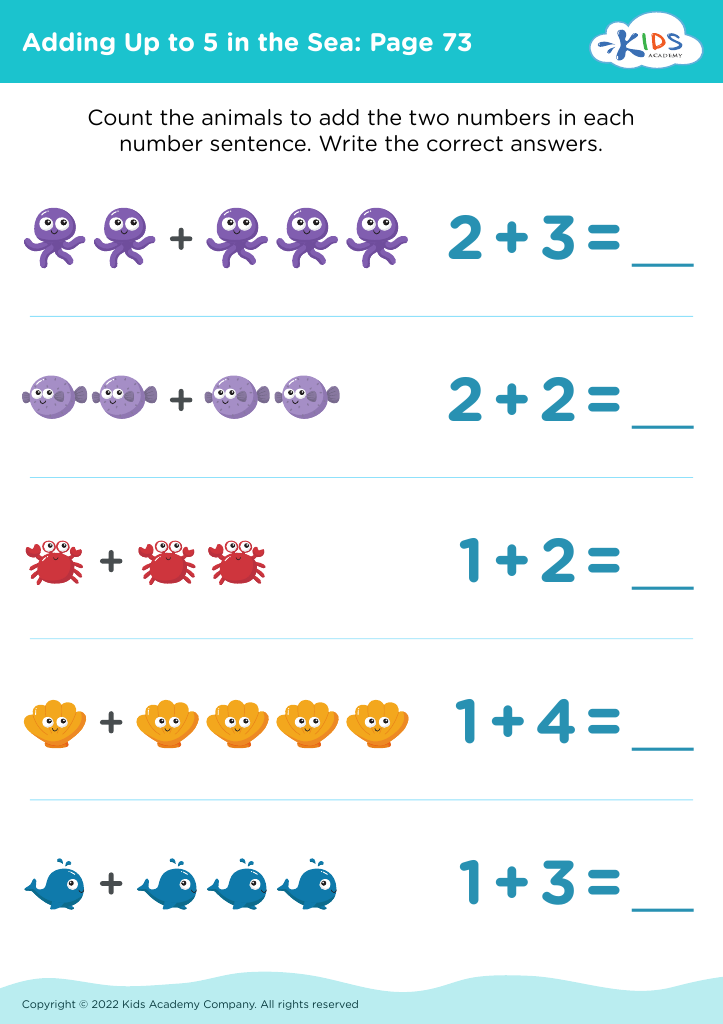
Adding Up to 5 in the Sea: Page 73
Worksheet
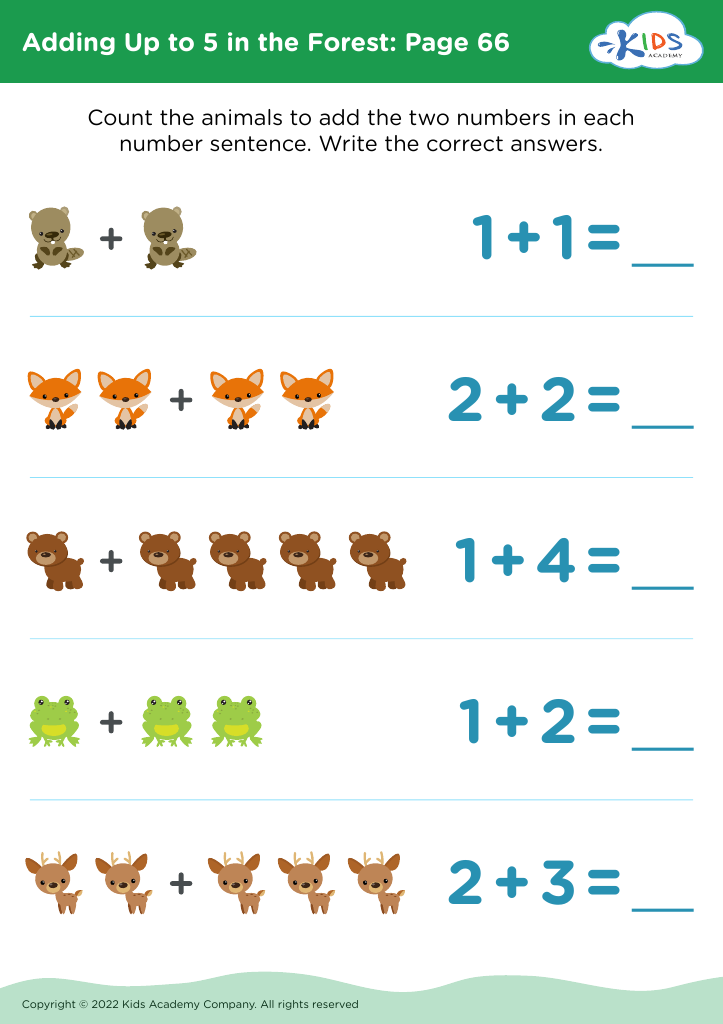
Adding Up to 5 in the Forest: Page 66
Worksheet


Counting practice and addition for children ages 3-5 are foundational skills that play a crucial role in early education. During these formative years, children are naturally curious and eager to learn, making it the perfect time to introduce concepts of counting and basic addition. Engaging in these practices helps to develop number sense, which is the understanding that numbers represent quantities and can be manipulated.

Parents and teachers should care about counting and addition exercises because they promote cognitive development, laying the groundwork for future mathematical skills. This foundational knowledge not only enhances problem-solving abilities but also instills confidence in young learners as they progress. Additionally, these practices encourage fine motor skills through activities such as counting objects or using tools for hands-on learning.

Moreover, practicing counting and addition can be integrated into daily activities, making learning organic and enjoyable. Activities like counting snacks, toys, or steps offer opportunities for children's practical application of numbers in real life. By fostering a solid understanding of counting and addition at a young age, parents and educators contribute to children’s overall success in academics and lifelong learning, nurturing a positive attitude toward mathematics from an early stage.