Division practice Division Worksheets for Ages 3-5
4 filtered results
-
From - To
Unlock the world of early math mastery with our engaging "Division Practice" worksheets designed for ages 3-5! Our carefully crafted resources make dividing numbers fun and easy for little learners. Each worksheet features vibrant visuals and interactive exercises that build foundational skills in a playful manner. With a blend of simple problems and creative illustrations, children can develop a strong understanding of division while boosting confidence. Perfect for at-home activities or classroom use, these division worksheets will set young minds on a path to math success! Empower your child’s early learning journey with Kids Academy today.
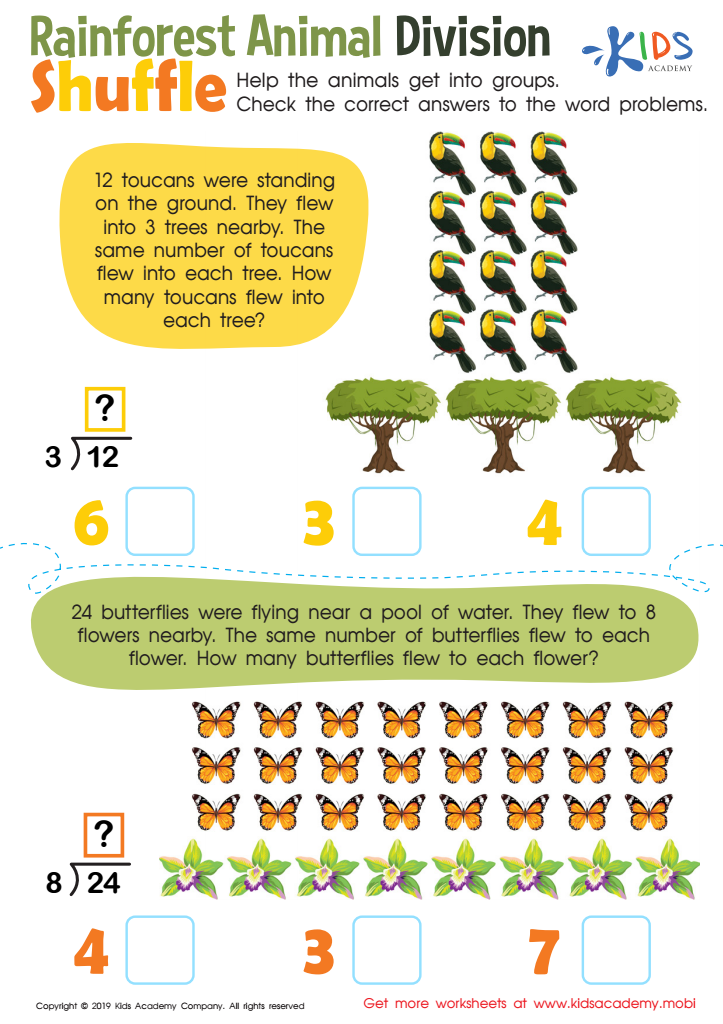
Rainforest Animal Division Worksheet
 Assign to My Students
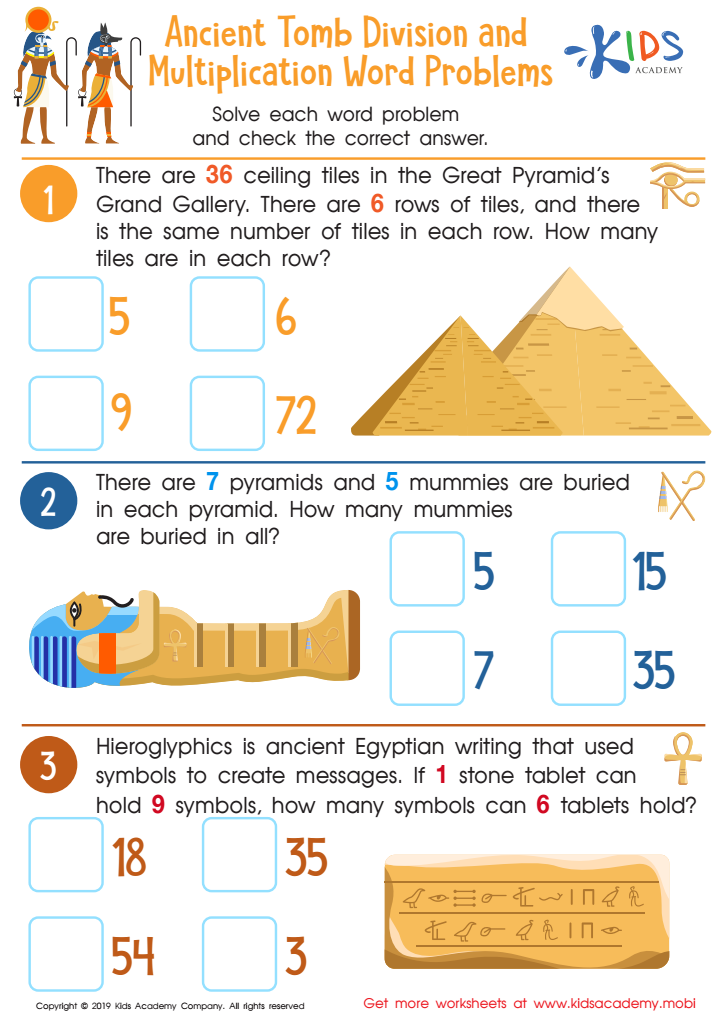
Ancient Tomb Division and Multiplication Word Problems Worksheet
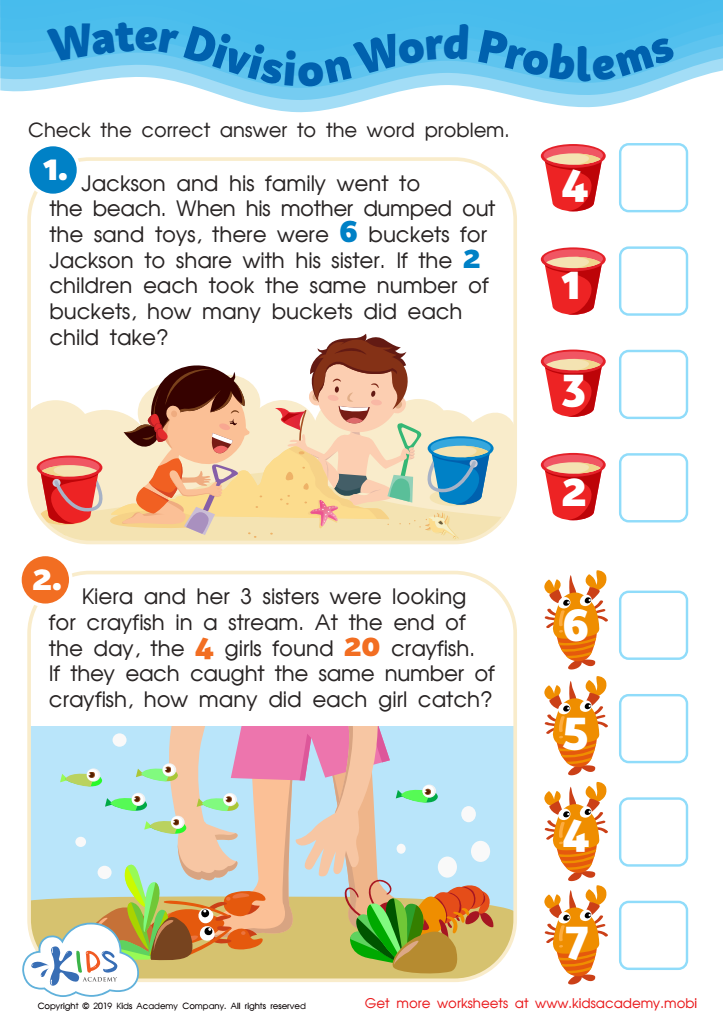
Water Division Word Problems Worksheet
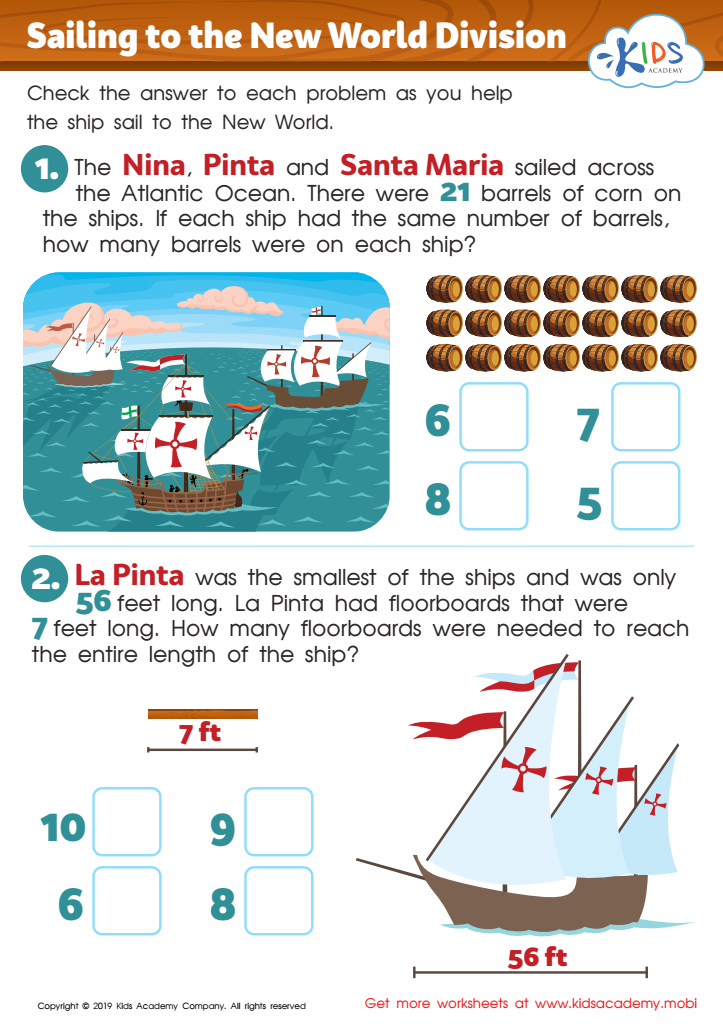
Sailing to the New World Division Worksheet








While ages 3-5 might seem quite early to introduce concepts like division, foundational math skills can be introduced in a way that is engaging and age-appropriate. Division practice can be subtly woven into play and daily activities, laying a crucial groundwork for more formal education later.
At this developmental stage, children are becoming familiar with basic counting and simple arithmetic operations like addition and subtraction. Division, introduced as the idea of sharing or grouping objects evenly, helps enhance a child’s understanding of numbers and their relationships. For example, sharing toys or snacks equally among friends teaches the foundational premise of division, cultivating both mathematical reasoning and social skills.
Furthermore, early exposure to mathematical concepts can boost cognitive development by encouraging problem-solving and critical thinking. Activities like dividing a set of blocks into smaller groups or discussing fair distribution of goodies can be both educational and entertaining.
For parents and educators, fostering a positive experience with math in early childhood also helps in demystifying the subject, making it less intimidating as children grow older. Moreover, a solid grasp on fundamental math concepts paves the way for academic success, providing a stable platform for mastering more complex operations like division in later years. Thus, integrating early division practice is beneficial and fosters an encouraging learning environment.








