
Color Identification Geometry Worksheets for Ages 3-5
4 filtered results
Difficulty Level
Grade
Age
-
From - To
Subject
Activity
Standards
Discover an engaging collection of Color Identification Geometry Worksheets designed specifically for children aged 3 to 5. These interactive worksheets combine the excitement of colors with essential geometry skills, helping young learners identify shapes while enhancing their color recognition. Through fun activities and vibrant illustrations, children will explore circles, squares, triangles, and more, all while developing critical cognitive skills. Perfect for preschool and early education, these printable resources support growth in both math and color learning. Encourage creativity and inquiry in your classroom or home with these beautifully designed worksheets, fostering a solid foundation for future academic success in math and beyond!
Favorites
With answer key
Interactive
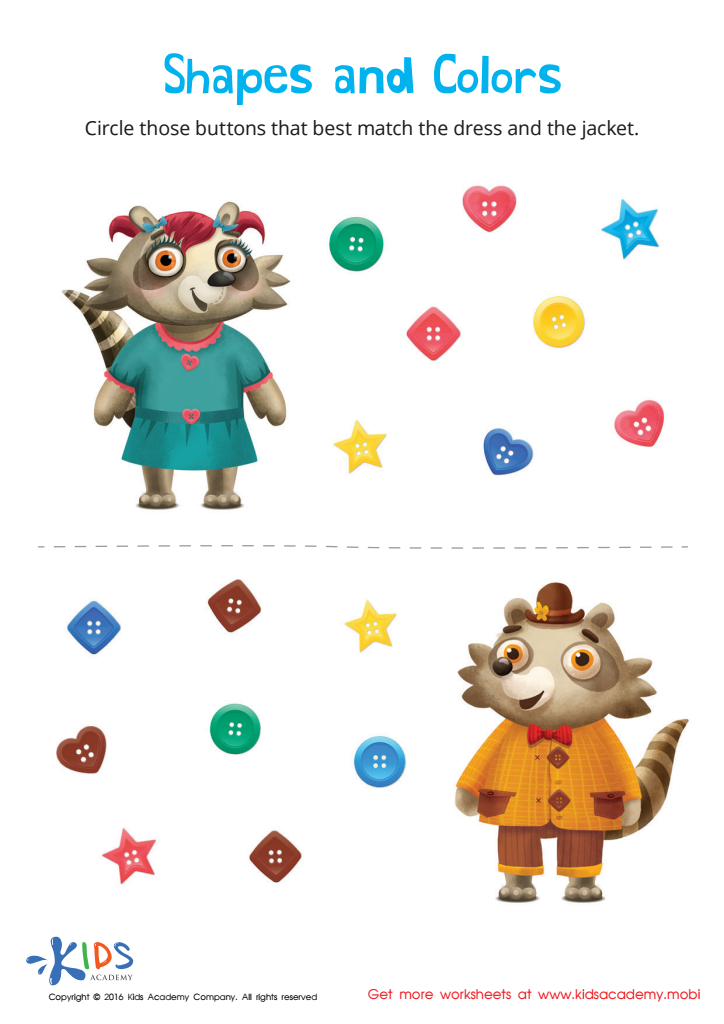
Matching: Shapes and Colors Worksheet
Help Mr. and Mrs. Raccoon find the right buttons to match their shirts! Kids will identify shapes and colors and learn to match them correctly.
Matching: Shapes and Colors Worksheet
Worksheet











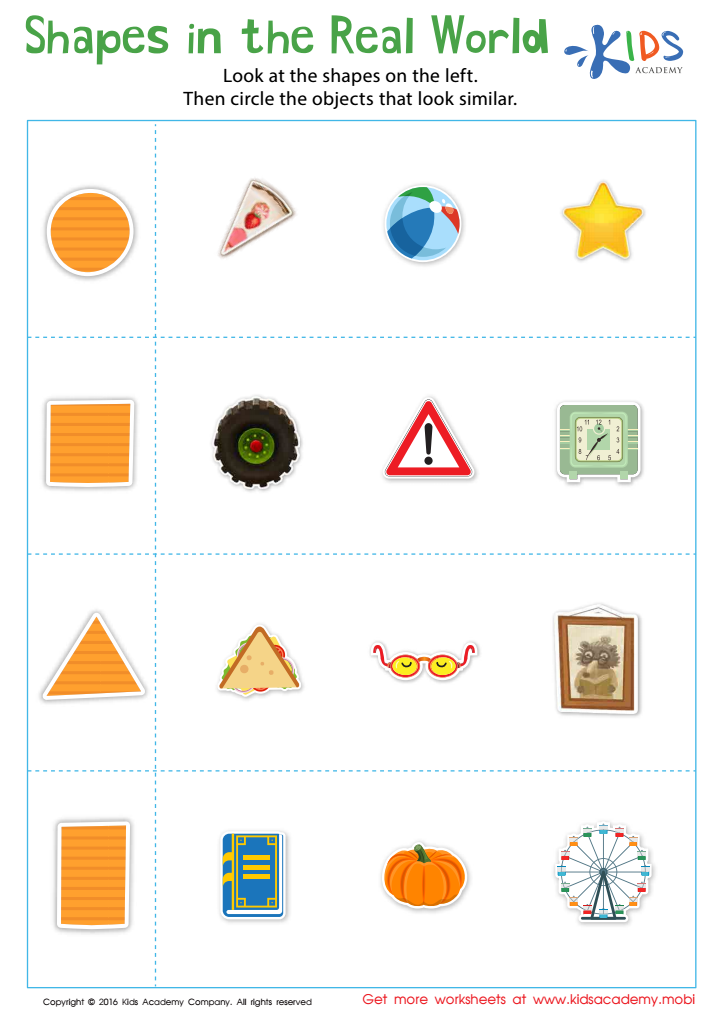
Shapes in the Real World Worksheet
Teach kids math in real-world context with this fun and inviting PDF. Let them explore geometric shapes and match them with everyday objects, giving them practice with fine motor skills and reinforcing basic shapes. Help them understand that math is everywhere in their lives!
Shapes in the Real World Worksheet
Worksheet
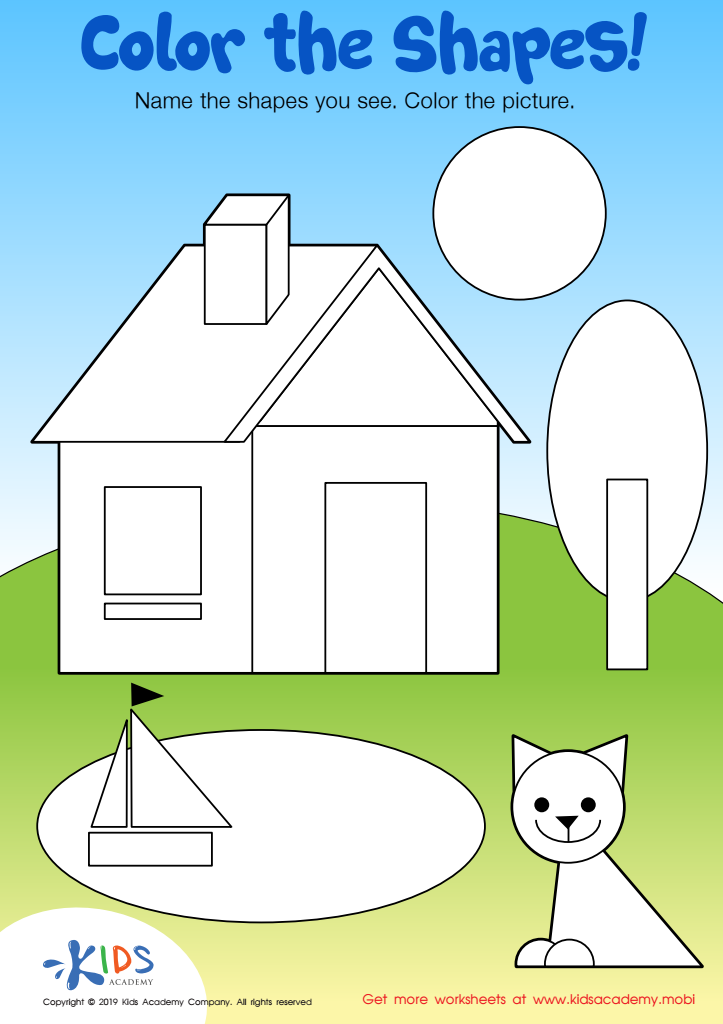
Color the Shapes Worksheet
Help your student master shape identification with this fun worksheet. Ask them to name the shapes in the picture, then color it! Ask questions like "How many squares do you see?" and "How many triangles?" to extend the learning. Identify squares, circles, triangles and rectangles with this enjoyable coloring page.
Download (PDF)
 Assign to My Students
Assign to My Students
Color the Shapes Worksheet
Worksheet
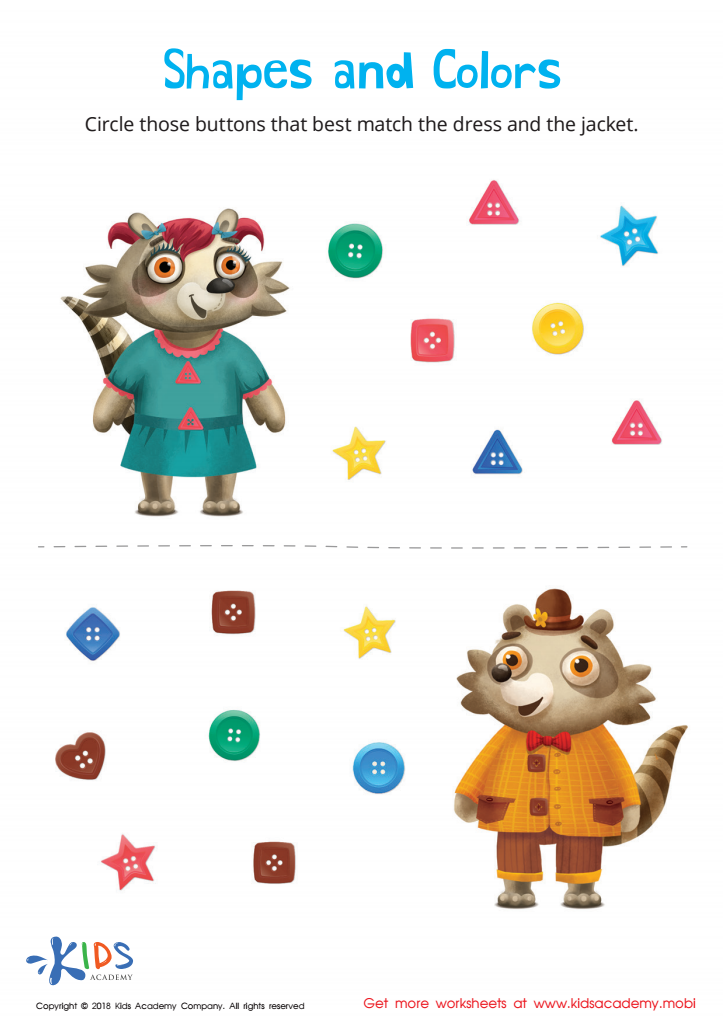
Shapes and Colors Worksheet
This worksheet is a fun way to teach toddlers shapes and colors! It has them match buttons on adorable racoon characters. Encourage your child to note the shape and color of the buttons then sort through and circle the matches. This helps build important attention to detail skills!
Shapes and Colors Worksheet
Worksheet
Join Kids Academy for Free
Who is primarily going to use this learning content?








Color identification and geometry are fundamental building blocks in early childhood education, particularly for children aged 3-5. Parents and teachers should care about these concepts for several important reasons.
Firstly, color identification enhances cognitive development. Recognizing and naming colors helps children to categorize and differentiate objects in their environment, fostering critical thinking skills. This foundational knowledge aids in language development as they learn to describe and communicate their experiences.
Furthermore, introducing geometric shapes builds spatial awareness and logical reasoning. Children learn to identify and manipulate shapes, which promotes problem-solving skills and creativity. Engaging with geometrical concepts through play and exploration also lays the groundwork for future mathematical understanding.
Additionally, integrating color and geometry into activities encourages hands-on learning, which is essential at this age. It inspires curiosity and exploration, turning abstract concepts into tangible experiences that children can understand and enjoy.
Incorporating these elements into everyday activities—such as art, games, and storytelling—supports holistic development. It not only enriches the educational experience but also helps create a supportive environment where children can thrive emotionally and socially. Ultimately, fostering these skills empowers future learners, setting them on a path toward academic success.








