Basic Math Skills Numbers Worksheets for Ages 3-5 - Page 2
25 filtered results
-
From - To
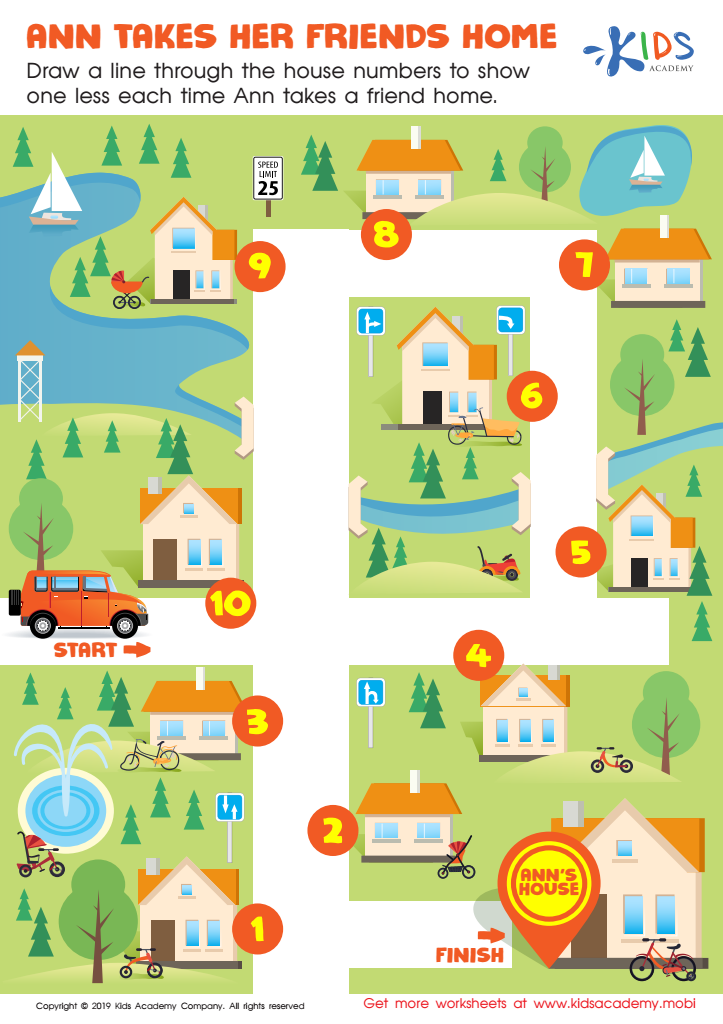
Ann Takes her Friends Home Worksheet
 Assign to My Students








Parents and teachers should care about basic math skills for children ages 3-5 because these early mathematical foundations are crucial for lifelong learning and cognitive development. The preschool years are an essential time for developing early numeracy skills, such as number recognition, counting, and basic operations. Engaging young children in fun, interactive activities that involve numbers—like counting toys, singing counting songs, and playing number-based games—stimulates their cognitive abilities and reinforces their understanding of quantity, patterns, and comparisons.
Early math skills correlate strongly with later academic achievement, particularly in mathematics. Children who grasp basic number concepts early on tend to find it easier to tackle more complex mathematical concepts as they progress through school. Moreover, strong math skills can boost a child's confidence and foster a positive attitude toward learning.
Additionally, an understanding of basic math prepares children for everyday problem-solving situations, teaching them skills they will use throughout life. Being knowledgeable in math also interacts with literacy development, encouraging broader critical thinking and reasoning skills. Overall, prioritizing basic math education for young children can yield long-lasting benefits and set a solid foundation for their future success in both academic and everyday contexts.








